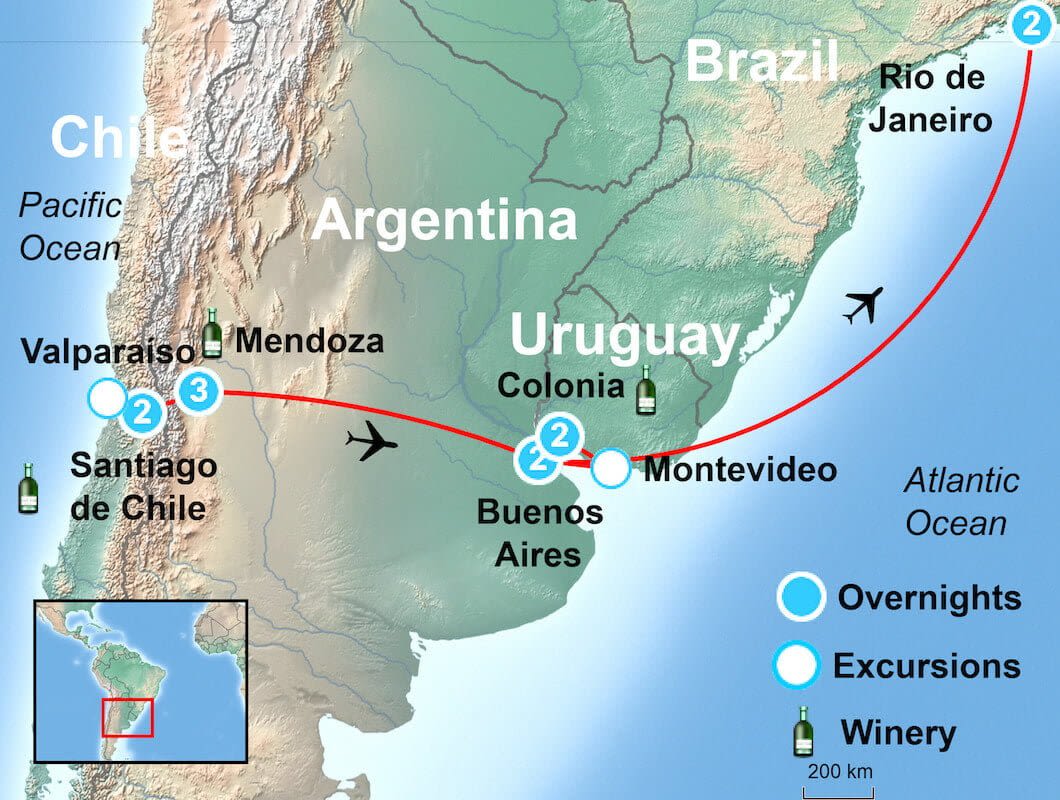
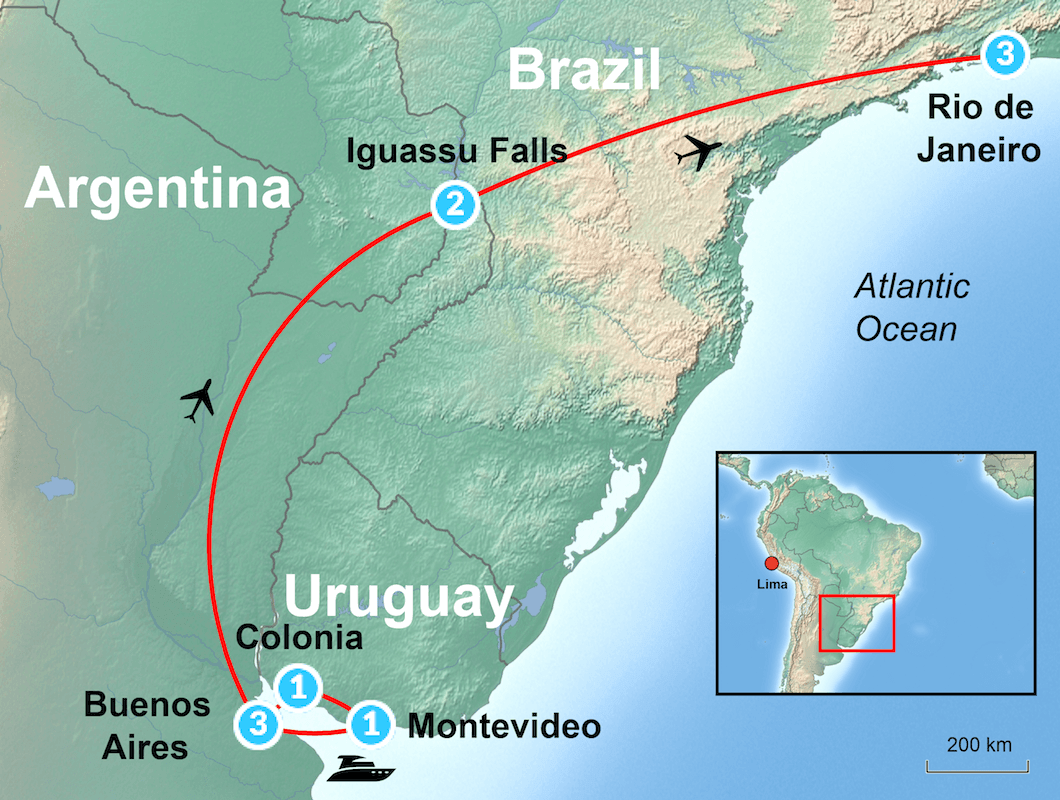
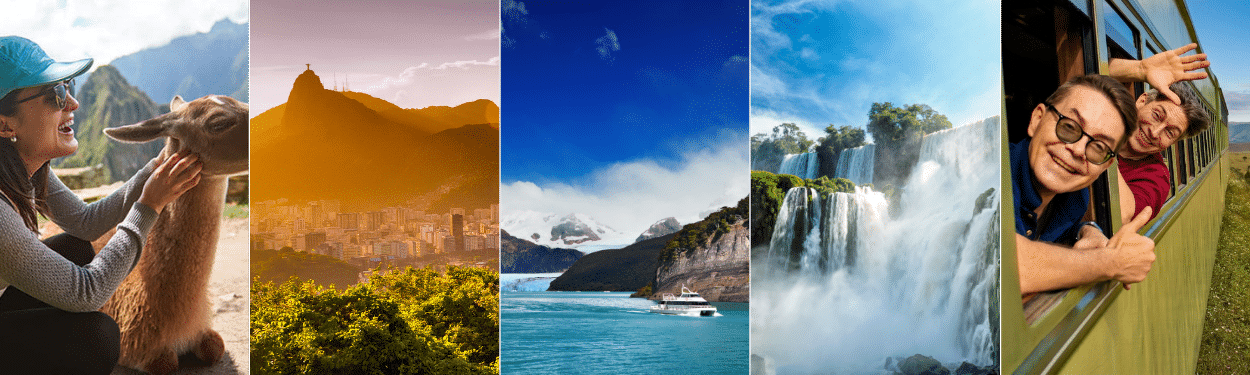
These South America tours are sample routes, not fixed departures. Each strings together places such as Machu Picchu, Patagonia, Iguazú Falls and Rio de Janeiro in an order that works on the map and on the calendar, and the Galápagos can be added. Treat them as travel packages you are allowed to take apart. Every trip is tailor-made: we design it around your dates, your pace and your choice of hotels, and local partners deliver it on the ground.
Browse by route: Argentina and Chile, Argentina and Brazil, Peru and Bolivia, Peru and Ecuador. By style: adventure, nature and wildlife, honeymoons. Or see all multi-country tours, or design your own.
Seven weeks for the whole continent: Machu Picchu and the Sacred Valley, the Andes lake crossing, both sides of Iguazú, and Rio, Buenos Aires and Santiago.
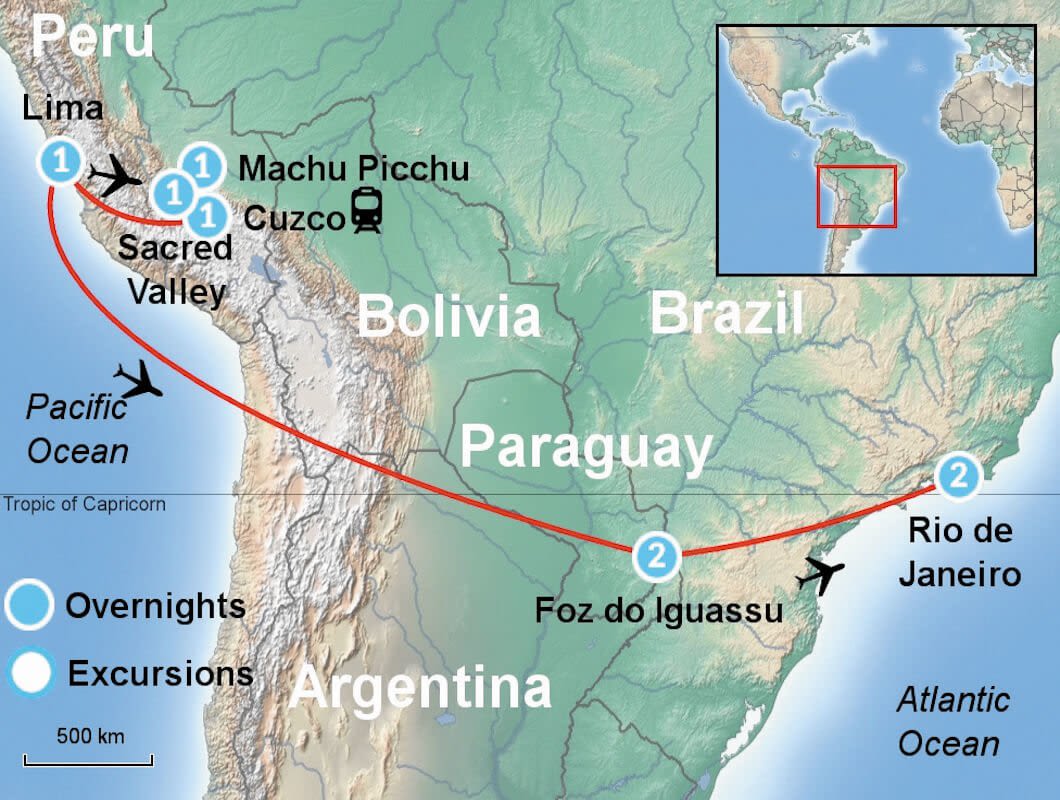
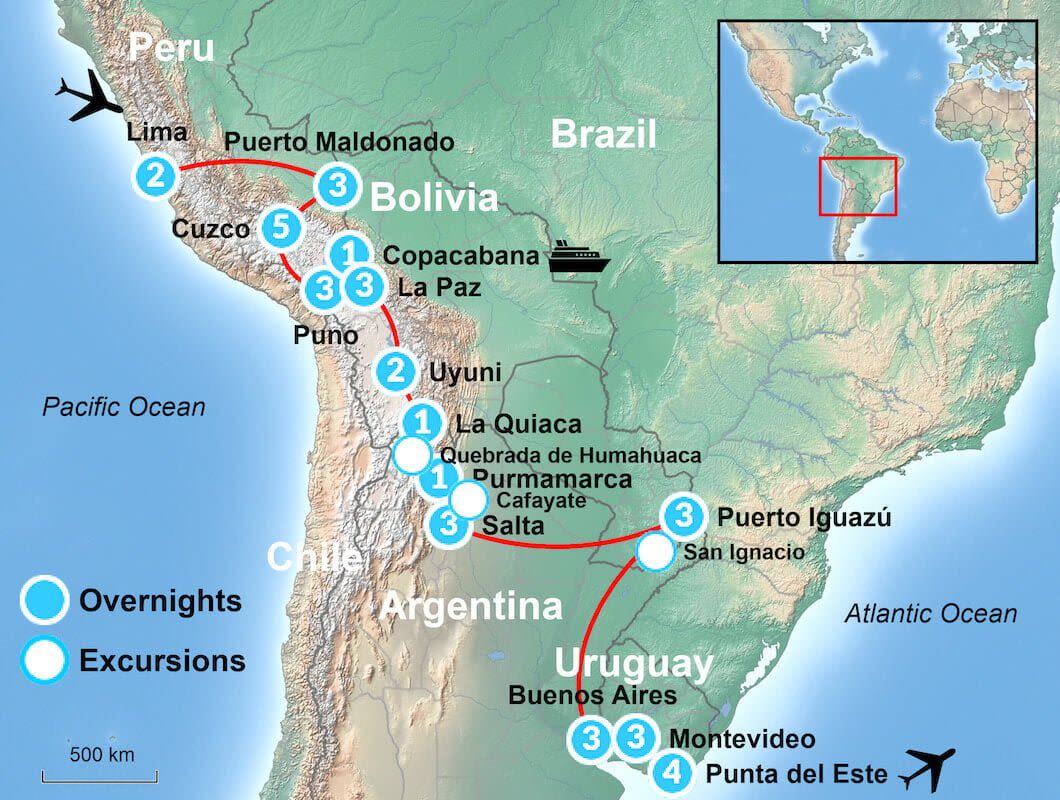
Pacific to Atlantic in one trip: Lima, Cusco and Machu Picchu, Lake Titicaca and La Paz, then Paraguay and Iguazú on the way to Rio de Janeiro.
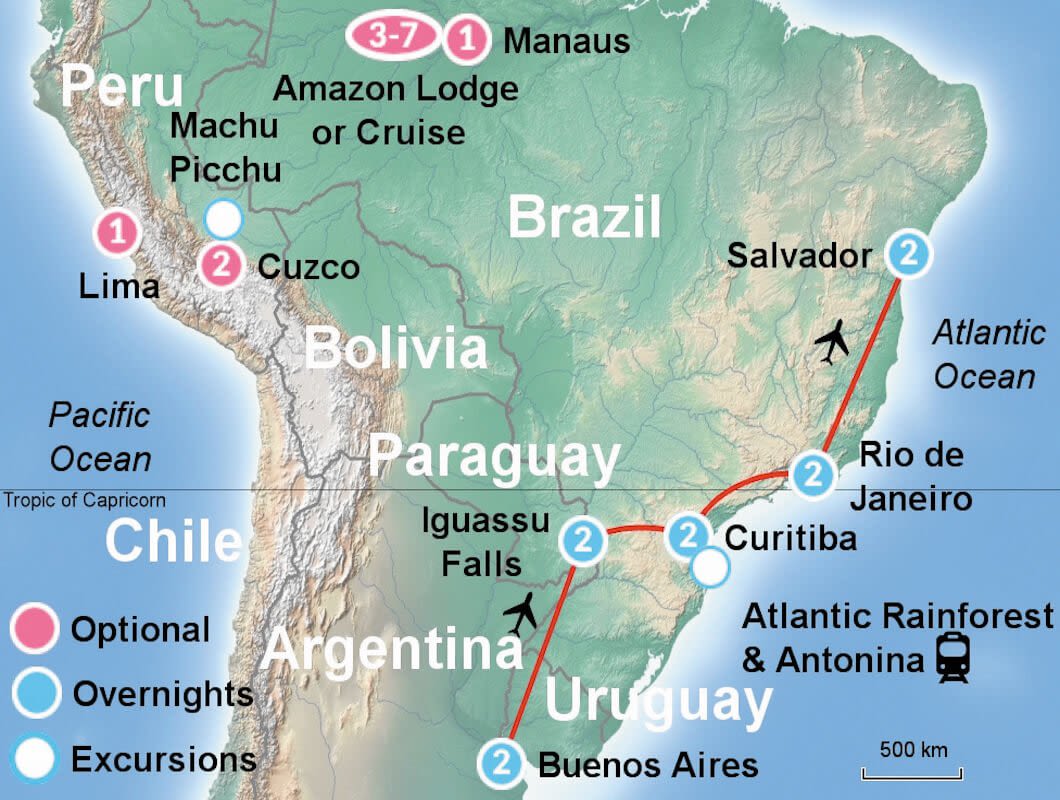
Built for a honeymoon: Rio’s beaches first, then Iguazú Falls, Buenos Aires and Santiago, ending with the history of Cusco and the Sacred Valley.
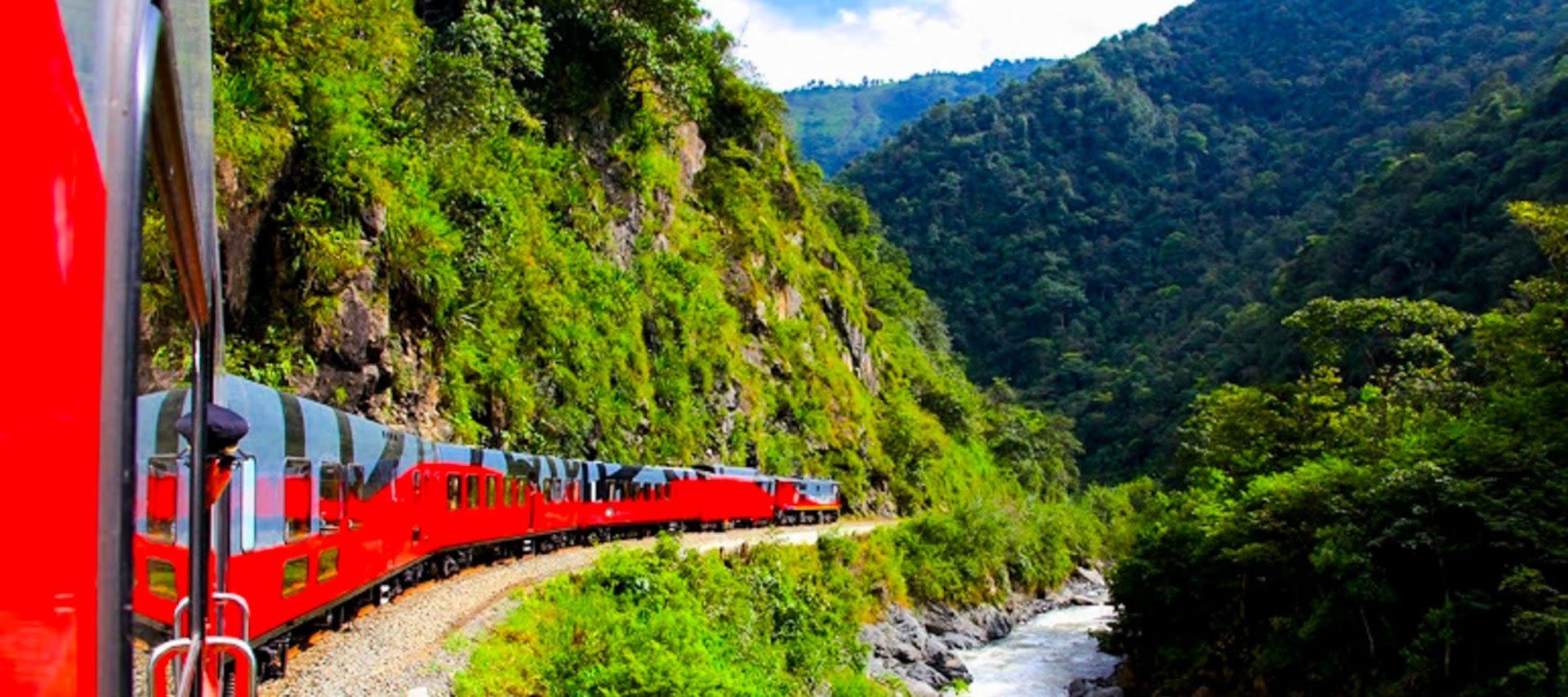
Mostly by train: out of Buenos Aires to the wildlife of Península Valdés, then the La Trochita steam train in Patagonia and on into Chile.
Three countries in nine nights, for travelers short on time: Lake Titicaca and La Paz, the Uyuni salt flats, San Pedro de Atacama and Salta.
Pick the style first. It usually picks the countries for you.
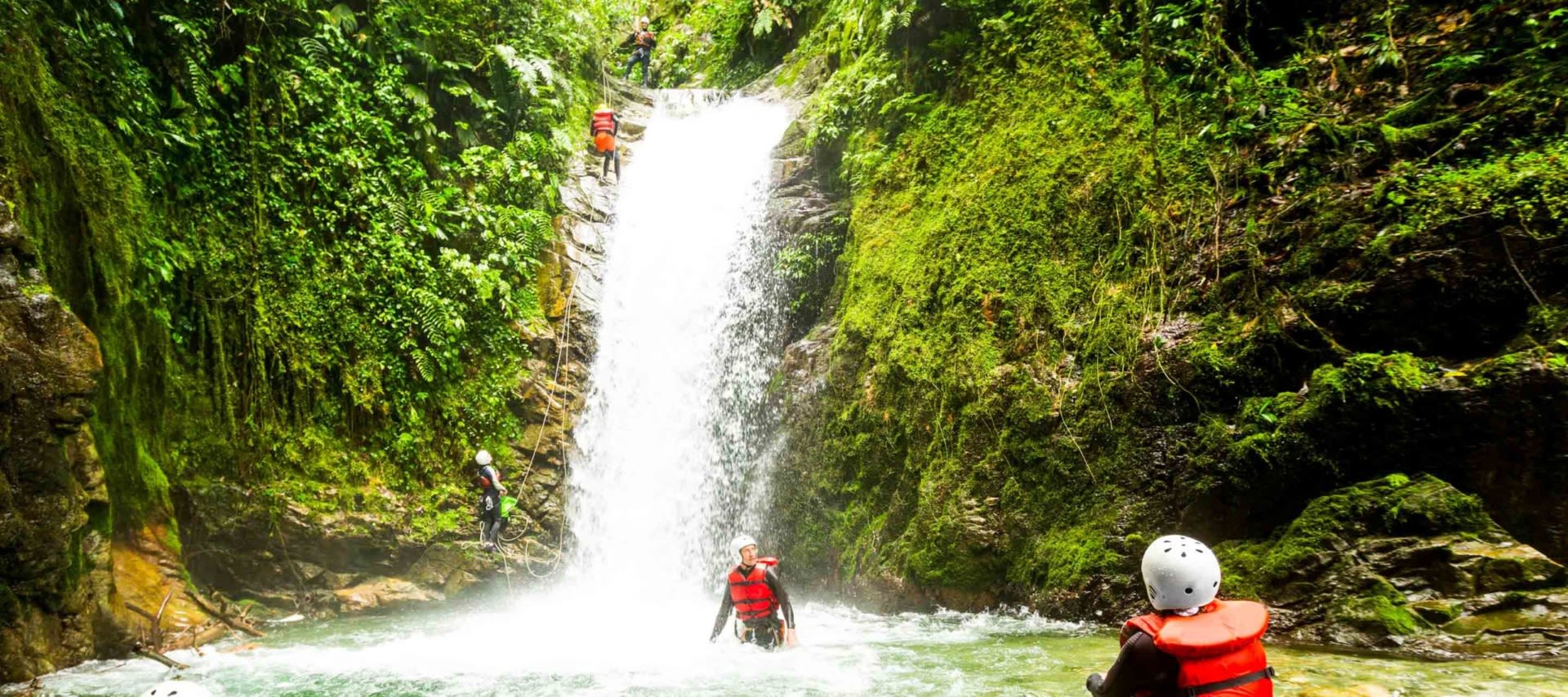
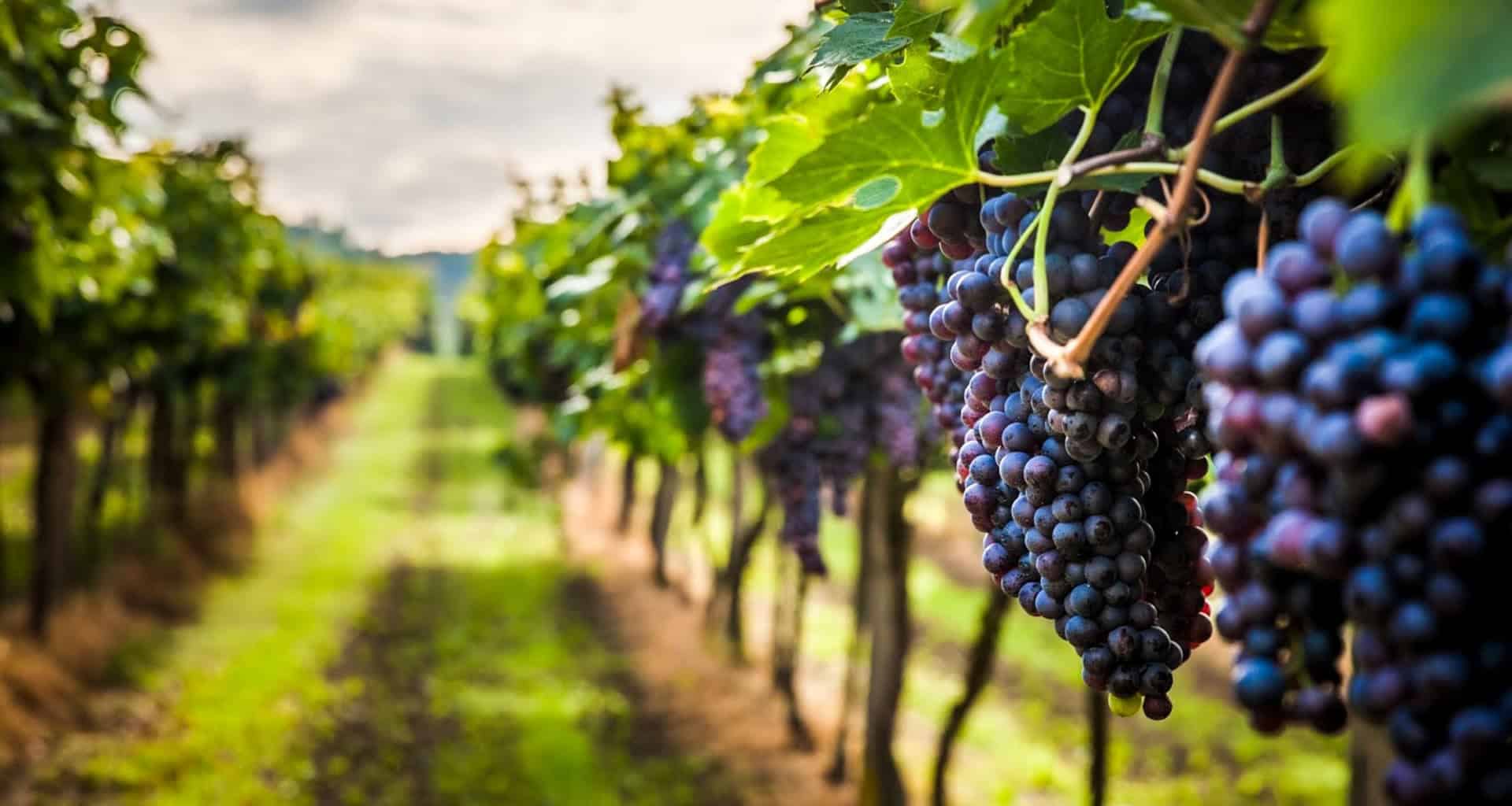
Adventure and nature trips point to Patagonia, the Amazon and the Galápagos; history and culture to the Inca heritage of Peru, Bolivia and Ecuador; food and wine to Argentina and Chile. Trains, cruises, lodges and spas change how you travel; honeymoons, golf and agricultural tours change why.
“Neither countries nor seasons are important,” says co-founder Juergen Keller. “It depends on what you want to do or to see!” So we start there: what kind of history, what kind of nature, and what you loved on earlier trips. Then we apply it to South America.
If you arrive with an itinerary from a catalog or a friend, we won’t just price it. We ask why, then suggest what makes it work: if you want Machu Picchu and the Amazon, the Peruvian Amazon is a short flight from Cusco, not a day and a half away in Brazil. And we add one thing you wouldn’t have found yourself, like Kuélap, the pre-Inca fortress of the Chachapoyas in northern Peru, which few travelers ever reach.
We also plan the order. Brazil alone is nearly half the continent, so two weeks across four countries means a lot of flying and little time in each place; better to see one corner properly and come back for the next. In Peru we don’t start you in Cusco, at 3,400 m (11,150 ft): you go first to Arequipa, at 2,335 m (7,660 ft), or straight down to the Sacred Valley, and Machu Picchu comes last. Like a good book, the trip builds up to it.
Our 32 sample itineraries show how the pieces fit.
“Visited Brazil, Argentina, Uruguay, Chile, Easter Island and Peru over a six week period. Very good itinerary collated by South America Travel. […] 18 flights all well scheduled.”
Robert Cort, six-week South America trip
What to see...
Plan by kinds of days, not lists of sights: a trek on the Inca Trail or in Torres del Paine, wildlife in the Pantanal, tango in Buenos Aires, food in Lima. Our things to do in South America guide takes them one by one; the adventure, history and culture and UNESCO World Heritage pages turn them into routes.
When is the...
Rain is the wrong thing to plan around. South America has no monsoon: even in the wet season it rarely rains all day, and Carnival in Rio falls right in the middle of it. Altitude, daylight and wind matter more, and every season has a plus and a minus. For a trip across several regions, the best months are April and October, with the month either side.
Argentina, Chile and Uruguay have their summer December through February, and Patagonia’s season runs November through March. Avoid Patagonia in the southern winter: in July there are only a few hours of light, many lodges close, and, as Juergen puts it, “it’s not the cold, but it’s the wind. It blows you off your heels.” Rio is the other way round, drier and clearer in the southern winter than in its humid February and March. The Andes of Peru and Bolivia are driest in the southern winter, the classic time for trekking and ruins: cold at night, but the clear skies show off the snowcapped peaks. The Caribbean coast of Colombia is at its windiest in January and February. The Amazon is hot all year and follows high and low water instead, and the Galápagos work in any month. Our best time to visit South America guide goes month by month.
The Best...
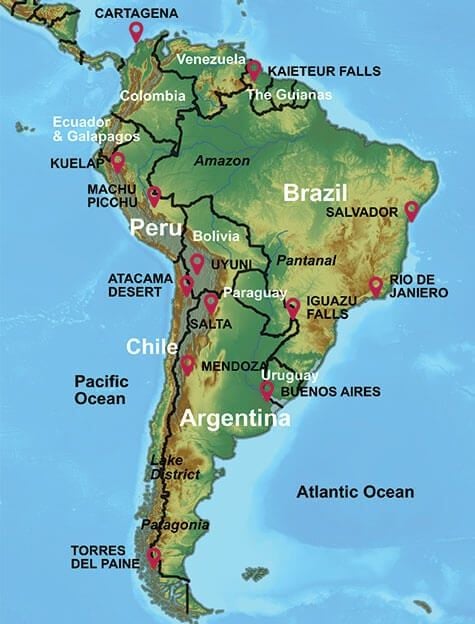
Start with these eight. Each links to its own page of tours and travel advice, with a note on what pairs well with it. Two or three of them, in a sensible order, make a full first trip. For more ideas, see our guide to the best places to visit in South America. Colombia, Uruguay, Paraguay, Venezuela and the Guianas have their own pages too.
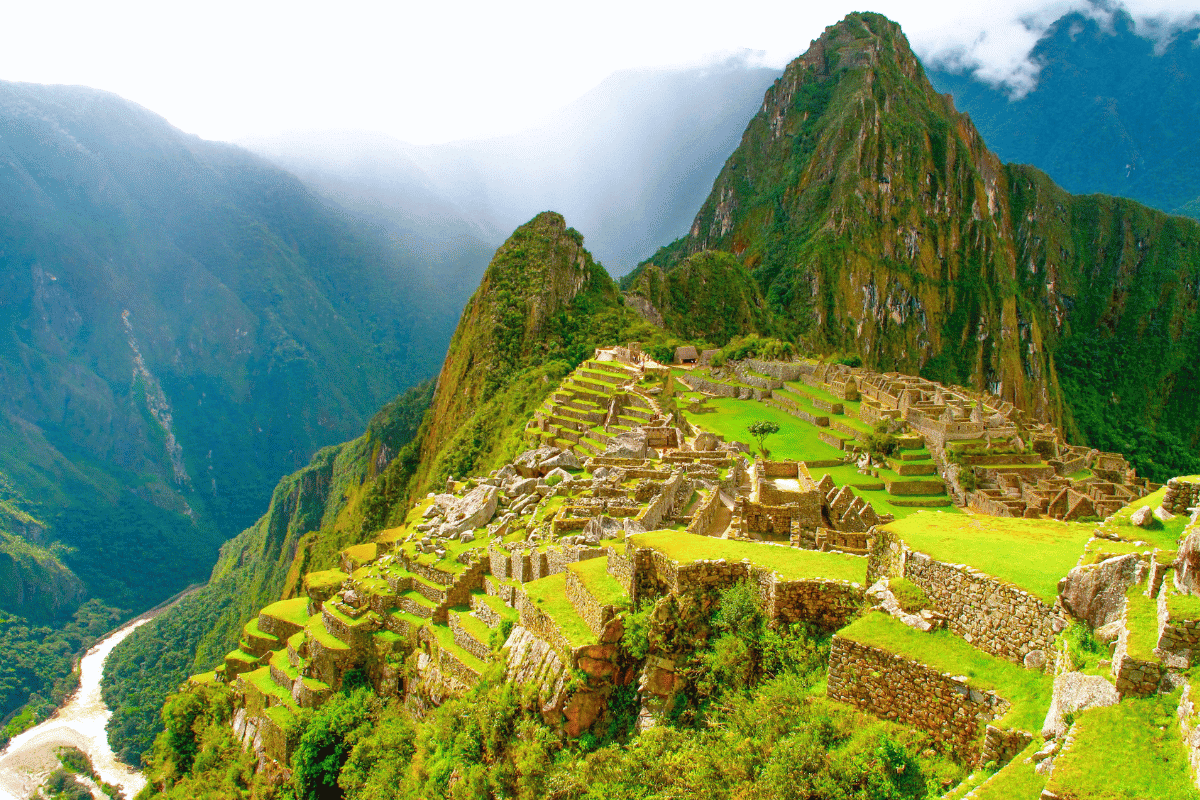
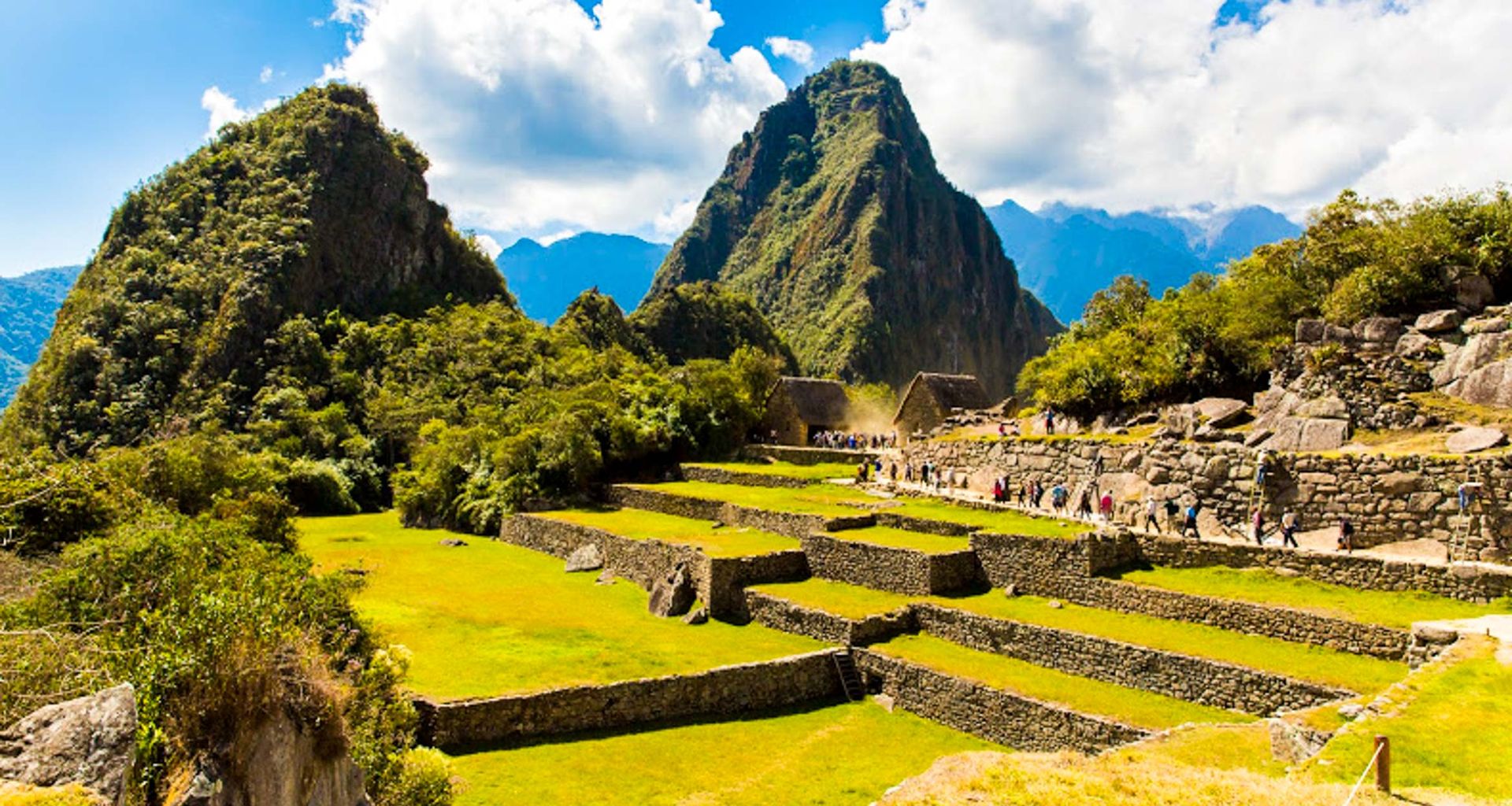
Peru, Bolivia and Ecuador share one Inca heritage, and we treat them as one destination. Juergen calls it its own cosmos: thin air, a different culture, and so much to see that it deserves a trip of its own. Machu Picchu, Cusco and the Sacred Valley anchor it, and Lima is the usual way in. Lake Titicaca leads on to Bolivia, and continental Ecuador completes it.
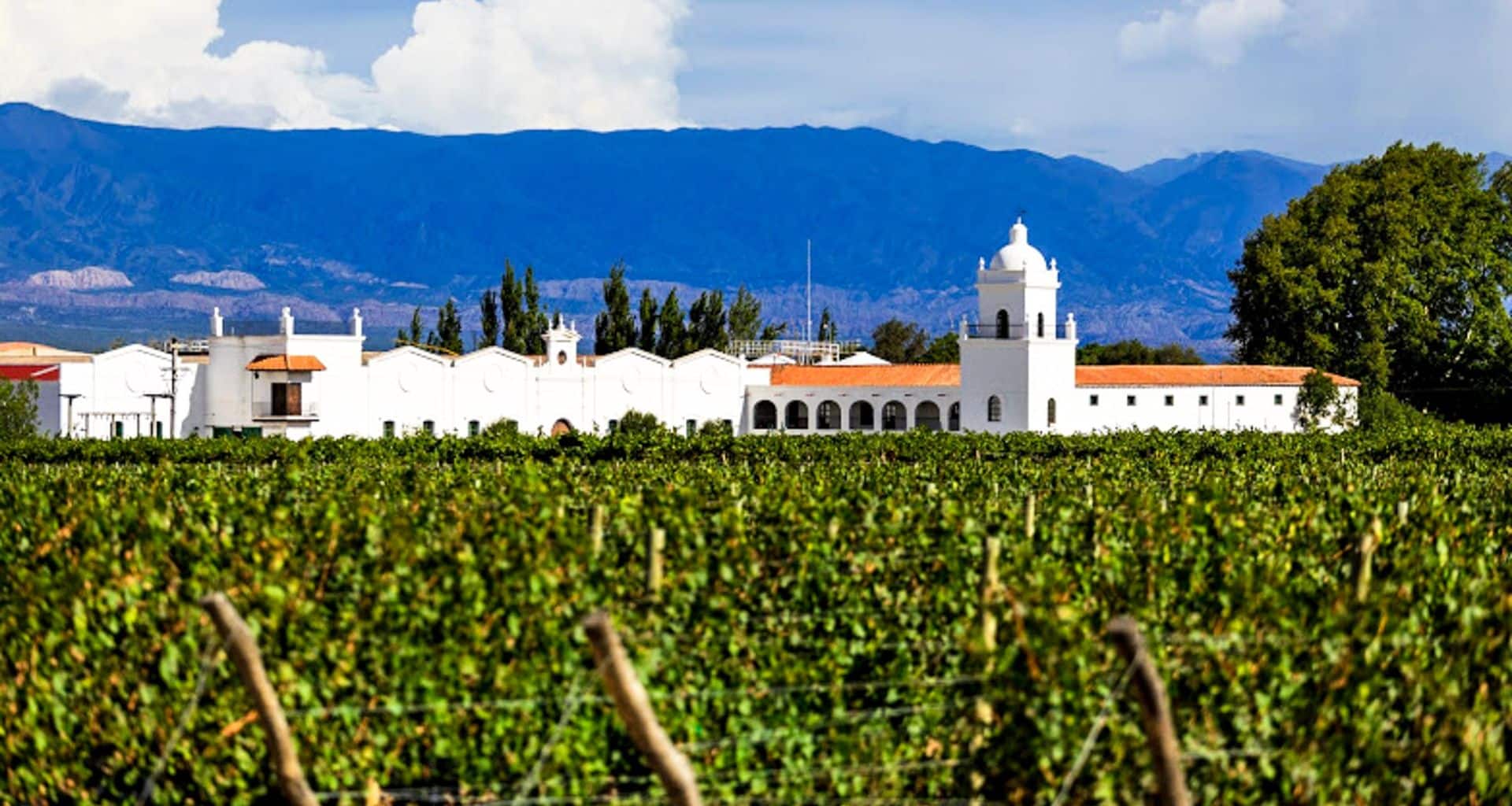
Argentina brings four very different stops: Buenos Aires, Iguazú Falls, the Mendoza wine country and the glaciers of Patagonia. Chile is the obvious partner across the Andes, Iguazú sits on the border with Brazil, and Uruguay lies across the Río de la Plata from Buenos Aires. With Chile and southern Brazil, it makes up the most European corner of the continent.
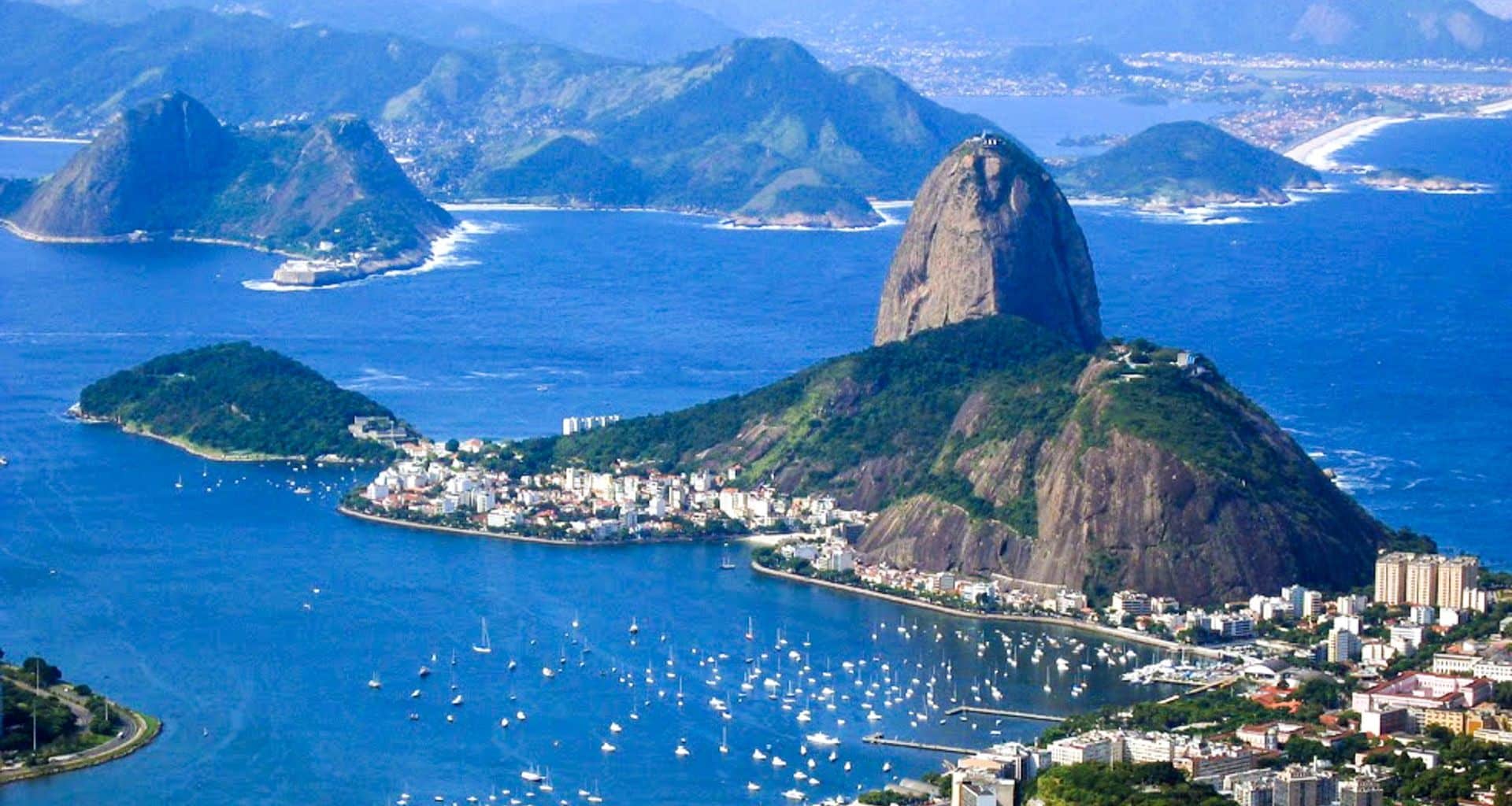
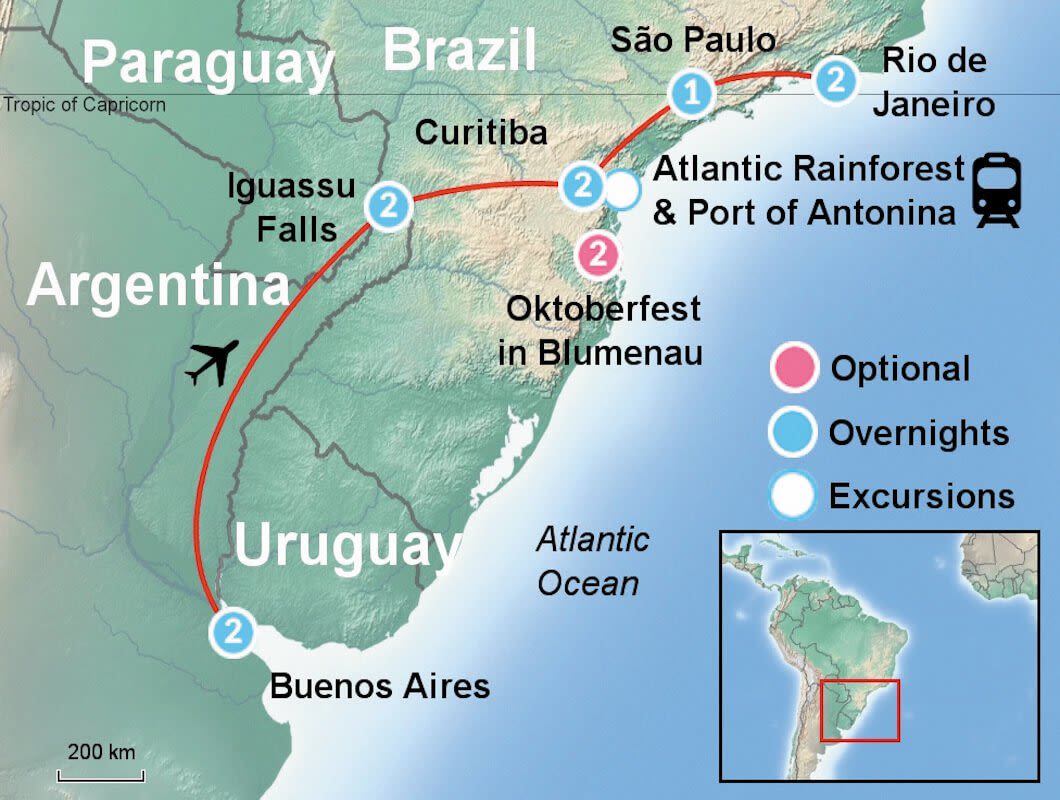
Brazil is bigger than the contiguous United States, so pick a region or two: Rio de Janeiro, the Brazilian side of Iguazú Falls, the baroque gold towns of Minas Gerais, and for wildlife the Pantanal and the Amazon. It pairs naturally with Argentina at Iguazú. Many travelers also want Machu Picchu on the same trip; we plan Peru and Brazil too, and we’re honest about the flying it takes.
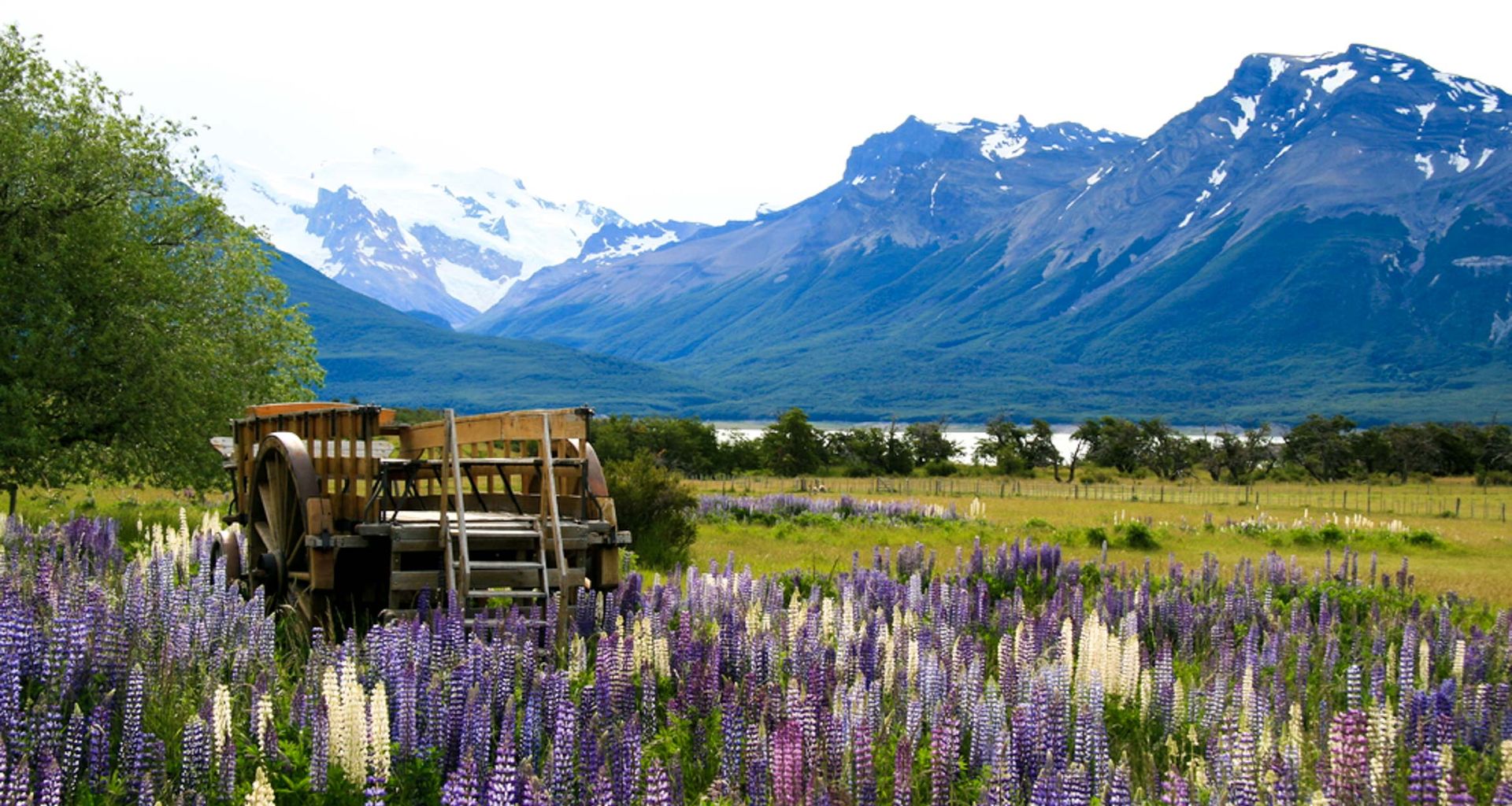
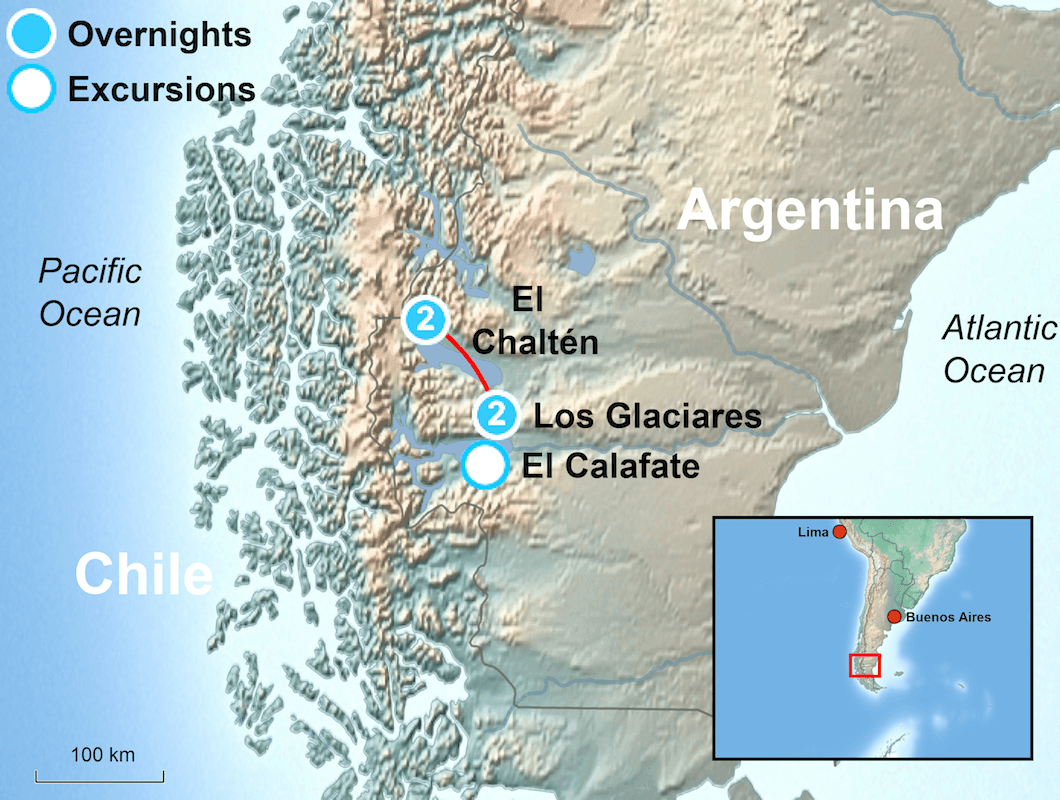
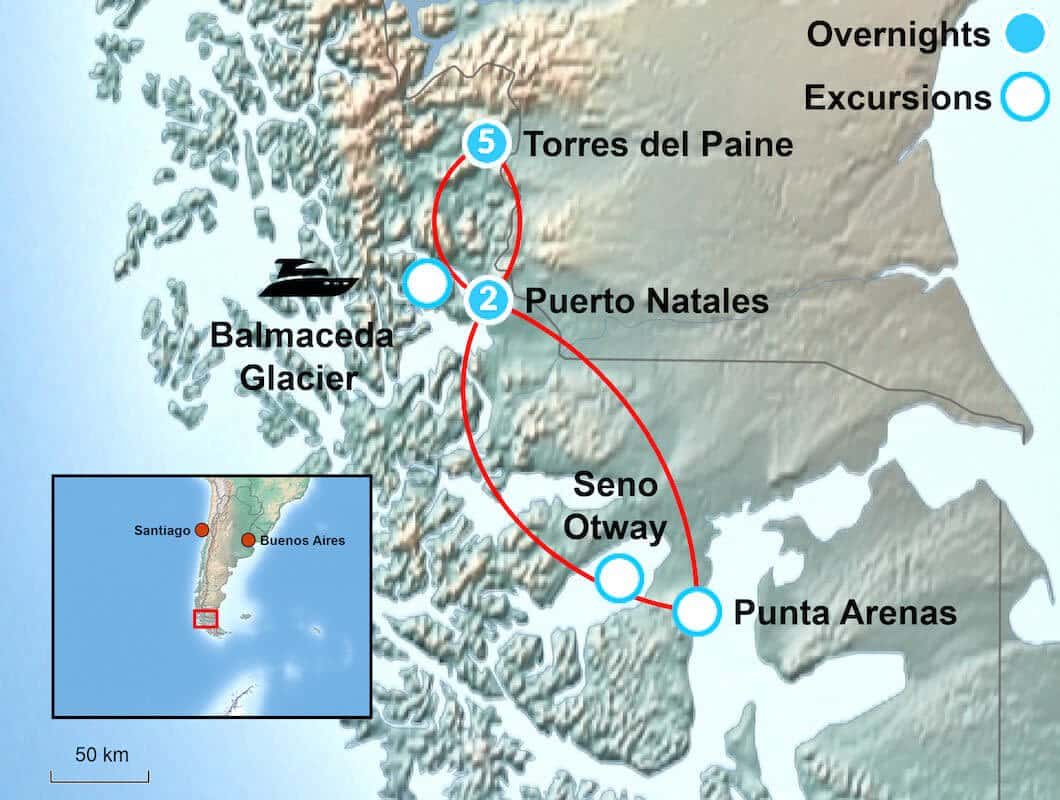
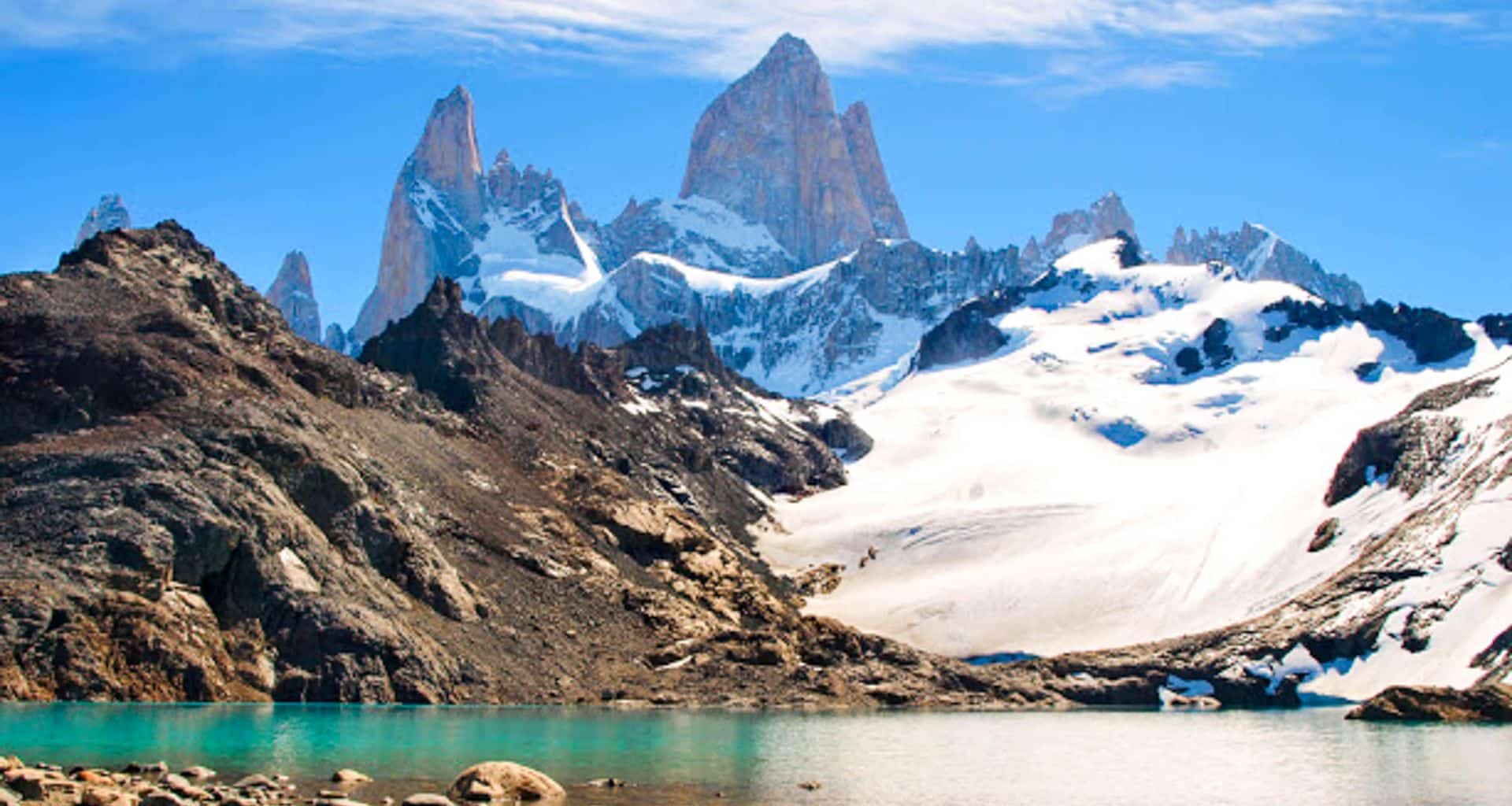
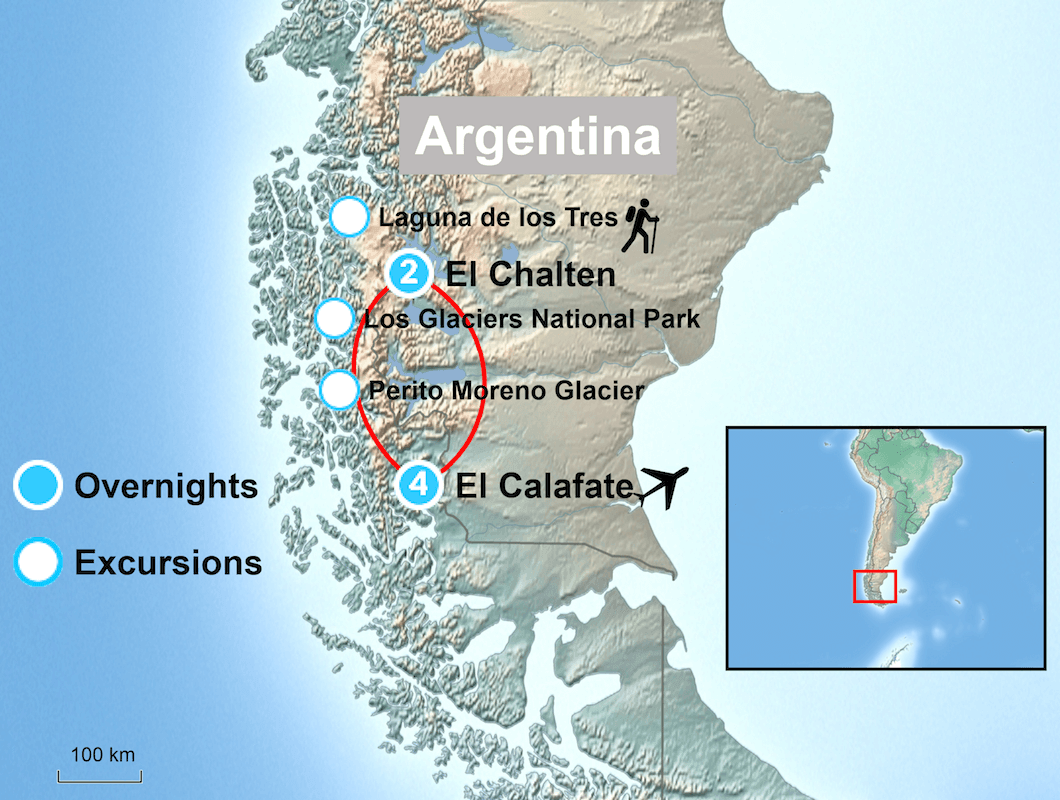
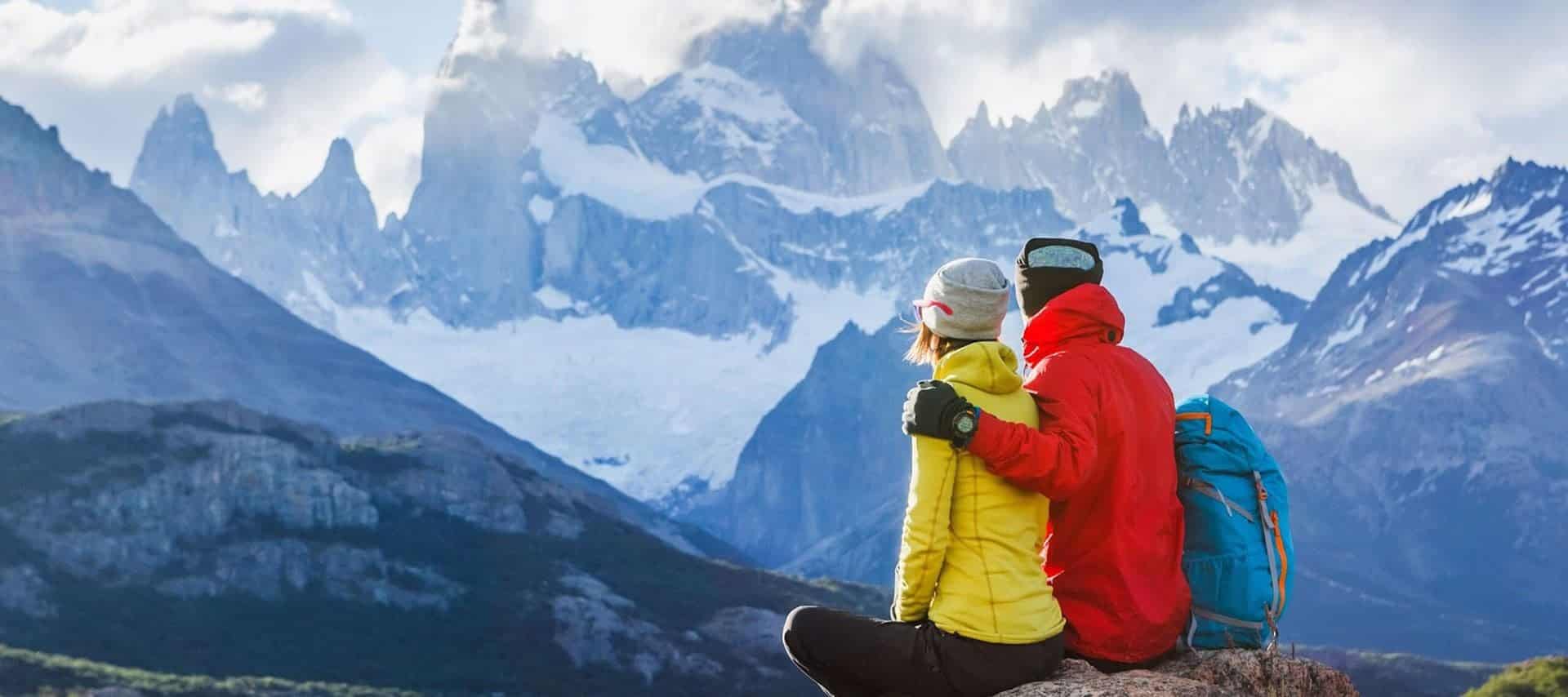
Patagonia spans southern Argentina and Chile, so one trip can take in the glaciers around El Calafate, the trails of El Chaltén and Torres del Paine, which makes it the natural meeting point of an Argentina and Chile trip. Its short season often sets the dates for the rest of the route, and it suits travelers who like it a little rough: the weather can bring four seasons in a day.
The islands belong to Ecuador and are wildlife country: giant tortoises, sea lions, marine iguanas. You see them from a small expedition boat or from hotels on the inhabited islands. They pair with mainland Ecuador, which deserves more time than most travelers give it (volcanoes, canyons, colonial Cuenca, the cloud forest), and with Peru; see Peru and Ecuador tours.
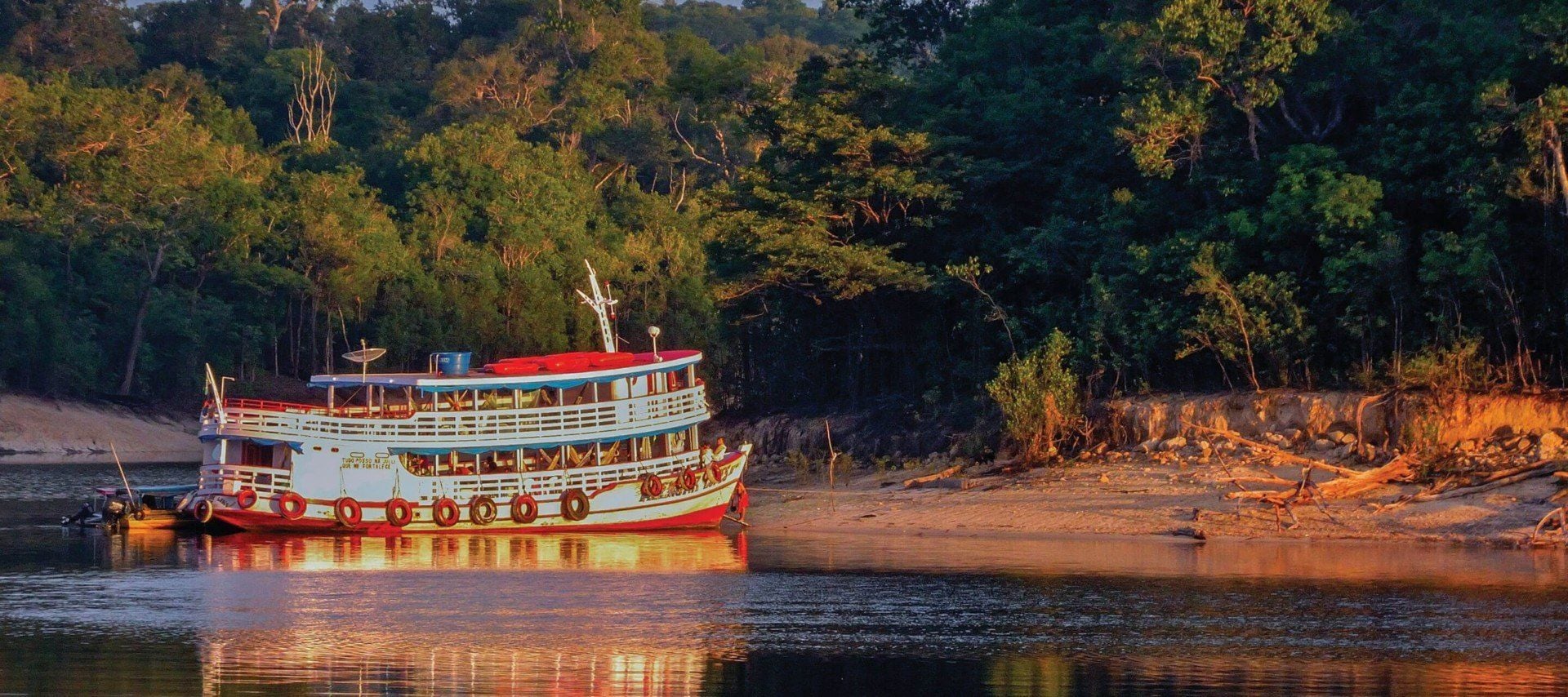
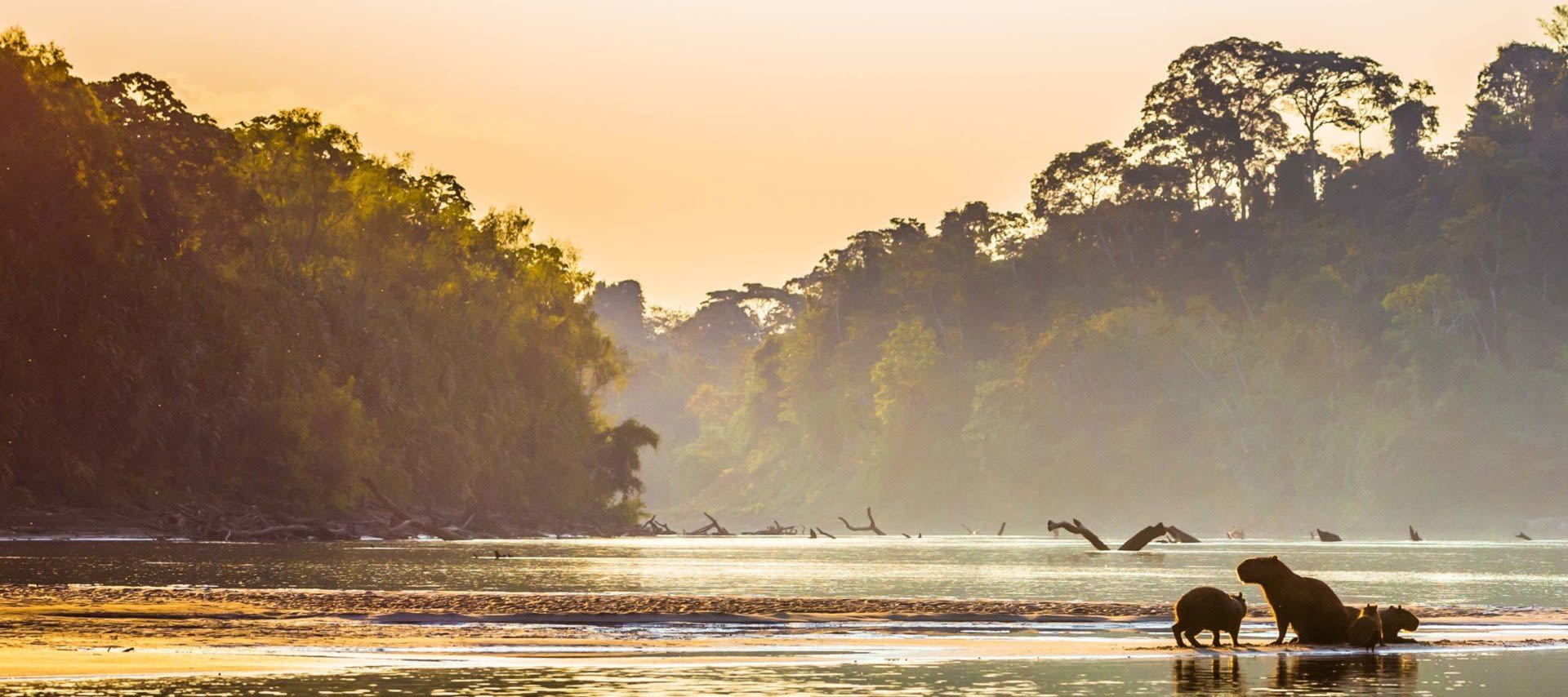
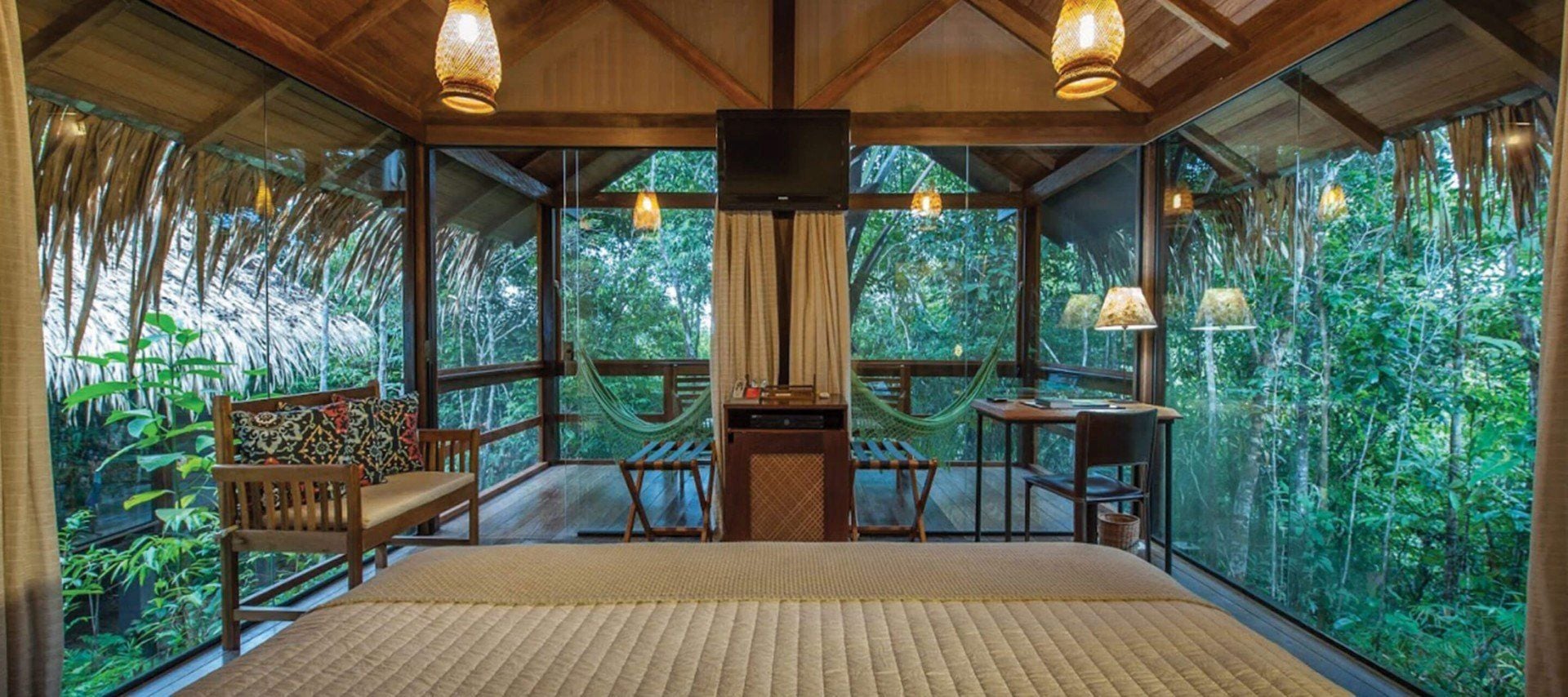
The largest rainforest on Earth is hot in every month, so its seasons are measured in water: high water for canoeing into the flooded forest, low water for jungle trails. Stays are at jungle lodges or on river cruises, reached through Peru, Brazil or Ecuador. From Cusco, the Peruvian Amazon is a short flight away (our Coast to Coast Tour goes in through Puerto Maldonado). On Brazil’s Rio Negro, where the Tucano sails, the dark, slightly acidic water keeps mosquitoes down.
More Adventure
Juergen’s favorite: a full day by boat and bus across the lakes between Puerto Varas and Bariloche. “It’s a long day, but it doesn’t feel like a long day.” Co-founder Brad Nehring likes to finish in Bariloche, which feels a little like arriving in Oz. Or pair Mendoza’s wineries with Santiago’s (Argentina and Chile tours).
One history across three countries, and enough for a trip on its own: Machu Picchu and Lake Titicaca with Bolivia, or the volcanoes and cloud forest of continental Ecuador with Peru.
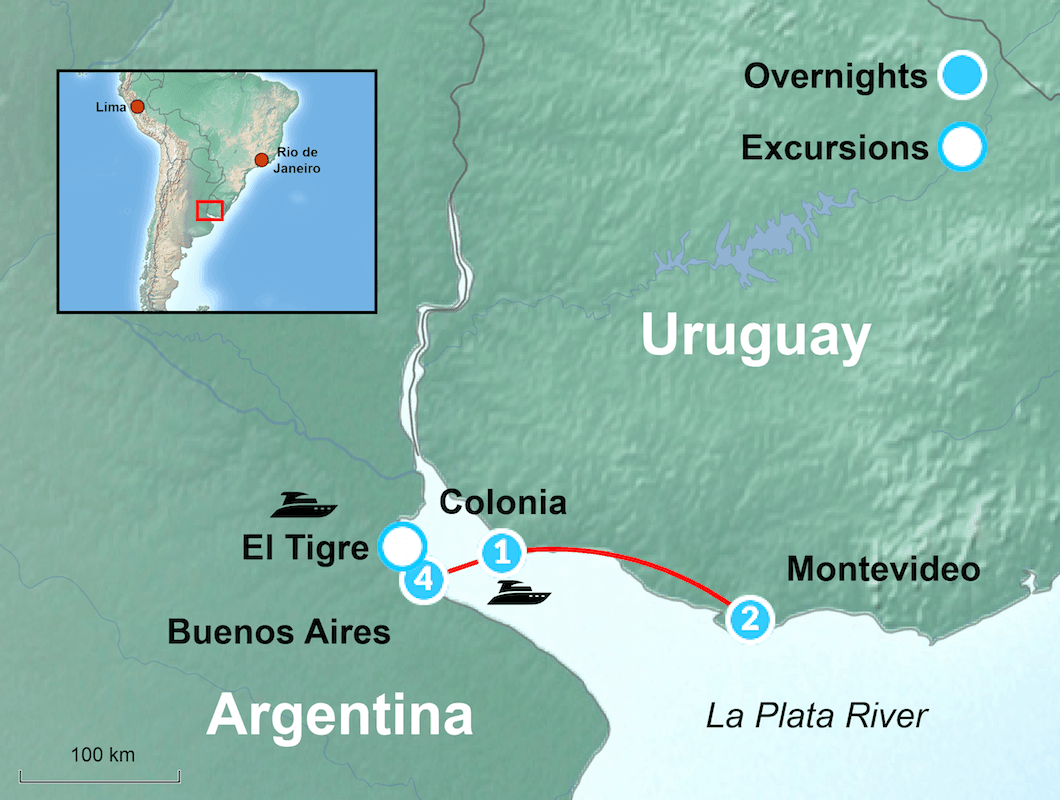
Iguazú Falls has an Argentine side and a Brazilian side; add Buenos Aires and Rio for Argentina and Brazil, or Colonia and Montevideo for Argentina and Uruguay.
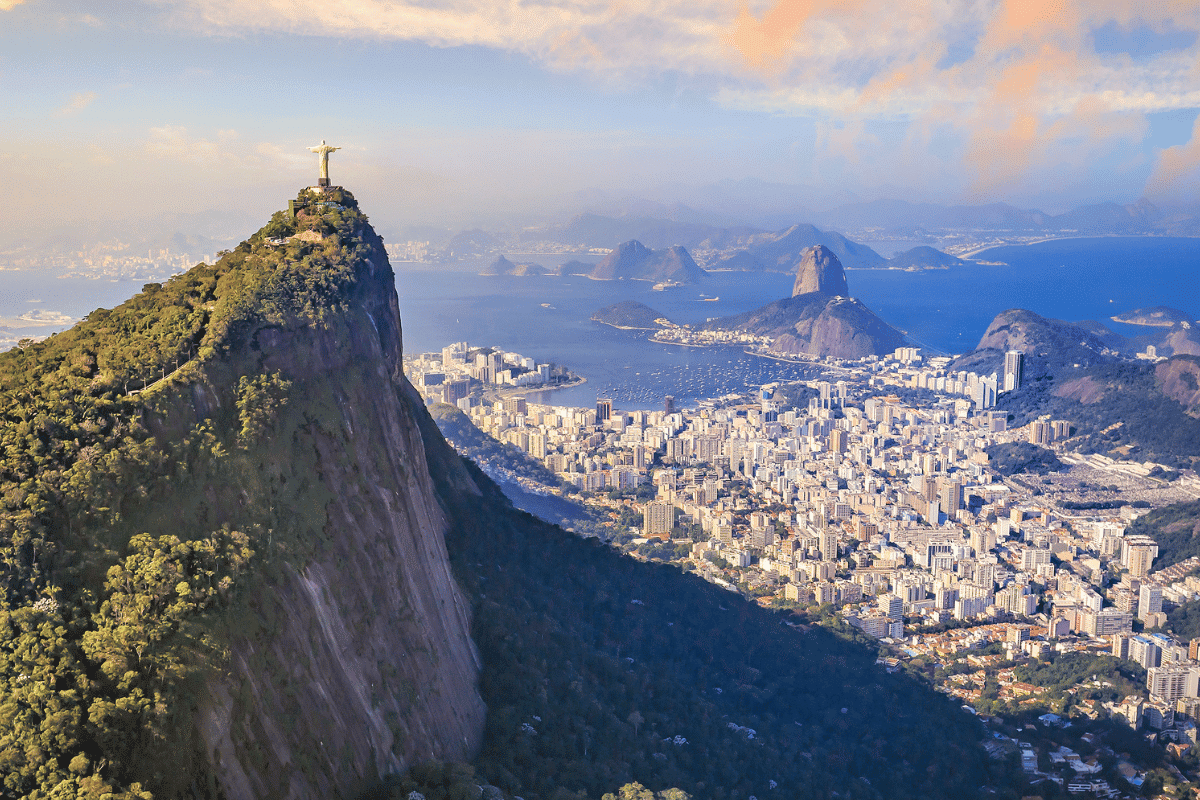
Two of the New Seven Wonders of the World, Machu Picchu and Rio’s Christ the Redeemer, and Iguazú Falls, one of the New Seven Wonders of Nature, in one trip: World Wonders of South America. Many travelers ask for it, so we plan it, along with Peru and Brazil and Chile and Peru. Expect long flights: Rio to Lima is about as far as New York to Los Angeles.
Uyuni’s salt flats and the Atacama face each other across the border, with the Red and Green Lagoons between (Bolivia and Chile tours). For longer routes, see all multi-country tours or plan around UNESCO World Heritage sites.
Planning a trip to South America? Our travel info covers the practical side: visas, safety, weather, money, flights and health.
Short answers to the questions that come up before booking a South America trip.
The best company for your trip is one that asks why you want to see what’s on your list, plans South America in depth, and can explain why your route goes in the order it does. Before you book, ask whether the itinerary is a tailor-made plan or a fixed group departure, who looks after you on the ground, how internal flights and border crossings are handled, and what past travelers say. Our traveler reviews are one place to check us against that list.
The best tours to South America build around one or two famous sights and the region around each, rather than racing between airports. Pairings that work well: Machu Picchu with Lake Titicaca, Iguazú Falls with Buenos Aires or Rio, Patagonia’s glaciers with its trails. The five tours above are good starting points.
The best package tours for South America keep a well-planned route but let you change it. Fixed group departures suit travelers who want company and a set schedule. Every tour on this page is tailor-made, a starting point we reshape around you. See how a custom South America tour works.
For a trip across several regions, April and October, with the month either side. No month rules out the whole continent, but some regions have a weak one: Patagonia in July (short days, closed lodges, strong wind) and Colombia’s Caribbean coast in January and February (wind). South America has no monsoon, and even in the wetter months it rarely rains all day. See our best time to visit South America guide.
Four things drive the cost: how many internal flights the route needs, the hotel level, the length of the trip and the season. Flights between regions add up on a continent this size. Prices peak in the weeks after Christmas, at New Year’s in Rio and during Semana Santa, the week before Easter, when South Americans travel too; Christmas itself is often good value. The tour cards above show a “From” price where one is published; for your own dates, request a free itinerary with the form above.
Most of our multi-country sample itineraries take 9 to 17 nights and cover two or three countries. Short add-ons, like 2 nights at Uyuni and the Atacama, fit onto a longer route, and Highlights of South America takes 49 nights to cover the continent’s best-known sights.
The best guided tours put a local guide where local knowledge matters: Machu Picchu and the Sacred Valley, the Iguazú trails, a first walk through Buenos Aires or Rio. On a tailor-made trip, a local guide in each destination usually handles your transfers and sightseeing, apart from shared outings such as a jeep tour in Rio, rather than one tour leader and one group for the whole journey. See our history and culture tours.
A tailor-made specialist can, because a luxury trip here depends on the details: the right hotel at each stop, remote lodges and spas, and connections that work. Most of our sample tours are priced at several hotel levels, up to five-star on many, and the South America Deluxe Tour covers the highlights over 25 nights.
Small ships suit the Galápagos, where expedition boats move between the islands, and the Amazon, by river cruise. In Patagonia, smaller expedition ships sail the fjords and around Cape Horn, and further south, expedition ships sail to Antarctica between November and March. See our South America cruises, the Galápagos and the Amazon.
The official answer comes from the US State Department, which publishes a current travel advisory for each South American country. Levels differ between countries and sometimes between regions of the same country, so check the advisory for every country on your route before you book and again before you fly. US citizens can also enroll in the State Department’s free Smart Traveler Enrollment Program (STEP). Our South America safety guide covers everyday precautions.
For some routes, yes. The CDC lists recommended vaccines for each country, and some areas, including parts of the Amazon, call for a yellow fever vaccination or malaria precautions. See a travel doctor or clinic well before you leave, and read our staying healthy in South America page.
Thinking of traveling to South America? We take your South American travel dream and make it a reality. Every fully custom South America trip is planned by your own expert personal Travel Consultant.
"*" indicates required fields
Our favorite South America tour ideas featuring the best destinations & activities designed to inspire…
Get your FREE South America Guide Now!