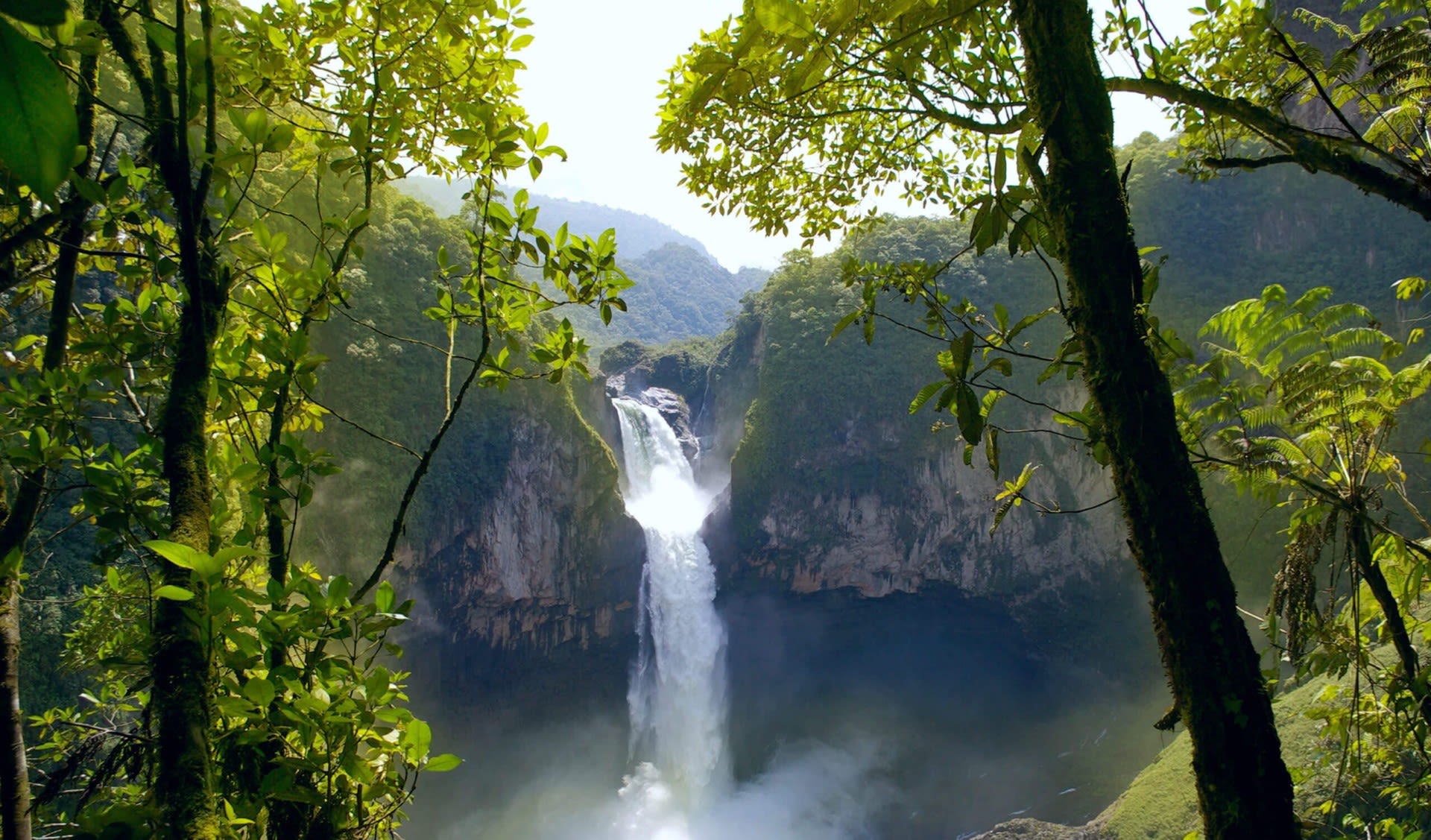
Tiny but astonishingly diverse, Ecuador squeezes four worlds into one compact country: the wildlife wonderland of the Galápagos, the Amazon rainforest, the volcano-lined Andes, and a Pacific coast — all within a short flight of each other. Below are the 8 experiences and 5 sights our team rates highest after 30+ years of planning Ecuador tours, from colonial Quito to Cotopaxi and the Otavalo market.
Because everything is so close together, Ecuador delivers more variety per day than almost anywhere in South America — the perfect country for travelers who want it all without long transfers.
Updated for the 2026-2027 Ecuador travel season.
If you are unsure on where to visit in South America, I recommend you choose Ecuador! The reason is that it is a small country yet very varied, with plenty of things to do. I definitely suggest visiting the Mindo cloudforest, especially if you like birdwatching - it is just a short drive from Quito. I’d also try to visit at least one of the smaller markets in the country. Otavalo is great, but it is very popular with tourists, so pick one of the many others in small towns and villages for a really authentic experience.
-Thomas Manchester
Ecuador Travel Expert

Ecuador's crown jewel and one of the world's great wildlife destinations: giant tortoises, marine iguanas, blue-footed boobies, and sea lions so unafraid you can snorkel alongside them. Explored by small-ship cruise or island-hopping, the Galápagos are the trip of a lifetime. Browse our Galápagos cruises.

Ecuador's high-Andean capital has one of the best-preserved and largest colonial centers in the Americas — a UNESCO World Heritage maze of gilded churches, plazas, and balconied streets, with the Pichincha volcano rising behind. Ride the TelefériQo cable car for sweeping views. See Quito tours.

Ecuador's slice of the Amazon — the Oriente — is among the most biodiverse on Earth. Stay at a jungle lodge in Yasuní or the Cuyabeno reserve, canoe past caimans and pink dolphins, visit clay licks alive with parrots, and spend time with indigenous Kichwa communities.

South of Quito, the Pan-American Highway runs between a corridor of snow-capped giants — including near-perfect Cotopaxi, one of the world's highest active volcanoes. Hike its flanks, mountain bike the slopes, or ride horses across the páramo, all within easy reach of the capital.

Ecuador's scenic railways climb through dramatic Andean landscapes, most famously the switchbacks of the Devil's Nose (Nariz del Diablo), descending a near-vertical rock face. A relaxed, spectacular way to take in the highlands. See our Ecuador train tours.

Ecuador's loveliest colonial city, UNESCO-listed Cuenca charms with red-tiled roofs, blue-domed cathedrals, and riverside walks — plus it's the real home of the misnamed "Panama" hat. A relaxed, cultured stop in the southern highlands. Explore Cuenca tours.
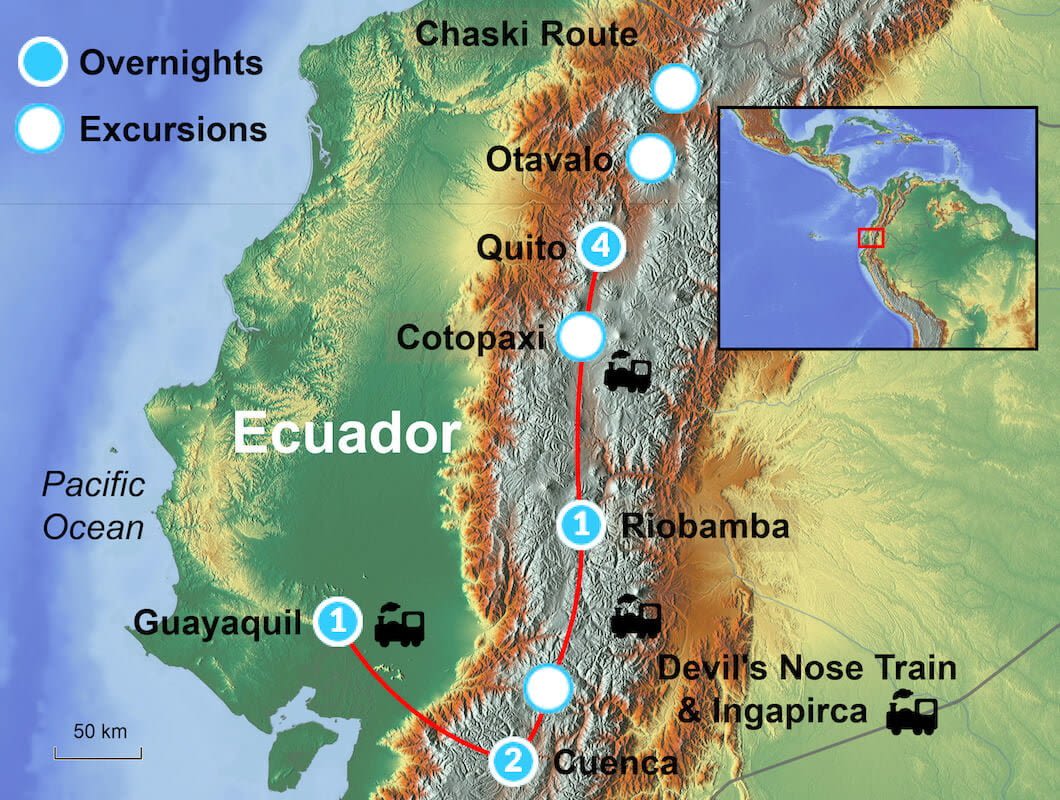
North of Quito, Otavalo hosts one of South America's largest and most famous indigenous markets — a riot of handwoven textiles, ponchos, and crafts sold by the Otavaleño people in traditional dress. The surrounding valley of lakes and volcanoes makes a beautiful day out.

Just a couple of hours from Quito, Mindo's misty cloud forest is a birdwatcher's paradise — hundreds of species including jewel-like hummingbirds and the cock-of-the-rock — plus waterfalls, zip-lines, and chocolate farms. A lush, easy escape from the highlands.
From the equator itself to the giant tortoises of the Galápagos, these are the icons that define an Ecuador trip.
The Galápagos' most famous residents — giant tortoises that can live over 100 years — gave the islands their name. See them in the wild in the Santa Cruz highlands or at the Charles Darwin Research Station.

Just outside Quito, the "Middle of the World" monument marks the equatorial line — the very feature that gives Ecuador its name. Straddle both hemispheres at once at this quirky, fun landmark.

Quito's most dazzling church, its baroque interior smothered in gold leaf — one of the finest examples of Spanish colonial Baroque in the Americas and the jewel of the old town.

Guayaquil's revitalized riverfront promenade along the Guayas River — gardens, monuments, and the colorful Las Peñas district climbing the hill behind, the gateway city for many Galápagos flights.

The seat of Ecuador's government on Quito's Plaza Grande, with a ceremonial changing of the guard on Mondays — a grand focal point of the colonial capital.

Ecuador’s great advantage is its compactness — Quito is the main hub, with short domestic flights to the Galápagos (via Guayaquil), the Amazon, and Cuenca, and the Andean highlights lie within a few hours’ drive of the capital. This is what lets a single trip combine islands, jungle, and mountains without long transfers. The Galápagos require a flight from the mainland and a national park entry fee. We arrange the flights, permits, and connections. See our Ecuador adventure tours.
Ecuadorian cuisine varies by altitude: hearty locro potato soup and roast cuy in the highlands, fresh ceviche and encebollado on the coast, and exotic fruits and river fish in the Amazon. Ecuador is also a source of world-class cacao, so the chocolate is exceptional.
The main tourist areas — the Galápagos, Quito’s historic center, the Andean highlands, and the Amazon lodges — are welcoming and well set up for visitors. As in any country, use ordinary city sense in Quito and Guayaquil, and check current guidance for certain coastal and border areas. Traveling with a local operator, as we arrange, keeps you on the well-trodden, rewarding routes. See our Ecuador safety guide.
The best time to visit Ecuador is generally the drier highland season of June to September, though the equatorial climate makes it a year-round destination that varies more by region than by season. The Galápagos are rewarding all year — the warm season (December–May) brings calmer seas and clearer water; the cool season (June–November) brings more active wildlife.
Ecuador is known above all for the Galápagos Islands, along with the equator it’s named for, colonial Quito, the Avenue of the Volcanoes, its Amazon rainforest, and Otavalo’s markets — an extraordinary amount of variety in one small country. For a closer look, see our guide to what Ecuador is famous for.
Plan 4–5 days for the mainland highlights — Quito, the Avenue of the Volcanoes, and Otavalo — and add 4–5 more for a Galápagos cruise, the single most popular reason to visit. With two weeks you can combine Andes, Amazon, and islands. Our planners tailor the mix to your interests.
Yes, and most travelers do. Flights to the Galápagos leave from Quito and Guayaquil, so it's natural to spend a few days in the Andes or Amazon before or after the islands. A classic trip pairs colonial Quito and the volcanoes with a 4–5 day Galápagos cruise.
Mainland Ecuador is affordable, but the Galápagos are the premium element — small-ship cruises and the national park fees make them a significant investment, and they drive most of the budget. Our tailored Ecuador trips that include a Galápagos cruise generally start around $2,400 per person and rise steeply with the ship class and cruise length; mainland-only trips cost considerably less. Ask us for a quote built around your plans.
A small-ship cruise is the classic choice — it reaches the more remote islands and maximizes wildlife time, sailing between sites overnight. Island-hopping with land-based hotels is a lower-cost, more flexible alternative that focuses on the inhabited islands. We'll match the option to your budget and sea-legs. Browse our Galápagos cruises.
The Galápagos, the Andean highlands, the Amazon lodges, and Quito's tourist core are welcoming and well set up for visitors. Use ordinary city sense in Quito and Guayaquil, and check current guidance for some coastal and border areas. Traveling with a local operator keeps you on the well-trodden routes. See our Ecuador safety guide.

Our favorite Ecuador tour ideas featuring the best destinations & activities designed to inspire…
Get your FREE Ecuador Guide Now!

