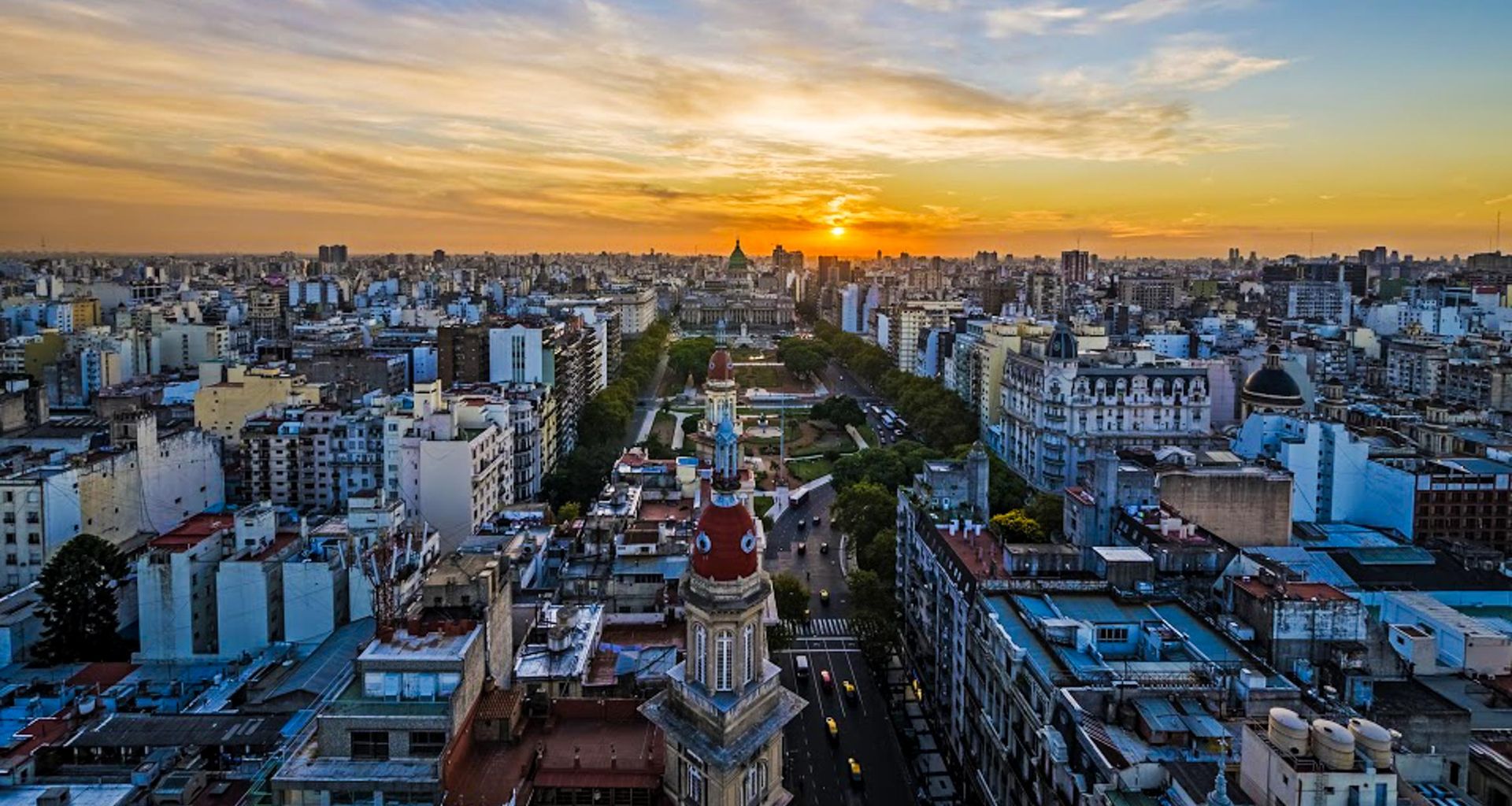
Argentina and Brazil tours turn on one place: Iguazú Falls, where the two countries meet and you cross from one to the other. On the Argentine side of the route is Buenos Aires, with its tango, its cafés and its European architecture. On the Brazilian side is Rio de Janeiro, with its beaches and mountain viewpoints, and between the falls and Rio lies the Atlantic Rainforest. Spanish on one side of the falls, Portuguese on the other.
Our Argentina and Brazil tour packages are starting points. We change the order, the pace and the hotels to fit you, or you can put together your own customized tour. If you are still weighing this pair against other countries, our South America tours show the wider map.
Argentina and Brazil Tour Packages
The trips below cover Argentina, Brazil or both. Any of them can be re-routed to make the crossing at Iguazú.
Click or Tap your preferences: Destinations & Activities. Be as specific or general as you like – or click Help Me Decide! We’ll spice it with hidden gems & personal tips to create your perfect trip. Need assistance? Contact an expert at +1 (888) 900-5060
Five Ways to Combine Argentina and Brazil
Tango, Samba & Waterfalls
The classic line at its shortest full length. After the falls it stays on the ground in Brazil: overland to Curitiba, the train through the Serra do Mar, a night in São Paulo, then a flight to Rio.
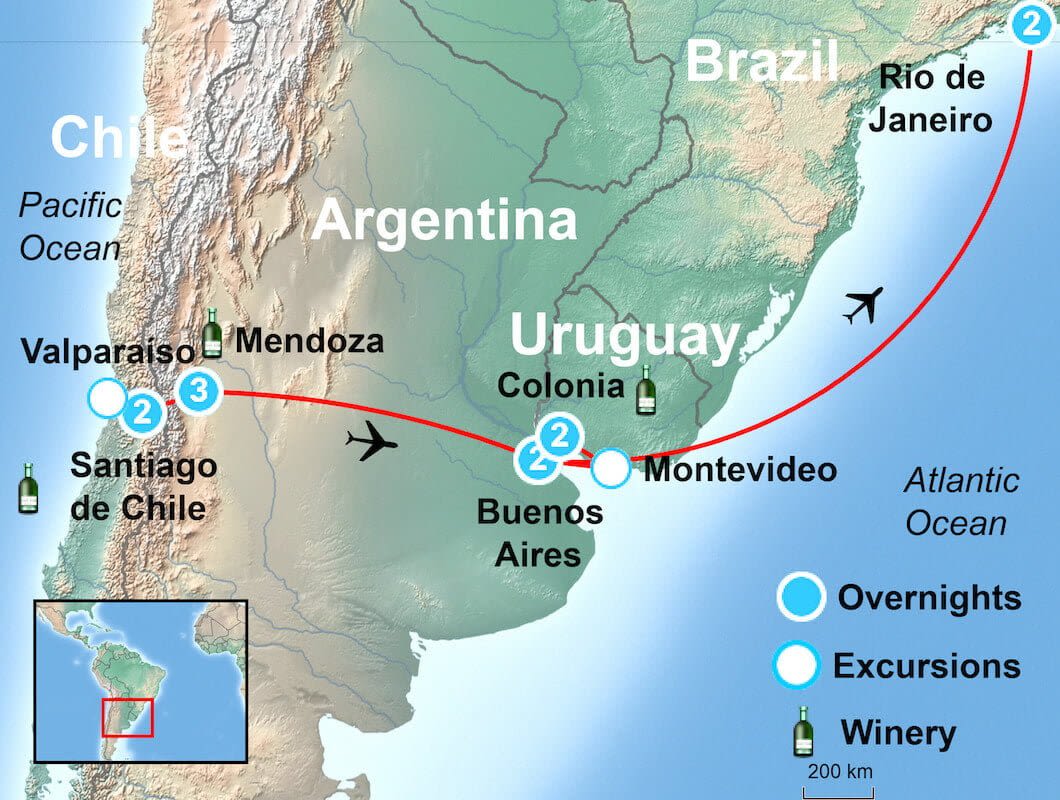
Uruguay as a side trip: from Buenos Aires you take the ferry over to Montevideo and Colonia and come back, then fly to the falls and on from Foz do Iguaçu to Rio. One show in each country, tango, candombe and samba, gives the trip its name.
Chile comes into it: Santiago, Valparaíso and Puerto Varas, then two days across the Andes lakes into Bariloche before Buenos Aires, the falls and Rio. That lakes crossing is one Juergen picks as a personal favorite.
The golf version, and the longest: four rounds around Buenos Aires, two in Rio, then north along the Brazilian coast to Praia do Forte, Comandatuba and Terravista. It starts in Buenos Aires and keeps going past Rio.
Southern Highlights: Uruguay, Buenos Aires & Brazil Tour
Uruguay as the opening act instead of a detour: Montevideo, a day at Punta del Este, Colonia, then the ferry to Buenos Aires, the falls and Rio, in one direction the whole way without doubling back.
Use the border. You fly into one country, cross at the falls, and fly home from the other. Nobody has to go back to Buenos Aires to catch the flight out. Juergen Keller, our co-founder, puts it this way: “Think international! … Things are much easier than flying in AND out of Buenos Aires.” On the Brazilian side he is just as plain: “Rio you can always include in the trip, Iguazu is ideal for combinations with Argentina.”
Two nights at the falls covers both sides. Our Iguazú Falls tours page has the rest.
Which end do you start from? That one is your call. All five trips above run from Buenos Aires to Rio. Juergen likes the reverse: “start in Rio de Janeiro, cross into Argentina via the Iguazu Falls and then head South.” Both work. What else you want to see decides it: more of Argentina to the south, or more of Brazil to the north.
How Many Days for Argentina and Brazil
Ten days covers the core: Buenos Aires, both sides of the falls and Rio, as Tango, Samba & Waterfalls shows. Eleven to fourteen days adds a third stop, Uruguay across the river or the Chilean lakes into Bariloche. The trips above show the range: ten days for the core, eleven with Uruguay, fourteen with Chile or a longer Uruguay stay. Three weeks gets you down to Patagonia as well.
Why not a week? Juergen again: “South-America is big. Brazil alone is bigger than the [contiguous] US. Do not plan a very tight schedule!”
For a third country, look south. Juergen calls this corner of the continent “the European South”: “the south of Brazil, Argentina and Chile belong together as one destination.” Chile fits, and our Argentina and Chile tours show how. Peru is a different trip; the FAQ below explains why.
Weather on an Argentina and Brazil Trip
Rain is the wrong worry. South America has no monsoon. Rio’s rainy season is its summer: hot, humid, and the sky murkier. Carnival falls in it, and Juergen’s answer to that is short: “Yes, it rains, but it doesn’t rain the whole day.”
The southern winter is the surprise. Brad Nehring, our other co-founder, likes Rio in July, when it tends to be drier: “You usually have blue sky.”
If the trip carries on south, July works against you. Patagonia’s days are short then and many lodges close. Juergen’s warning is about the air, not the thermometer: “It’s not the cold, but it’s the wind. It blows you off your heels.”
So plan the weather by place, not by country. Our guide to the best time to visit Brazil has more on Rio and the coast.
Where an Argentina and Brazil Trip Goes
Listed north to south, in Juergen’s order. The trips above run the same line the other way, and each stop below fits either direction.
1.
Rio de Janeiro
Sugarloaf and Corcovado for the views, the Tijuca forest inside the city, a samba night, and the beaches in between. The trips above give Rio three to five days. If you want a slow day on this route, put it here: the beach is part of the city.
Brazil’s coastal forest, linked to the falls overland. Curitiba is the base. From there you go down to Morretes and the historic port of Antonina, and the railway through the Serra do Mar carries you through the forest itself. It takes about two days and turns part of the Brazilian leg into a land route.
Two sides of one border, and the trip wants both. Sleep on one side, give a day to the other, and keep your passport in your pocket for the crossing. How to split the time between the sides is on the falls’ own page; read it before you choose your nights.
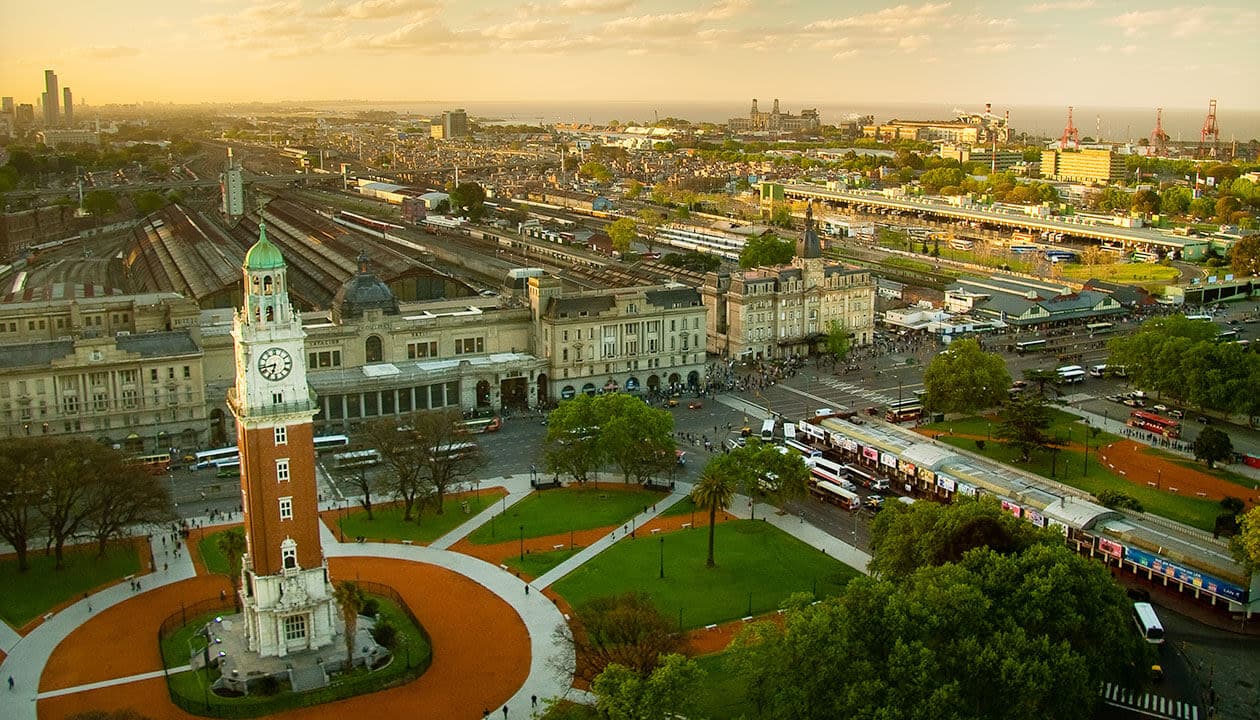
Two or three days on the trips above: San Telmo and La Boca, Recoleta and Palermo, a tango show over dinner, and the Tigre delta on the edge of the city if you have a morning to spare. A domestic flight links it with Puerto Iguazú, so the city and the falls sit easily side by side.
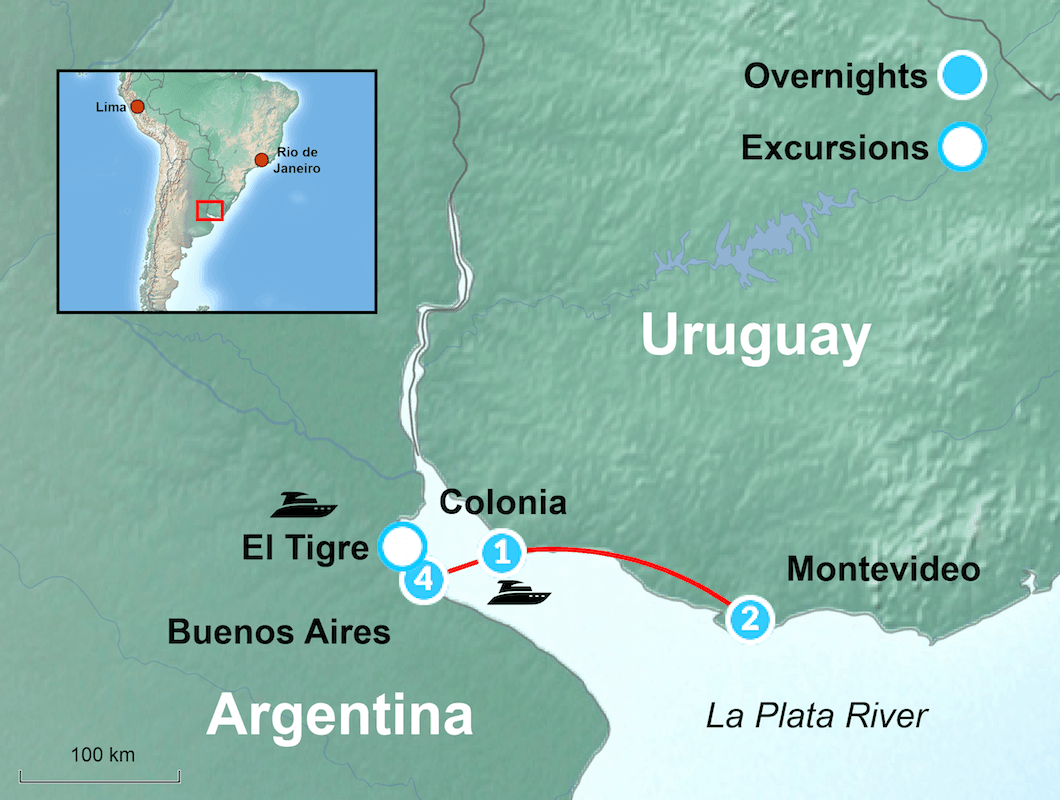
A ferry across the Río de la Plata from Buenos Aires puts Uruguay on the trip without another flight. Colonia del Sacramento, the old town on the river, is the near shore; Montevideo, the capital, sits further along the coast. Two days works as a side trip. Give it longer if Uruguay is a stop in its own right.
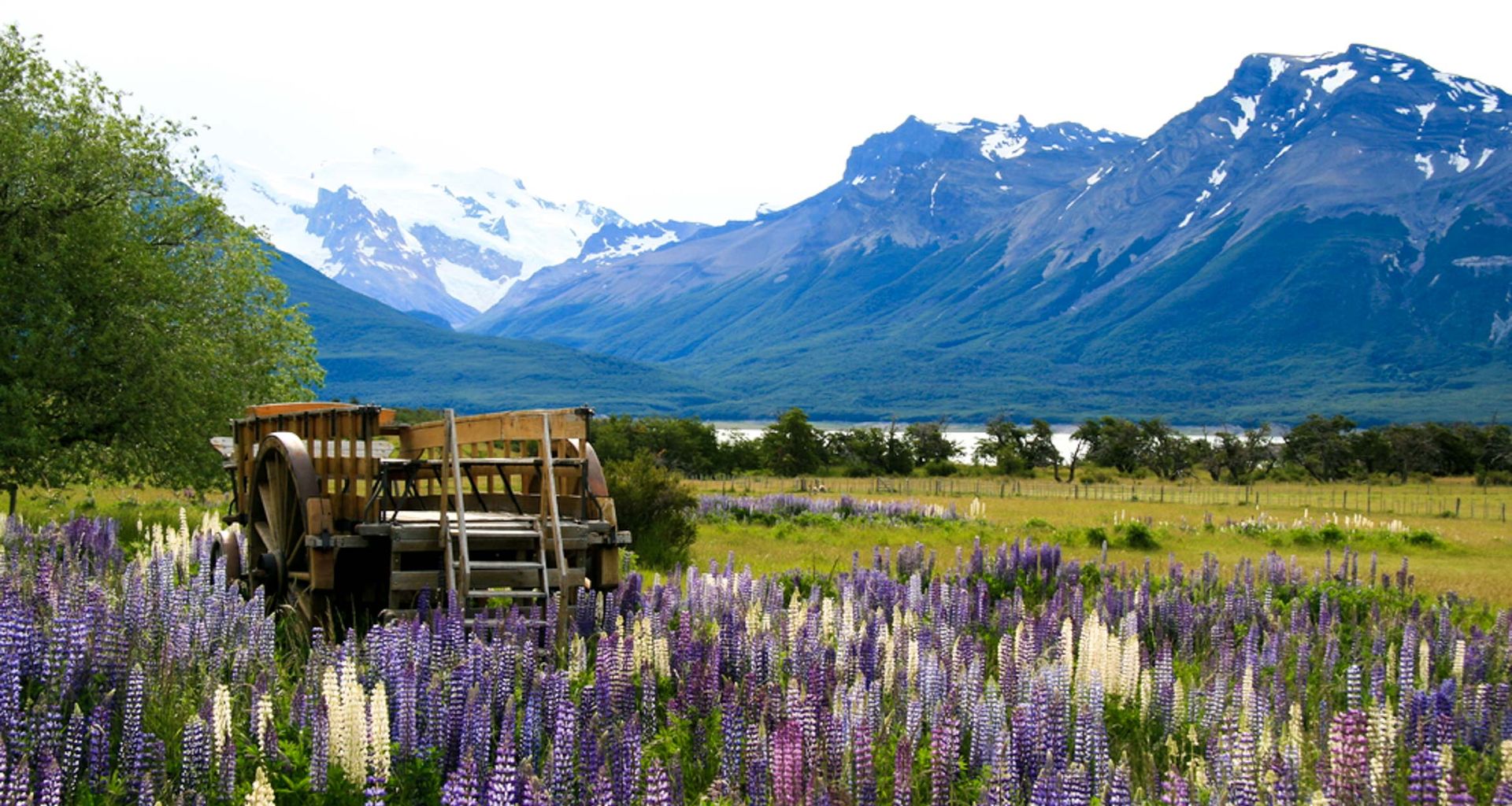
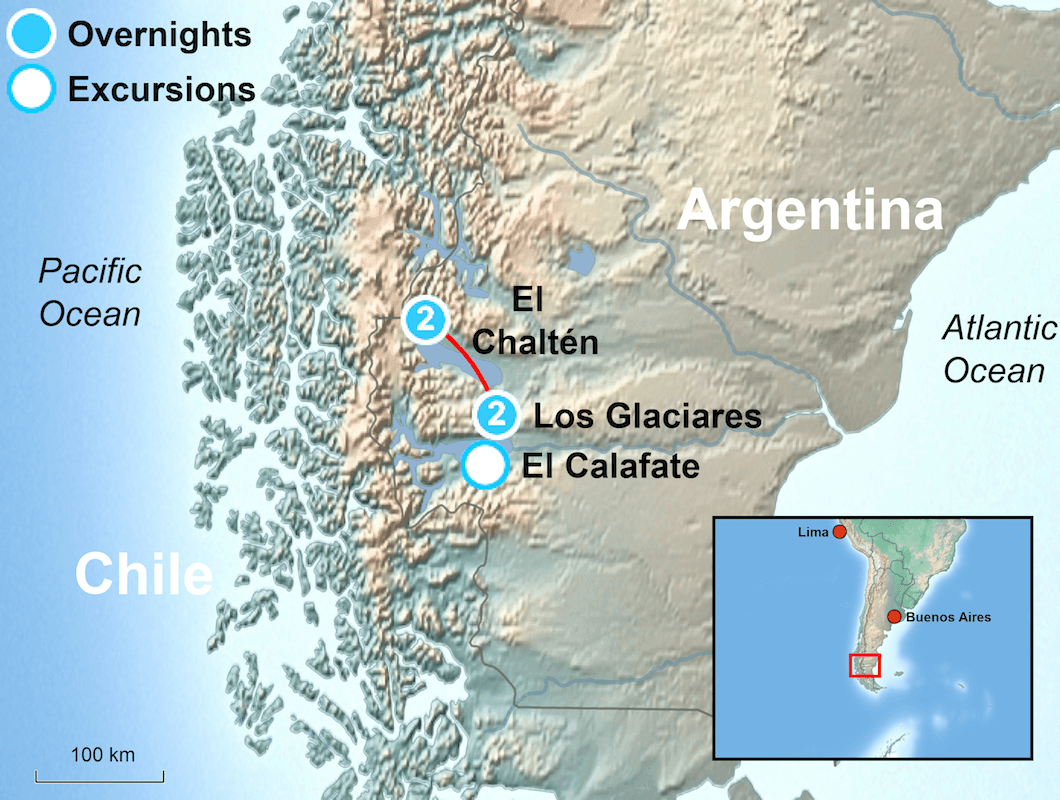
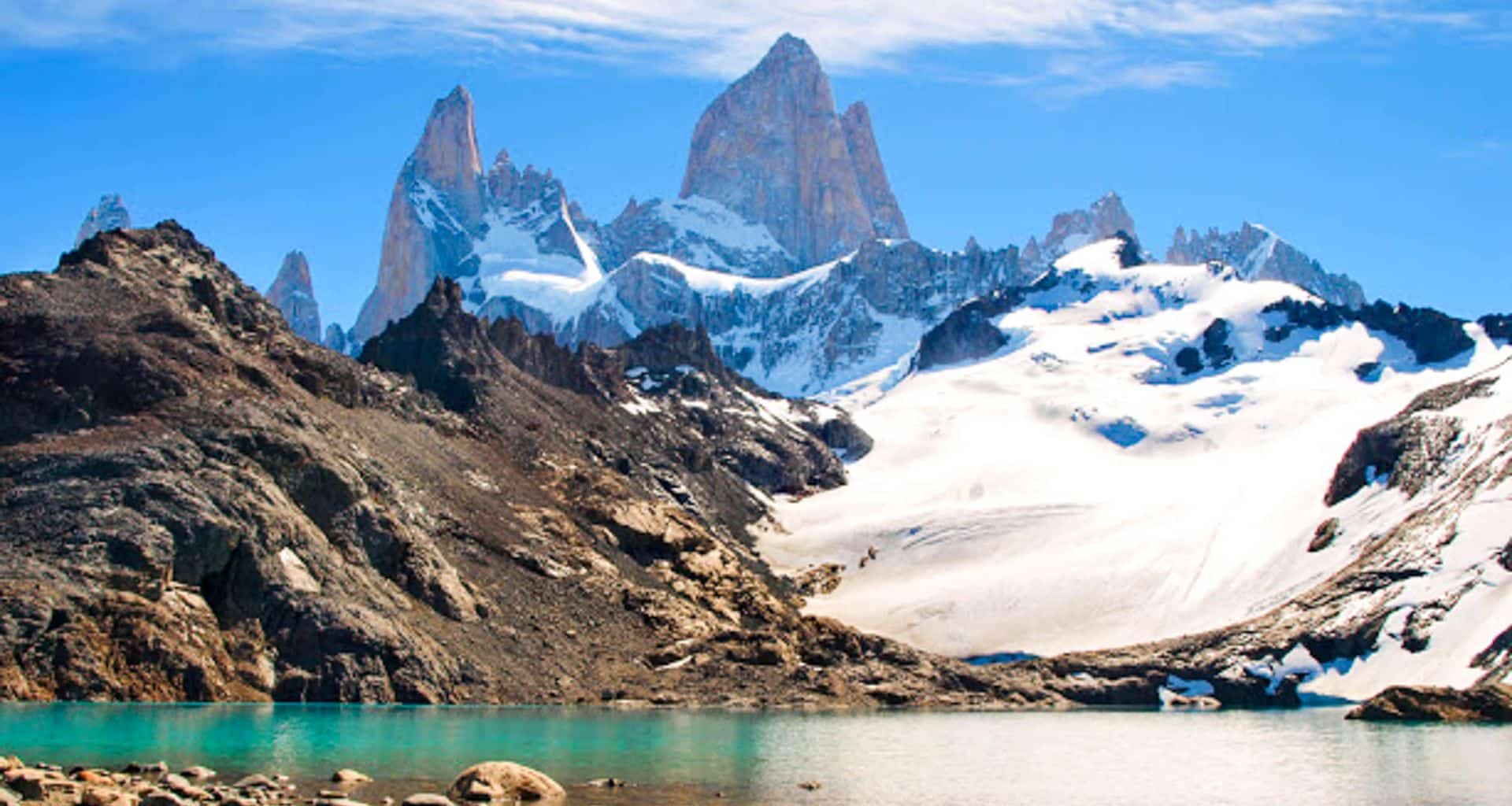
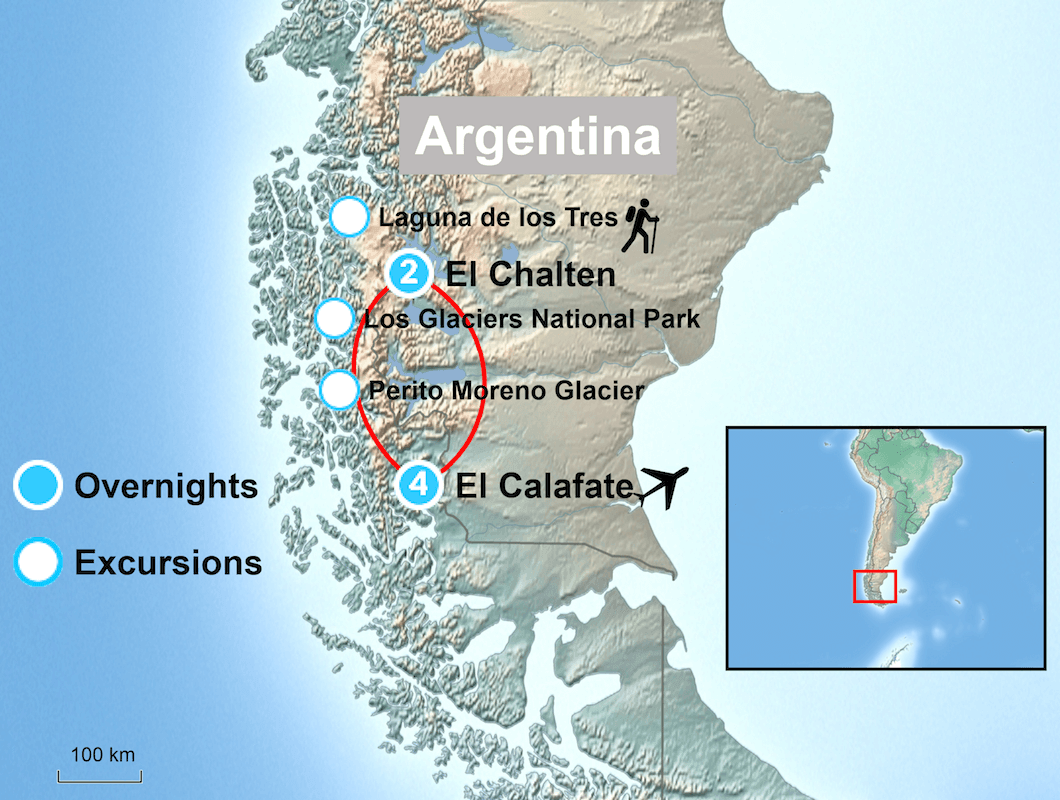
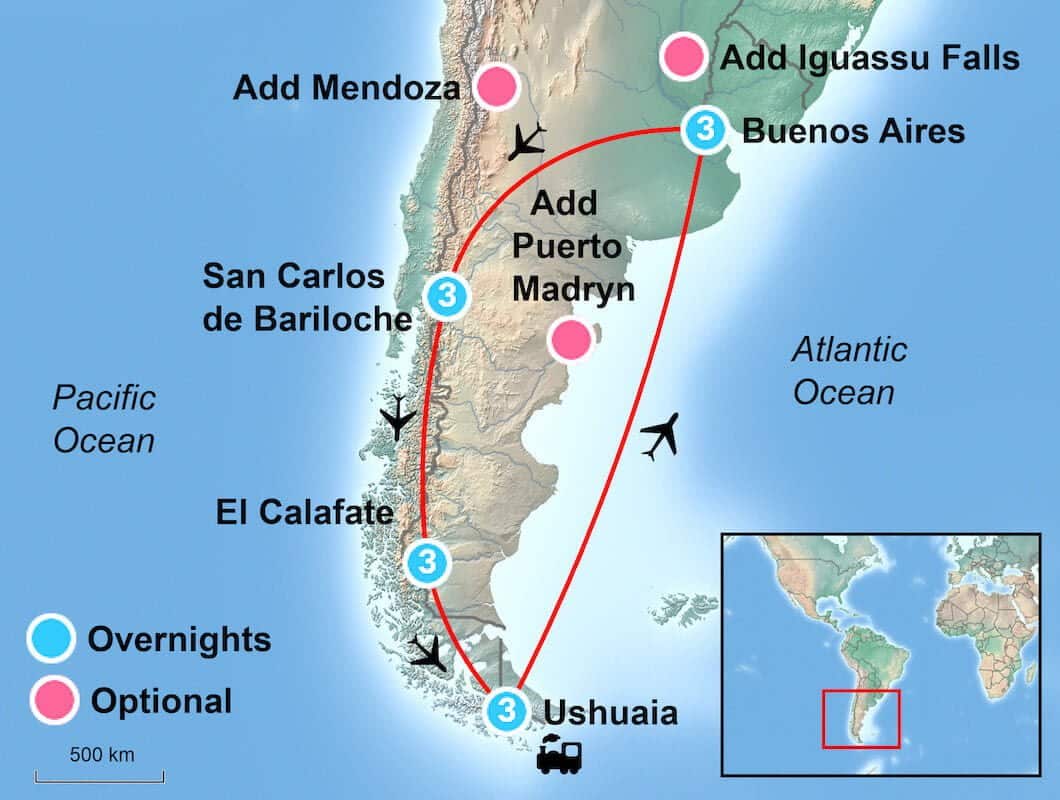
Patagonia hangs off the southern end of the route, a flight south from Buenos Aires. The draw is ice and rock: the Perito Moreno glacier outside El Calafate, the trails around El Chaltén, and the Chilean side across the border if there is time. It is a detour off the line, not a stop on it, and it deserves its own days rather than a gap squeezed between flights.
Two countries means two sets of entry requirements, two currencies and a border in the middle of the trip. We plan around all of it: which side of the falls you see on which day, where you sleep, and how the flights connect. Some routes between the two are not flown every day, and weather can cancel a flight, so we plan the connections with room to spare. On the ground, Brad Nehring says, “we generally have a local guide in each destination, which ideally does the transfers and the sightseeing.” He also says “multi-country has always been our specialty.” We design and plan the trip; our local partners guide it.
Download our FREE South America Travel Guide and get inspired to explore to South America. Browse through 26 pages of travel planning tips and ideas – a great resource for planning your dream vacation.
Planning a trip to South America? Explore essential travel info including via requirements, safety tips, weather, money, and more so you can focus on designing the perfect adventure!
South America Hotels & Resorts
South America Articles
Staying Healthy in South America
Internet & Calling in South America
South America Travel Insurance
South America Packing List
Money in South America
South America Visa Requirements
Getting to and Around South America
Weather in South America
Languages of South America
South America Food & Drink
Safety in South America
Argentina and Brazil Tour FAQs
What is the best month to visit Brazil and Argentina?
April or October, plus the month either side. Juergen Keller’s rule is simple: “the best time for South America is April and October.” Around the holidays, Brad Nehring watches the calendar more than the weather. Christmas itself is “usually relatively inexpensive”, since South Americans are home with family; “They start traveling directly AFTER that.” Semana Santa, the week before Easter, is “very tricky and potentially expensive.” More on the best time to visit Argentina.
Which country is better to visit, Brazil or Argentina?
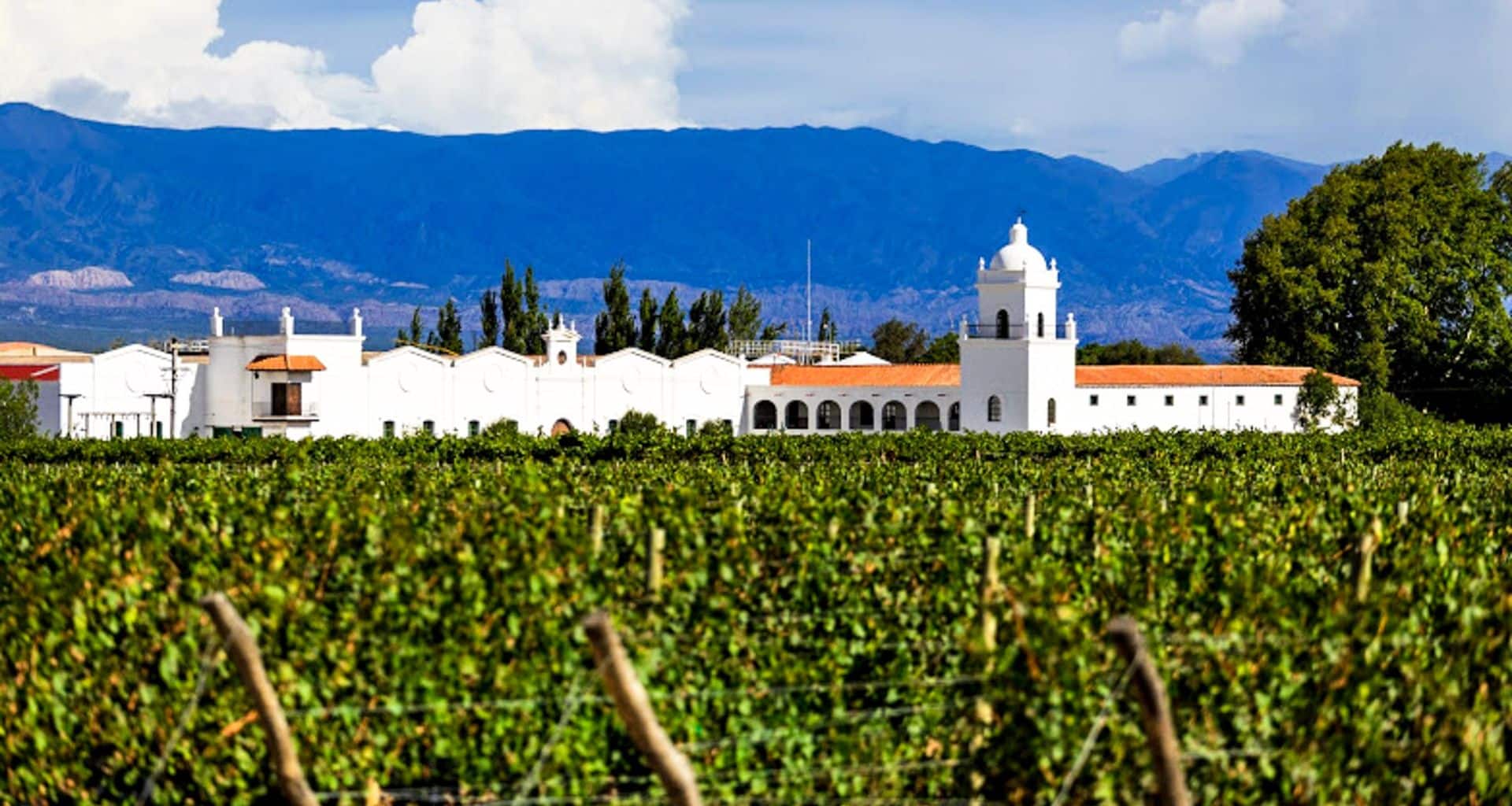
Neither, on its own. Juergen Keller turns the question around: “It depends on what you want to do or to see!” Argentina means Buenos Aires, the glaciers of Patagonia and the wine country around Mendoza. Brazil means Rio, the Atlantic Rainforest and, for animals, the Pantanal. You rarely have to choose: one trip holds both.
Is it safe for U.S. citizens to travel to Argentina and Brazil right now?
Check the U.S. State Department’s current travel advisory for each country before you book. Argentina and Brazil are rated separately, and an advisory can change between the day you book and the day you fly, so read it again before you leave. Our pages on safety in Argentina and safety in Brazil are a starting point.
How do you get from Argentina to Brazil?
Across the border at Iguazú Falls, or by air. At the falls you cross between Puerto Iguazú on the Argentine side and Foz do Iguaçu on the Brazilian side, with your passport; all five trips above make the crossing there. The other way is a flight between Buenos Aires and Rio, which skips the falls. Our golf and wine trips do that.
Do U.S. citizens need a visa for Argentina and Brazil?
Check the current rules for your passport before you book, for both countries. Each one sets its own entry requirements, and they change from time to time. Our pages on Argentina visa requirements and Brazil visa requirements are the place to start; the official government sites have the final word.
Can you add Peru to an Argentina and Brazil trip?
You can, though Juergen Keller is honest about it: combining Peru with Argentina “doesn’t make much sense”, and he says the same of Peru and Brazil. Peru deserves a trip of its own. He is just as clear the other way: “if they want to see it we will never say don’t do it.” If Peru has to go in, start with our Brazil and Peru tours.
Can an Argentina and Brazil tour include Carnival or New Year’s in Rio?
Yes, both. Carnival moves every year, so the trip is planned around that year's parade dates; our Rio Carnival page has the detail. New Year’s in Brazil, eight days, pairs the Argentine side of the falls with Rio for New Year’s Eve. Plan either one early: Brad Nehring names New Year’s in Rio as the expensive week.
Your Experts in South America!
Let’s Design Your Perfect South America Trip
Tell us what you want to see in Argentina and Brazil and how many days you have. We will plan the route between them, the nights at each stop and any third country that fits.
We Love to Talk About South America Trip Ideas!
Thinking of traveling to South America? We take your South American travel dream and make it a reality. Every fully custom South America trip is planned by your own expert personal Travel Consultant.
"*" indicates required fields
South America Travel Guide
Our favorite South America tour ideas featuring the best destinations & activities designed to inspire…

 +1 (888) 900-5060