Three capybaras stand at the edge of a calm river at sunrise, with misty water and dense South America rainforest trees in the background under a golden sky—an idyllic scene for unforgettable nature tours.
Experts in Tailor-Made

South America Nature Tours

20+ Years Designing South America Wildlife Tours

South America nature tours start with the animal you want to see, not with a country. Name it, and we tell you where that wildlife lives and in which month to go. Giant otters, caiman and, with luck, a jaguar point to the Pantanal in Brazil. The Amazon Rainforest is where you go for the forest itself, and in Peru it begins a short flight from Cusco. On the Galápagos Islands the animals do not hide; we plan the islands by small ship, often with a few days on the mainland of Ecuador. Whales and penguins are on the Atlantic coast of Patagonia.

Each trip is private. A wildlife week can stand alone or sit inside a longer route through our South America tours. Start with one of the itineraries below, or design your own trip.

South America Wildlife Tours

Every itinerary here is private and can move to your dates and to the animal’s season. Some center on wildlife, others carry it as one stop on a longer route, so read them as drafts we adjust.

Create Your Own Custom Tour

Click or Tap your preferences: Destinations & Activities. Be as specific or general as you like – or click Help Me Decide! We’ll spice it with hidden gems & personal tips to create your perfect trip. Need assistance? Contact an expert at +1 (888) 900-5060

Step 1 of 6 - Destinations

Choose Destinations
Destinations
Amazon Interests
Argentina Interests
Bolivia Interests
Brazil Interests
Chile Interests
Colombia & Panama Interests
Ecuador & Galápagos Interests
Paraguay & Uruguay Interests
Patagonia & Antarctica Interests
Peru & Machu Picchu Interests
Guianas Interests
Choose Interests

Top Wildlife Tours in South America

Pantanal Wetlands & Rio de Janeiro Tour

Daily wildlife excursions in the Pantanal: caiman, capybara, giant otters and, with luck, a jaguar. Then Rio de Janeiro, which Juergen says you can always include in a Brazil trip.

8 days

Cusco & the Peruvian Amazon to Manu National Park

From Cusco into the Manu Biosphere Reserve, by road down through the cloud forest, with five nights in lodges and the last three at the Manu Wildlife Center. Macaws and monkeys in the canopy, and the forest itself by canoe and on foot.

6 days

Cruise the Galapagos and Tour Colonial Quito

A four-day Galápagos cruise, which can be lengthened, with guided walks ashore and snorkeling, plus Quito and the Otavalo market on the mainland. The cruise is how we recommend seeing the islands.

8 days

Bariloche and Peninsula Valdes Wildlife Watching Trip

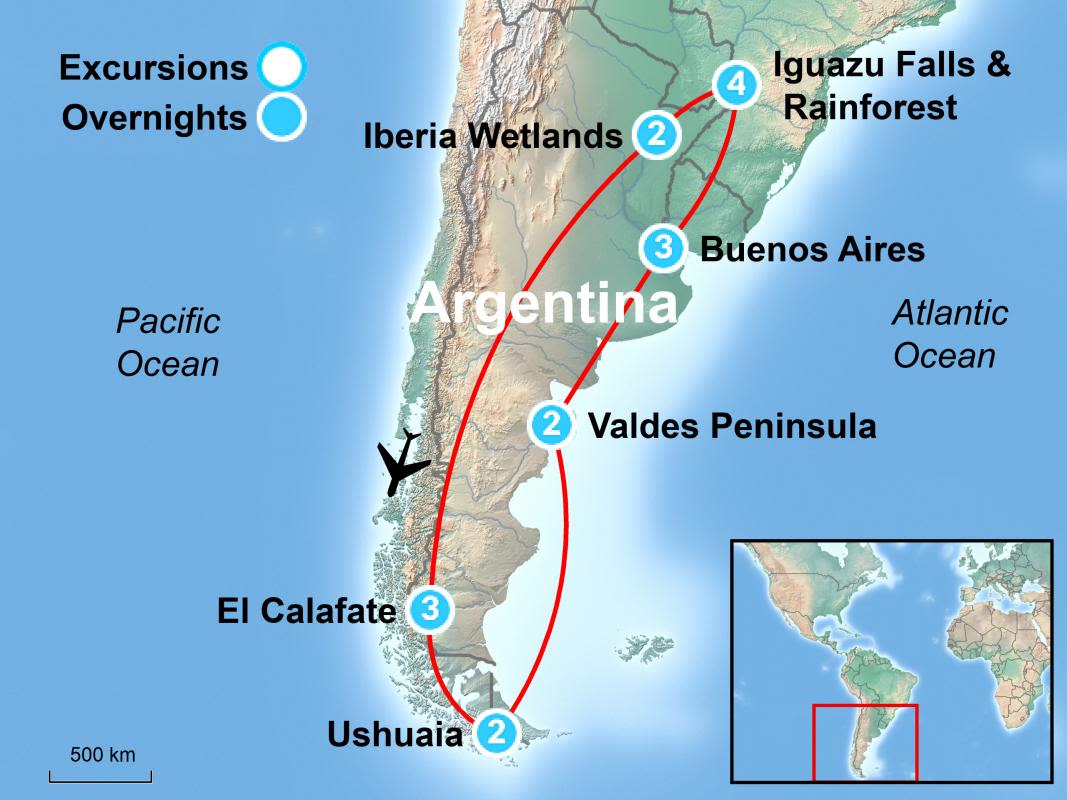
Punta Tombo’s penguins on the first afternoon and a full day on Península Valdés, then by bus across Patagonia to Esquel, Los Alerces and a 3,000-year-old alerce, and on to Bariloche. Right whales are off the peninsula from June to December.

8 days

Puerto Deseado Patagonia Bird Watching Tour

Four days on the Ría Deseado, a drowned river mouth where five cormorant species nest side by side, with Magellanic penguins from October to April and rockhoppers too. Cabo Blanco’s sea lions and the Jaramillo petrified forest fill the rest.

4 days

Planning a South America Wildlife Tour: Start With the Animal

Juergen Keller, our co-founder, opens every wildlife conversation the same way: tell us what you want to see. Then he corrects the answer where it needs correcting. The usual mix-up is animals and the Amazon. The Amazon is the place for the forest itself: the trees, the rivers, the scale of it. The animals are there too, but the vegetation hides them, and you often see one only because the guide’s eyes are trained.

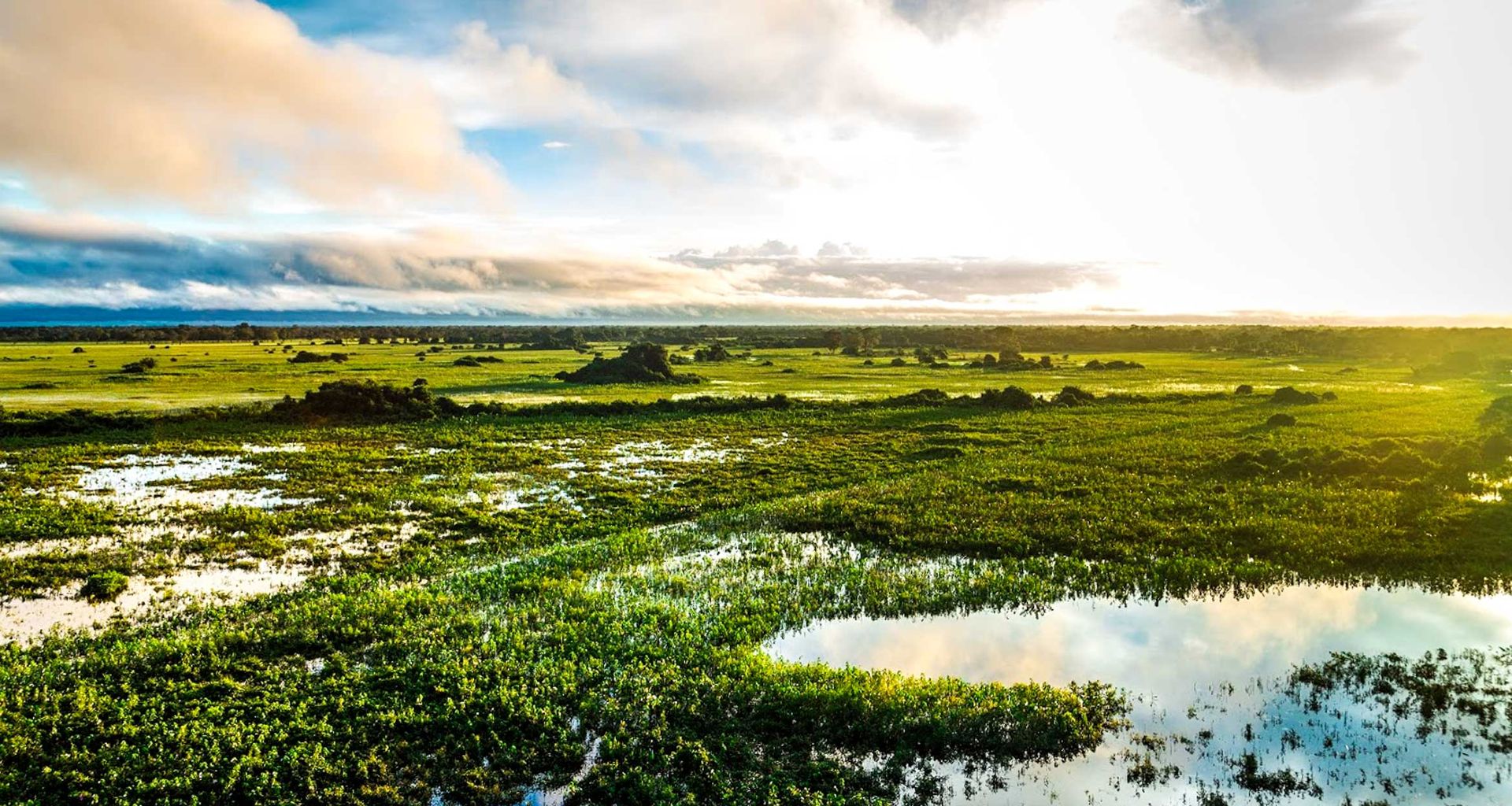
If animals are the point, go to the Pantanal. It is open wetland and savannah, with far fewer places to hide. For animals that do not hide at all, the Galápagos. For the quiet option, the Iberá wetlands in northeastern Argentina. For whales and penguins, the Atlantic coast of Argentine Patagonia, in their months. So the first planning question is not which country. It is which animal.

Sunlight shines over the vast green wetlands of the Pantanal, with patches of water, low vegetation, and a distant horizon—an inviting scene for a Brazil fishing tour under a partly cloudy sky.
Aerial view of the Meeting of Waters in Brazil, where the brown Rio Solimões and dark blue Rio Negro flow side by side through the Amazon rainforest, their striking contrast visible under a partly cloudy sky near the renowned Juma Amazon Lodge eco-lodge.

Lodge, Boat or Route: How a Wildlife Trip Is Planned

A lodge stays put. You sleep in one place and go out each day by boat, canoe or on foot. A boat moves, and in the Amazon Juergen prefers it for that reason: “Lodges are stationary. Boats show you different perspectives.” His favorite, and Brad’s, is the Tucano, a small expedition boat on the dark, slightly acidic water of the Rio Negro: “a real explorer’s boat,” in Juergen’s words, “taking you to different places.” In the Galápagos the boat is the plan: we recommend a small-ship cruise over island-hopping from hotels.

Then pair the wild place with an anchor. Rio fits after the Pantanal. Iguazú pairs with Iberá, which stays quiet because getting there takes effort. And leave slack. Some routes in Brazil fly only three times a week, and weather cancels flights. A missed connection should cost you a spare day, not the otters.

When to Go: Every Animal Keeps Its Own Calendar

There is no single wildlife season for the continent. Each place keeps its own.

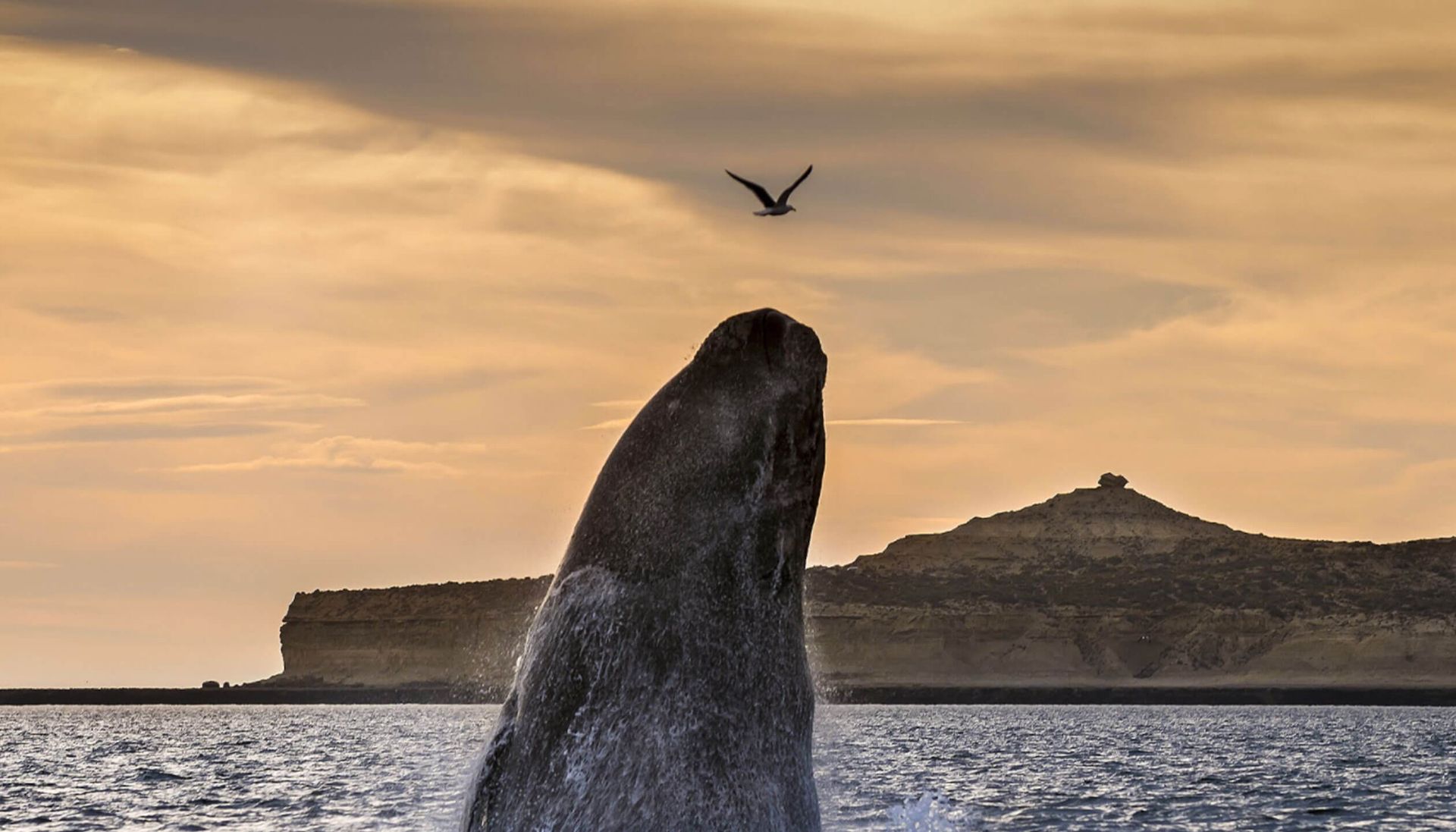
The Pantanal: the dry season runs May to September, and July to September is the peak, when animals gather at the water that is left. The Amazon: rain is not the problem. Juergen’s experience is that even in the rainy season there are sunny breaks every day; when it rains, it just rains very hard. The Galápagos has two good seasons. December to May is warm, with calmer seas and the best snorkeling; June to November is cooler, with the richest marine life. On the Argentine coast, southern right whales are off Península Valdés from June to December, and Magellanic penguins are at Punta Tombo from September to April. September to December gives you both on that coast. Patagonia in July: no. Little daylight, and many lodges are closed.

A southern right whale breaches out of the water at sunset near Patagonia, with ocean spray surrounding it and a bird flying above. A rocky coastline and hills are visible in the background under a cloudy sky.

Where to See Wildlife in South America

Six places, what you see in each and how you spend the day there. Each one has its own page with the itineraries.
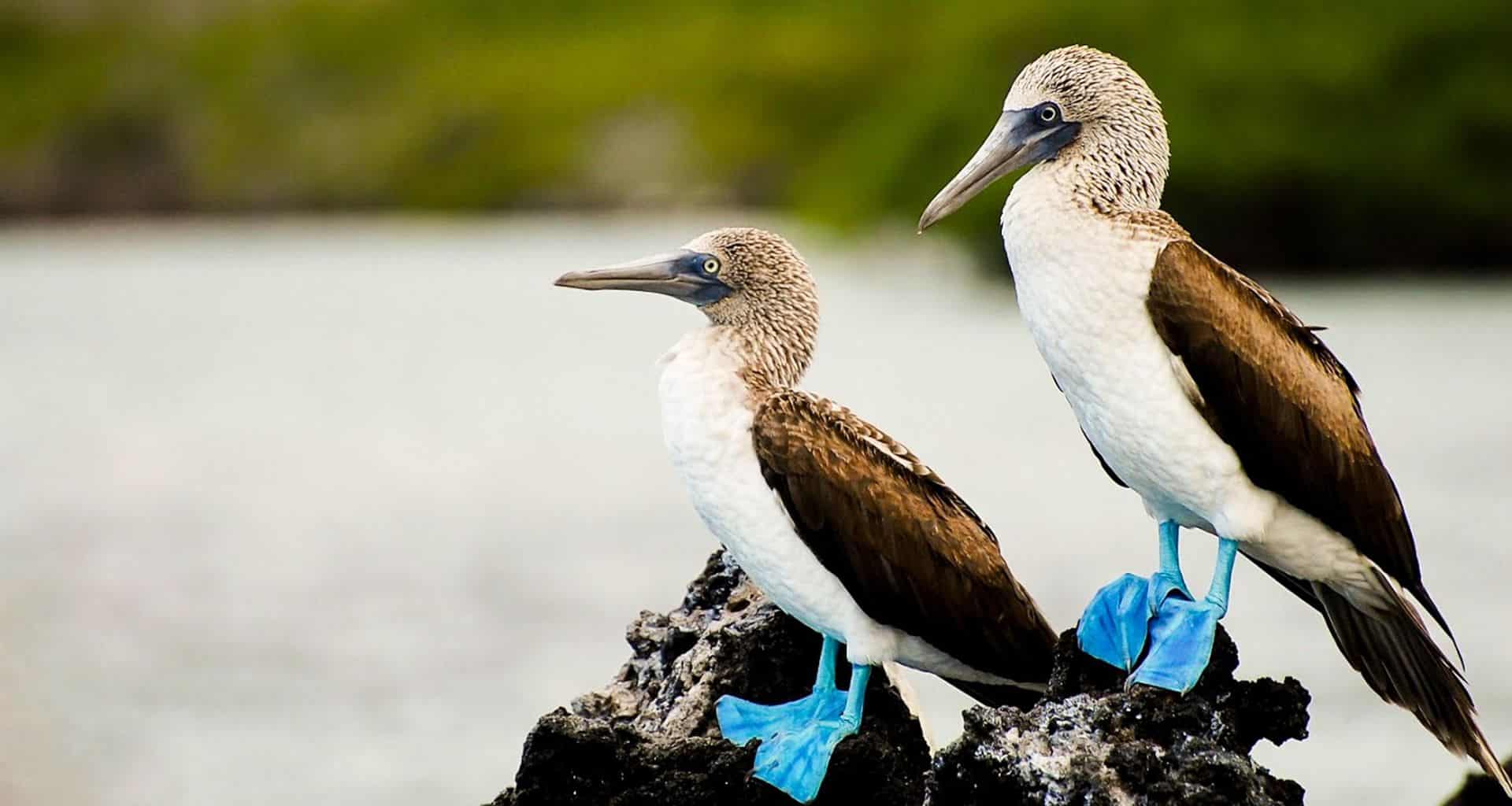
Two blue-footed boobies with brown and white feathers and bright blue feet stand on dark rocks near water in the Galapagos, with a blurred green background.
1.

The Pantanal

Brazil’s great wetland, which runs over into Bolivia and Paraguay. From October to March the rains flood the plain, and the water recedes from March. You stay at a lodge and go out each day by vehicle and by boat. What stays with Juergen is the emptiness of the savannah and the trees devouring other trees.

Explore The Pantanal tours

2.

The Amazon

Come for the forest. The Peruvian Amazon starts at Cusco, and Brad finds you tend to see more animals there, closer to the mountains. Getting to the Brazilian Amazon, in his count, is a day and a half of travel instead of a short hop. Juergen’s Amazon moment: a kayak on the river early in the morning, listening to the fauna wake up.

Explore The Amazon tours

3.

The Galápagos

Sea lions on the beaches, marine iguanas on black lava, blue-footed boobies, giant tortoises. You sleep on a small ship and spend the days ashore on guided walks, with snorkeling between landings. Our Quito and Galápagos route has three nights aboard, with stops at San Cristóbal, Española and Santa Cruz.

Explore The Galápagos tours

4.

Iguazú’s forest and the Iberá wetlands

The falls are only part of it. At Yacutinga Lodge, in the Misiones forest, the days are a kayak on a forest stream and a walk after dark. Iberá, in Corrientes province, is open marsh: caiman, capybara, otters and marsh deer, with some 350 bird species. It is about four hours by road from Puerto Iguazú, through Posadas.

Explore Iguazú’s forest and the Iberá wetlands tours

5.

Península Valdés and the Patagonian coast

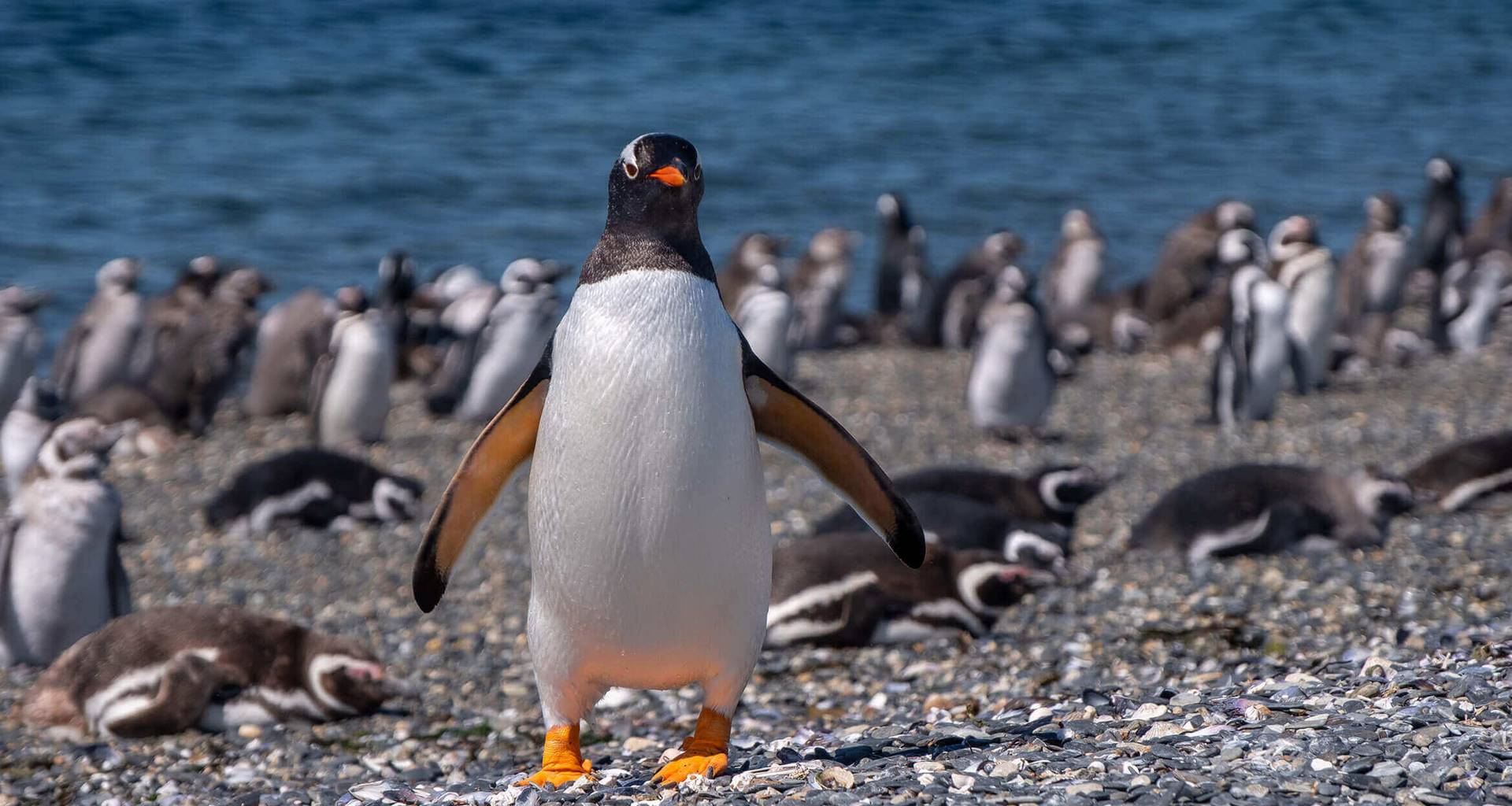
Southern right whales off Puerto Pirámides, which the Wild Argentina route watches from a semi-submersible boat. Elephant seals at Caleta Valdés, sea lions along the shore. Punta Tombo is not on the peninsula but south of it: a Magellanic penguin colony you reach from the same base, Puerto Madryn.

Explore Península Valdés and the Patagonian coast tours

6.

Torres del Paine and the steppe

Here the landscape comes first and the animals come with it: guanacos on the open steppe, condors on the wind. You walk, on day hikes from a lodge or on the W trek. Juergen’s word on Patagonia: it is for those that like it rough. And in winter, “it’s not the cold, but it’s the wind. It blows you off your heels.”

Explore Torres del Paine and the steppe tours

More South America Options

Wildlife often shares a trip with something else. The ice and penguins of the far south are on our Antarctica cruises page. The Guianas are rainforest and savannah with very few visitors. For where you sleep, see lodge tours; for time on the water, South America cruises and river cruises in the Brazilian Amazon. To move under your own power, adventure tours. For two or more countries in one trip, multi-country tours.

Why Plan a Wildlife Tour With Us

Get to Know Us
Binoculars and a field notebook on a wooden lodge railing above a misty forest canopy at first light

We ask what you want to see, and we say so when the plan and the animal do not match. Ask us for jaguars in the Amazon and we will point you to the Pantanal. We time the trip to the animal’s calendar, not to a holiday week. In each place you have a local guide, and on a wildlife trip that is the person who spots the animal long before you do. Where flights are thin, we leave slack. And we do not promise sightings. Nothing is guaranteed, because it is wildlife. We have designed private South America trips since 1999.

Download your free

South America Travel Guide

Download our FREE South America Travel Guide and get inspired to explore to South America. Browse through 26 pages of travel planning tips and ideas – a great resource for planning your dream vacation.
  • Colorful maps and images
  • Unique hotels within South America
  • Inspiration for cruises, remote lodges and trains
  • Wine, golf and adventure ideas
  • 24 top tours of South America

South America Travel Info

Planning a trip to South America? Explore essential travel info including via requirements, safety tips, weather, money, and more so you can focus on designing the perfect adventure!

Icon
South America Hotels & Resorts
Icon
South America Articles
Icon
Staying Healthy in South America
Icon
Internet & Calling in South America
Icon
South America Travel Insurance
Icon
South America Packing List
Icon
Money in South America
Icon
South America Visa Requirements
Icon
Getting to and Around South America
Icon
Weather in South America
Icon
Languages of South America
Icon
South America Food & Drink
Icon
Safety in South America

South America Wildlife Tour FAQs

In a handful of places, each strong for different animals. Giant otters, caiman and, with luck, jaguars: the Pantanal in Brazil. Macaws, monkeys and the forest itself: the Amazon. Sea lions, iguanas and boobies that let you approach: the Galápagos. Marsh deer and caiman away from the crowds: Iberá in Argentina. Right whales and penguins: Península Valdés and Punta Tombo. Guanacos and condors: Torres del Paine.

The Pantanal, if you mean seeing animals. Juergen Keller’s rule: “Amazon for flora, Pantanal for fauna. Less trees more animals to see. More trees more possibilities for animals to hide.” The Pantanal is open country, so you can see across it. The Amazon is where you go for the forest itself. You can combine the two: Cristalino Lodge, in the southern Brazilian Amazon, is about an hour’s flight from the Pantanal.

It depends on the place, because each one keeps its own calendar. The Pantanal is at its best in the dry season, May to September. If one trip covers several places, September is where the windows meet: still the Pantanal’s dry-season peak, right whales off Península Valdés, and the first penguins at Punta Tombo. Rain does not rule out the Amazon. Patagonia is the one to avoid in July. Our best time to visit South America guide covers the rest of the continent.

The closest thing to a safari is the Pantanal in Brazil. It is open grassland and wetland, not forest, and you go out from a lodge by vehicle and by boat. As our Pantanal page puts it, it is a considerably easier way to spot wildlife than going to the Amazon. The animals are not Africa’s: caiman, capybara, giant anteaters and, with luck, jaguars.

By cruise. We recommend cruising over land-based island-hopping: the ship does the moving between islands, and your days go to the landings. Even a three- or four-day cruise gives a real feel for the wildlife; a seven-day voyage takes in the most islands. Our cruise options page shows what we plan.

Yes, with the right place, the right month and luck. The Pantanal in its dry season is the strongest bet, and July to September is the peak, when animals concentrate near the remaining water. Iberá, in Argentina, is the quiet alternative; in Juergen’s words, “with a bit of luck you can even see jaguars there.” No one can promise a jaguar. Planning puts you where they are, at the right time; the rest is the animal’s decision.

Yes, both. From Cusco, the Peruvian Amazon is a short flight away, and Brad Nehring, our other co-founder, finds it more fascinating than the Brazilian side. Machu Picchu then comes last, Juergen’s rule, so the trip leads up to it. In Argentina, Juergen adds the Iberá wetlands to Iguazú, and he would have you stay on in the forest around Puerto Iguazú rather than leave after the falls.

Your Experts in South America!

Let’s Design Your Perfect South America Trip

Tell us the animal you want to see and the dates you have. We will tell you where it is, when it is there, and how to reach it without losing a day.
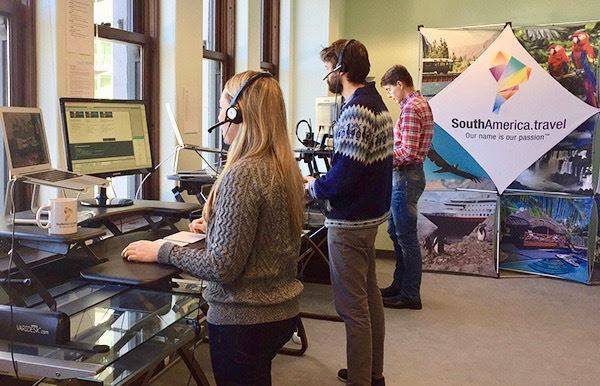
Four people work at standing desks with headsets and computers in a bright office. A colorful “SouthAmerica.travel” banner and destination photos are displayed in the background.
We Love to Talk About South America Trip Ideas!

Thinking of traveling to South America? We take your South American travel dream and make it a reality. Every fully custom South America trip is planned by your own expert personal Travel Consultant.
"*" indicates required fields

This field is for validation purposes and should be left unchanged.
Full Name*

We ❤️ to talk! A brief chat with your personal Travel Consultant helps us create your perfect trip!

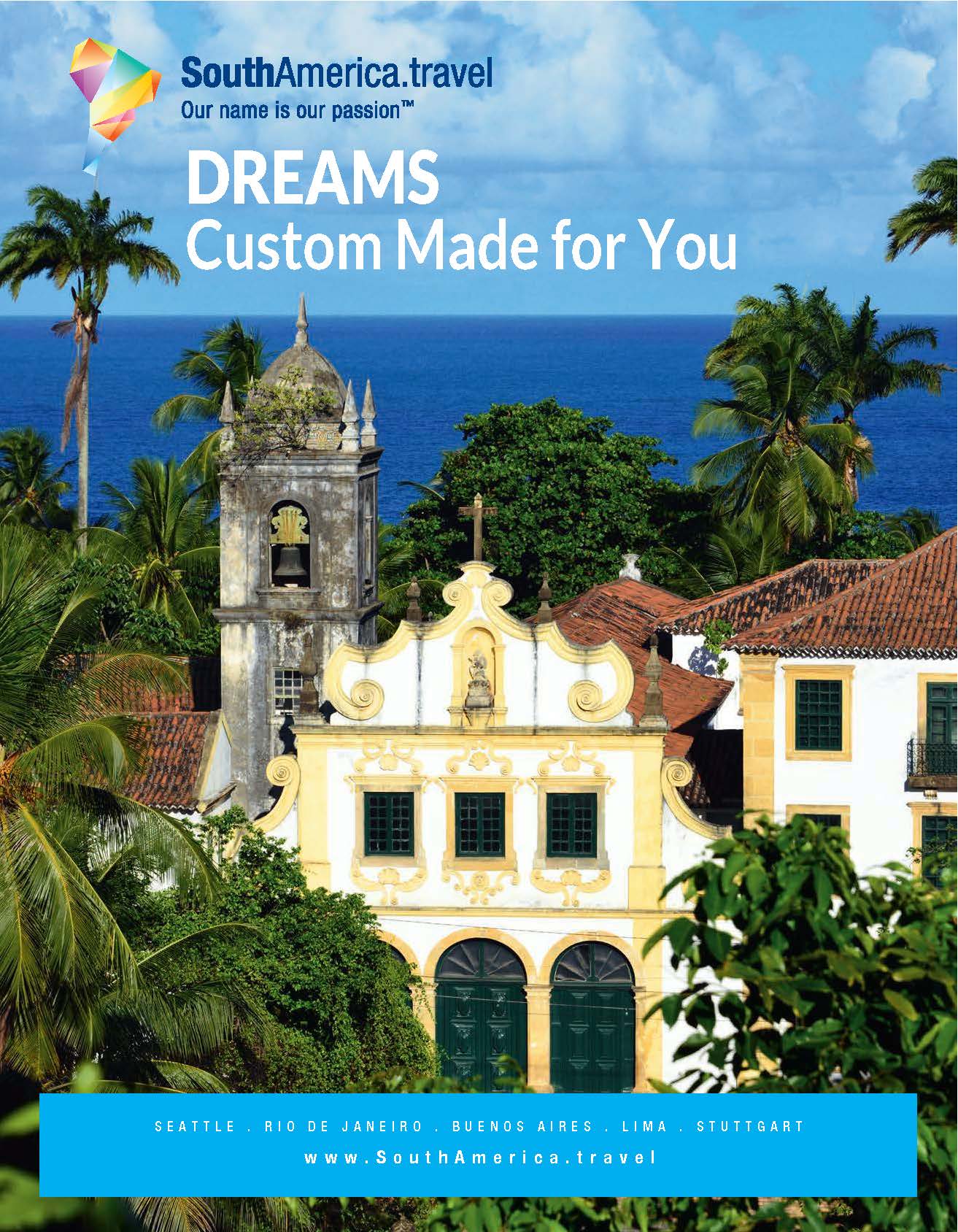
South America Travel Guide PDF Cover Page.

South America Travel Guide

Our favorite South America tour ideas featuring the best destinations & activities designed to inspire…

Get your FREE South America Guide Now!

Name(Required)