*Example by 4 travelers in 4★ accommodation, low season. Flights priced separately. Get a quote for 1 to 99+ below
Itinerary A is one of our three Coral Cruises itineraries offered. This itinerary is perfect for those who are interested in exploring the Galapagos to see the marine and wildlife of the different islands in the Galapagos. On this cruise, spend 4 days / 3 nights (Sunday to Wednesday) exploring the southern and eastern islands of the Galapagos, which are Santa Cruz Island and Rabida Island.
Depart for Quito or Guayaquil to head on a 2 hour and 30-minute flight to Baltra Island. You will be picked up at the airport by a nature guide and head to board the Motor Yacht Coral I or Coral II.
In the afternoon, visit the Charles Darwin Station & its tortoise breeding program. Here, you can see the famous giant Galapagos Tortoises, which when fully grown can weigh up to 500 pounds. Learn about the nature of the tortoises and view each stage of their growth cycle, from unhatched eggs to full-grown adults. Guests are often fascinated by how small the tortoises are as babies compared to when they are adults.
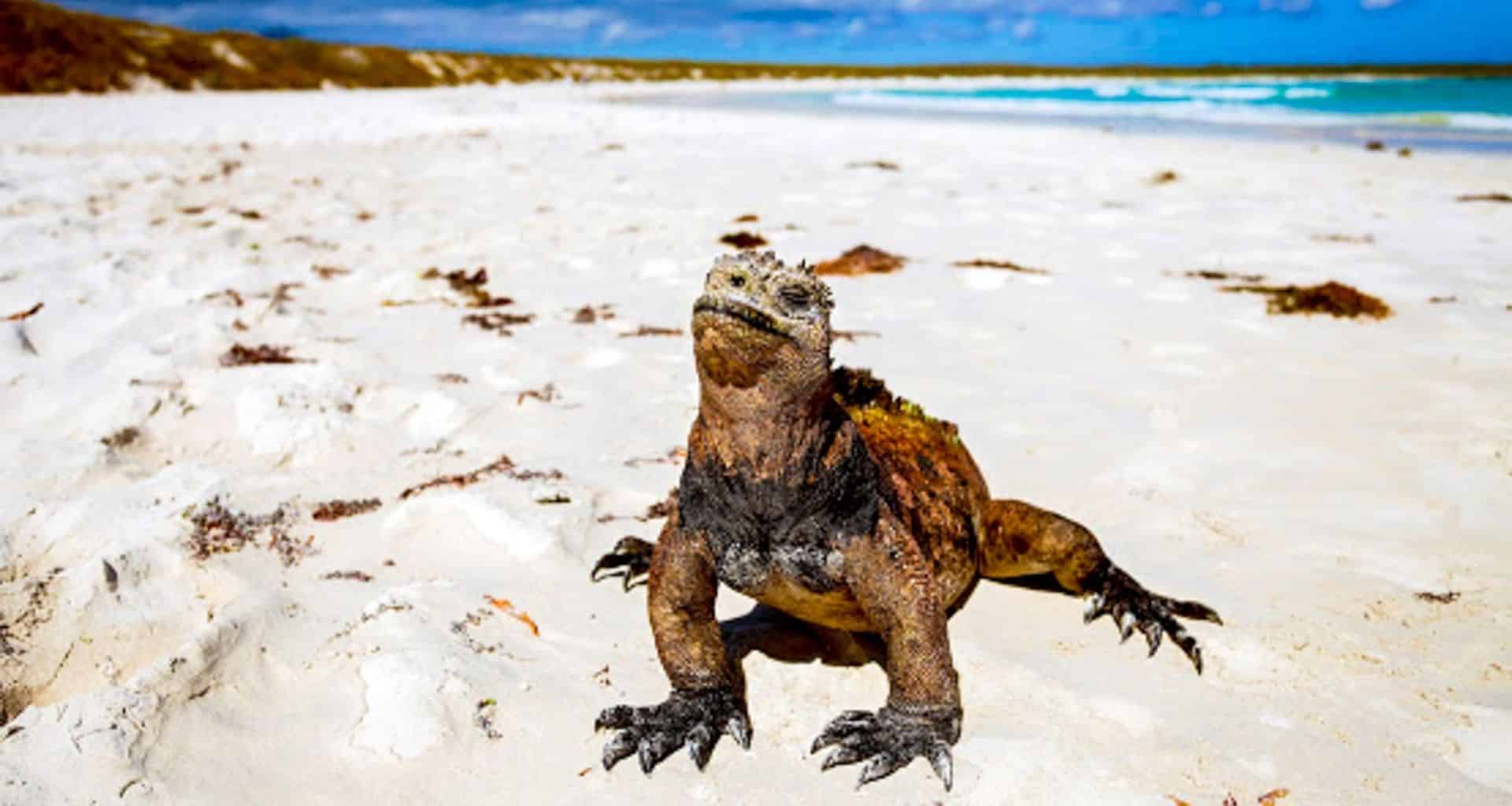
Hike to Dragon Hill to see the nests of iguanas. You will start your walk to a brackish lagoon that is a popular destination to spot flamingos. Keep an eye out for mockingbirds, yellow warblers, Galapagos doves, and Darwin's finches. When you reach Dragon Hill, you will see the land of the iguanas and a beautiful view of the neighboring islands.
Later, head to Bartolome Island where you will feel like you are on the moon with all of its fascinating landscapes. Head to Pinnacle Rock, a popular destination in the Galapagos. This is among one of the best places to snorkel because of its clear water, flat waves, and its variety of sea animals. You can spot turtles, penguins, sharks, and a variety of fish.
In the center of the Galapagos, Rabida is known for its diverse volcanic geology. With its unique dark red sand and sea lion colonies, this island is a unique destination in the Galapagos. From July through September, see the nesting of brown pelicans and the famous Darwin finches. Take a dinghy ride along the marine cliffs to see the nesting of seabirds. Then, snorkel to see the marine life of the island.
In the afternoon, visit Espumilla Beach. This amazing white-sand beach offers a shoreline for seabirds, fur seals, and sea lions to rest. Guests often enjoy exploring the mangroves, small palo santo forest, and the nearby lagoons. If you're looking for sea turtles, visit the upper dunes which are popular nesting sites.
End your trip with a visit to the Black Turtle Cove on the north shore of Santa Cruz Island. Take an hour boat ride to see turtles at this cove declared as a turtle sanctuary. Spot stingrays, fish, and reef sharks swim below you and see pelicans, herons, and egrets above you.
After your amazing Galapagos adventure, you will be transferred to the airport to head back to Guayaquil or Quito. Once in mainland Ecuador, you can catch your international flight home, or you can continue your tour of Ecuador with one of our other fantastic Ecuador Tours.
The Coral Cruise “B” Itinerary route is a 5-day itinerary that visits several islands in the Galapagos archipelago. You’ll see the islands of Santa Cruz, Fernandina, Santiago, and Isabela Islands. And the wildlife? Well, you can expect to see a wide variety: iguanas, sea lions, Sally Lightfoot crabs, Flightless Cormorants, Galapagos penguins, Galapagos Hawks, Blue-footed Booby, Brown Noddy, terns, giant tortoises, Darwin’s finches, mockingbirds, finches, vermillion flycatchers, egrets, and more!
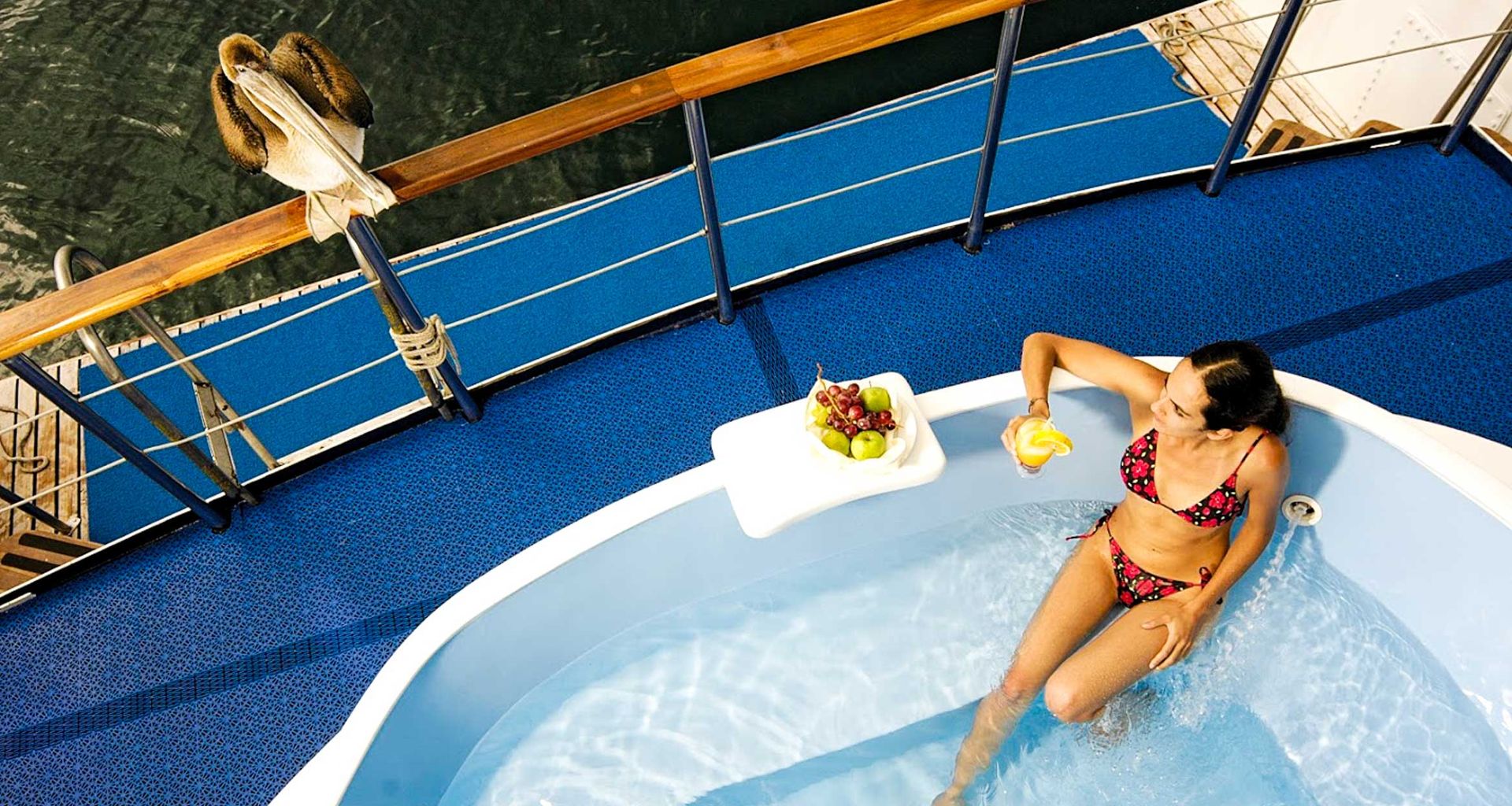
Take a 2.5-hour flight from Quito or Guayaquil and land in Baltra, the main airport in the Galapagos. Once on the islands, you'll meet your guide. All guides on the Galapagos are Ecuadorian and are certified, naturalists. The guide will help you board the Motor Yacht Coral at the nearby harbor. Get comfortable on the boat, which has multiple decks for lounging, hob-nobbing with fellow cruisers, and viewing wildlife.
In the afternoon, dry landing on Santa Cruz Island. This is where there is the best opportunity to spot wild, Galapagos tortoises. Walk amongst these huge reptiles and spot other highland species, such as Darwin finches. Continue to a forest of endemic Scalesia trees and shrubs, and spot an abundance of diverse passerine bird species.
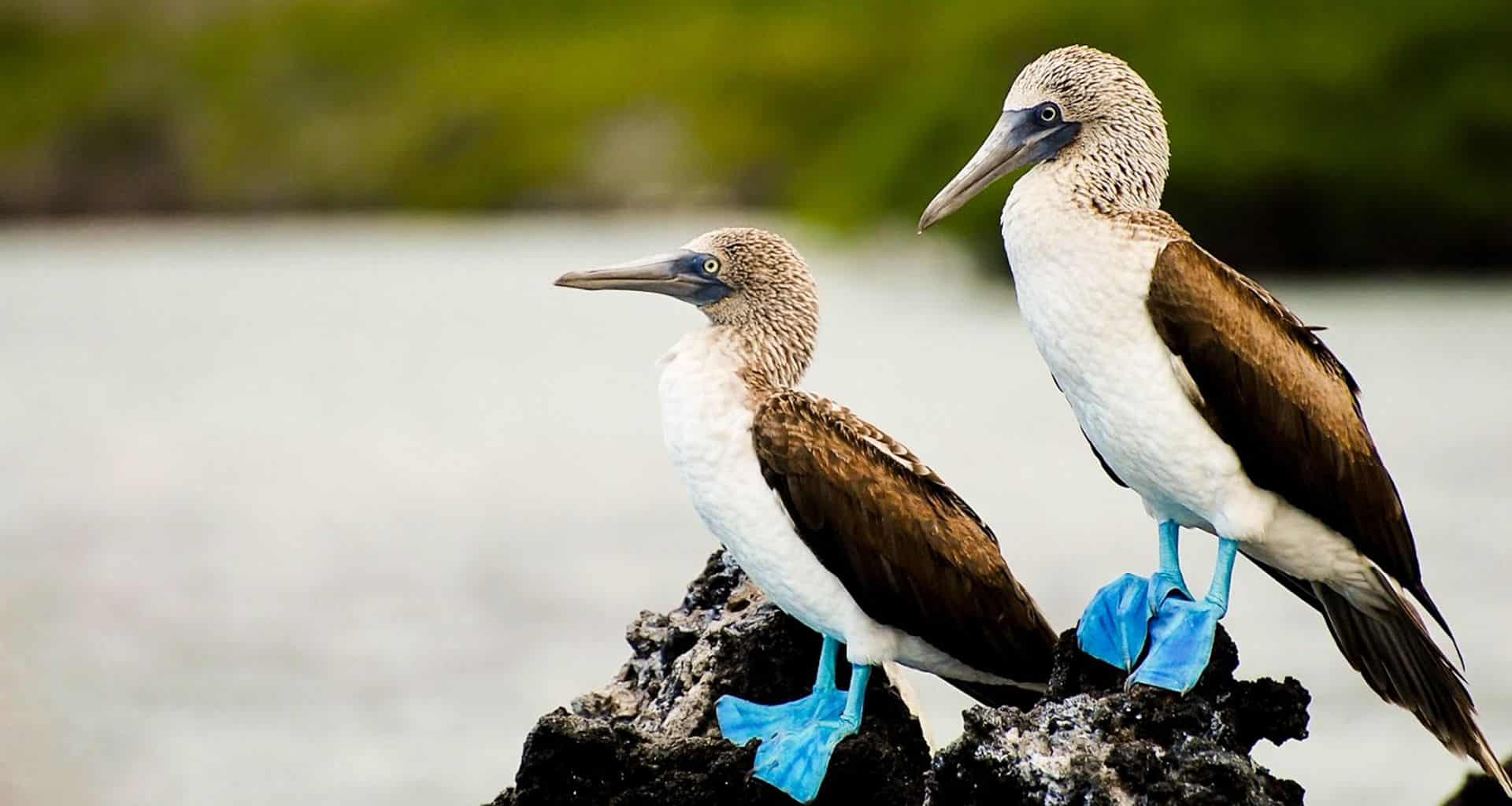
In the morning, discover two protected turquoise coves on each side of Vicente Roca Point on Isabela Island. One of the coves is only accessible by water, offering guests the chance to see some of the most abundant marine ecosystems in the world. Spot dolphins, seahorses, frogfish, octopus, and more! And of course, you'll have the opportunity to see some Blue-footed boobies.
In the afternoon, a dry landing on Espinosa Point (Fernandina Island). Admire the diversity that calls Espinosa home. From the marine iguanas to the Galapagos Hawk, you won't have trouble keeping entertained.
Today's land-based excursions begin with a cruise to Urbina Bay, a black volcanic beach. Depending on the season, you may be greeted by giant tortoises, land iguanas, Flightless Cormorants, and more. After a short walk, you'll have the chance to go snorkeling alongside tropical fish, friendly sea lions, and sea turtles. There is also a view of the Alcedo Volcano from here.
Later, check out Tagus Cove. Here, you will learn about the eruption of the five volcanoes that make up the area. Enjoy amazing views of the lava fields and volcanic formations as you hike around the island. And to end the day with a friendly face, check out the western part of the island, where the most penguins can be found.
In the morning, head to Egas Port, a black volcanic sand beach, visited by Darwin in 1835. Walk the volcanic ash formed trails while keeping a look out for herons, marine iguanas, starfish, and more.
Later, visit Sullivan Bay on the southeastern portion of Santiago Island. Here you can view the extensive water flows that formed during the 19th-century. It's quite a colorful site, as reddish-yellow colored tuff cones appear in the middle of the lava flow.
Today you will have the opportunity to explore the north side of Santa Cruz. Flamingo ponds, sunbathing iguanas, coastal birds, and Darwin finches fill up the island. As you walk along the beach, take a peek at the sea turtles nesting sites. You may also spot the remains of US Navy barges leftover from World War II.
After your visit at Bachas Beach, transfer to the airport where you will board your flight to Guayaquil, Quito, or to your next destination.
Itinerary C is one of three Coral Cruise itineraries that we offer. This 4 days / 3 nights cruise is perfect for those who want to explore Santa Cruz Island, Mosquera Islet, Seymour Island, and Santa Fe Island.
Take a 2 hour and 30-minute flight from Quito or Guayaquil to Baltra Airport. Meet your nature guides at the airport and take a 10-minute bus ride to the pier to board Motor Yacht Coral I or Coral II.
Then, visit the Galapagos giant tortoises and iguanas at the Fausto Lierena Breeding Center. This program takes the eggs from Santiago, Santa Cruz, and Pinzon to their center to be hatched without any danger. When they reach the age of 5, they are returned to their natural habitats. This center is a great way to learn about the endangered species and learn about how they returned over 2,000 animals. Also, the Charles Darwin Station provides environmental education to communities and schools in the Galapagos. If there is time, visit Puerto Ayora town.
Start you day with a visit to Mosquera Islet, located between North Seymour and Baltra Island. It is known for its large colony of sea lions and shorebirds such as herons and lava gulls. Spend some time snorkeling to see the marine life of this island. Most of the islet is made up of sand and lava rocks.
Then, visit North Seymour Island, which was formed by underwater volcanic eruptions. You will be able to see layers of lava on the ocean floor. Take a 2-hour walk to see the nesting colonies of blue-footed boobies, frigate birds, and swallow-tailed gulls. During your walk, spot land iguanas and Galapagos snakes.
Start your day on Santa Fe Island with sea lions resting on white sandy beaches. Take a walk to see the cactus forest, Santa Fe land iguanas, Galapagos hawks, Galapagos snakes, rice rats, and a variety of birds! Deep-water snorkel for an hour in the blue waters of the Galapagos to see the marine life of Santa Fe Island.
Then, visit the northern part of the Islet to see the cactus forest, colorful red and yellow iguanas, and other animals. During the dry season, see the fruits and flowers bloom on the opuntia cacti. Then, head to the South Plaza to see the hybrid iguana that can travel on both land and sea! When we reach the highest point of the Islet, we can spot tropical birds. During the dry season, from June to January, you can see the yellow and green plants change to bright red.
You can view Kicker Rock from the vessel. Kicker Rock was formed by two ancient rocks (148 m) in the northeast sea. If you look closely, you can see that it acquired its name from its resemblance of a sleeping lion. Many Galapagos sea animals hang around here. Have fun scouting out birds, sea lions, and frigate.
Later, visit Cerro Colorado. Learn about how the National Park works to conserve its tortoises and surrounding nature. Opt to explore the village's busy port, where you can find handicrafts, and local restaurants to stop by for a drink or some delicious food.
After your Galapagos adventure, we will head to the San Cristobal Airport for your flight to return to Quito or Guayaquil. Once in mainland Ecuador, you can catch your international flight home, or you can continue your tour of Ecuador with one of our other fantastic Ecuador Tours.
As one of our three Galapagos Coral Cruise itineraries, this 5 days / 4 nights itinerary is perfect for those looking for a nature exploration in the north and central islands of the Galapagos: San Cristobal Island, Espanola Island, Floreana Island, and Santa Cruz Island.
Take a 2 hour and 30-minute flight from Guayaquil or Quito to San Cristobal. Meet your guide at the San Cristobal Airport and head to board the Motor Yacht Coral I or Coral II.
In the afternoon, land in Puerto Baquerizo Moreno, the capital of the Galapagos Islands. Visit the Interpretation Center, where you will learn about the history of the islands. The Museum of Natural History displays a plethora of information about the volcanic background of the islands, their remote location, the abundant life species that thrive here, and more. Then, take a high-intensity walk and spot exotic wildlife, including a frigatebird nesting colony.
See the lava formations and white sandy beaches of Cerro Brujo. Visit a lagoon where you can spot many birds such as the ruddy turnstones, sandpiper, White-cheeked Pintails, whimbrels, and black-necked stilts. Snorkel for an hour, relax on the beach or take a walk to a hidden lagoon.
In the afternoon, walk along the trail to see the olive sandy beach, volcanic rocks, three booby species, and a sea lion colony. Snorkel and kayak in the blue waters of Pitt Point.
As one of the oldest islands in the Galapagos, Espanola Island is known for its collection of unique species. It is an attractive part of the Galapagos because of its variety of wildlife. Take a beautiful hike to explore the wildlife and vegetation of the island. You will be able to see the nesting grounds of the Galapagos doves, hawks, gulls, and albatrosses during the mating season from April to December. Then, see the famous blowhole called the 'Soplador'. It can shoot up water up to 75 feet into the air.
In the afternoon, visit Gardner Bay, known for its sea lions lying on the white sandy beaches. There are no trails here, so visitors sit along the shore to spot the variety of birds around the island including the hood mockingbird, yellow warbler, Darwin finches, small ground finch, and cacti finch. Snorkel here to see the parrot fish, creole fish, damselfish, and king angelfish.
Begin the day visiting Champion Islet, known for its variety of wildlife like blue lobsters, long nose hawkfish, coral hawkfish, seahorses, and red-lipped batfish. Take a dinghy ride or snorkel to discover these amazing animals for a unique experience.
Then, travel to Cormorant Point, known for its green sand beach. Hike to a brackish lagoon to see the largest flamingo population in the Galapagos. Reach a white-sand beach that is one of the main nesting sites for the green Pacific sea turtles. After relaxing on the beach, head back to the green sand beach to snorkel or swim for an hour with the sea turtles, sea lions, penguins, and white-tipped reef sharks.
Later, visit Post Office Bay, named after Captain James Colnett who placed a wooden barrel to serve as a post office. Today, tourists leave unstamped postcards in the barrel. This is also a great place to snorkel with playful sea lions and sea turtles.
Begin visiting the central highlands of Santa Cruz. Get up close to the wild, Galapagos giant tortoises at the Highlands Tortoise Reserve. Then, take a short walk and spot ground finches, flycatchers, cattle egrets, yellow warblers, and other different types of birds.
Then, stop by the Pit Craters that were formed by the collapse of some surface materials. Here, you will have a great chance of seeing giant tortoises as well.
Finally, head to the Baltra Airport, and board your flight to return to Quito or Guayaquil. Once in mainland Ecuador, catch an international flight home, or continue your tour of Ecuador with one of our other fantastic Ecuador Tours.
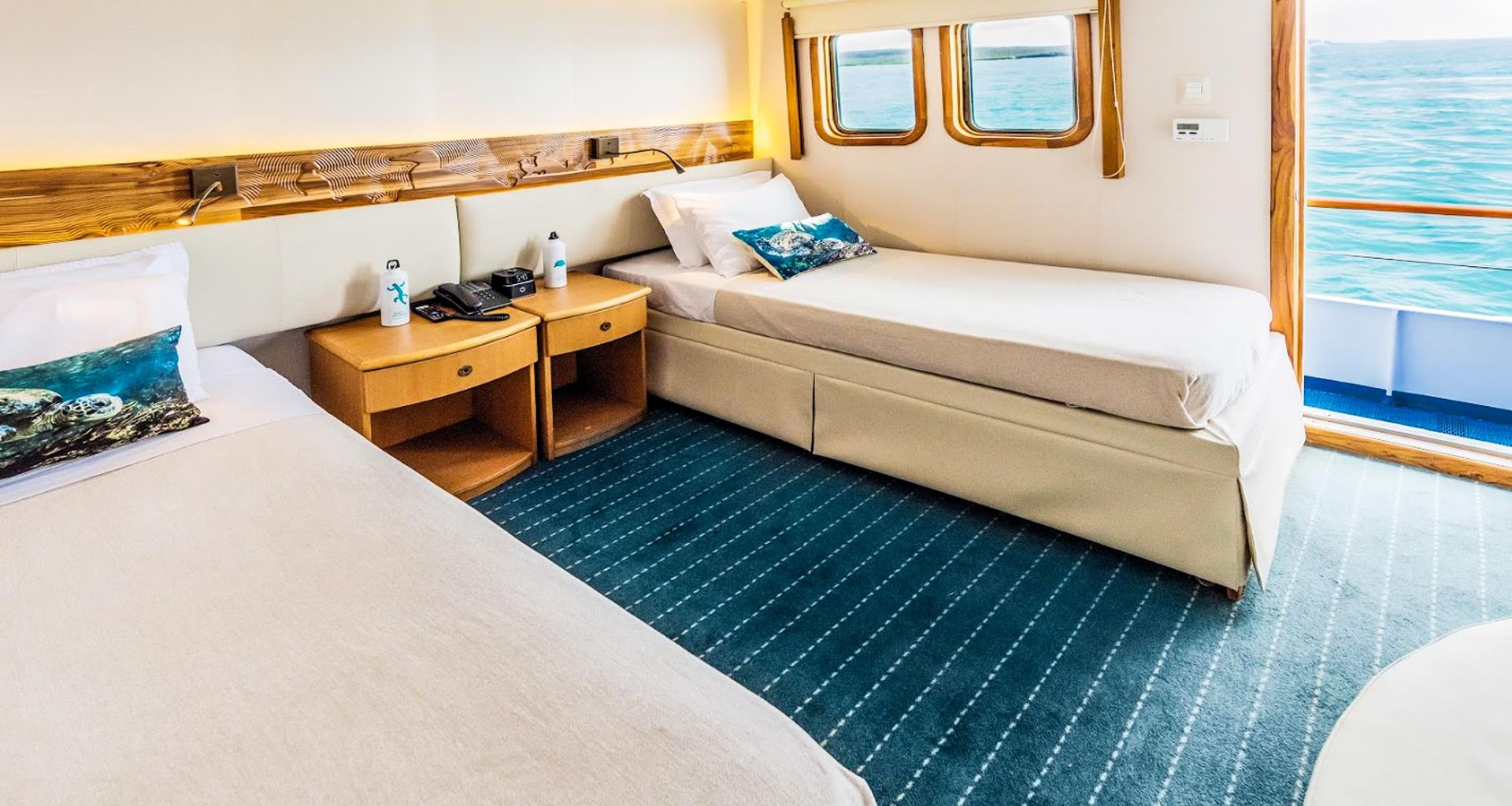
The Standard Cabin is located on the sea deck, allowing ease of access to the amenities on the ship. The room includes two double beds, a private bathroom and windows looking out to the ocean.
The Standard Plus Cabin is located on the sea deck, allowing ease of access to the amenities on the ship. The room includes two queen sized beds, a private bathroom and windows looking out to the ocean.
The Junior Cabin is located on the Earth and Sky decks, allowing ease of access to the amenities on the ship. The room includes a queen sized bed, a private bathroom and large windows looking out to the ocean.
The Standard Cabin is located on the sea deck, allowing ease of access to the amenities on the ship. The room includes two double beds, a private bathroom and windows looking out to the ocean.
The Standard Plus Cabin is located on the sea deck, allowing ease of access to the amenities on the ship. The room includes two queen sized beds, a private bathroom and windows looking out to the ocean.
The Junior Cabin is located on the Earth and Sky decks, allowing ease of access to the amenities on the ship. The room includes a queen sized bed, a private bathroom and large windows looking out to the ocean.