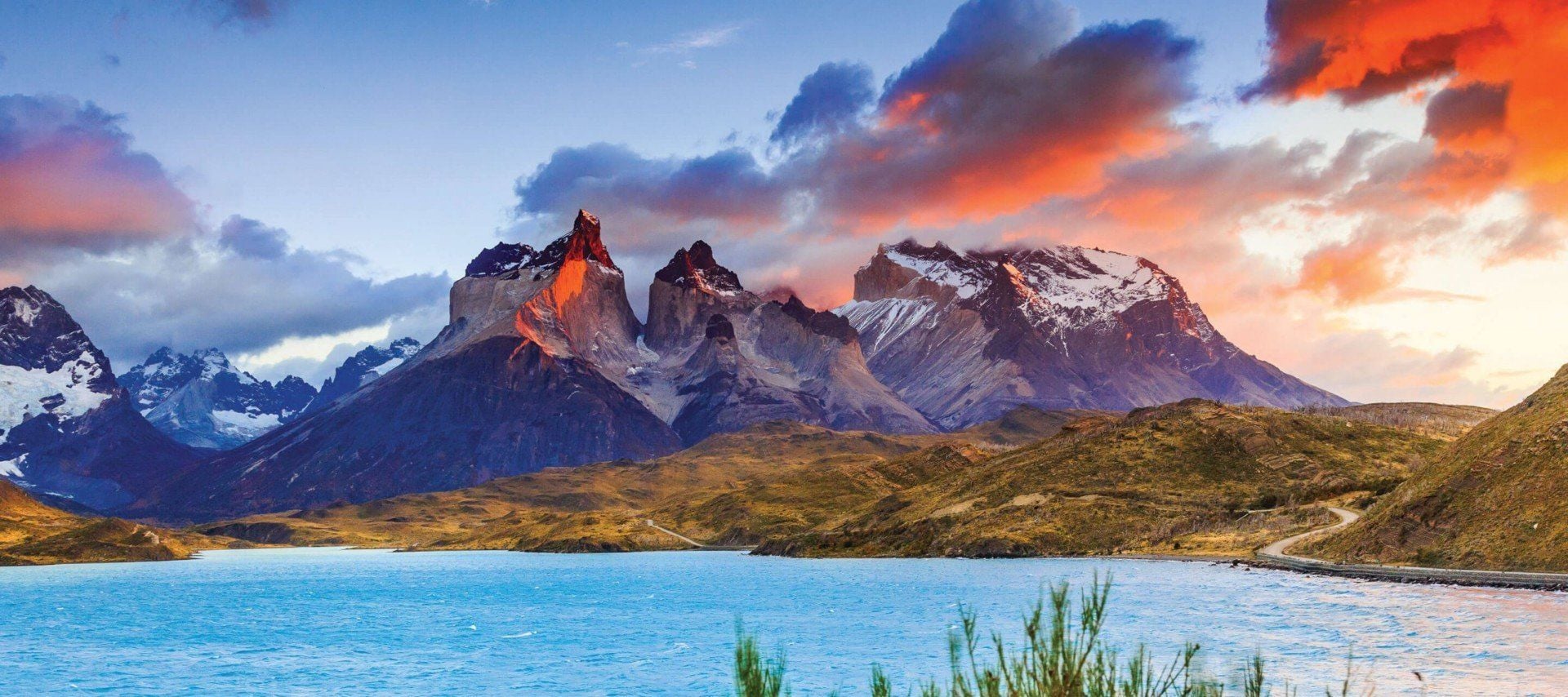
Quick answer: There is no single best time to visit South America — the continent stretches from the Caribbean, across the Equator, all the way down toward Antarctica, so “season” means very different things in different places. The shoulder months of September–November and April–May are the safest bet for a multi-country trip, and October–November is the all-round sweet spot: mild weather in the south, the tail of the dry season in the Andes, and wildlife on the move. But the ideal month really depends on which regions you are combining. Browse our South America tours for ideas.
South America doesn’t have one shared calendar. Three different climate patterns overlap across the continent:
Is it summer or winter in South America right now? In the southern countries, the seasons are the opposite of North America and Europe — so when it is winter up north, Argentina and Chile are enjoying summer (December–February). Nearer the Equator there is no summer or winter at all, just wetter and drier months. In other words, it depends on how far south you are.
Because the continent spans so many climates, almost every month is a great time to be somewhere in South America. Here is where each month shines:
| Month | Season (Southern Hemisphere) | Where It Shines |
|---|---|---|
| January | Summer | Patagonia trekking, Rio & Uruguay beaches, Galapagos |
| February | Summer | Patagonia, Brazil’s Carnival, Iguazú in full flow |
| March | Autumn | ★ Mendoza & Chilean wine harvest, calmer Patagonia |
| April | Autumn | ★ Andes shoulder, dry Colombia & Venezuela, mild cities |
| May | Late autumn | Peru & Bolivia dry season begins, good Amazon wildlife |
| June | Winter | Machu Picchu & Atacama (dry), the Pantanal, Andes skiing |
| July | Winter | Peak Andes dry season, Pantanal jaguars, Amazon low water |
| August | Winter | Dry Andes, the Pantanal, Colombia’s festivals, skiing |
| September | Spring | ★ Dry Andes, whales on the coasts, Patagonia opening |
| October | Spring | ★ The all-round sweet spot — great almost everywhere |
| November | Spring | ★ Patagonia prime, mild south, wildlife everywhere |
| December | Summer | Patagonia & the Lake District, beaches, festive cities |
★ = shoulder months, the best windows for combining several countries in one trip. See our full South America weather guide for more detail.
Below, we break down the best time to visit each of South America’s climate zones — jump to the one you’re planning.
“In general, the best time to visit South America is in October and November as the springtime weather conditions make it comfortable in the cities, beaches, and mountains and nature’s beauty is on full display. Flowers are blooming, wildlife is much more active, and seasonal crowds and travel costs are fairly moderate.”
Rebecca Deering
South America Travel Expert
South America's southern cone has four seasons, reversed from the northern hemisphere — summer runs December to February, winter June to August. The spring (September–November) and autumn (March–April) shoulders are generally the most comfortable, while Patagonia has its own short summer season. When to go, country by country:
High in the Andes, altitude matters more than the calendar — days are cool and nights cold all year. What changes is the rain, which splits the year into a dry season (roughly May–October) and a wet season (November–March). The dry season is the classic time for trekking, ruins, and the salt flats:
Across Brazil, the Amazon Basin, and the northern countries, it stays warm all year — the seasons are defined by rainfall rather than temperature, and each destination has its own wet and dry rhythm:
South America's two great wildlife journeys run on their own calendars — one an equatorial archipelago, the other the frozen far south:
However you combine them, our trip planners can build a South America itinerary around the seasons — start with our things to do in South America guide.
There is no single best time — the continent spans both hemispheres and the Equator. For a multi-country trip, the shoulder months of September–November and April–May are safest, and October–November is the all-round sweet spot: mild in the south, dry in the Andes, and full of wildlife. For a single country, the best month depends on the region.
It depends how far south you are. The southern countries — Argentina, Chile, Uruguay, and Paraguay — are in the southern hemisphere, so their seasons are reversed from North America and Europe: summer is December–February, winter June–August. Nearer the Equator (Colombia, Ecuador, the Amazon) there is no summer or winter at all — just wetter and drier months.
Only part of it. The temperate south (Argentina, Chile, Uruguay, Paraguay) has four seasons, reversed from the northern hemisphere. The tropical north and the Amazon have just a wet and a dry season, staying warm year-round. And the Andes go by altitude, with a dry and a wet season rather than hot and cold ones.
October and November are the best all-round months. It is spring in the south (mild in Buenos Aires and Santiago, and Patagonia is opening), the Andes are still fairly dry for Machu Picchu and the salt flats, and wildlife is active from the Galapagos to the Pantanal — so it is the easiest time to combine several regions in one trip.
It varies by region. In the Andes (Peru, Bolivia) and much of the tropical interior, the dry season runs roughly May to October. The Amazon's low-water season is June–November. The temperate south does not have a strong dry season — rainfall there is spread through the year. There is no single dry season for the whole continent.
The shoulder seasons — September to November and April to May — are best for trips that cross several regions, when the weather is reasonable almost everywhere at once. October and November in particular let you pair, say, Machu Picchu with Patagonia and the Galapagos without hitting the extremes of high summer or the wettest months.
Each runs on its own calendar: the Amazon is best at low water (Jun–Nov); Patagonia in its Nov–Mar summer; Machu Picchu in the dry season (May–Sep); and the Galapagos is superb year-round. To combine several, the Sep–Nov shoulder is the best compromise.
Low-season value varies by region, but in general the wetter shoulder months bring fewer crowds and lower prices. The most expensive, busiest periods to avoid are the December–January holidays (peak summer in the south), Patagonia's high summer, and Brazil's Carnival. Travelling in the quieter shoulder months is the best way to keep costs down almost anywhere on the continent.

Our favorite South America tour ideas featuring the best destinations & activities designed to inspire…
Get your FREE South America Guide Now!

