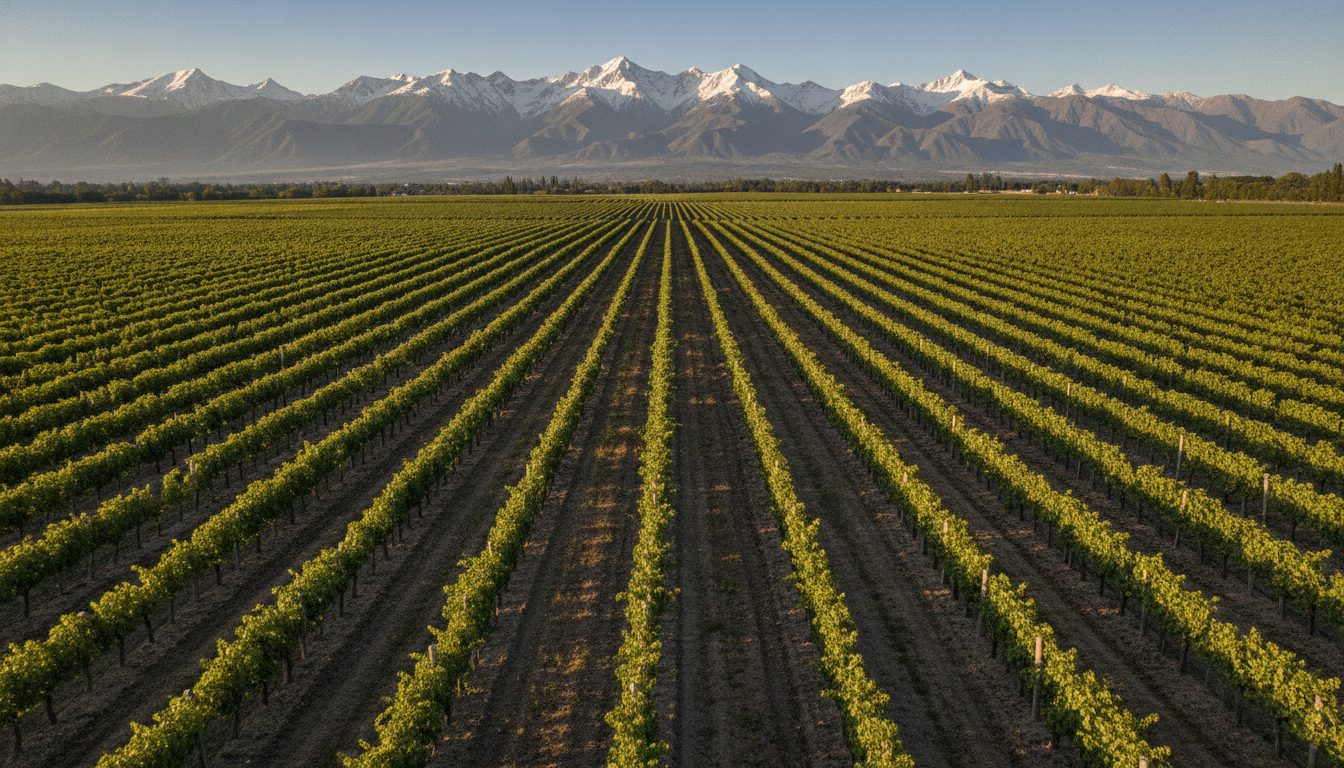
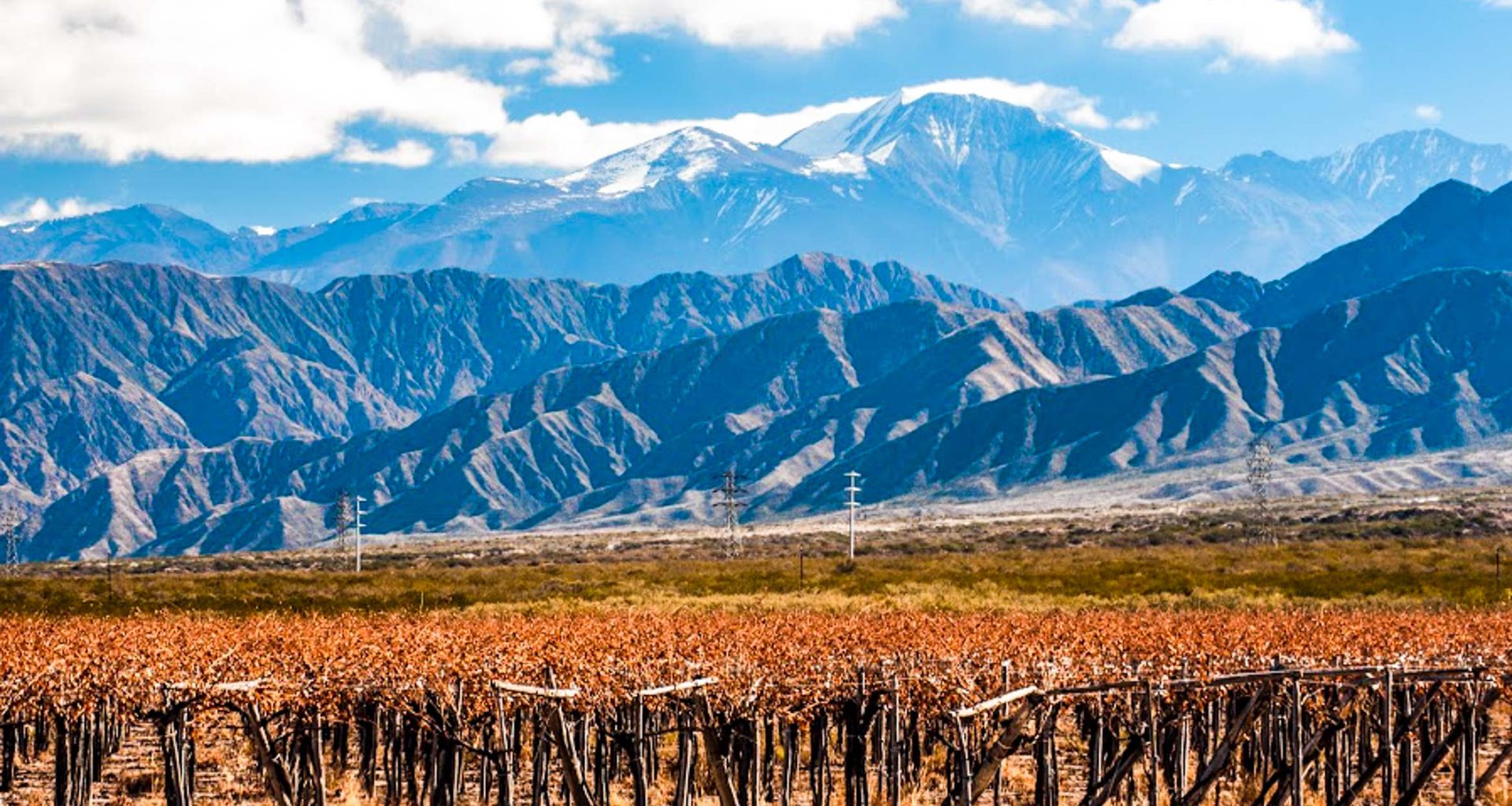
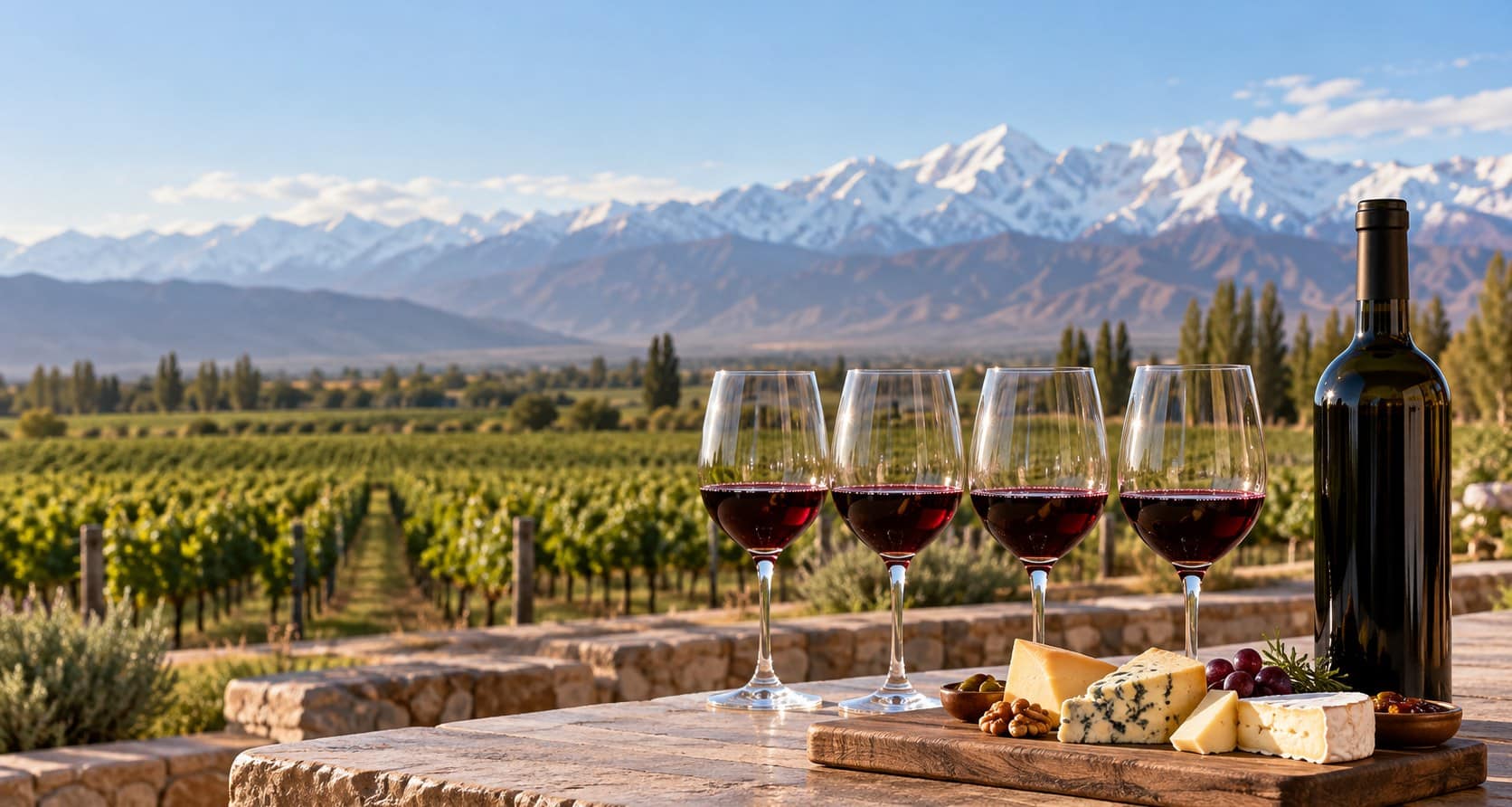
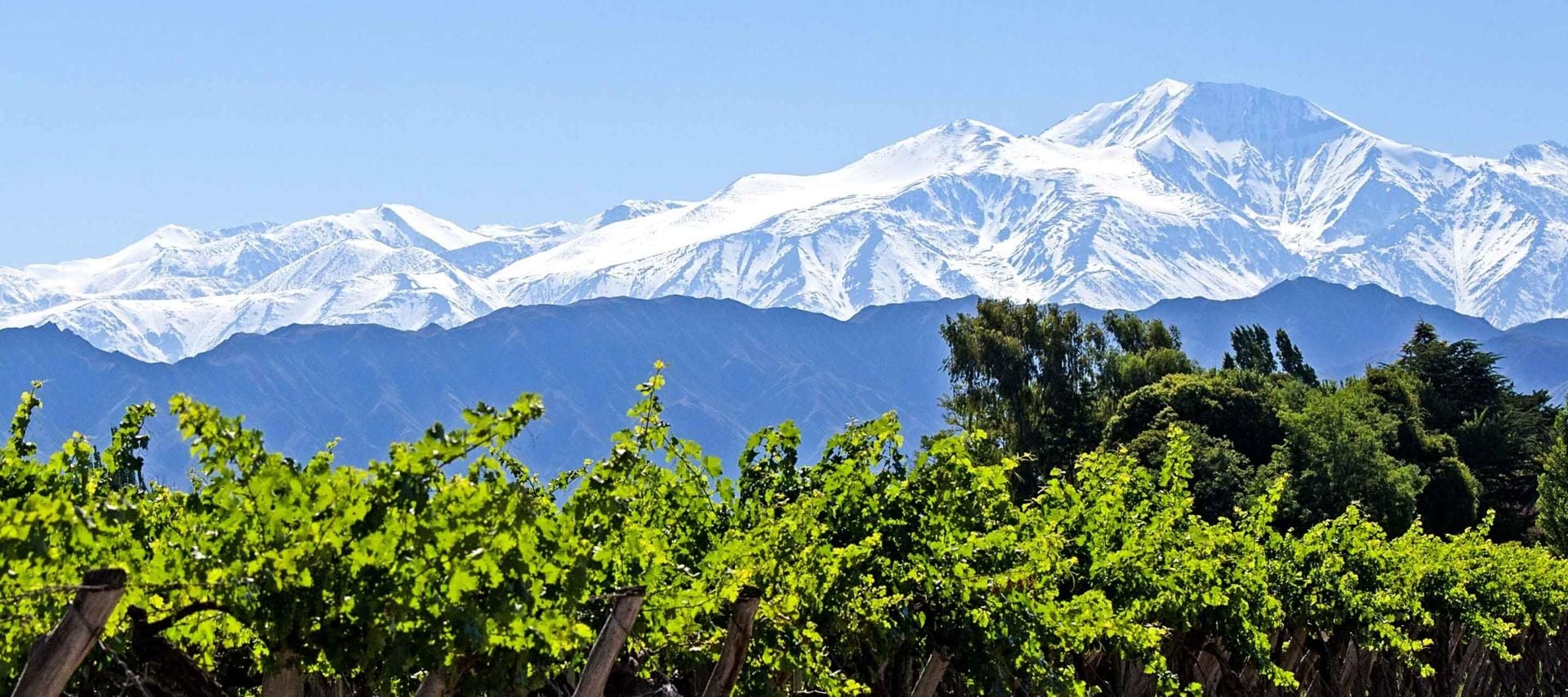
A Mendoza wine tour is the strongest addition to a journey through Argentina. The region spreads across three valleys, Maipú, Luján de Cuyo and the Uco Valley, and produces roughly two-thirds of the country’s wine, including most of the Malbec anyone has heard of. Days are spent between bodegas with a private driver and a wine guide; evenings go to a vineyard lodge or the plane-tree streets of Mendoza city. There is more here than tasting: Argentine food and wine at length, cooking classes among the vines, horseback rides, cycling between the old Maipú estates, and hiking in the foothills below Aconcagua. Most travelers arrive on a two-hour flight from Buenos Aires and stay three or four nights. Contact a travel consultant to start planning your Mendoza wine itinerary.
Mendoza Wine Tours & Vineyard Stays
Each of these is a private three to five night extension in Mendoza wine country, built into a longer Argentina itinerary rather than sold on its own. Send us your dates and we place the wine days where they fit the rest of your route.
Click or Tap your preferences: Destinations & Activities. Be as specific or general as you like – or click Help Me Decide! We’ll spice it with hidden gems & personal tips to create your perfect trip. Need assistance? Contact an expert at +1 (888) 900-5060
Which Mendoza Wine Tour Fits You?
Essential Mendoza Wine Tasting
The first-timer's itinerary: four nights, private touring, a city tour to open with, and tastings across the valleys including the Uco. Take this one if you want the classic bodegas without having to work out which valley is which yourself.
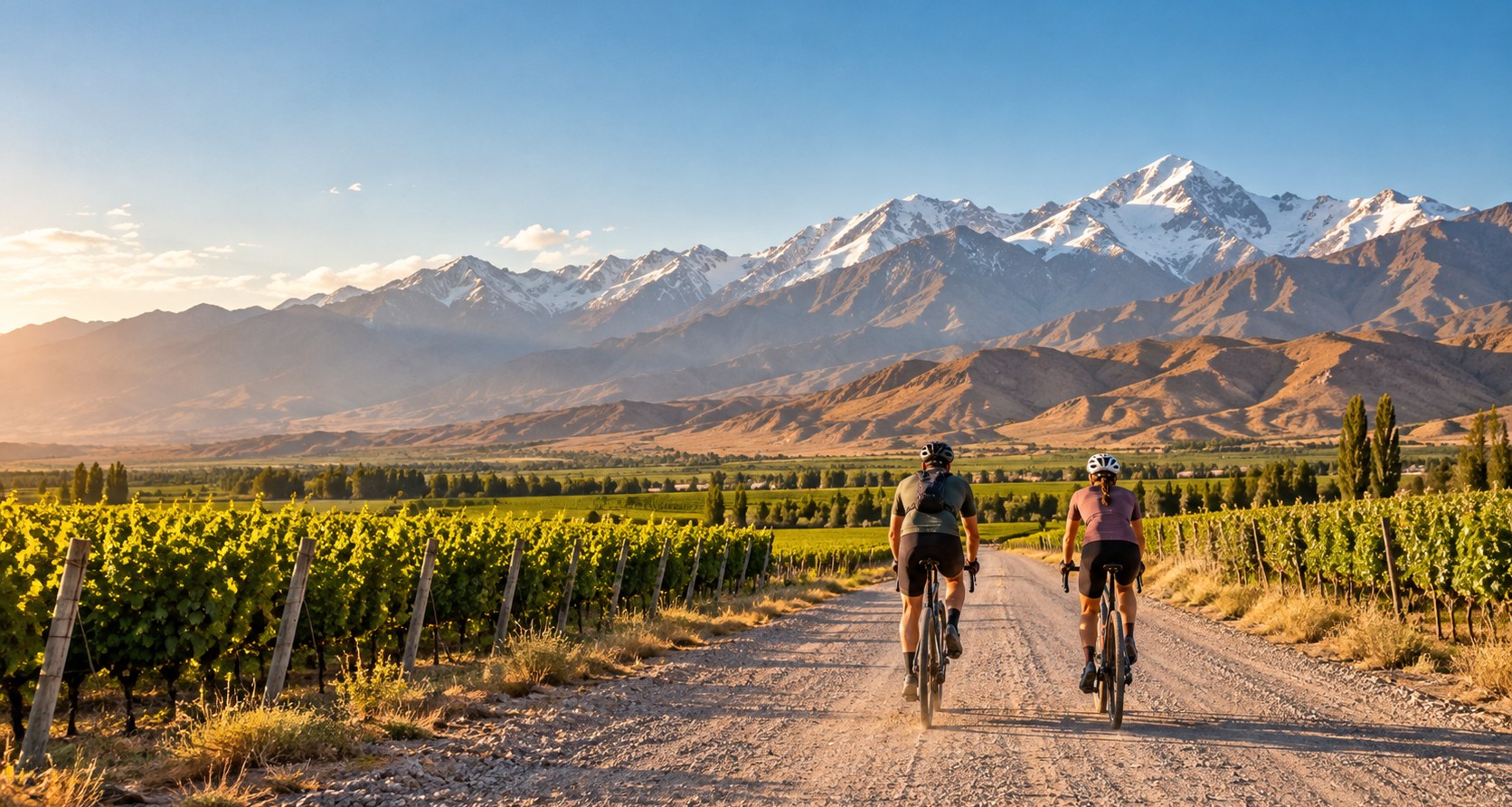
For people who cannot sit still for three days of tasting. The same private wine days, with cycling, horseback riding, hiking in the Andes or rafting placed between them, and your choice of which activities go in.
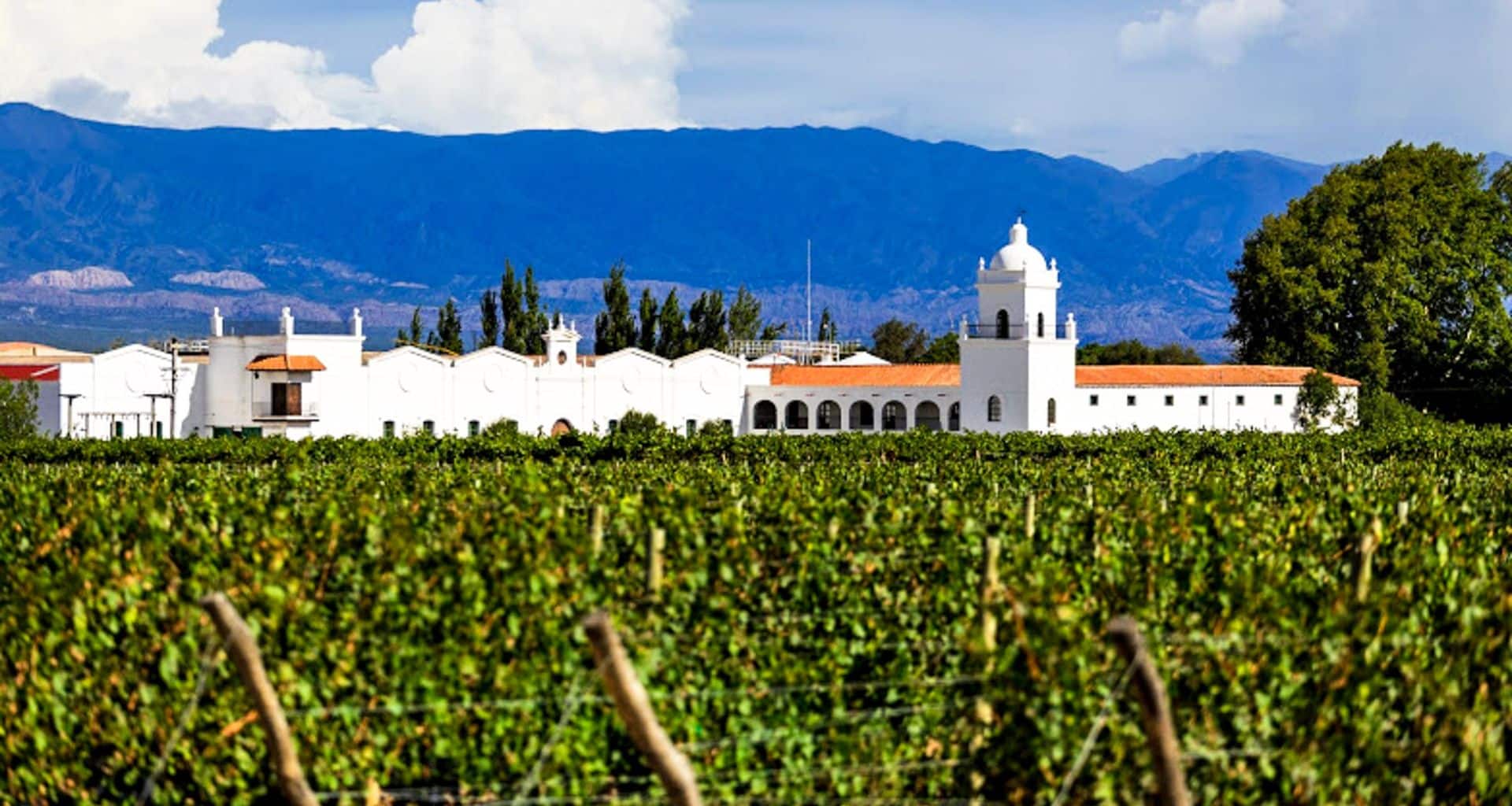
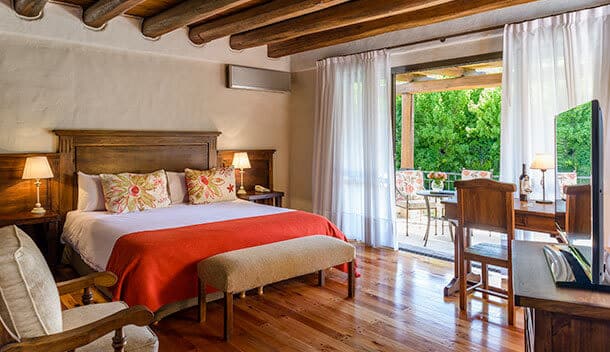
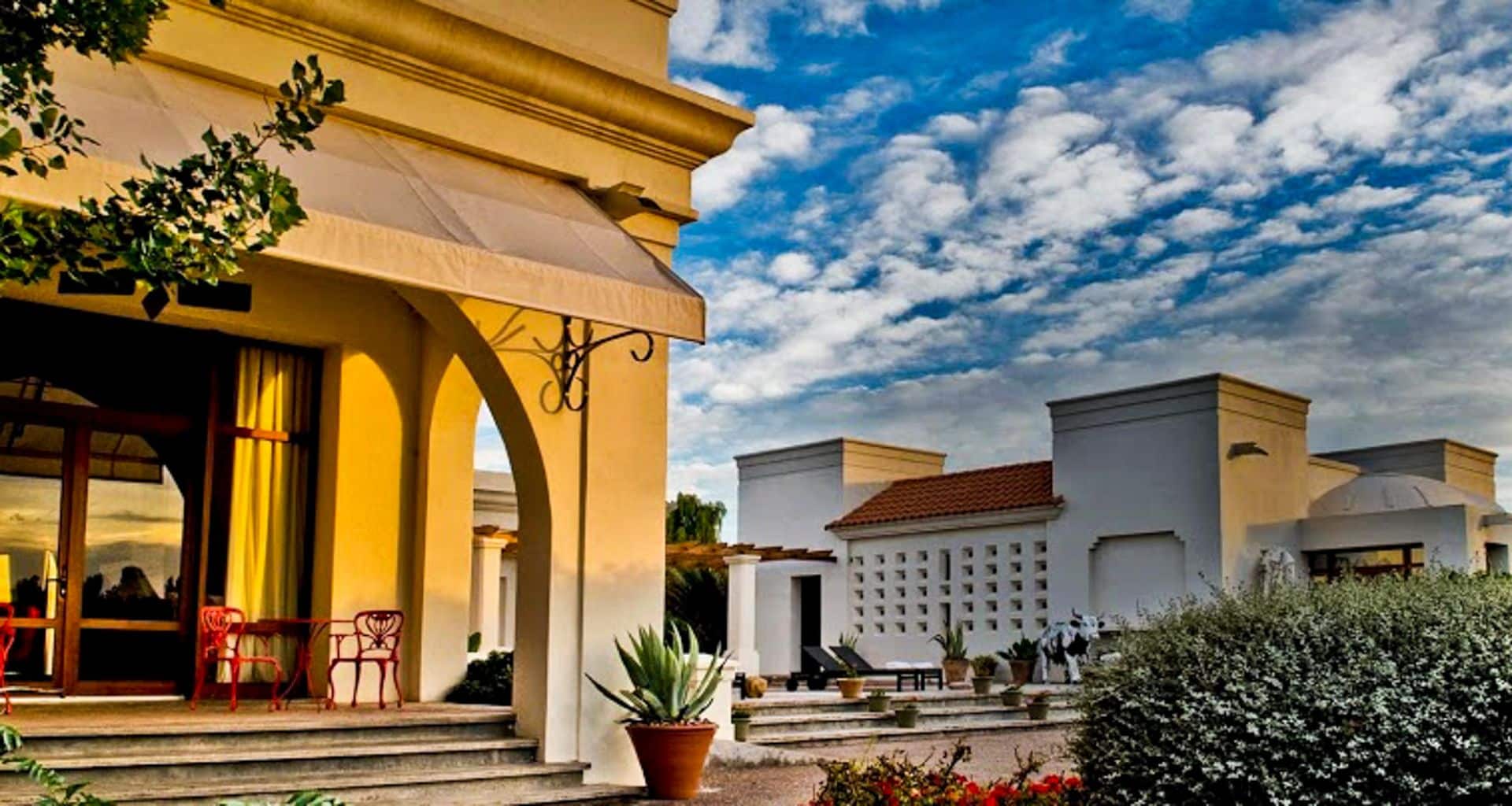
Three nights in a Relais & Châteaux lodge set in the Luján de Cuyo vineyards, where the place you sleep is as much the reason to come as the tastings. Best for couples and for anyone who would rather stay put than change hotels.
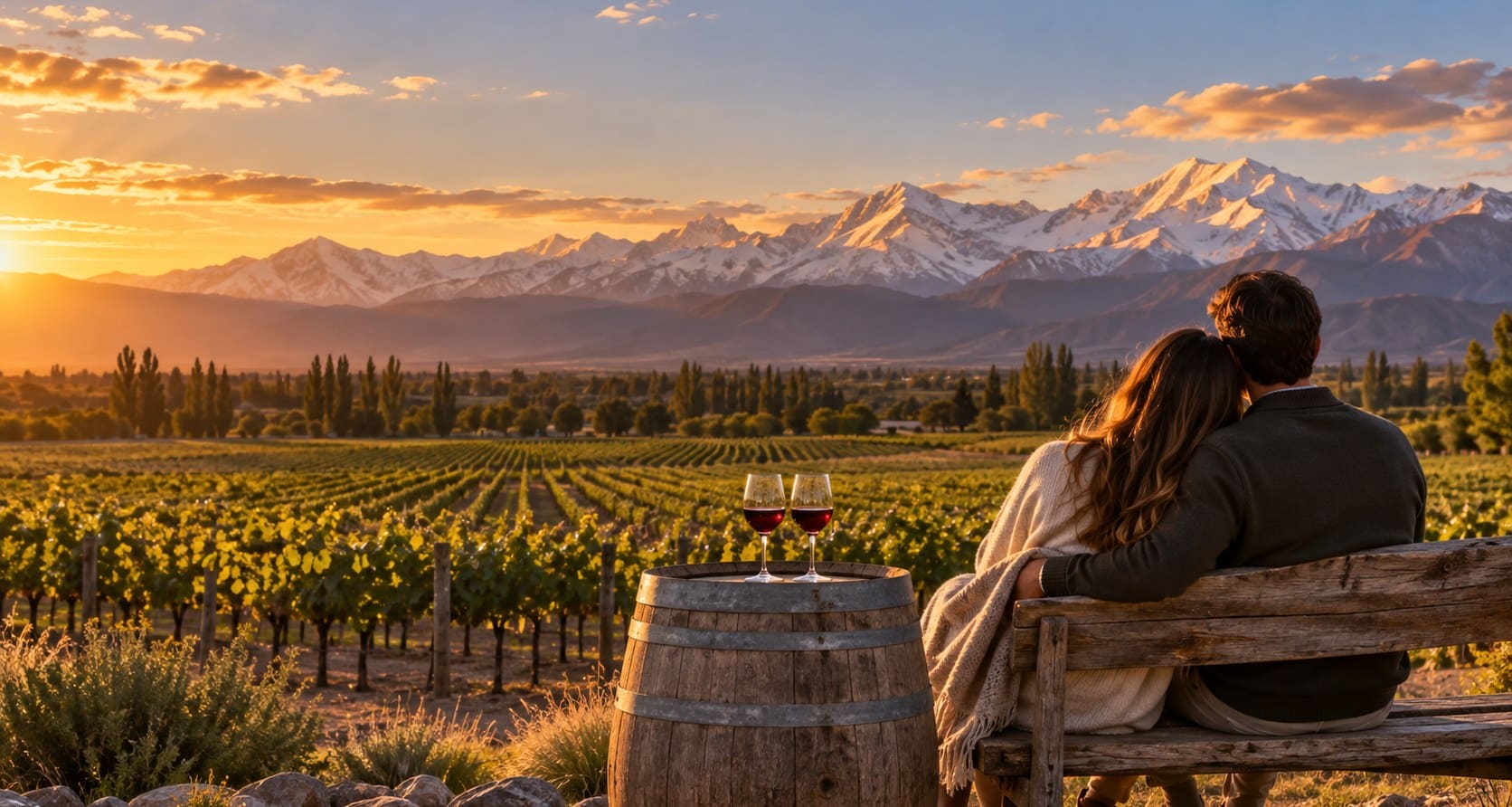
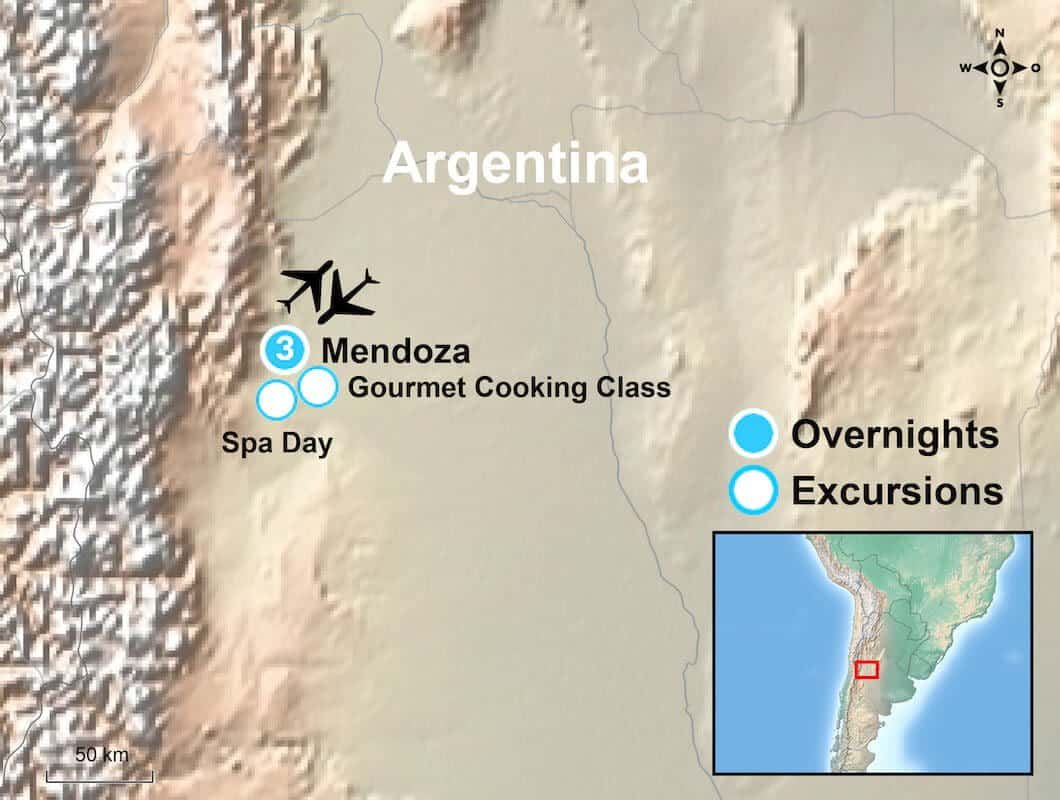
The romantic version, at a slower pace: a spa, a gourmet cooking class surrounded by vines, and three nights that do not need an alarm. It usually goes at the end of a honeymoon route rather than the start.
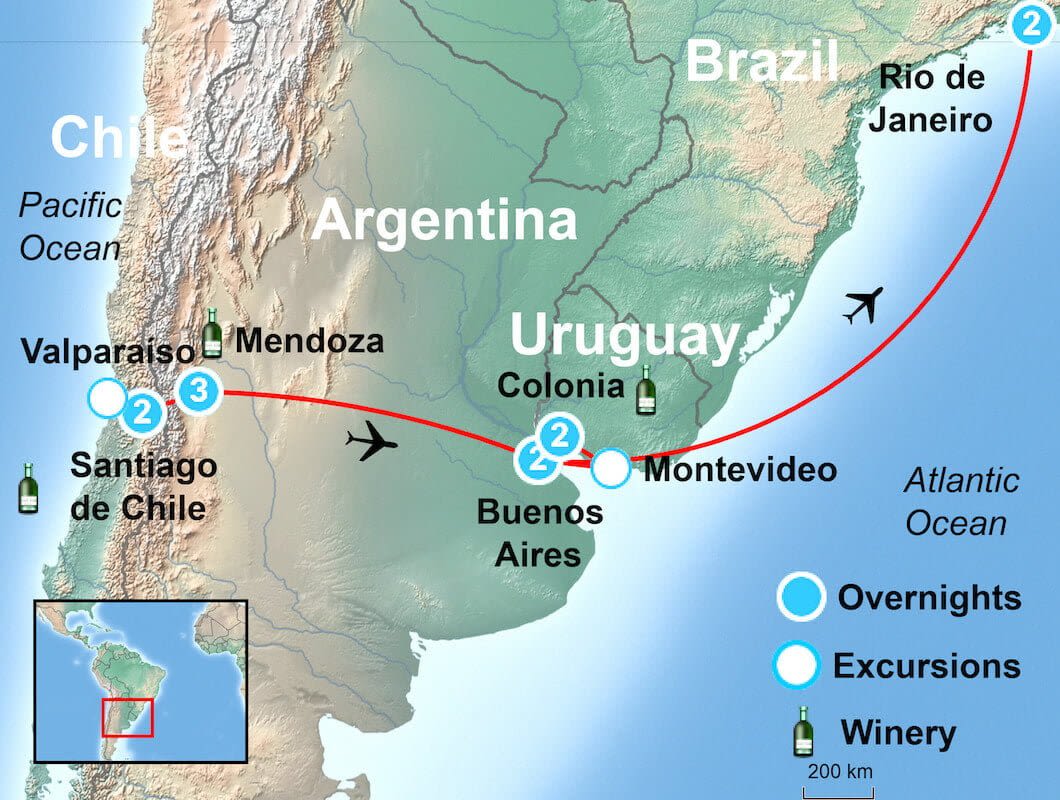
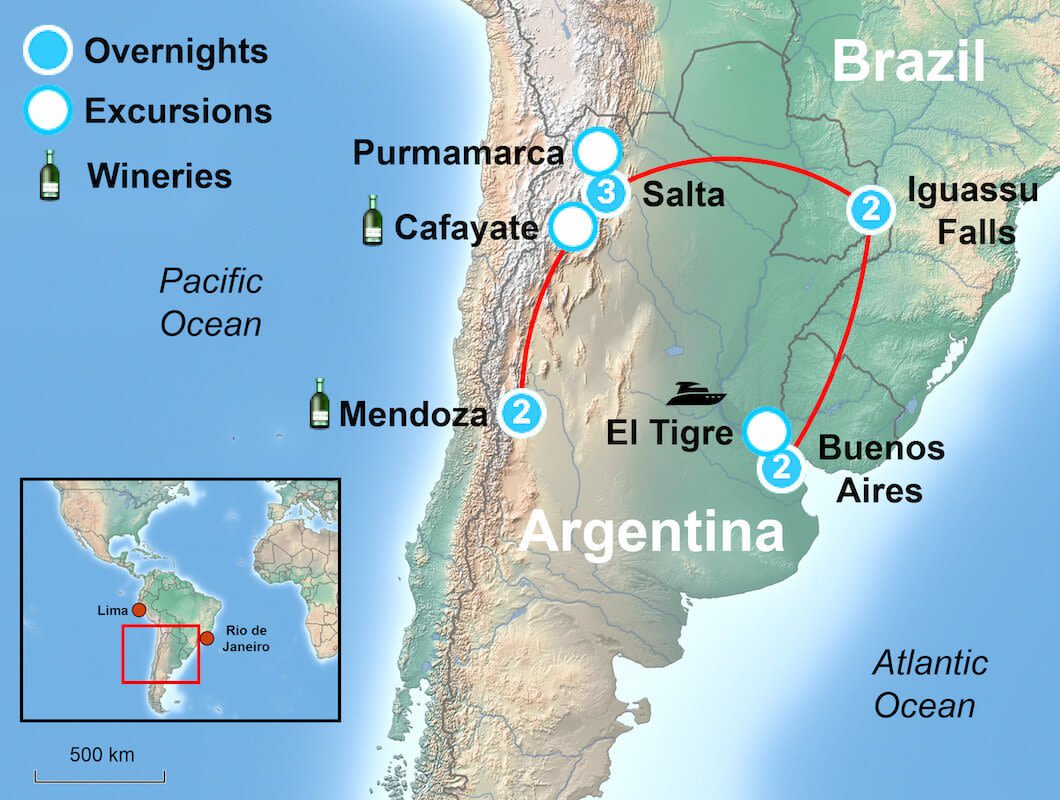
Mendoza as the finale of a full country route: Buenos Aires, Iguassu Falls, Salta and Cafayate, then the wine capital with the snow line above it. Choose this if you want the wine region inside the trip instead of bolted onto it.
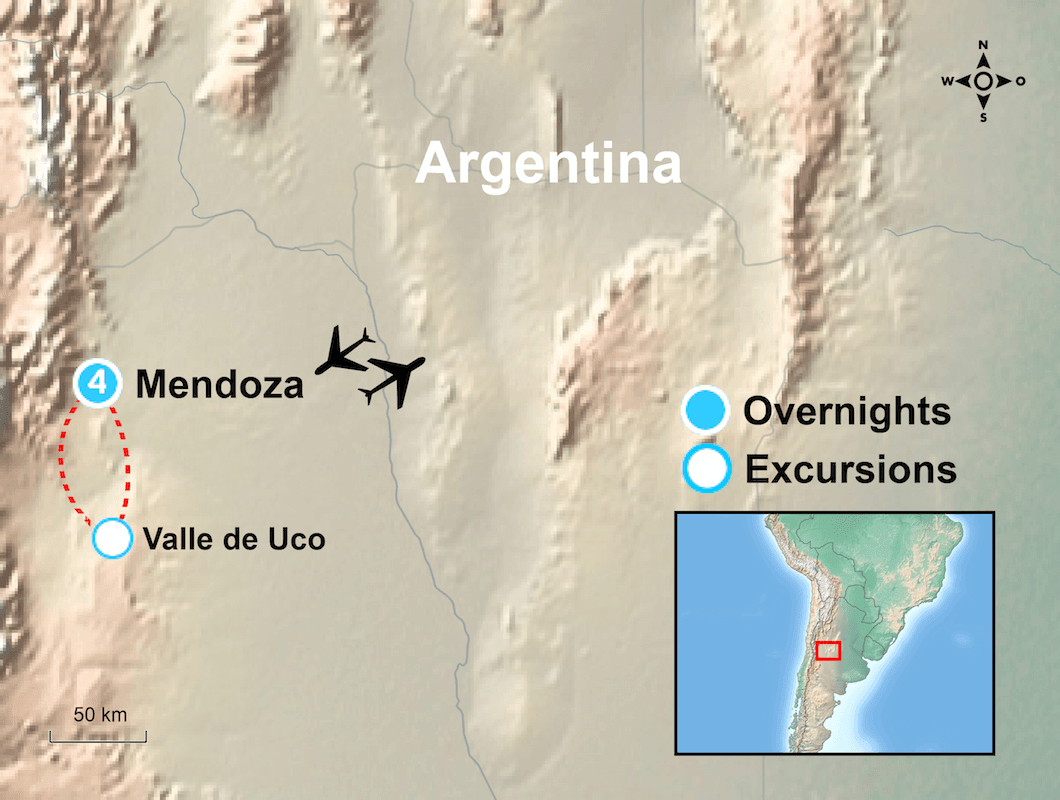
Three valleys, three different days. Maipú lies 15 to 20 km from the city, half an hour out. It is the oldest district and the flattest: historic family bodegas, olive oil and preserves alongside the wine, and quiet lanes between the gates. The one valley where cycling between wineries is a pleasure. Luján de Cuyo is 30 to 40 km south, about 45 minutes, and it is the Malbec heartland: the classic estates, older vines, and most of the vineyard lodges, Cavas Wine Lodge among them. The Uco Valley runs 80 to 120 km south, roughly an hour and a half each way, high enough that the nights turn cold, and it holds the newer bodegas built around architecture and long lunches.
A three or four night stay threads all three. Give one day to Maipú, one to Luján de Cuyo, and give the Uco a whole day rather than half of one. If the itinerary allows a night out in the Uco, take it; the drive home after a five-course lunch is the weakest hour of the trip. The Essential Mendoza Wine Tasting itinerary is built on that shape.
How to Get to Mendoza
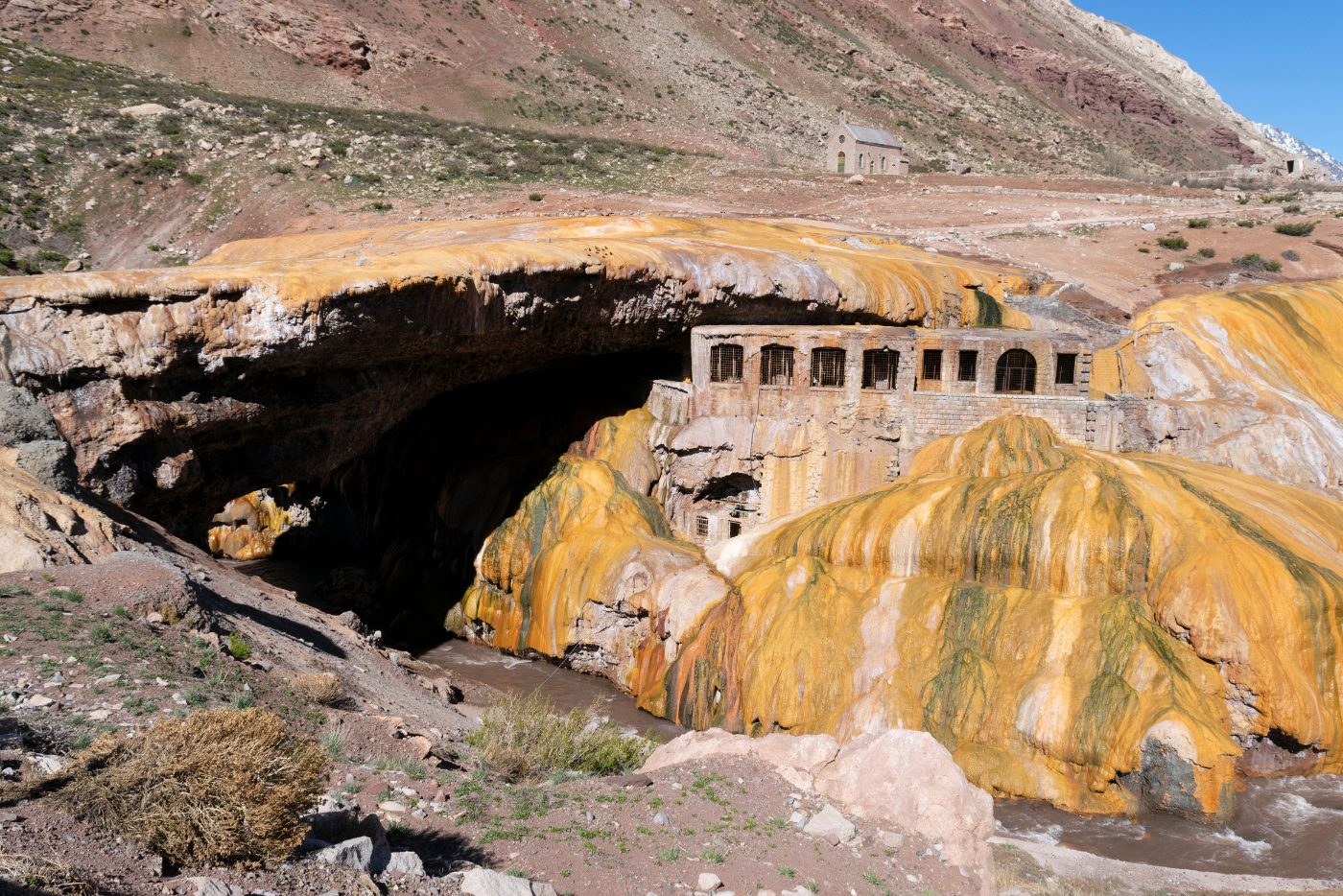
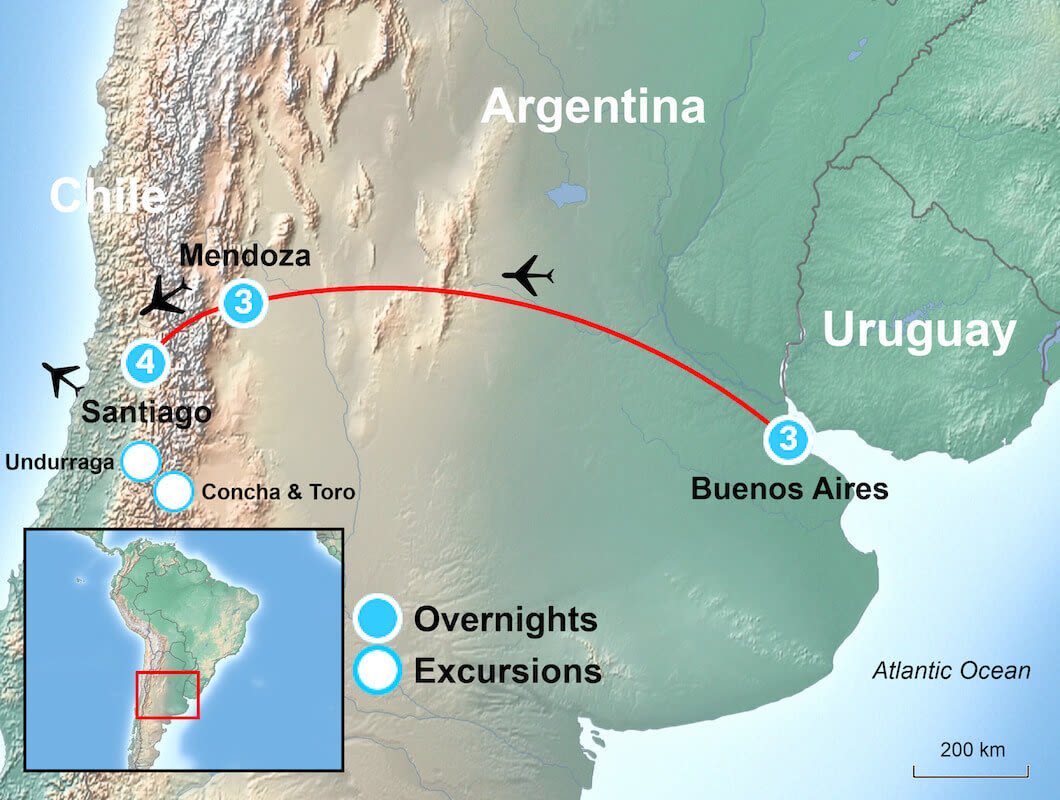
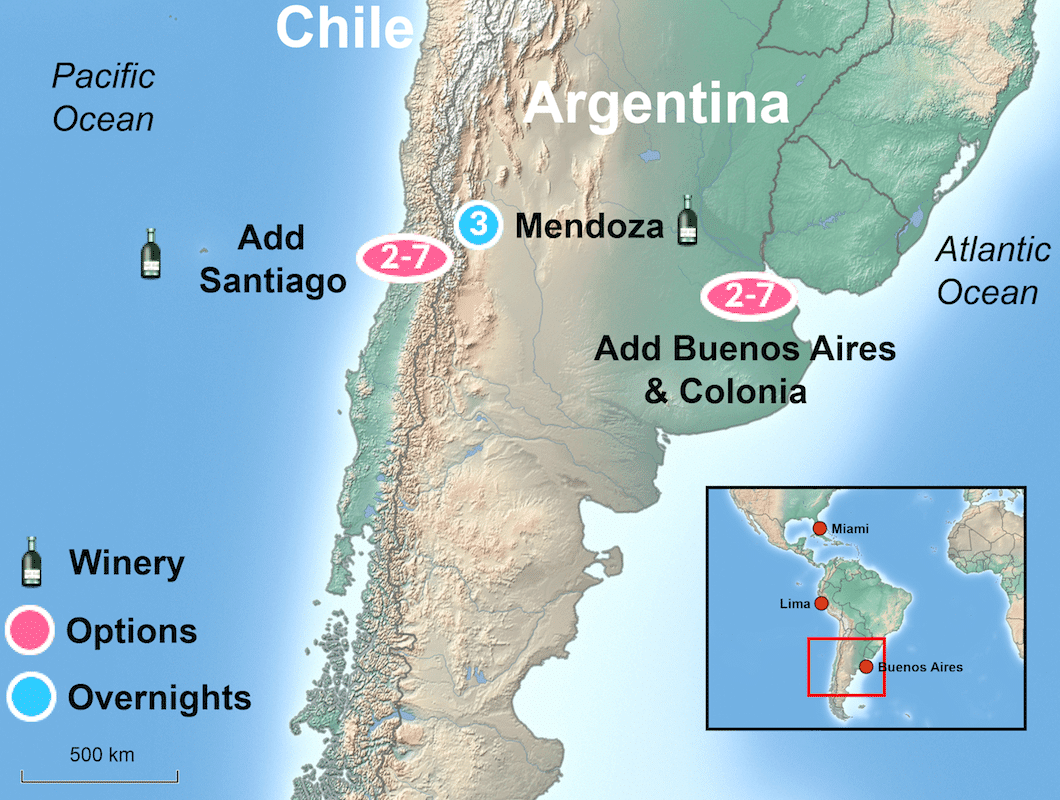
Mendoza sits in a wide valley at the foot of the Andes in western Argentina and is easy to reach. Direct flights from Buenos Aires take about two hours. From Santiago, Chile the flight is 45 to 50 minutes, and the road crossing at Paso Los Libertadores takes most of a day, past Puente del Inca and under Aconcagua. The pass closes for snow in winter, so it always needs a fallback.
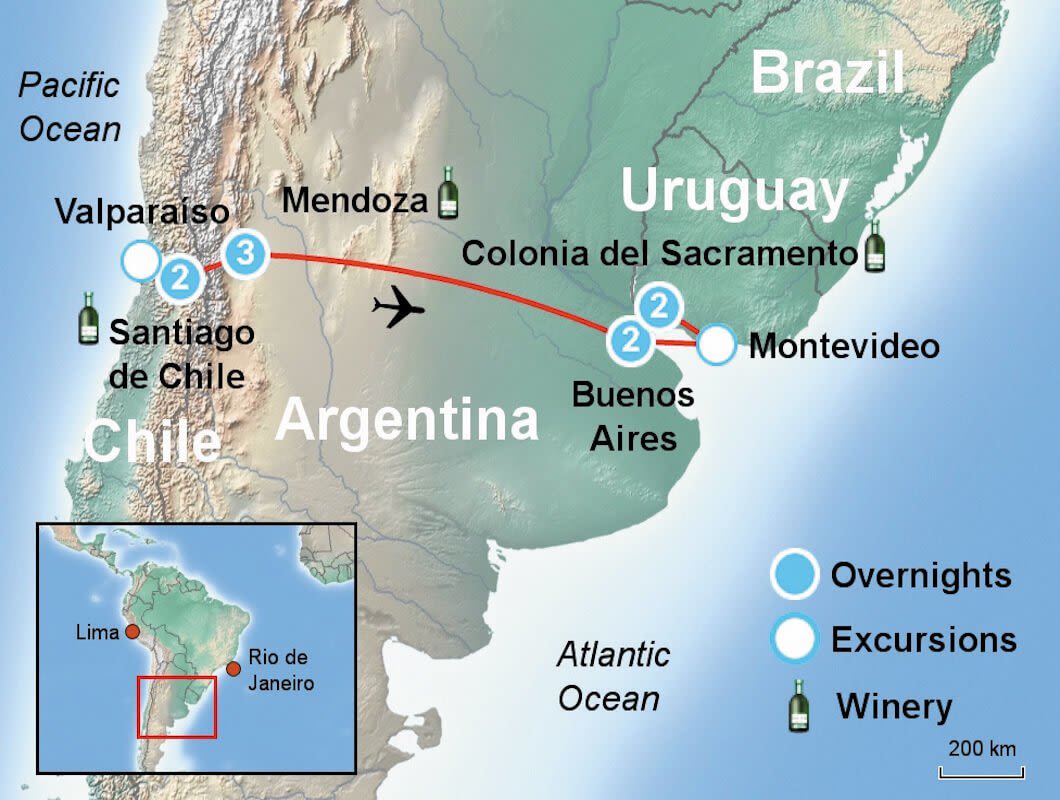
Our advice on the route: do not fly in and out of Buenos Aires. Finish the wine days and leave west over the Andes instead, which turns a wasted return leg into one of the best drives on the continent and puts Santiago at the end of your trip.
Most visitors open with a Mendoza city tour, then spend full days in Maipú, Luján de Cuyo and the Uco Valley with a wine expert guiding them between bodegas, passing landmarks such as the Church of Carrodilla. Evenings go to a boutique vineyard lodge and a long dinner.
What a Private Mendoza Wine Day Looks Like
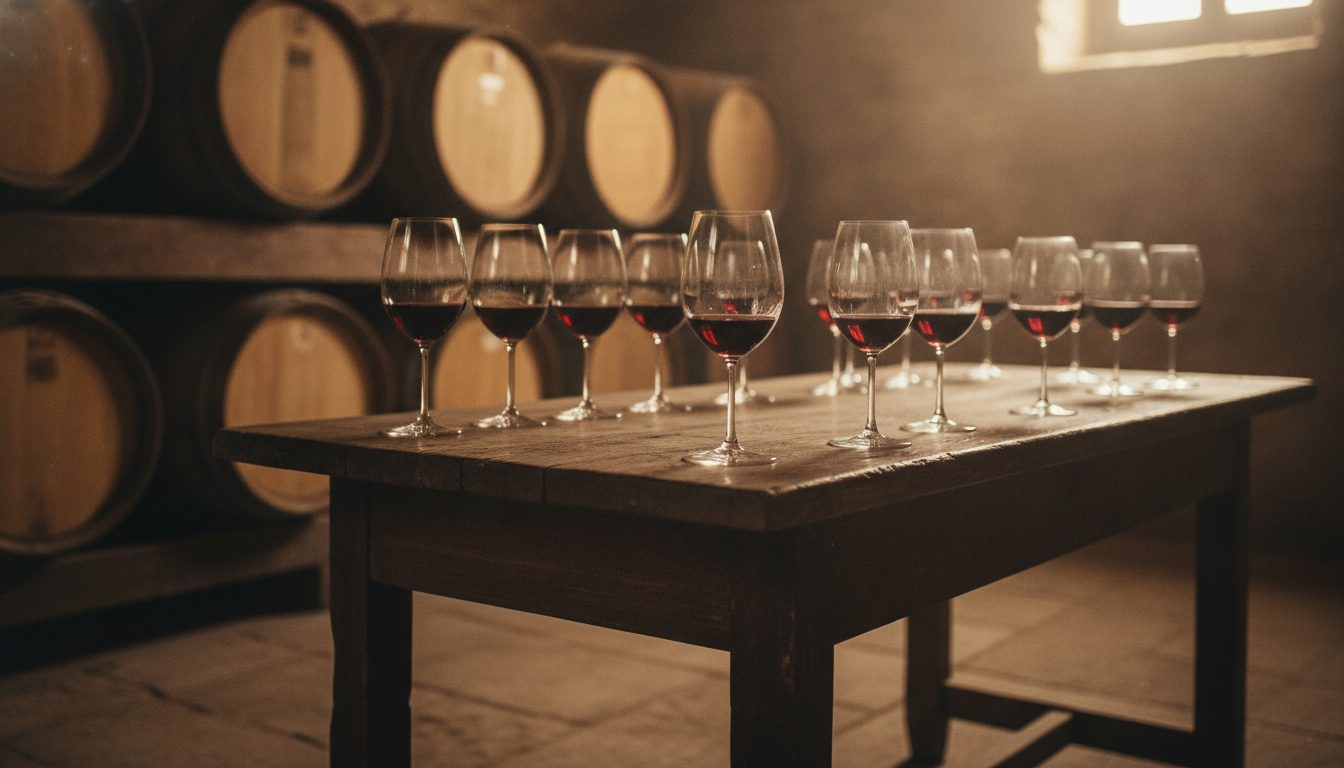
A driver collects you after breakfast with an English-speaking wine guide in the car. Three bodegas, not six. Most Mendoza bodegas receive visitors by appointment, so the day is booked weeks ahead and the times are held for you; few of the good ones take walk-ins at the gate. The middle stop is lunch, and it runs long, several courses with the winemaker’s own bottles beside them. You are back at the lodge by late afternoon, which is the whole argument for only doing three.
The guide reads the room. If you know your way around a tasting note, the talk turns to soil, altitude and why a Luján Malbec and an Uco Malbec taste like different grapes. If you do not, nobody makes you perform. It suits couples, families and small groups who want the day arranged for them. It does not suit a traveler who wants to rent a bicycle in Maipú tomorrow morning, or a cruise stopover with six hours ashore.
The Wine Regions Around Mendoza
Six places worth your days, with rough drive times from Mendoza city. Distance matters more here than in most wine regions, because the valleys run a long way south.
1.
Maipú
Fifteen to twenty kilometers from the city, so about half an hour. The oldest district: family bodegas that have been at it for generations, olive oil and preserves sold alongside the wine, and flat lanes between the gates. The one valley where cycling between wineries is genuinely pleasant.
Thirty to forty kilometers south, roughly 45 minutes. The Malbec heartland, and where most of the vineyard lodges are, which makes it the better base if you would rather sleep among the vines than in town. Classic estates, old vines, tasting rooms that look straight at the Andes.
Eighty to a hundred and twenty kilometers south, about an hour and a half. High, cold at night, and the newest part of Mendoza wine country: bodegas built as architecture, restaurants that justify the drive on their own, and tighter, more structured Malbec. Worth a night, not just a visit.
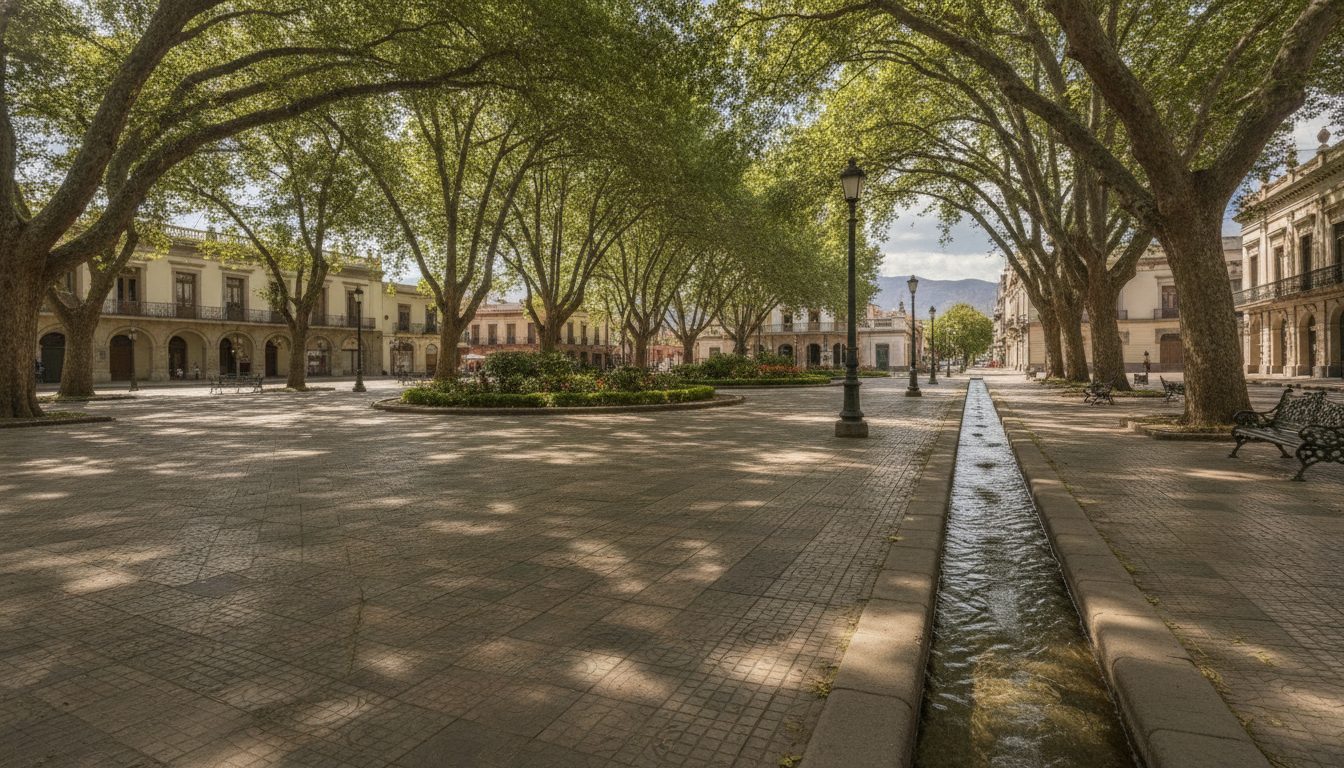
The base for everything else. Low buildings, wide plazas, plane trees over the sidewalks and acequias, the open irrigation channels that keep a desert city green. Parque General San Martín is worth an hour before dinner. Most travelers sleep here for the Maipú and Luján days, then move out to a lodge.
West of the city on the road to the Chilean border. Puente del Inca is a mineral-stained natural bridge over the river, and a little farther on comes the viewpoint for Aconcagua, at 6,961 meters the highest peak in the Americas. A full day out, and the natural first half of a crossing into Chile.
Across the Andes: Santiago and Chile's Wine Valleys
Forty-five minutes by air, or most of a day by road over the pass. Ending in Chile instead of doubling back to Buenos Aires adds Santiago and the valleys behind it to a wine trip without adding much travel time. It is the route we suggest most often.
The Malbecs worth flying for never leave Argentina. The wineries that make them are small and have no export logistics in place, and the home market is big enough for them, so what reaches a shop where you live comes from the few large producers, often under foreign ownership. Good wine. Not the reason to get on a plane. The reason is the bodegas you cannot buy from, and getting through those gates takes appointments and a guide who knows the winemakers.
We put you in the right valley for the right nights, arrange the driver and the tastings, and build Mendoza into the rest of your Argentina itinerary, flights and the Santiago exit included. Twenty years of doing it.
Download our FREE Argentina Travel Guide and get inspired to travel to Argentina. Browse through 30 pages of travel planning tips and ideas, pictures of Argentina, and adventurous tours. This e-book is a great resource for planning your Argentina dream vacation.
Planning a trip to South America? Explore essential travel info including via requirements, safety tips, weather, money, and more so you can focus on designing the perfect adventure!
Argentina Overview
Argentina Holidays
Argentina Recommended Hotels
Money in Argentina
Languages of Argentina
Safety in Argentina
Staying Healthy in Argentina
Argentina Travel Insurance
Internet & Calling in Argentina
Argentina Packing List
Argentina Visa Requirements
Argentina Flights
Argentina Food: Asado, Malbec and the Culture Behind the Table
Argentina Articles
Weather in Argentina
Mendoza Wine Tours FAQs
What is the best wine tour in Mendoza?
There is no single best one; it depends on the valley that suits you and how you like to spend a day. A first visit is usually served best by a tasting itinerary covering Maipú, Luján de Cuyo and the Uco Valley. If you would rather ride or hike between bodegas, take the adventure version. If the hotel matters most, stay at a vineyard lodge. Every one of these Mendoza wine tour packages is private and tailor-made.
Do you need to book wineries in Mendoza?
Yes. Bodegas here receive visitors by appointment, and the good ones fill weeks ahead, particularly over harvest. Turning up at the gate rarely works. We make the appointments as part of the itinerary and match them to your driver and guide, so the timings hold and lunch is booked at the bodega you actually wanted to eat at.
How many days do you need in Mendoza?
Three or four nights. That buys a day in Maipú, a day in Luján de Cuyo, a full day in the Uco Valley and an afternoon with nothing scheduled in it, which is the one people talk about afterwards. Two nights works, but the Uco is what gets cut. Spend one of the nights out in the Uco Valley if you can.
When is the best time for a Mendoza wine tour?
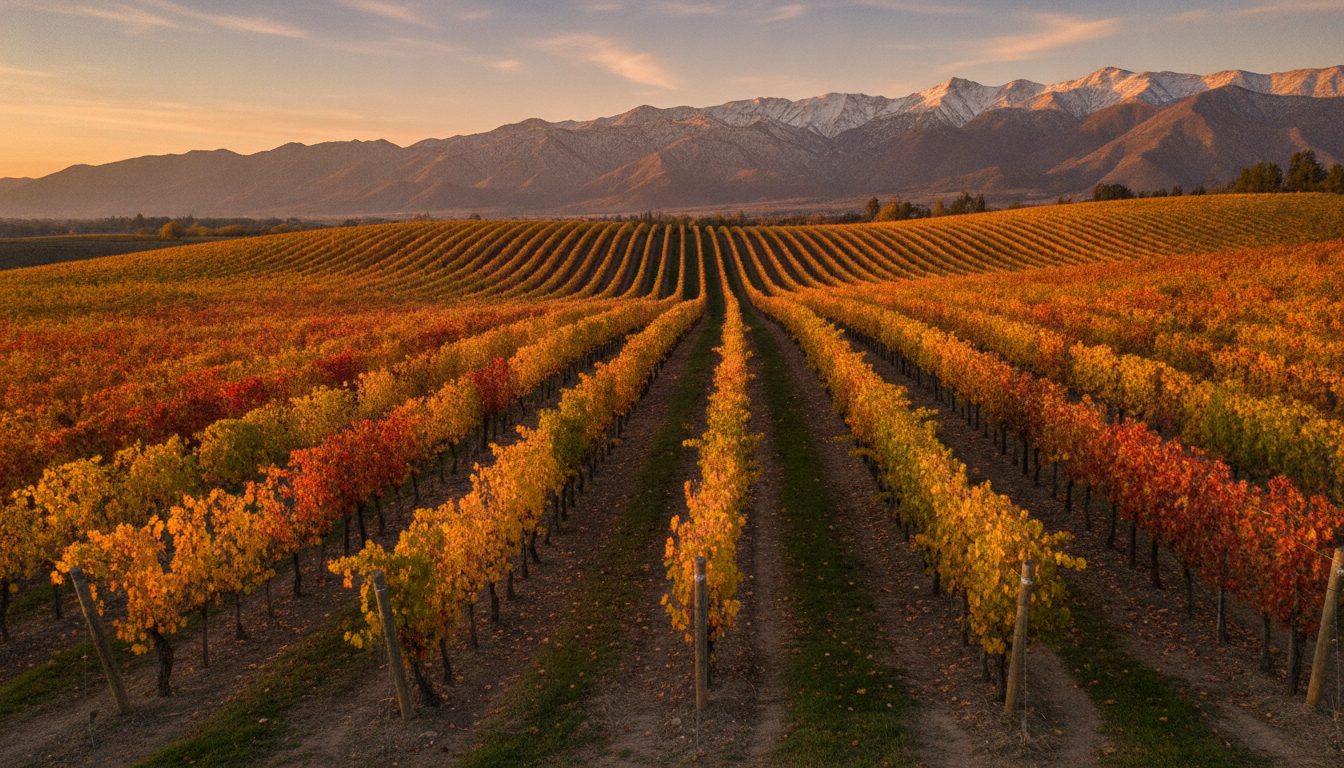
The region is dry and sunny most of the year, so there is no wasted season. Harvest runs February to April and the Vendimia festival falls in early March, which is the liveliest the valleys get and also the busiest. April and May bring the autumn color through the vines. Winter is quiet, and the Andes crossing can close for snow.
Can I do Mendoza from Buenos Aires?
Yes. The flight is about two hours, and Mendoza works as a three or four night chapter inside a longer Argentina itinerary. What you cannot do is see the wine country in a single day from Buenos Aires; the flying alone eats it. Fly in, stay, then either fly back or continue west over the Andes to Santiago.
Should I stay in Mendoza city or at a vineyard lodge?
Both, if you have four nights. Two in the city, which is walkable and holds the restaurants and the plazas, and two at a lodge in Luján de Cuyo or the Uco Valley, where you wake up in the vines and do not have to drive after lunch. With only three nights, our preference is the lodge.
Can't I just buy Argentine Malbec at home?
You can buy some of it. The small wineries making the most interesting Malbec do not export, because they have no export logistics and the Argentine market absorbs everything they bottle. What sells abroad comes from a handful of large producers, often foreign-owned. It is decent wine. It is not what you will be poured in a bodega in Luján de Cuyo.
Your Experts in Argentina!
Let’s Design Your Mendoza Wine Trip
Our specialists have been arranging bodega appointments and private wine guides in Mendoza for more than twenty years. Send your dates and what you like to drink, and we will build the valleys into your Argentina itinerary.
We Love to Talk About South America Trip Ideas!
Thinking of traveling to South America? We take your South American travel dream and make it a reality. Every fully custom South America trip is planned by your own expert personal Travel Consultant.
"*" indicates required fields
Argentina Travel Guide
Our favorite Argentina tour ideas featuring the best destinations & activities designed to inspire…
 +1 (888) 900-5060