Argentina runs from the subtropical north around Iguazú, at about 26° south, to Ushuaia on Tierra del Fuego, at almost 55° south, and the Andes run the whole way, from northern Argentina to the southern extreme. So the first question about the weather is not when. It is where. On the same January afternoon, Mendoza averages 91°F (33°C) and Ushuaia 56°F (14°C).
Argentina’s national weather service, the Servicio Meteorológico Nacional (SMN), describes a subtropical north, a mild center with hot summers, a temperate to subpolar south, and a high-mountain climate above about 8,200 feet (2,500 m).
These are the SMN’s 1991–2020 climate normals, also reported to the World Meteorological Organization, in °F with degrees Celsius in parentheses. Highs and lows are the monthly averages for January, midsummer, and July, the coldest month at every station here.
| City (SMN station) | Altitude | January high / low | July high / low | Rain per year | Wettest month | Driest month |
|---|---|---|---|---|---|---|
| Iguazú (airport) | 886 ft (270 m) | 90 / 69°F (32 / 21°C) | 73 / 52°F (23 / 11°C) | 77.2 in (1,960 mm) | October | August |
| Salta (airport) | 4,006 ft (1,221 m) | 82 / 62°F (28 / 17°C) | 68 / 37°F (20 / 3°C) | 29.1 in (738 mm) | January | June to August |
| Buenos Aires (city observatory) | 82 ft (25 m) | 86 / 68°F (30 / 20°C) | 60 / 46°F (16 / 8°C) | 49.5 in (1,258 mm) | January | June |
| Mendoza (airport) | 2,310 ft (704 m) | 91 / 67°F (33 / 19°C) | 60 / 36°F (15 / 2°C) | 9.4 in (238 mm) | January | July |
| Bariloche (airport) | 2,756 ft (840 m) | 74 / 45°F (23 / 7°C) | 44 / 29°F (7 / −2°C) | 32.0 in (813 mm) | June | February |
| El Calafate (airport) | 669 ft (204 m) | 66 / 45°F (19 / 7°C) | 41 / 24°F (5 / −4°C) | 6.3 in (161 mm) | April, May | January, November |
| Ushuaia (airport) | 187 ft (57 m) | 56°F (14°C) / not published | 40 / 32°F (5 / 0°C) | 18.0 in (458 mm) | April | October |
El Calafate’s record begins in 2001 and Ushuaia’s in 1997, and the SMN publishes no Ushuaia low outside July. Read the rain column twice. Mendoza and El Calafate are drier than most people expect.
Argentina does have four seasons, counted the southern way: summer from December to February, autumn from March to May, winter from June to August, spring from September to November. Remember that the seasons in the southern hemisphere are opposite to North America’s, so a Christmas trip lands in summer.
What a season means depends on the region. Summer is the rainy season in Salta and the dry one in Bariloche. For when to go, region by region, see the best time to visit Argentina. This page sticks to what the weather does.

Central Argentina is the Pampas: the flat plains around Buenos Aires, the hills of Córdoba, which rise to 9,150 feet (2,790 m) at Cerro Champaquí, and the beaches down to Mar del Plata. The climate is temperate with distinct seasons, hot and humid in summer, cool in winter. Frost in Buenos Aires is rare, less than one night a year.
Winter is drier, not dry. The city gets about 15 inches (387 mm) of rain from December to February and 8 inches (206 mm) from June to August, still on five or six days a month. Two winds have names. The pampero arrives from the south or southwest, gusty, and drops the temperature and humidity. The sudestada blows hard from the southeast, sometimes for days, and can hold back the Río de la Plata until it floods its shores.
Along the Atlantic coast, beach weather is milder. Mar del Plata, on the Atlantic Ocean, averages 80°F (26°C) on a January afternoon, 6°F (about 4°C) cooler than Buenos Aires.
The northeastern edge of Argentina, Misiones and the country around Iguazú, is one of the wettest parts of Argentina. Iguazú gets rain on about 100 days a year and has no dry season: October brings almost 10 inches (247 mm), and even August, the driest month, more than 3 inches (84 mm). Thunderstorms peak from October to March. Winters are mild. A Buenos Aires, Iguazú and Perito Moreno itinerary crosses three of these climates in one trip.
The northwest is desert country, high plains and river valleys, with the Puna plateau averaging about 11,500 feet (3,500 m). Here the rain comes in summer. Salta gets four-fifths of its 29 inches (738 mm) between December and March, almost 8 inches (197 mm) in January alone, while June, July and August bring about a tenth of an inch (2–3 mm) each. Winter is the northwest’s dry season, with mild days, nights near 37°F (3°C) and frost on about nine nights in July.
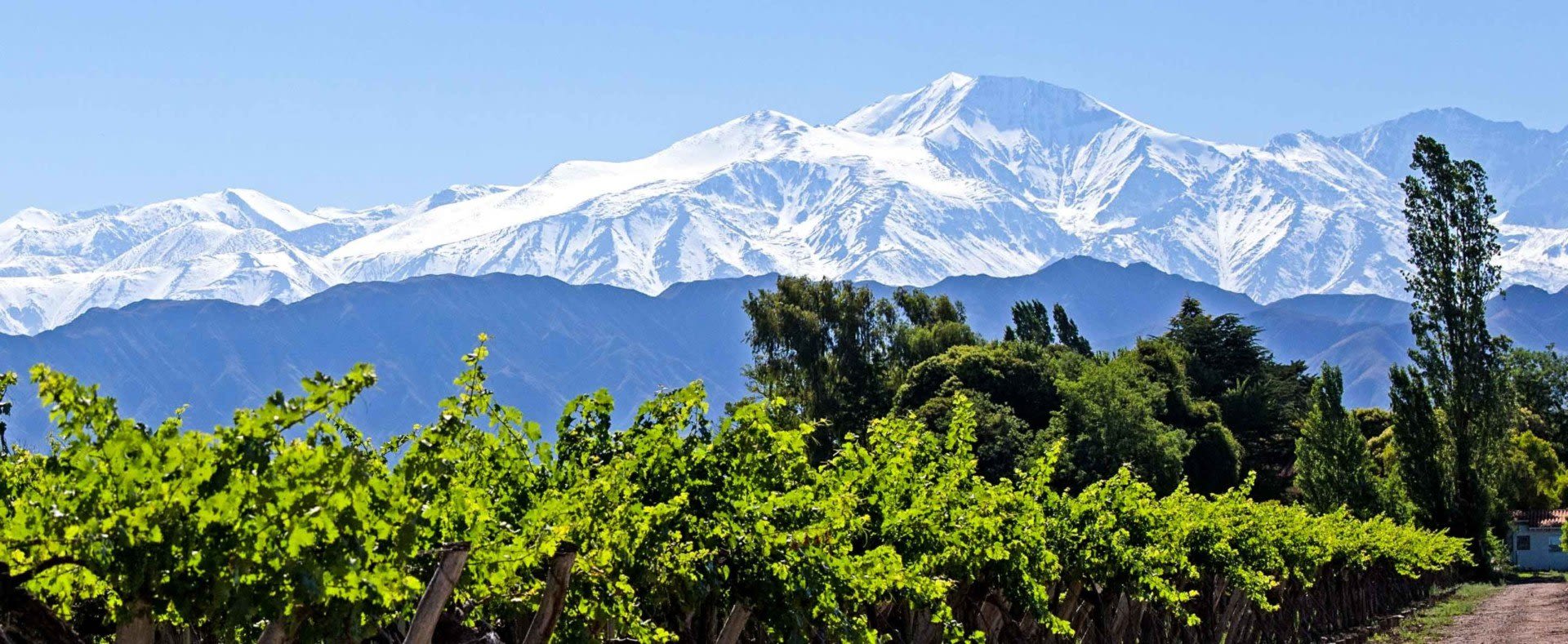
Mendoza sits in dry country at the foot of the Andes: 9.4 inches (238 mm) of rain a year on about 30 days, and close to 3,000 hours of sunshine. In the high cordillera above the Mendoza wine country, storms can bring heavy snow.
The Lake District turns the pattern around. Bariloche gets almost two-thirds of its 32 inches (813 mm) from May to August and sees snow on about 25 days a year, seven of them in July. Summers are dry and mild; February brings less than an inch (18 mm) of rain. For ideas, see our Bariloche and Lake District tours.
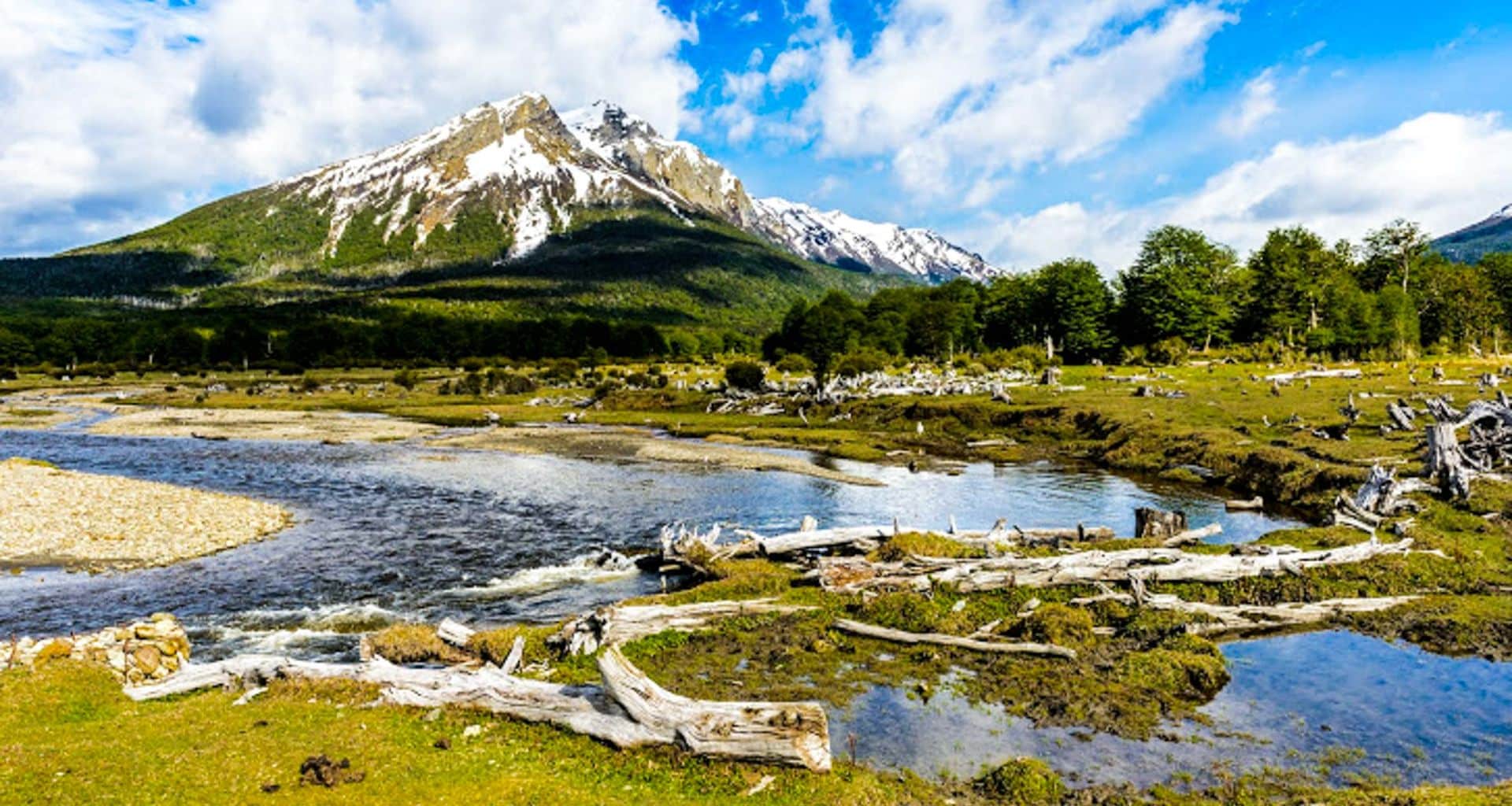
Southern Patagonia is glaciers, mountain lakes and stepped plateaus running east to the Atlantic, and it is drier than it looks. The Andes wring the moisture out of the Pacific air, so El Calafate gets only 6.3 inches (161 mm) a year, with frost on about 151 nights. Our Patagonia weather page goes deeper on the region.
Ushuaia stays cool all year. Rain or snow falls on about 99 days, and the SMN counts about 60 days with snow, more than twice Bariloche’s count, mostly in winter and now and then in summer. That snow is what skiing in Ushuaia runs on.

Wind is the Patagonian weather visitors remember. It blows mostly from the west and, the SMN says, hardest from November to February, right through the southern summer. In El Calafate it tops 27 mph (43 km/h) on about 20 days a month from November to January, against six or seven in May and July. Ushuaia has nearly 300 such days a year. Bring a windproof layer for an El Chaltén and El Calafate trek, and leave slack in the plan for the days the wind wins.
Mendoza has its own wind, the zonda. It comes down the eastern side of the Andes warm and extremely dry, gusting above 25 mph (40 km/h), and sends the temperature up and the humidity down. It is most frequent in winter and early spring, and the SMN issues alerts for it.
In the northwest, altitude does what latitude does in the south. At La Quiaca, 11,348 feet (3,459 m) up on the high plateau, July afternoons reach 61°F (16°C) and nights fall to 21°F (−6°C), with frost on 139 nights a year. Above about 13,100 feet (4,000 m), snow can fall even in summer.
Pack for the regions on your route, not for the month alone. Buenos Aires and Iguazú in summer call for light clothes, rain gear and sun protection. The northwest and Mendoza want layers for warm days and cold nights. Bariloche and anywhere south of it want a warm, windproof, waterproof jacket in every season, since even January nights in El Calafate average 45°F (7°C). Our Argentina packing list covers the rest.
If your trip crosses several of these climates, share your dates when you ask about a custom Argentina trip, so the weather shapes the route from the start.