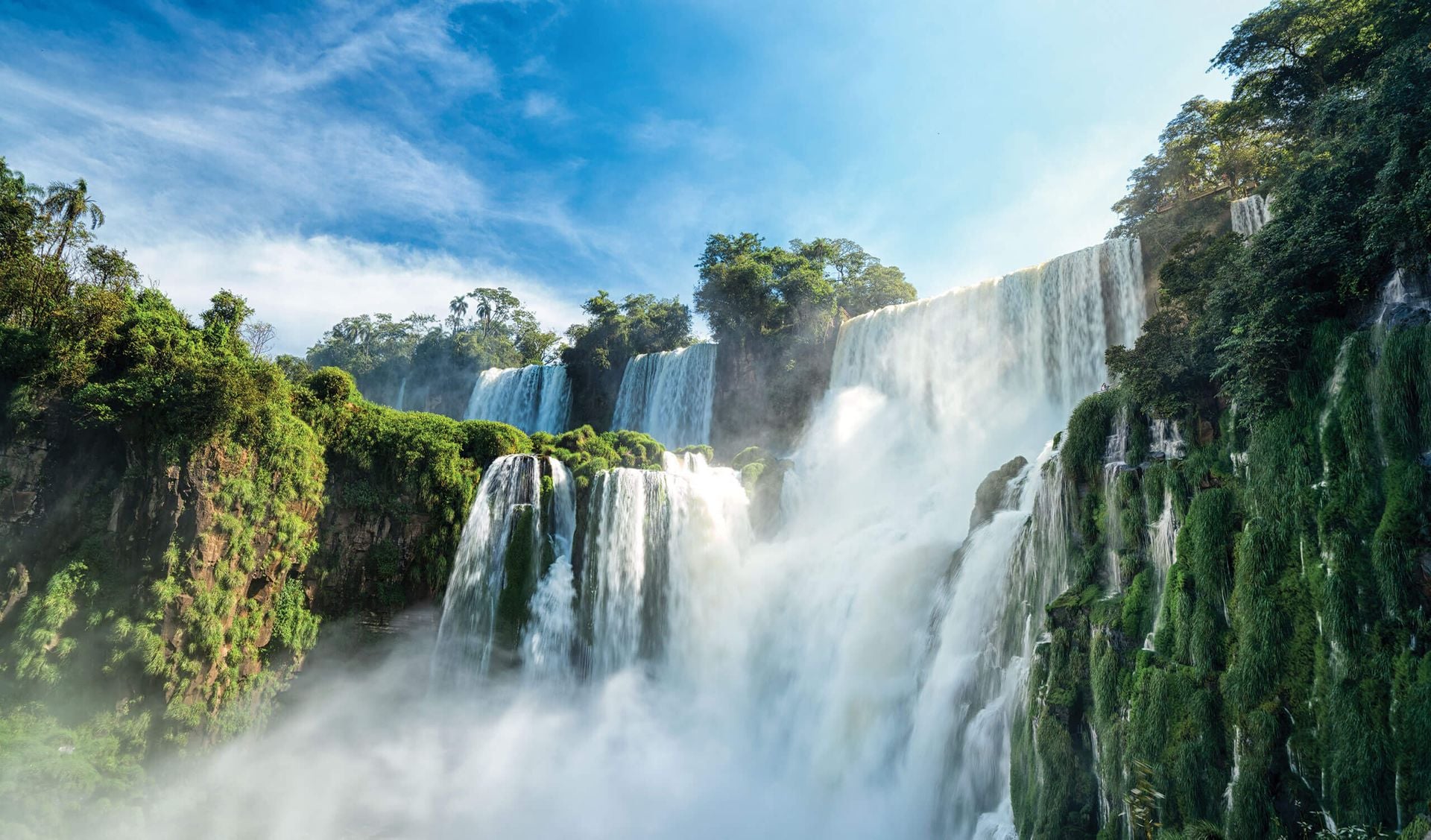
Wondering what to do on your Argentina trip? Below are the 18 experiences and places our team rates highest after 30+ years of planning Argentina tours — from icons like Perito Moreno and Iguazú to the spots most first-time itineraries miss, like the Iberá Wetlands and the high-desert Northwest.
One piece of advice before the list: the famous places are famous for a reason. Don’t skip the Perito Moreno Glacier or Iguazú Falls because they draw crowds — skip the checklist version of them. Stay the extra day, linger over the long lunch, and let Argentina surprise you.
Updated for the 2026-2027 Argentina travel season.
There are so many incredible things to do in Argentina. I recommend visiting the sprawling, outdoor San Telmo market full of local artists. In addition to San Telmo, one of the most unique experiences I have had was sailing through the Andean Mountain range. Starting in Argentina, in the city of Bariloche, you navigate 3 lakes by catamaran across the Chilean border, ending in Puerto Varas. Regardless of where in Argentina you visit, never miss an opportunity to sample the Steak or Malbec.
-Conrad McGarvey
Argentina Travel Expert

Perito Moreno is one of the only major glaciers on Earth you can stand in front of and watch calve — building-sized slabs of ice crack and crash into Lago Argentino throughout the day. Walkways put you a few hundred meters from the face, and boat and ice-trekking options get you closer still. Our advice: don't day-trip it and run. Stay an extra night in El Calafate, base for Patagonia's glacier country, and take the town at its own pace. El Calafate is about a three-hour nonstop flight from Buenos Aires, and the glacier is an easy 80-km drive from town.

Three hours north of El Calafate, El Chaltén is Argentina's trekking capital — and pairing the two is the single best upgrade you can make to a Patagonia itinerary. Day hikes like Laguna de los Tres put you at the foot of Mount Fitz Roy's granite spires without technical climbing, and the town runs on hikers, so logistics are easy. Serious walkers can extend across the border into Chilean Patagonia and Torres del Paine on our Argentina adventure tours. El Chaltén sits about three hours north of El Calafate by road — the two pair naturally in one Patagonia leg.

Here's what the wine-shop shelf at home won't tell you: most of Argentina's best Malbec never crosses the border. The standout wineries around Mendoza and Cafayate are small — they don't have export logistics, and the domestic market keeps them busy. What reaches the US and Europe comes mostly from a handful of mass producers. So a tasting on a Mendoza wine tour isn't a nicer version of drinking Malbec at home — it's wines you simply cannot get any other way.

Argentine beef is legendary — but the secret isn't the cow, it's the ritual. A real asado is grilled slowly, for hours, away from the flame, while everyone stands around the fire with a drink in hand and the starters keep coming. A late lunch drifts into evening without anyone noticing. The best place to experience it is a family-run estancia in the pampas outside Buenos Aires, where the asado comes with gaucho horsemanship and the heritage behind it. Pair it with our Argentina food & wine tours.

The "Paris of South America" is best taken one barrio at a time: the Sunday San Telmo market sprawling with local artists and antiques, Recoleta's grand cemetery and cafés, Casa Rosada and the boulevards of Avenida de Mayo, La Boca's painted houses, and Palermo's restaurants — where Italian and Middle Eastern immigrant influence shows up in some genuinely creative cooking. Give the city two to three days on any Buenos Aires tour before flying onward.

Tango belongs to Buenos Aires, and you can meet it two ways: a polished dinner show with world-class dancers, or a neighborhood milonga where porteños dance for themselves and beginners can take a pre-dance class. Do the show for the spectacle, the milonga for the goosebumps. Visiting in August? The Buenos Aires Tango Festival brings the world's best dancers to town — many events are free. A Buenos Aires tango tour can build in both.

Nearly 300 falls thunder over a two-mile arc of jungle cliffs at Iguazú, and the Argentine side's walkways take you directly over the lip of the Devil's Throat — you feel the falls in your chest before you see them. For now that walkway is closed: the park took it down in August 2026 as a flood precaution and has not set a reopening date, while the Upper and Lower circuits stay open. We check its status when we plan your dates. Most visitors sprint through in a day. Don't: the subtropical forest around Puerto Iguazú rewards a second day (the Brazilian side's panorama alone is worth the border crossing), and it sets up the wildlife detour most travelers never hear about — see the next item. Puerto Iguazú is under two hours by air from Buenos Aires, and the park entrance is roughly 20 minutes from town.

The Iberá Wetlands are our favorite answer to "what don't the guidebooks push?" One of the largest freshwater wetlands in the world, teeming with capybaras, caimans, marsh deer, and hundreds of bird species — and, with rewilding well underway and a bit of luck, wild jaguars. The logistics are slightly complicated, which is exactly why the crowds haven't arrived. It slots naturally between Iguazú and Buenos Aires; ask us to build it into a custom Argentina tour.

From June through early December, southern right whales gather to breed in the sheltered gulfs of UNESCO-listed Península Valdés — close enough to shore that you can sometimes watch them from the beach at Puerto Madryn. Boat excursions get you alongside mothers and calves; the peninsula also hosts elephant seals, sea lion colonies, Magellanic penguins, and — for the very lucky, in season — orcas hunting along the shore.

Argentina's Northwest feels like another country: colonial Salta, the rainbow rock of the Quebrada de Humahuaca, high-altitude vineyards, and the famous Train to the Clouds. And a tip from our co-founder: the overland route from Salta across the Andes to Chile's Atacama Desert — flamingos against the mountains most of the way — is one of the most spectacular road journeys in South America. Argentine long-distance buses are far more comfortable than most travelers expect. Salta is a two-hour flight from Buenos Aires and makes the easiest gateway to the whole region.
Argentina is the world’s eighth-largest country, and its regions are wildly different — subtropical jungle in the north, vineyards and high Andes in the west, whale coasts in the east, and glacier country at the bottom of the map. These are the eight places we route most first and second trips through; grab the free Argentina travel guide for the full picture.
Argentina's capital deserves two to three days at either end of a trip: tango, steakhouses, museums, and markets, plus easy day trips to Tigre's delta or a family-run estancia — most are surprisingly luxurious, pool included, with horseback riding always on the program. Nearly every Argentina itinerary pivots through here, so use it well.

The gateway to Perito Moreno and the glacial lakes of southern Patagonia. Beyond the famous boardwalks: boat safaris among icebergs on Lago Argentino, ice-trekking on the glacier itself, and historic Estancia Cristina, reachable only by boat. A relaxed lakeside town worth an unhurried extra day.

Alpine lakes, forested peaks, chocolate shops, and Argentina's best skiing at Cerro Catedral. The signature journey here is the Andean lakes crossing: three lakes by catamaran from Bariloche across the border to Puerto Varas, Chile — one of our team's most unforgettable travel days anywhere. Explore Bariloche & Lake District tours.

Colonial architecture, Andean culture, and the layered reds and ochres of UNESCO-listed Quebrada de Humahuaca. Cafayate's high-altitude Torrontés vineyards make this the thinking traveler's wine detour. Pairs naturally with a crossing to Chile's Atacama. See Salta & Northwest Argentina tours.

The southernmost city on Earth: sail the Beagle Channel past sea lion colonies, hike Tierra del Fuego National Park, and ride the End of the World train. Ushuaia is also the departure port for Antarctica — many travelers combine both. Browse Argentina cruises.

More than a base for the falls: the red-earth Misiones rainforest hides the evocative Jesuit ruins of San Ignacio Miní, and the Iberá Wetlands lie within reach to the south. Stay two nights and the subtropical north becomes a destination in its own right, not a layover.

Vineyard lunches under the highest Andes, bodega tastings you can't replicate abroad, and views of Aconcagua — the highest peak in the Americas. From here you can cross the Andes to Santiago by road, one of the continent's great mountain drives. Start with Mendoza wine tours.

A UNESCO World Heritage marine sanctuary on the Atlantic coast: whales in season, elephant seals, sea lions, and vast Magellanic penguin colonies nearby. One of South America's great wildlife stops — see our Argentina UNESCO tours for how it fits a longer route.

Distances are huge, so most itineraries fly between regions — Buenos Aires is the hub, with direct flights to El Calafate, Ushuaia, Bariloche, Mendoza, Salta, and Puerto Iguazú. Two insider notes from 30+ years of routing trips: first, Argentina’s long-distance buses are excellent — full-recline seats and standards well above what North American travelers expect — and a few routes, like Salta to Atacama or Mendoza over the Andes to Chile, are attractions in themselves. Second, think international: the easiest Argentina routes don’t fly in and out of Buenos Aires both ways. Begin or end in Chile or Brazil instead — for example Santiago south through Patagonia, crossing to El Calafate and working north; or Rio de Janeiro into Argentina via Iguazú, then heading south. See our Argentina & Chile tours for routes built this way.
Grape Harvest: The Vendimia in Mendoza is a famous festival that takes place each year to celebrate the grape harvest. Events begin in January though the majority of the celebrations take place in March. Folkloric music is played and the festival culminates with the crowning of the Queen of Vendimia. Of course, there is plenty of good wine, especially Malbec to lubricate proceedings and wine enthusiasts descend on Mendoza from around the world.
Tango Festival: In August each year, the Buenos Aires Tango Festival takes place. The best tango dancers from around the world travel to Buenos Aires and perform in a series of concerts and classes, some of which are free. If you love tango – this is definitely the festival for you!
Argentina’s food of steak, empanadas, and wine is very popular — but don’t stop there. Thanks to generations of Italian and Arabic immigration, Argentina serves some of the continent’s most creative cooking: pizza and pasta that rival Italy’s, and inventive dinner menus in Buenos Aires. The national dessert, dulce de leche, is what every traveler is left craving after visiting Argentina.
Yes, Argentina is safe. On our tours, our travelers will be accompanied by a local guide, and all transportation will be arranged, ensuring the utmost safety. However, we always recommend travelers use the same caution as they would in any foreign place.
The best time to visit Argentina is between March and late June or September to mid-December. During these times, it is the shoulder season of Argentina. Meaning there will be fewer crowds, mild weather, and many activities are available to travelers due to the agreeable climate.
Argentina is known for a myriad of things. One of the most notable being the Tango! Learn how to dance the sultry steps of the Tango in Buenos Aires, the home of the popular dance, at one of the famous Tango clubs. In addition to the Tango, Argentina is also famous for its wine, its gauchos, futbol (Maradona and Messi are from Argentina), and its art. For a closer look, see our guide to what Argentina is famous for.
Plan 10–14 days for the classic first trip: Buenos Aires, Patagonia's glaciers, and Iguazú Falls. With three weeks you can add the Northwest, Mendoza, or the Iberá Wetlands. Shorter trips work best focused on one region plus Buenos Aires — our trip planners can shape it around your dates.
Here's the trick most first-timers miss: don't fly in and out of Buenos Aires both ways. The smoothest routes begin or end in Chile or Brazil — for example, Santiago down through Chilean Patagonia, crossing to El Calafate and working north; or Rio de Janeiro into Argentina via Iguazú Falls, then heading south. Routing it this way makes the whole trip simpler. See our Argentina & Chile tours.
For most travelers it comes down to Perito Moreno Glacier or Iguazú Falls — and the honest answer is both, since they anchor opposite ends of the country and combine easily by air. If you must choose one: Iguazú in the warmer months, the glacier if Patagonia is your dream.
Yes — it's the classic Argentina route. Domestic flights connect both through Buenos Aires, so a 12–14 day itinerary comfortably covers the capital, El Calafate's glaciers, and the falls, with room for El Chaltén trekking or a wine stop in between.
Argentina is generally strong value compared with the US or Europe — world-class dining and wine cost a fraction of what they would at home. As a concrete benchmark from our own 60 Argentina itineraries: shorter trips start around $650 per person, and most custom routes run roughly $150–250 per person per day depending on hotel tier. Where budgets grow: Patagonia lodges, domestic flights, and premium estancia stays — a well-planned route keeps flights efficient, which is where most budgets leak.
No. English is common in Buenos Aires hotels and restaurants and throughout the main tourist regions, and on a guided or privately-arranged trip your guides handle the rest. A few words of Spanish will earn you warmer welcomes at markets and estancias, but they're a bonus, not a requirement.
One of the best in South America. Family-run estancias near Buenos Aires are made for it — most are luxurious, with pools, and horseback riding is always included. Add penguins and whales at Península Valdés and the spectacle of Iguazú, and kids stay as engaged as the adults. We can tailor the pace to your family.
The route most of our first-time travelers run: Days 1–3 Buenos Aires, with a day at a family-run estancia; Days 4–7 fly to El Calafate for Perito Moreno, adding El Chaltén if you hike; Days 8–10 fly north to Iguazú Falls. With 14 days, add Mendoza wine country or Salta and the Northwest. Prefer not to backtrack? Start in Santiago or Rio instead and cross into Argentina — see our Argentina & Chile tours.

Our favorite Argentina tour ideas featuring the best destinations & activities designed to inspire…
Get your FREE Argentina Guide Now!

