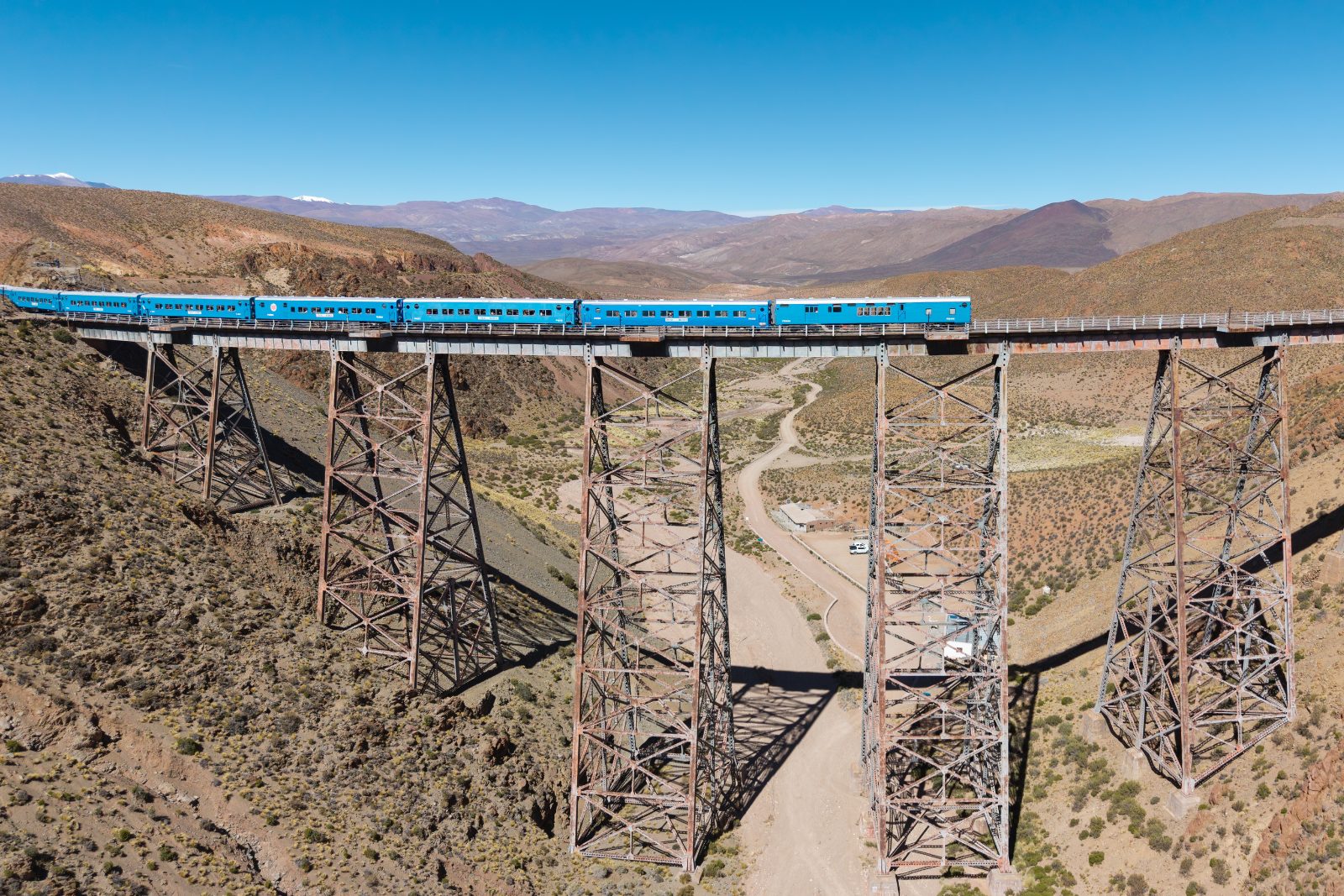
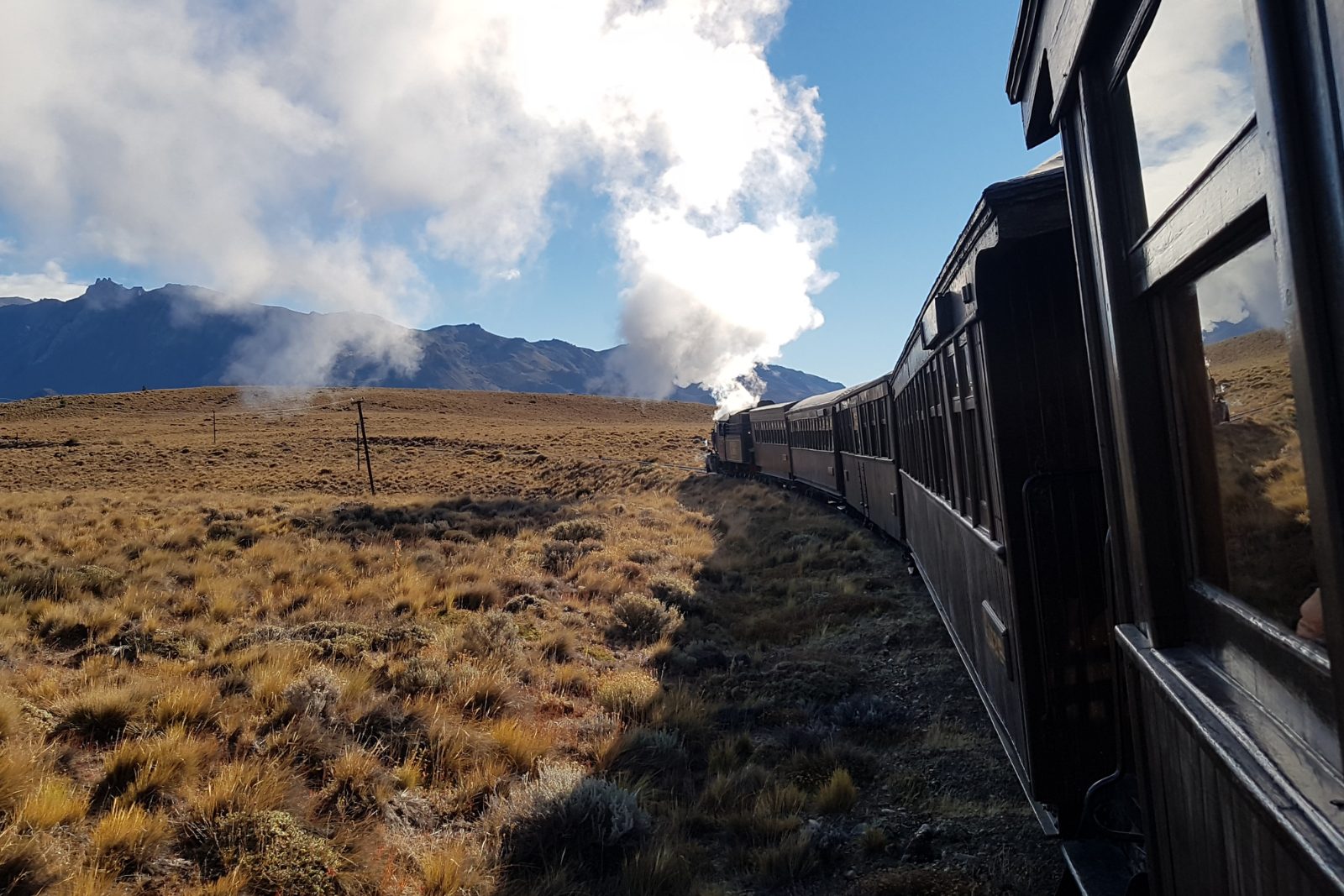
Trains in Argentina are unlike any other. The Tren a las Nubes climbs to real height out of Salta on a line of 19 tunnels and 29 bridges. Also not to be missed is the Tren Patagónico from Viedma on the coast to Bariloche at the footsteps of the Andes. Hop aboard the Train to the Clouds and take a trip on the End of the World Train for an experience unlike any other. We can customize any railway route of Argentina just to your liking.
Argentina Tours That Include a Rail Journey
These are our Argentina itineraries, and only some of them put you on a train. The trips built around a named railway are listed separately, and every one of them is private and tailor-made.
Click or Tap your preferences: Destinations & Activities. Be as specific or general as you like – or click Help Me Decide! We’ll spice it with hidden gems & personal tips to create your perfect trip. Need assistance? Contact an expert at +1 (888) 900-5060
Argentina Trips With a Real Rail Journey
Train to the Clouds Argentina Railway
Four days in Salta with the Tren a las Nubes as the centerpiece: the full-day climb through deep gorges, dark tunnels and steep viaducts, plus the city itself and the Hill of Seven Colors. It is an extension rather than a whole trip, and it gets planned around the train's fixed departure dates, which we confirm before the rest of the week is built.
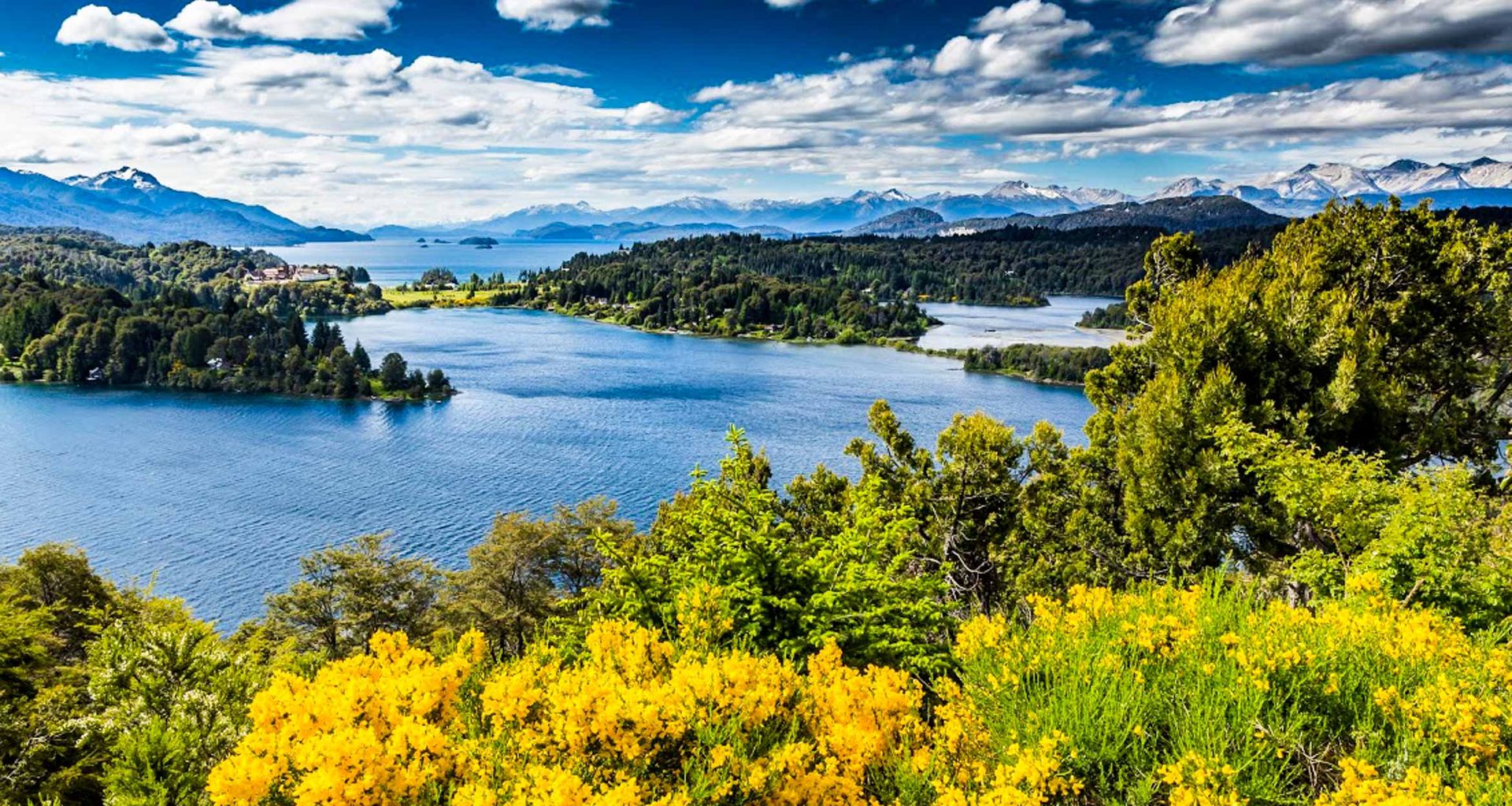
Six days through Nahuel Huapi and Los Alerces national parks with a ride on the narrow-gauge La Trochita, the Old Patagonian Express, through the prairies and forests where Butch Cassidy hid out. The train itself is a short Saturday run, so the rest of the week is the Bariloche circuit and the Seven Lakes road, which is the right way round.
Train to the Clouds & Tucumán–Buenos Aires Railway Journey
Ten days that give the northwest the time it actually needs: Salta, Cafayate and its Torrontes wineries, Humahuaca and the Hill of Seven Colors, the full-day scenic ride on the Train to the Clouds, and city days in Buenos Aires with the Tigre delta at the end. The Train to the Clouds runs only on fixed dates, a few times a week, so this one is planned around the calendar rather than the other way round.
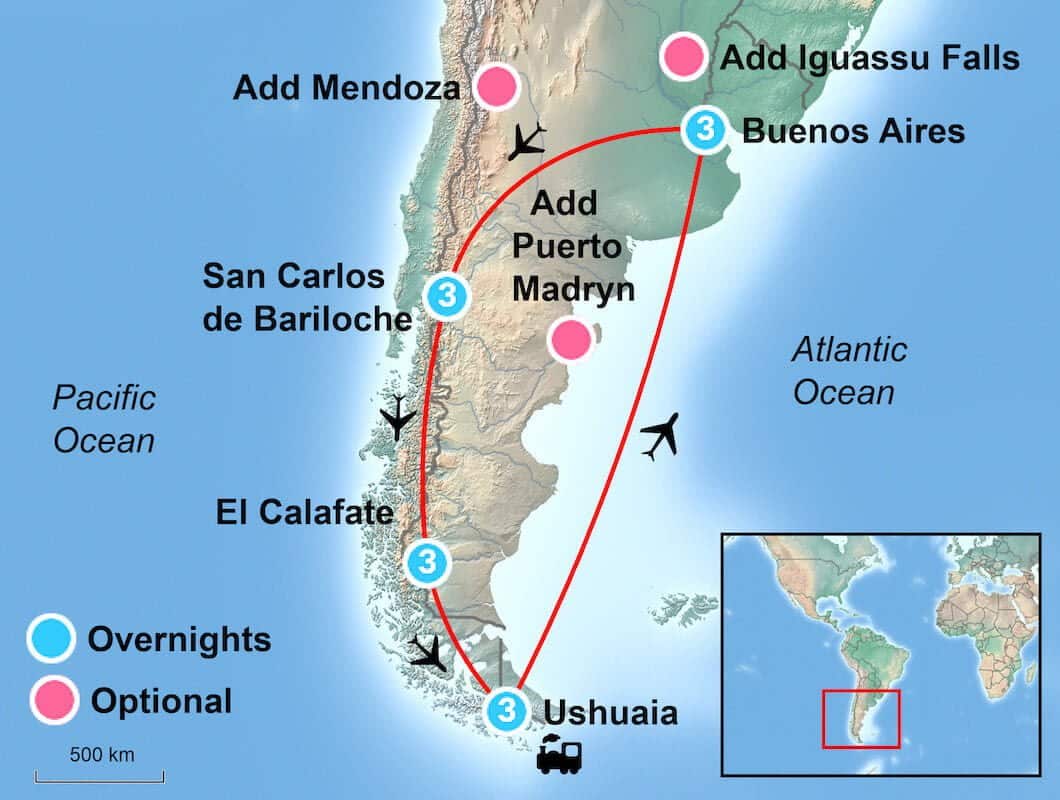
Thirteen days that take in Buenos Aires, Iguazú, the Lake District and Patagonia, and the one full-length Argentina trip of ours with a real rail journey inside it: the end-of-the-world train through Tierra del Fuego National Park out of Ushuaia. The walking is short and the flights do the long distances.
Argentina is not a country you cross by train. The trains that run are a short list, and most of them are rides rather than transport.
The scenic ones are a day or less. The Tren a las Nubes leaves Salta in the morning, climbs to the La Polvorilla viaduct at 4,220 meters, about 13,850 feet and returns the same day. The Tren del Fin del Mundo at Ushuaia is 7 kilometers long, runs all year and goes three times a day. La Trochita, the narrow-gauge Old Patagonian Express, runs Saturdays out of Esquel: 18 kilometers, about two and a half hours. The Tren de las Sierras covers 22 stations between Córdoba and Capilla del Monte in roughly five hours, with a change at Valle Hermoso. Jujuy has the Tren Solar de la Quebrada, running on solar power and lithium batteries.
One genuine long-distance service is left. The Tren Patagónico runs Viedma to Bariloche in about 19 hours, with sleeper cabins and space for your car, and our Patagonia rail page carries the detail.
Railway Trips through Argentina
Visit Argentina in a different way with the Argentina railway tours. Railroads in Argentina mirror to a large degree the railroads in Great Britain. Not only was a lot of technology imported from there, but the railroads were also partly responsible for making Argentina one of the richest countries in the world. Without rail, commodities like wheat and meat would not have had access to international markets.
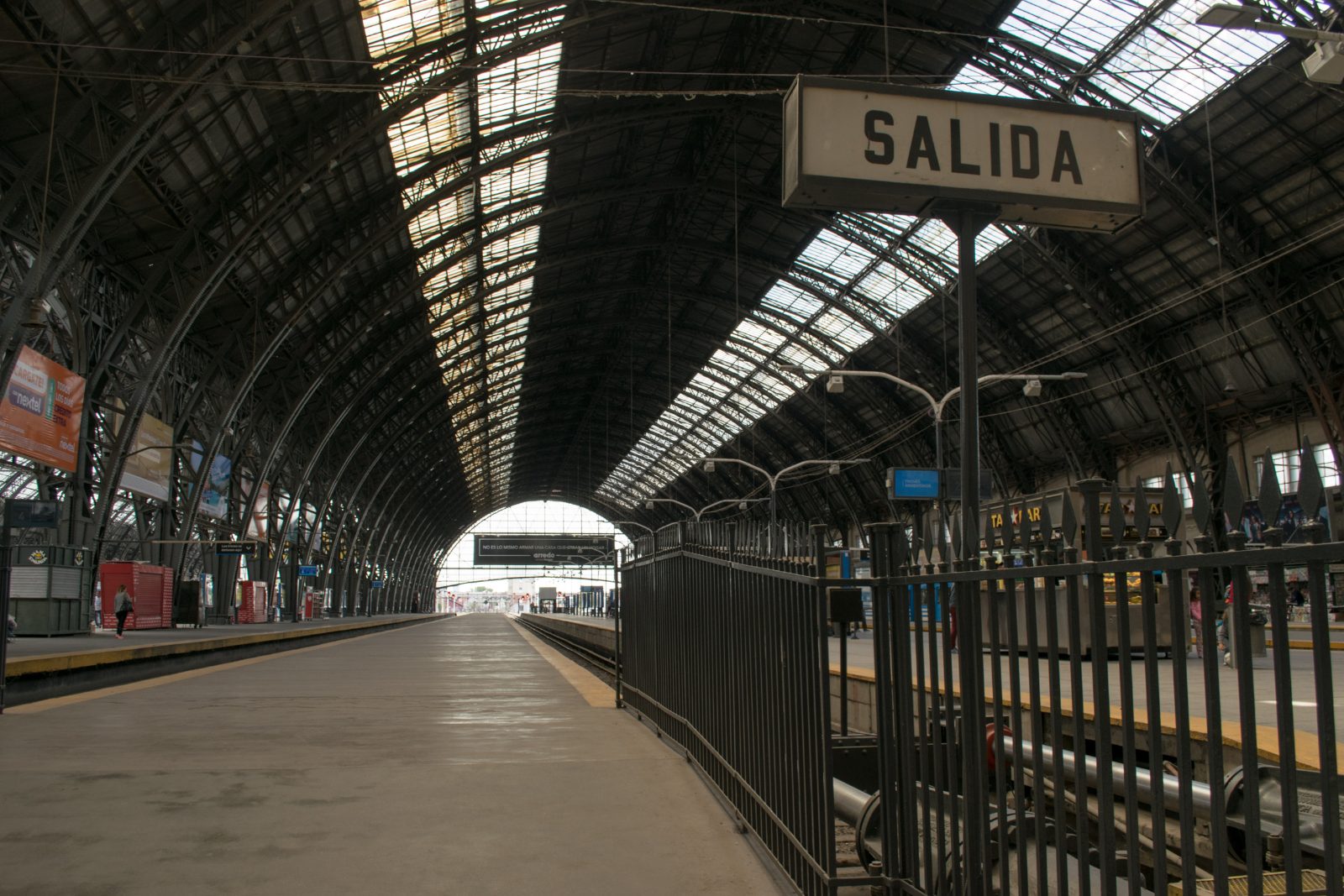
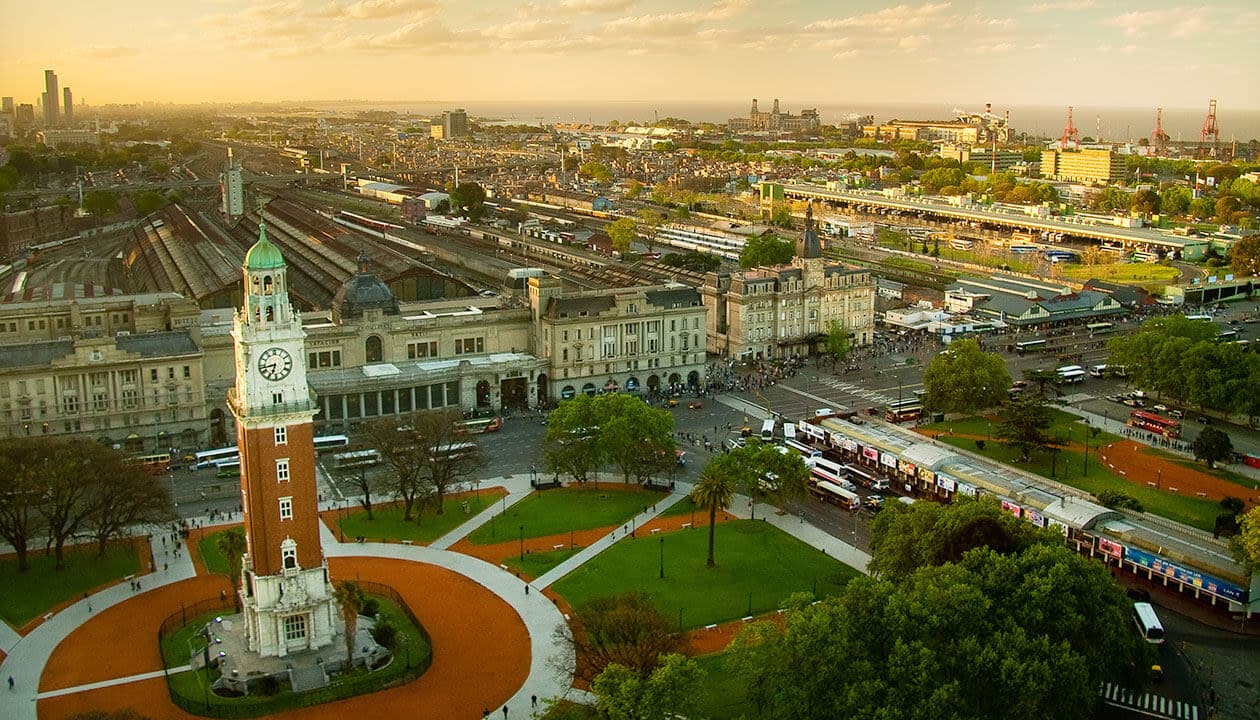
If you are interested in rail history, also include into your Argentina train tour the two great railroad station cathedrals in Buenos Aires: Retiro and Constitución. And of course, include a ride on one of the oldest metro systems in the world, the Buenos Aires Subte. Say so when you are planning your time in Buenos Aires and we will put the stations and the Subte into the city days rather than leave them to chance. You can find below our tours that include Argentina railway tours.
The Routes People Ask For That No Longer Run
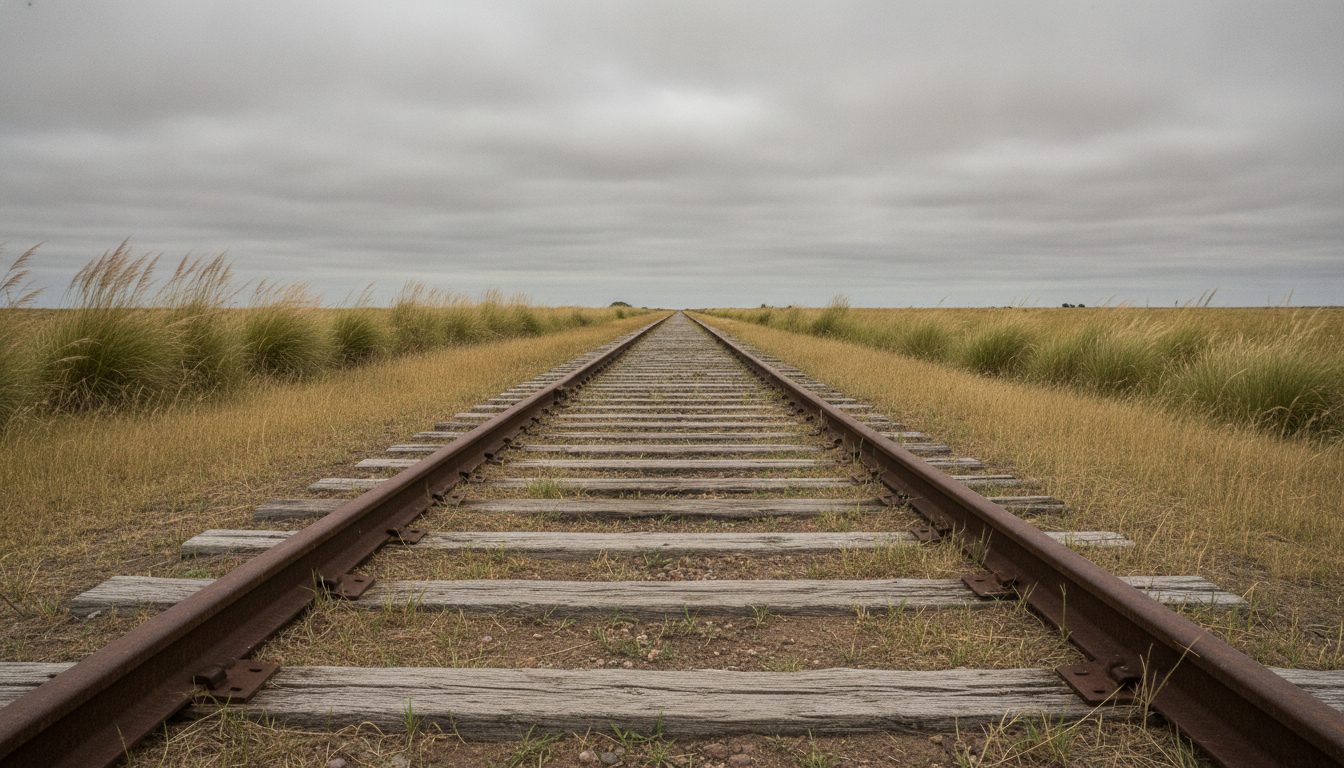
There is no passenger train from Buenos Aires to Mendoza, and none from Buenos Aires south into Patagonia — not to Bariloche, not to El Calafate, not to Ushuaia. Those are the routes travelers ask us for most often, and the honest answer is that the trains do not exist. Patagonia has trains, but you reach them by flying south first.
The two long-distance services that did run out of Buenos Aires, to Córdoba and to Tucumán, have been suspended since a derailment in September 2025. Track surveys found tens of thousands of deteriorated sleepers on the Rosario–Córdoba and Rosario–Tucumán lines. The government’s estimate is ten to twelve months of works, with restoration expected in 2027, and both services were still suspended as of May 2026.
So we fly the distances and drive the parts worth driving. Buenos Aires to Mendoza is a flight, then the wine country by road and the Andes crossing into Chile by bus. Patagonia is a flight, then Ruta 40. The rail days go where a train is worth the day.
Six Trains You Can Actually Ride
These are the six worth planning a day around, and the six we get asked about. Three of them are Patagonian, so we say what riding them is like and send you to the Patagonia rail page that carries the depth on those.
1.
Tren a las Nubes, Salta
The morning departure out of Salta climbs through deep gorges, dark tunnels and steep viaducts, turns at the La Polvorilla viaduct 4,220 meters, about 13,850 feet up, and returns the same day. Treat it as the day, not an excursion between other plans. Dates of operation move, which is why we confirm them before anything else in the week is fixed.
Seven kilometers, three departures a day, running all year. It is the easiest train in the country to fit into an itinerary, because it costs you a morning rather than a day and it does not have a season to plan around. The Patagonia rail page has the detail on what the ride is like.
The one real long-distance train left in Argentina. It leaves Viedma on Fridays at 17:00 and reaches Bariloche around midday on Saturday, roughly 19 hours, with sleeper cabins and car transport, and it runs back on Sundays at 17:00. Two departures a week means it shapes the itinerary rather than slotting into it.
The narrow-gauge Old Patagonian Express runs Esquel to Nahuel Pan in Chubut, Saturdays at 10:00, 18 kilometers in about two and a half hours. It is running through 2026. The section in Río Negro out of Ingeniero Jacobacci is not running, which is where the reports that La Trochita has stopped come from.
Twenty-two stations between Córdoba and Capilla del Monte, about five hours, with a change at Valle Hermoso. That arithmetic tells you what sort of train this is, a slow one that stops everywhere, and that is precisely its appeal. It pairs with the Jesuit estancias and the wineries that are the reason most of our travelers are in Córdoba province at all.
Jujuy’s tourist train runs on solar power and lithium batteries, which makes it the odd one out among Argentina’s tourist trains. It runs in the Quebrada de Humahuaca, UNESCO World Heritage since 2003, and it works as a stop inside a Jujuy day rather than a reason to go. We confirm operating days before we put it in a plan.
Tourist-train schedules in Argentina shift, and most trains run only on set days. The Train to the Clouds leaves a few times a week, on fixed dates. La Trochita is once a week. The Tren Patagónico leaves Viedma on Fridays. A rail day therefore sets the shape of the whole itinerary instead of fitting into it, and the good departures sell out well ahead. Tickets are sold locally, in ways that are awkward to deal with from abroad. We confirm what is running on your dates, hold the seats, and build the rest of the country around the day the train actually goes. Start with a custom Argentina plan and give us the dates.
Download our FREE Argentina Travel Guide and get inspired to travel to Argentina. Browse through 30 pages of travel planning tips and ideas, pictures of Argentina, and adventurous tours. This e-book is a great resource for planning your Argentina dream vacation.
Planning a trip to South America? Explore essential travel info including via requirements, safety tips, weather, money, and more so you can focus on designing the perfect adventure!
Argentina Overview
Argentina Holidays
Argentina Recommended Hotels
Money in Argentina
Languages of Argentina
Safety in Argentina
Staying Healthy in Argentina
Argentina Travel Insurance
Internet & Calling in Argentina
Argentina Packing List
Argentina Visa Requirements
Getting to and Around Argentina
Argentina Food: Asado, Malbec and the Culture Behind the Table
Argentina Articles
Weather in Argentina
Argentina Train Travel FAQs
Can you travel around Argentina by train?
Not in any practical sense. One long-distance passenger service is running, the Tren Patagónico between Viedma and Bariloche, and everything else is a short scenic ride in one region. The distances between Argentine regions are covered by air, or by long-distance bus, which is genuinely comfortable here. Plan the trains as experiences in places you are already visiting, and fly the legs between them.
Is the Train to the Clouds worth it?
Yes, if you give it the day it takes. The Tren a las Nubes leaves Salta in the morning, climbs to the La Polvorilla viaduct at 4,220 meters, about 13,850 feet and returns the same day. The whole thing is the day. Travelers who treat it as an excursion squeezed between other plans tend to resent the hours. Travelers who build the day around it do not.
Does Argentina have a good train system?
In Buenos Aires, yes. The Subte is one of the oldest metro systems in the world and it is genuinely useful, and Retiro and Constitución are two of the great railway stations anywhere. For crossing the country, no. The network was built to move wheat and meat to international markets rather than to move people between cities, and what is left of the passenger long-distance services is a short list.
Is there a train from Buenos Aires to Mendoza?
No. There is no passenger service between Buenos Aires and Mendoza, and no plan we build pretends otherwise. The leg is a flight. The part of that route worth taking slowly is at the far end: the wine country by road, and then the Andes crossing into Chile by bus, which is one of the great road crossings of the Andes.
Is there a train to Patagonia, Bariloche or Ushuaia?
There is no train from Buenos Aires to any of them. Patagonia does have trains, but they are local: the Tren Patagónico runs Viedma to Bariloche, La Trochita runs out of Esquel, and the Tren del Fin del Mundo runs at Ushuaia. Each one is a ride within Patagonia that you reach by flying south first. Our Patagonia rail page covers all three.
Are Argentina’s long-distance trains running right now?
One is. The Tren Patagónico leaves Viedma on Fridays at 17:00 and returns from Bariloche on Sundays at 17:00, about 19 hours with sleeper cabins. The Buenos Aires services to Córdoba and Tucumán have been suspended since a derailment in September 2025. Track surveys found tens of thousands of deteriorated sleepers on the lines through Rosario, works were estimated at ten to twelve months, and restoration is expected in 2027.
How do you book Argentina’s tourist trains from abroad?
Most of them are sold locally, in ways that are awkward to deal with from another country, and the good departures go before foreign travelers reach them. Seasons are short and dates move. We confirm the operating dates first, secure the seats, and place the rail day inside the rest of the itinerary, so the trip is not built around a train that was never going to run that week.
Your Experts in Argentina!
Let’s Design Your Perfect Argentina Trip
Tell us which trains you want to ride and when you can travel, and we will confirm what is actually running on those dates and build the rest of Argentina around it. If the timetable does not work, we will say so before you plan a trip around it.
We Love to Talk About South America Trip Ideas!
Thinking of traveling to South America? We take your South American travel dream and make it a reality. Every fully custom South America trip is planned by your own expert personal Travel Consultant.
"*" indicates required fields
Argentina Travel Guide
Our favorite Argentina tour ideas featuring the best destinations & activities designed to inspire…

 +1 (888) 900-5060