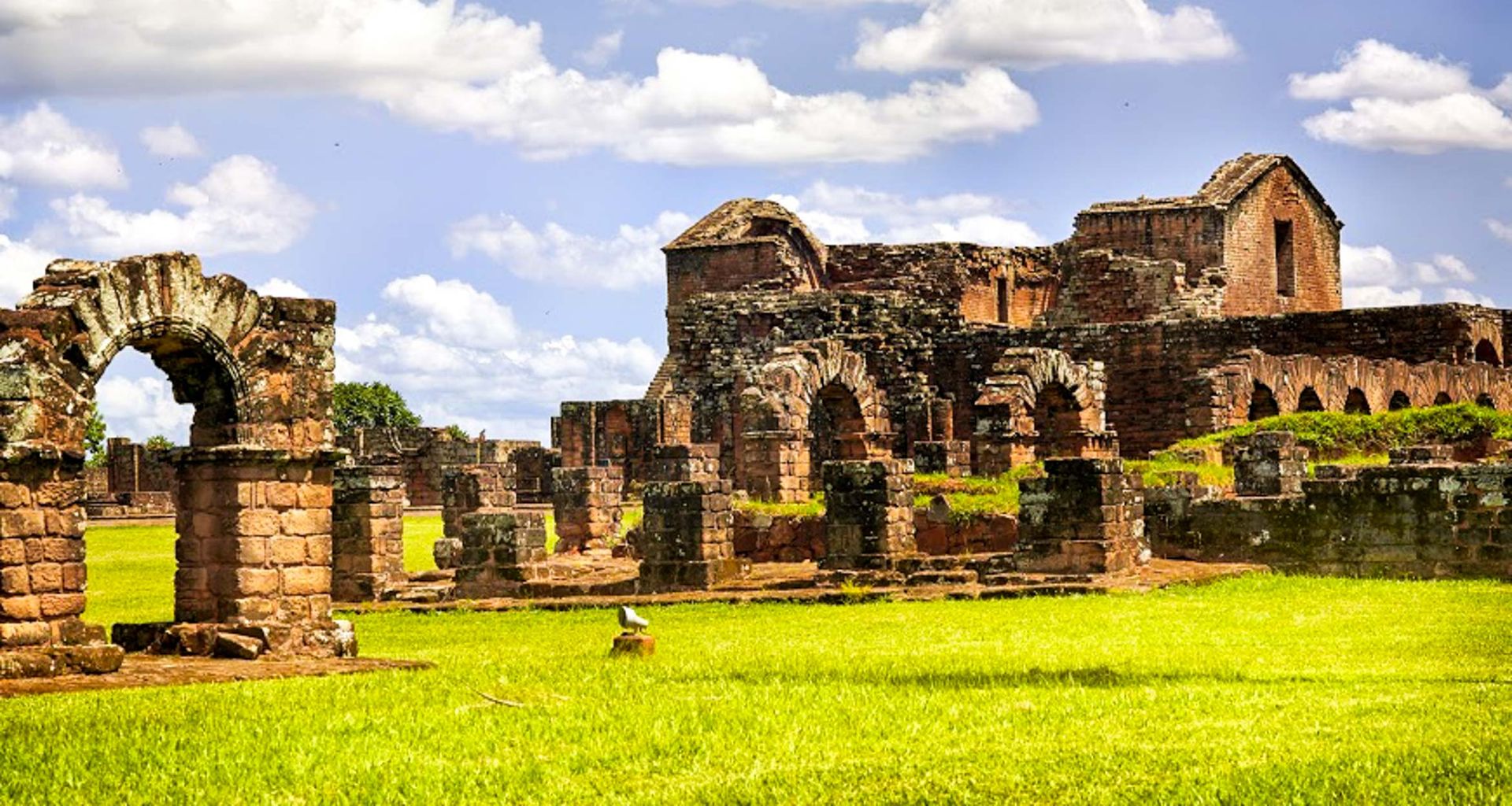
San Ignacio Miní is the best preserved of Argentina’s Jesuit missions, a town of red sandstone standing roofless in the forest of Misiones. The Jesuits founded it in 1610 and moved it here in 1696. UNESCO listed it in 1984.
It is not a destination on its own. Almost everyone who sees the ruins is already in the northeast for Iguazú Falls, 242 km north on RN 12, and gives the missions one day. We add San Ignacio Miní to a tailor-made Argentina itinerary; we do not sell it as a trip.
Trips Through Misiones and Iguazú
The grid below holds the itineraries matched to San Ignacio Miní. Only one stops at the ruins, so read the shortlist first.
Click or Tap your preferences: Destinations & Activities. Be as specific or general as you like – or click Help Me Decide! We’ll spice it with hidden gems & personal tips to create your perfect trip. Need assistance? Contact an expert at +1 (888) 900-5060
Which Trips Stop at the Ruins
Jesuit Missions & Iguazú Falls
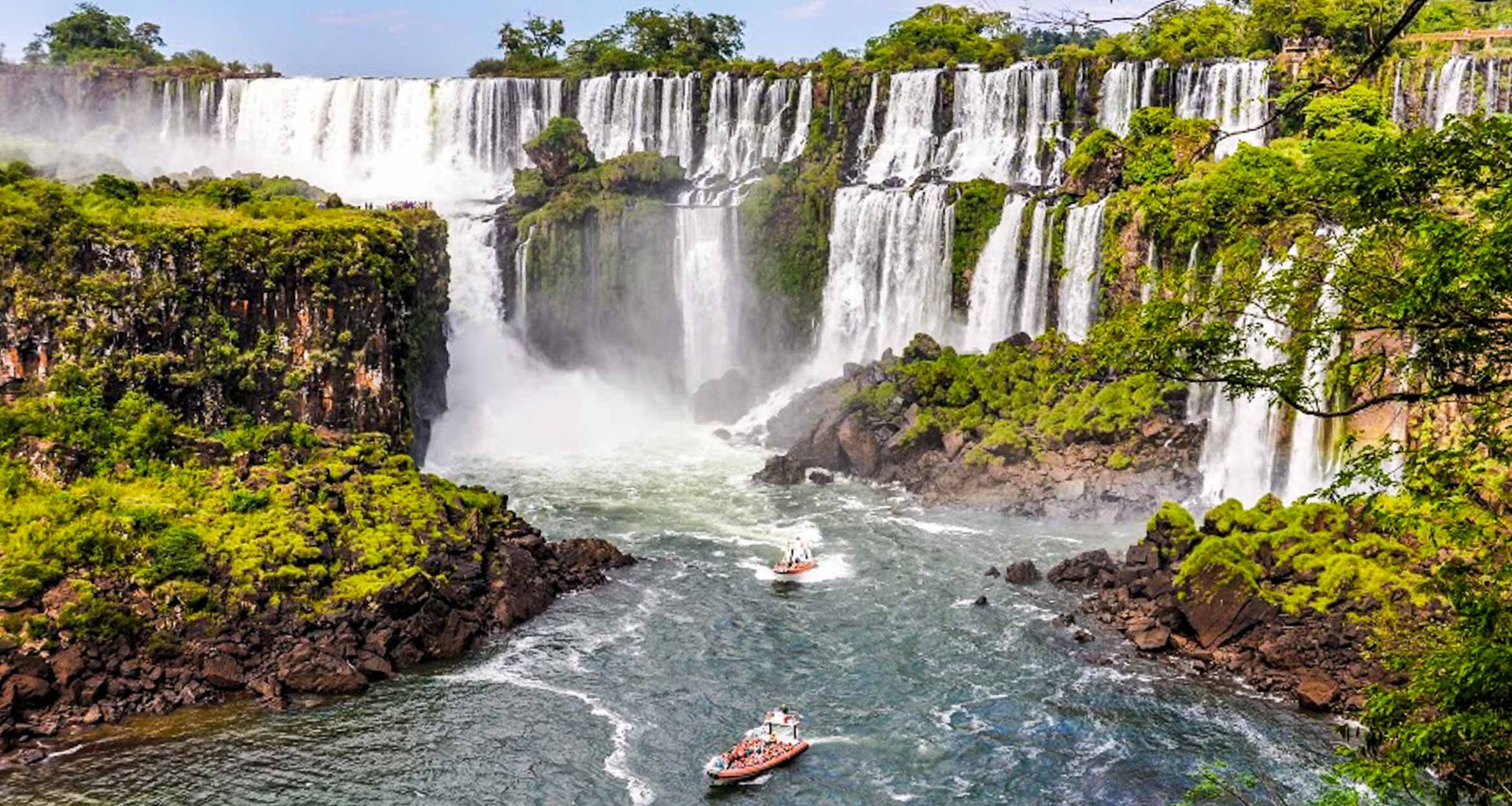
The only itinerary here that stops at San Ignacio Miní. Six days: the ruins, the Wanda gem mine a city tour of Oberá and the falls with the Grand Adventure boat.
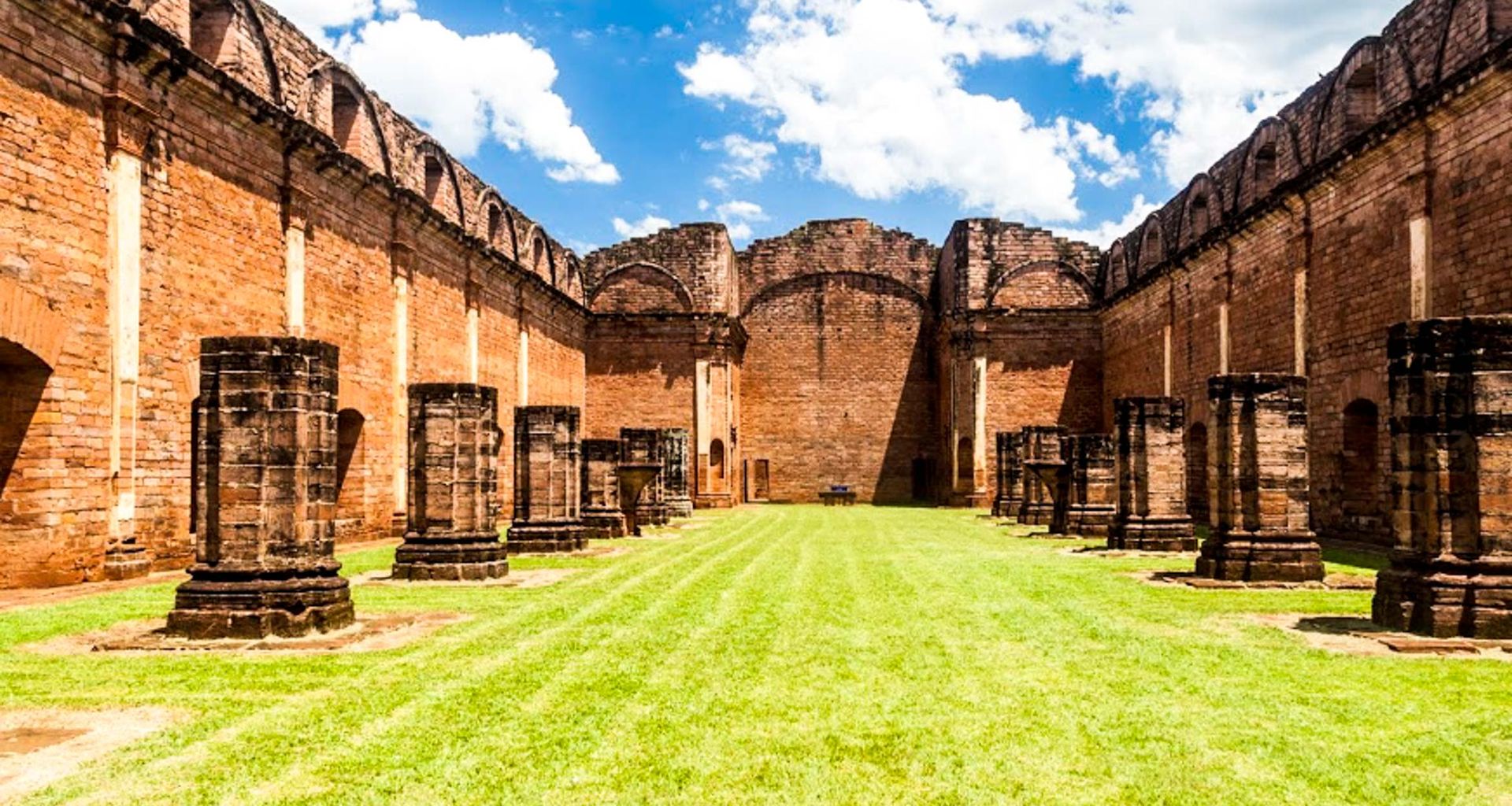
What stands is a town plan, not a building. The plaza is the center, with the church at one end and the workshops, school and priests’ quarters beside it. Along the other sides run the rows of Guaraní dwellings, about 200 of them, in the same red sandstone.
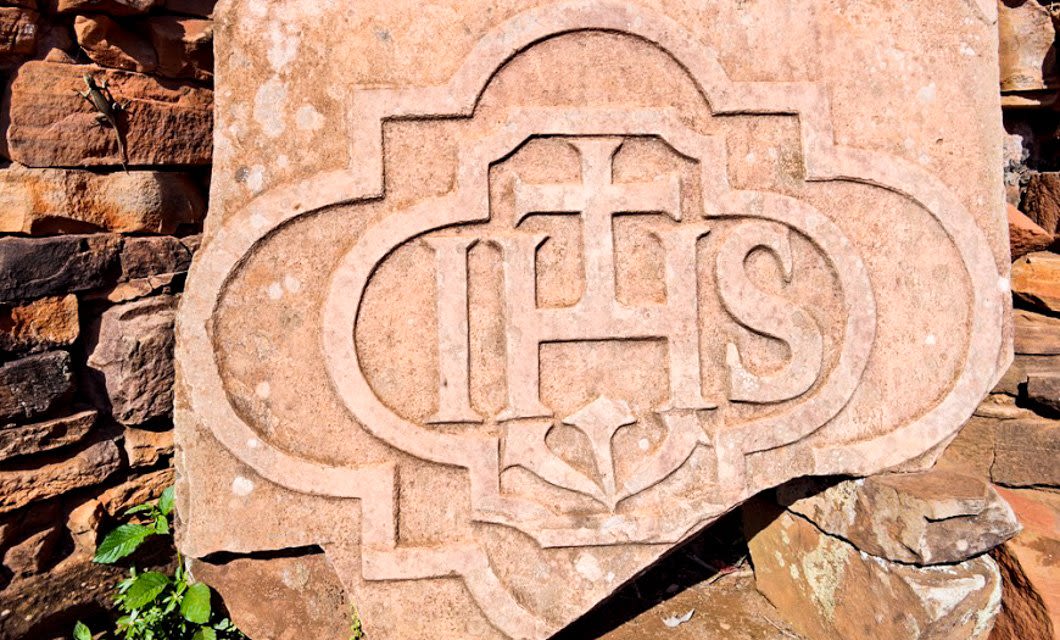
The church front is what people photograph. Its doorway and columns carry carved angels, flowers and local plants, cut by Guaraní masons working from European models. That mixture has a name, Guaraní Baroque, and this is the clearest place in Argentina to see it.
Roofs and timber are long gone; the walls, the carving and the street grid are not. UNESCO listed the site in 1984 with Santa Ana, Loreto and Santa María la Mayor,. What survives is a church, a cemetery, the priest’s house and the outlines of some two hundred dwellings around the plaza.
Founded 1610, Moved Here in 1696
The mission is older than the ruins. José Cataldino and Simón Maceta founded San Ignacio Miní in 1610, in Guairá, far north in what is now Brazil.
Both were broken by the Bandeirantes, slave raiders out of São Paulo who hunted the reductions of a Jesuit province that reached across present-day Paraguay. The survivors walked south. San Ignacio Miní settled on this site in 1696, which is the date the stone belongs to.
Spain expelled the Jesuits in 1767, which ended the missions here and the colleges around Córdoba. The town emptied in the wars that followed and was abandoned around 1817. Everything you walk through now was laid out after that move, which is why the plan reads as one piece. The forest took it back, and it stayed lost long enough to be rediscovered rather than preserved.
Visiting from Iguazú
RN 12 runs south out of Puerto Iguazú along the Paraná and reaches San Ignacio in 242 km. It runs as one long day, usually with the Wanda gem mine on the way, and you are back that evening. Ask us for the current running time before you commit the day; roadworks move it. If the missions matter more to you than the falls, fly into Posadas instead and work north from there.
Santa Ana and Loreto sit on the same road just beyond San Ignacio, and both are quiet. Go early. Misiones is subtropical, the middle of the day is hot and humid most of the year, and the stone holds the heat. Weather and the best time to visit have their own pages.
The Four Missions and the Two Towns
Four mission sites survive in Misiones, and two towns put you in reach of them. With one day, San Ignacio Miní is the one.
1.
San Ignacio Miní
The one to see if you see only one. The plaza, the carved church front and about 200 dwellings stand in cleared ground beside San Ignacio village, with a museum at the entrance. Two hours covers it. The missions and Iguazú itinerary stops here.
Part of the same UNESCO listing. The nearest of the other three, a short way along RN 12 toward Posadas. Far less has been cleared: you walk between walls with forest still standing in them, usually alone. It is the quietest of the four, and you will often have the walls to yourself.
Listed in 1984 with San Ignacio Miní. Loreto held a printing press that produced dictionaries in Guaraní. Of the four listed sites it is the hardest to read on the ground. Less of it has been rebuilt, so what you see is closer to how the missions were found.
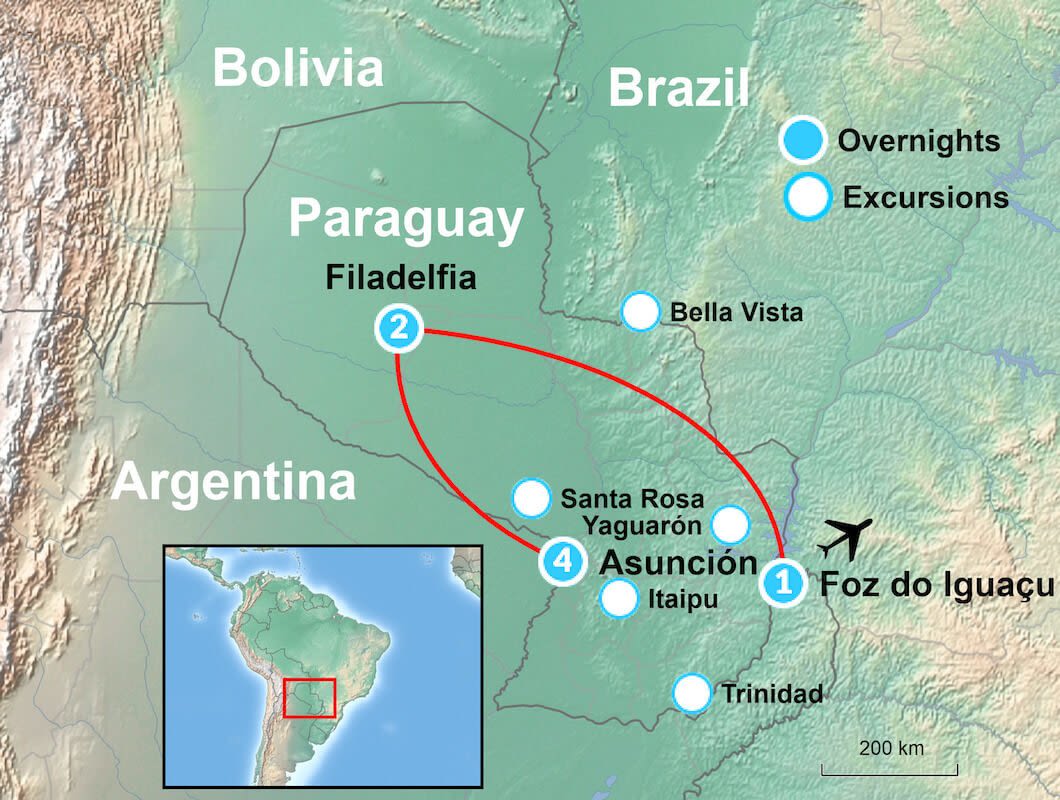
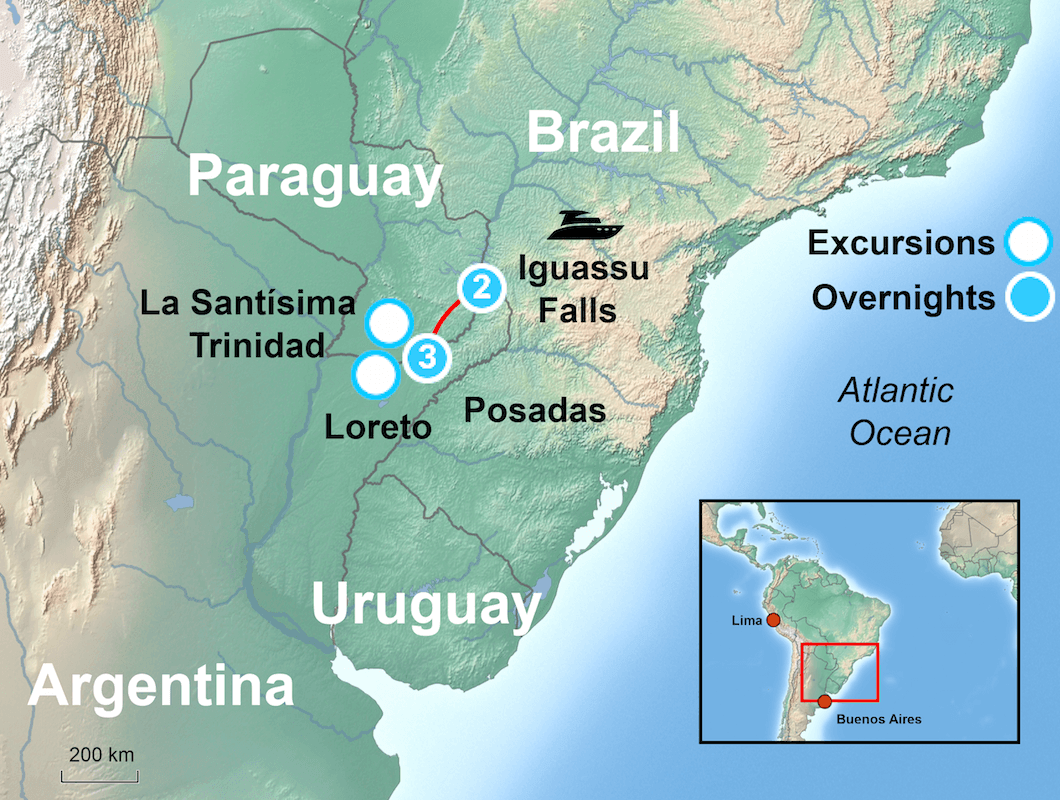
The farthest of the four from San Ignacio, southeast toward the Uruguay River, and the one almost nobody reaches. It earns its place on a longer loop, the kind that also crosses the Paraná to Trinidad and Jesús in Paraguay.
The base almost everyone uses. You come for Iguazú Falls, give them two days, the Argentine side and the Brazilian side, and take the missions as a third. Stay longer than the falls require. There is more here than the water.
The capital of Misiones, on the Paraná opposite Encarnación in Paraguay, and the closest airport to the ruins. Flights route through Buenos Aires. Posadas is the base to choose if the missions are the reason for the trip rather than the add-on.
San Ignacio Miní is one day inside a larger trip, and the larger trip is where planning earns its keep. We have designed custom South America itineraries since 1999. The decisions that make this leg work are the dull ones: which side of the falls on which day, whether the missions are worth a day at Iguazú, and which flight back to Buenos Aires does not cost a morning. You get a consultant who has routed it, and a written itinerary. We design trips; we do not run buses.
Download our FREE Argentina Travel Guide and get inspired to travel to Argentina. Browse through 30 pages of travel planning tips and ideas, pictures of Argentina, and adventurous tours. This e-book is a great resource for planning your Argentina dream vacation.
Planning a trip to South America? Explore essential travel info including via requirements, safety tips, weather, money, and more so you can focus on designing the perfect adventure!
Argentina Overview
Argentina Holidays
Argentina Recommended Hotels
Money in Argentina
Languages of Argentina
Safety in Argentina
Staying Healthy in Argentina
Argentina Travel Insurance
Internet & Calling in Argentina
Argentina Packing List
Argentina Visa Requirements
Argentina Flights
Argentina Food: Asado, Malbec and the Culture Behind the Table
Argentina Articles
Weather in Argentina
Questions We Get About San Ignacio Miní
What is San Ignacio Miní?
A ruined Jesuit mission town in Misiones province, northeastern Argentina, built by the Jesuits and the Guaraní in red sandstone: a plaza, a church, workshops and about 200 dwellings. Abandoned around 1817, it is the best preserved of the four Argentine mission sites UNESCO listed in 1984.
Is San Ignacio Miní worth visiting?
Yes, if you are already in the northeast. It is the most complete mission town left in Argentina, and the plaza says more than a museum would. It does not justify a trip of its own. People come for the falls and add the ruins.
How far is San Ignacio Miní from Iguazú Falls?
Roughly 250 km, south from Puerto Iguazú along RN 12. It runs as one long day, with the Wanda gem mine on the way. Ask us for the current running time when you plan the day, because roadworks change it.
How long do you need at the ruins?
Two hours on site covers the plaza, the church front, the dwellings and the museum at the entrance. Add the road and it is a full day out of Puerto Iguazú. For Santa Ana and Loreto too, base yourself in Posadas.
When was San Ignacio Miní built?
Both dates are right. The mission was founded in 1610 in Guairá, in what is now Brazil, and moved to this site in 1696 after slave raids out of São Paulo. The stone was laid after 1696, so “built in 1696” on its own is half the story.
What does Guaraní Baroque mean?
European Baroque design built by Guaraní hands. The plans and pattern books came from Italy and Spain; the masons and carvers were Guaraní, and local plants and faces turn up in the stonework beside the angels. The church front here is the best example of it.
Can you see all four Argentine missions?
Yes, with two days. San Ignacio Mini, Santa Ana and Loreto sit within a short drive of one another, so they go together; Santa Maria la Mayor is further off and takes a run of its own. Trinidad and Jesus, over the border in Paraguay, can be added to the same trip. We build that as a private route rather than a fixed tour, so tell us how much of it you want.
Your Experts in Argentina!
Let’s Design Your Perfect Argentina Trip
Tell us when you are going to Iguazú and whether the missions belong in the plan. We will come back with the day written out.
We Love to Talk About South America Trip Ideas!
Thinking of traveling to South America? We take your South American travel dream and make it a reality. Every fully custom South America trip is planned by your own expert personal Travel Consultant.
"*" indicates required fields
Argentina Travel Guide
Our favorite Argentina tour ideas featuring the best destinations & activities designed to inspire…

 +1 (888) 900-5060