Mesmerizing coasts, dense forests, spectacular glaciers, and wonderful wildlife — Patagonia has captured your attention, but where do you start? We’ve shortlisted the very best of the region and answered the question every traveler asks first: what is Patagonia famous for?
Patagonia is famous for its glaciers, jagged granite peaks, and remarkable wildlife — the advancing Perito Moreno Glacier, the Fitz Roy and Torres del Paine massifs, whale watching off Península Valdés, half-a-million-strong penguin colonies, and “end of the world” Ushuaia, all spread across the wild southern tip of Argentina and Chile. Come explore each of them with us below.
First things first — where is Patagonia?
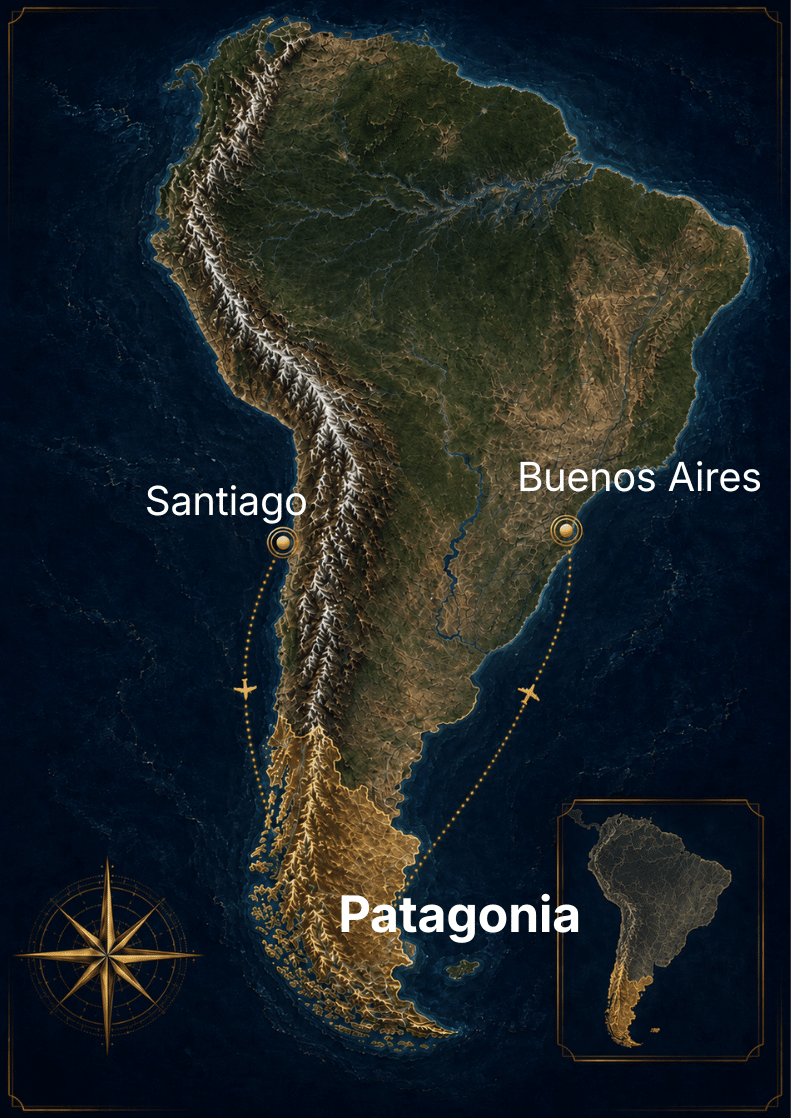
As you can see in this map, Patagonia (in yellow here) is located at the very bottom of the continent of South America. It lies in both Chile and Argentina and covers a huge amount of land area.
Patagonia is a vast geographical region at the southern end of South America, shared by Argentina and Chile, with the Andes as the dividing line. It covers more than a million square kilometers — almost half of each country — yet is home to fewer than two million people. (For the full story on its borders, the name, and how to get there, see our guide to where Patagonia is.)
A few quick Patagonia facts:
It stretches across both countries and is protected by a string of national parks on both sides of the border.
Near the town of Esquel in Argentina you’ll find the alerce — the world’s second-longest-living tree species — including one specimen estimated at over 2,600 years old.
The official language is Spanish, and most of Patagonia sits just one or two hours ahead of U.S. Eastern Time.
The summer travel season runs from December to March, though the wider window of October to April is ideal.
Now that you know roughly where you’re headed, let’s get to the good part — what is Patagonia famous for? First up on our list is…
#1. Perito Moreno Glacier, Los Glaciares National Park
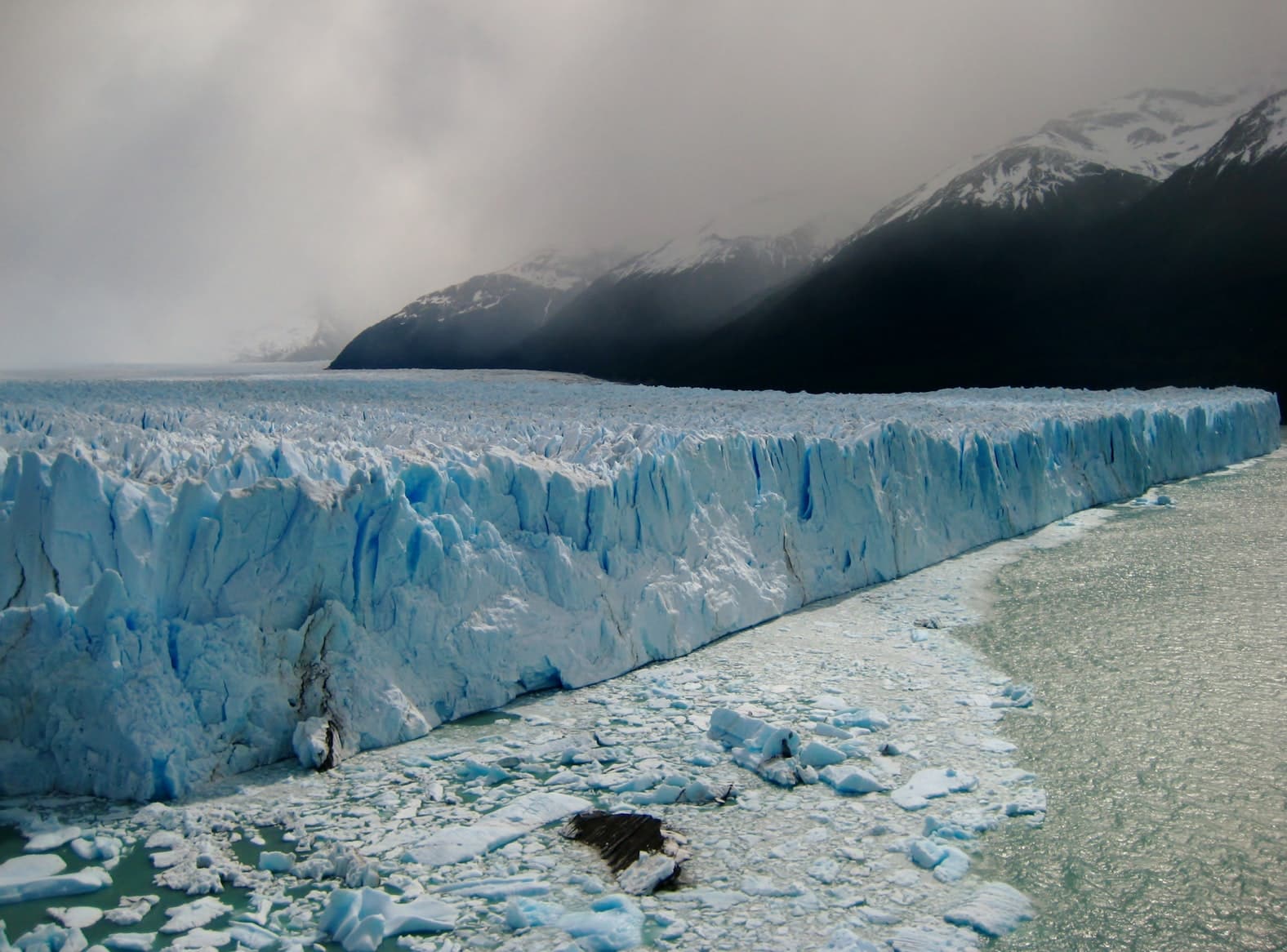
Perito Moreno Glacier near El Calafate, one of the few advancing glaciers on Earth.
Tucked into Los Glaciares National Park near El Calafate, the Perito Moreno Glacier is the most stunning centerpiece you may ever come across — roughly 30 km long, 5 km wide, and rising about 70 m above the water. Did you know it’s one of the few glaciers on the planet still advancing? It creeps forward up to 2 m a day, and watching house-sized chunks of ice calve off the face and crash into the lake — with a roar and an enormous splash — is a genuinely thrilling experience. There are boardwalk viewpoints at every angle, plus ice-trekking tours on the glacier itself and boat rides to its base. While you’re here, don’t miss nearby Viedma Glacier, another stunning creation of mother nature.
#2. El Chaltén and Mt Fitz Roy
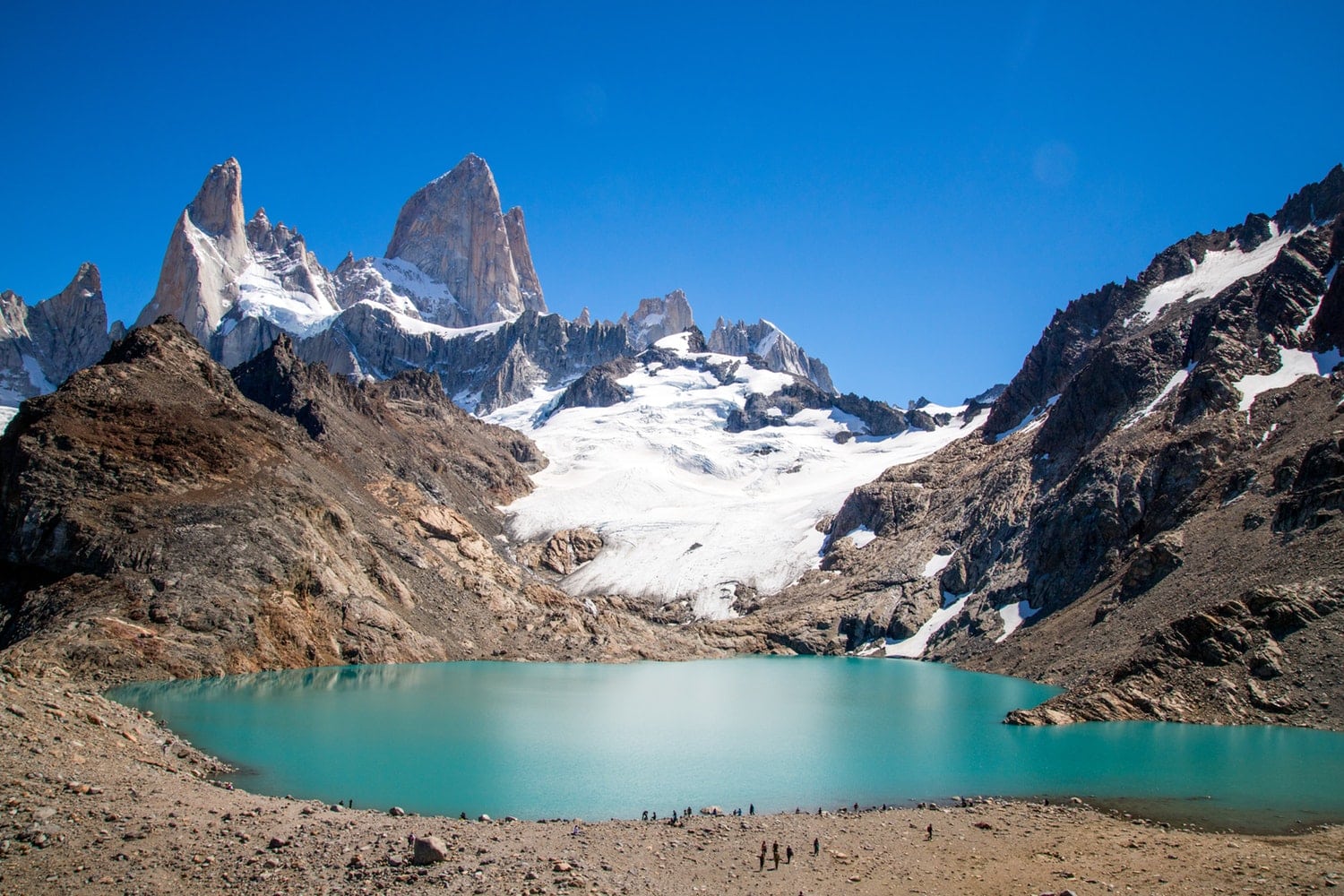
Mount Fitz Roy above El Chaltén, Argentina’s trekking capital.
El Chaltén may very well be the hiking capital of the world. Surrounded by pristine mountains and serene lakes, it offers some of the most scenic trails anywhere — Patagonia is famous for its world-class hiking, rock climbing, mountaineering, and horseback riding. If you love the outdoors, Mt Fitz Roy is the spot for you, and any list of what Patagonia is famous for would be incomplete without the Fitz Roy trek and the hike toward Cerro Torre — absolute stunners that remind you just how wonderful nature truly is. Many travelers pair it with El Calafate on a single trekking trip through Argentine Patagonia.
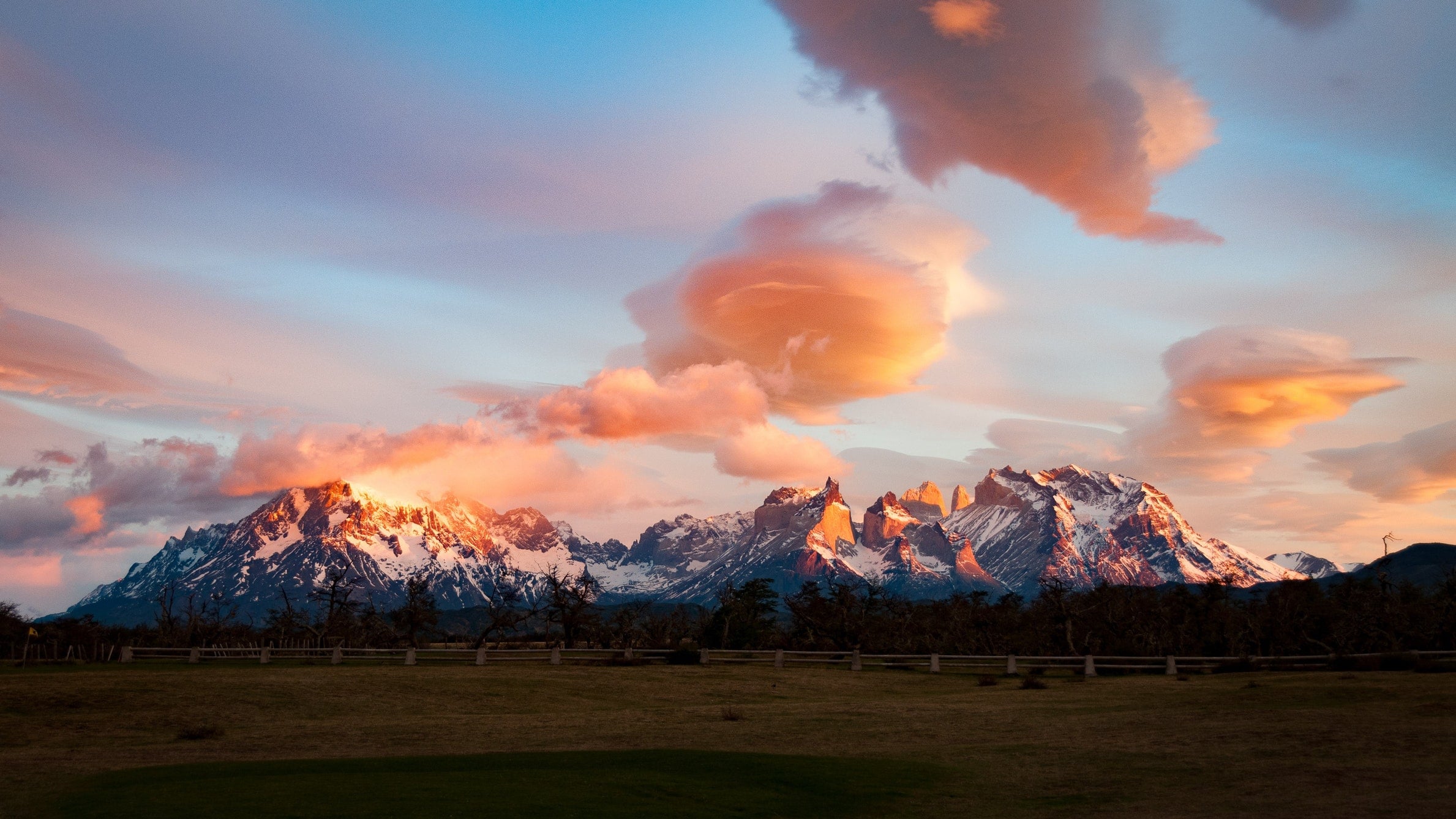
#3. Torres del Paine National Park
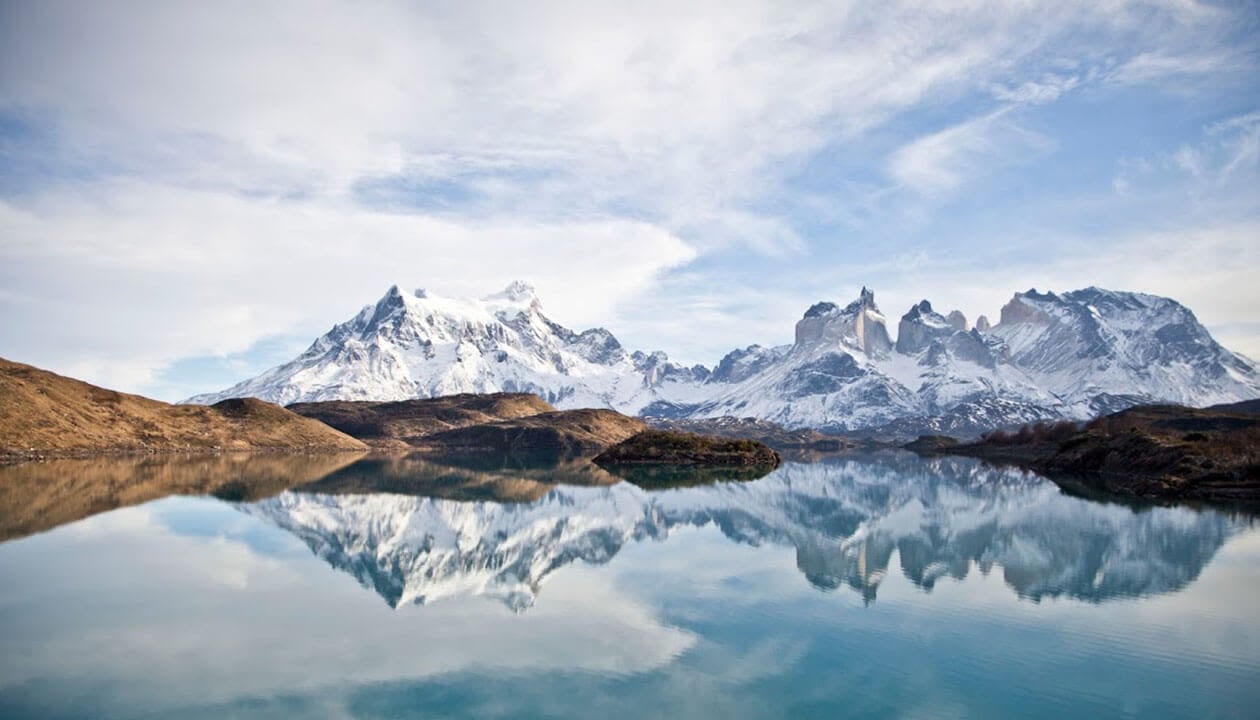
The granite towers of Torres del Paine, Chilean Patagonia.
A hiker’s paradise on the Chilean side, Torres del Paine is ringed by magnificent granite spires and clear glacial lakes. We highly recommend staying inside the park so you can truly soak it in — go sightseeing along the Serrano River, the Grey Glacier, and the lagoons of Lago Pehoé, Lago Nordenskjöld, and Lago Sarmiento. The W Trek and the longer O Trek are the most famous trails here, with scenic walks and hikes to suit every level. Torres del Paine is also wonderful for wildlife: keep an eye out for Andean condors, Magellanic horned owls, Chilean flamingos, gray foxes, the Andean huemul deer, and much more.
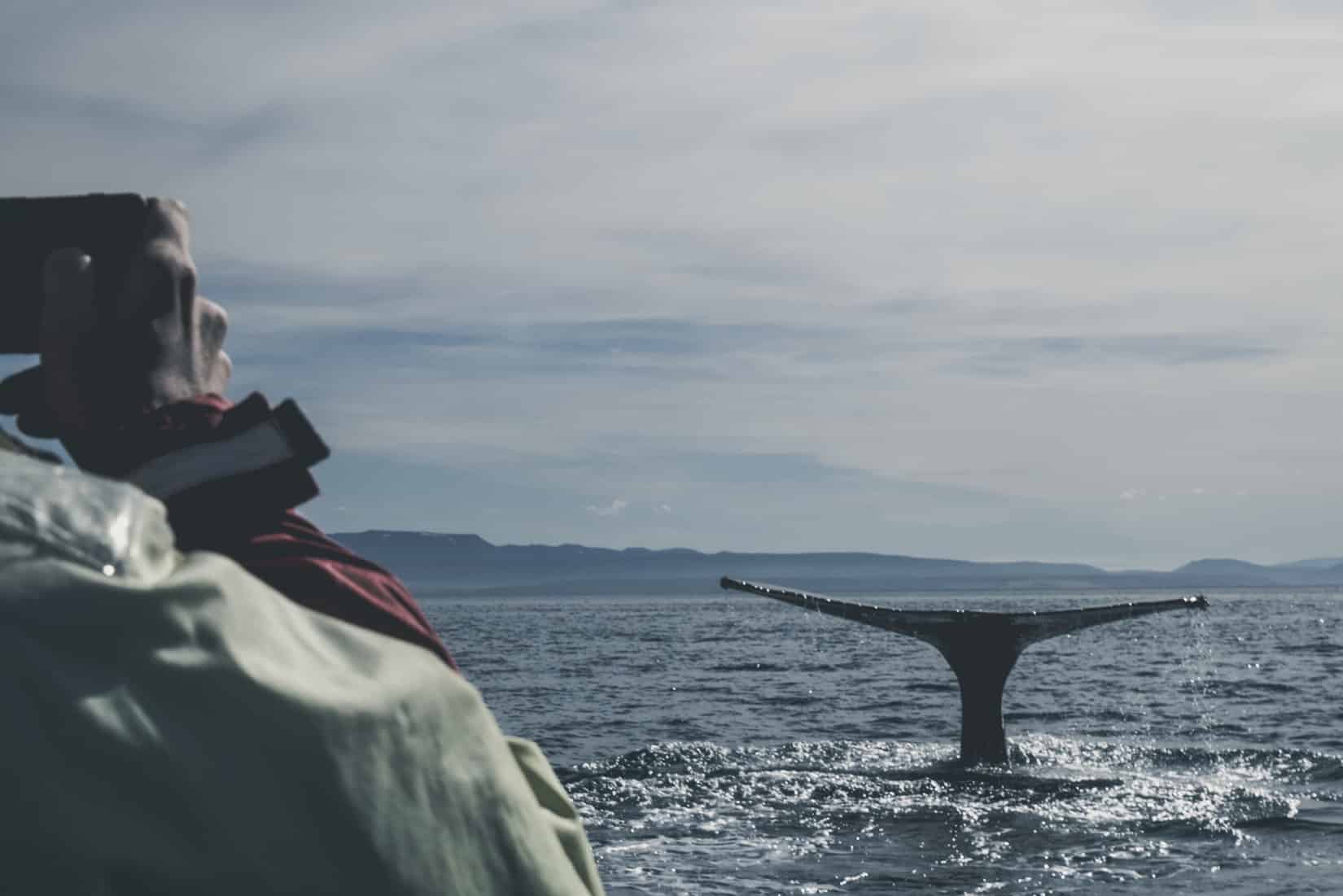
#4. Puerto Madryn and Península Valdés
Whale watching off Península Valdés, near Puerto Madryn.
Next up on our list of what Patagonia is famous for: whale watching! If you’re a wildlife lover, head to Península Valdés, just off Puerto Madryn. Its warm, sheltered waters are a major breeding ground for whales from roughly June through December, and you may spot southern right whales, orcas, sea lions, seals, and plenty of other Patagonian wildlife along this remarkable stretch of coast.
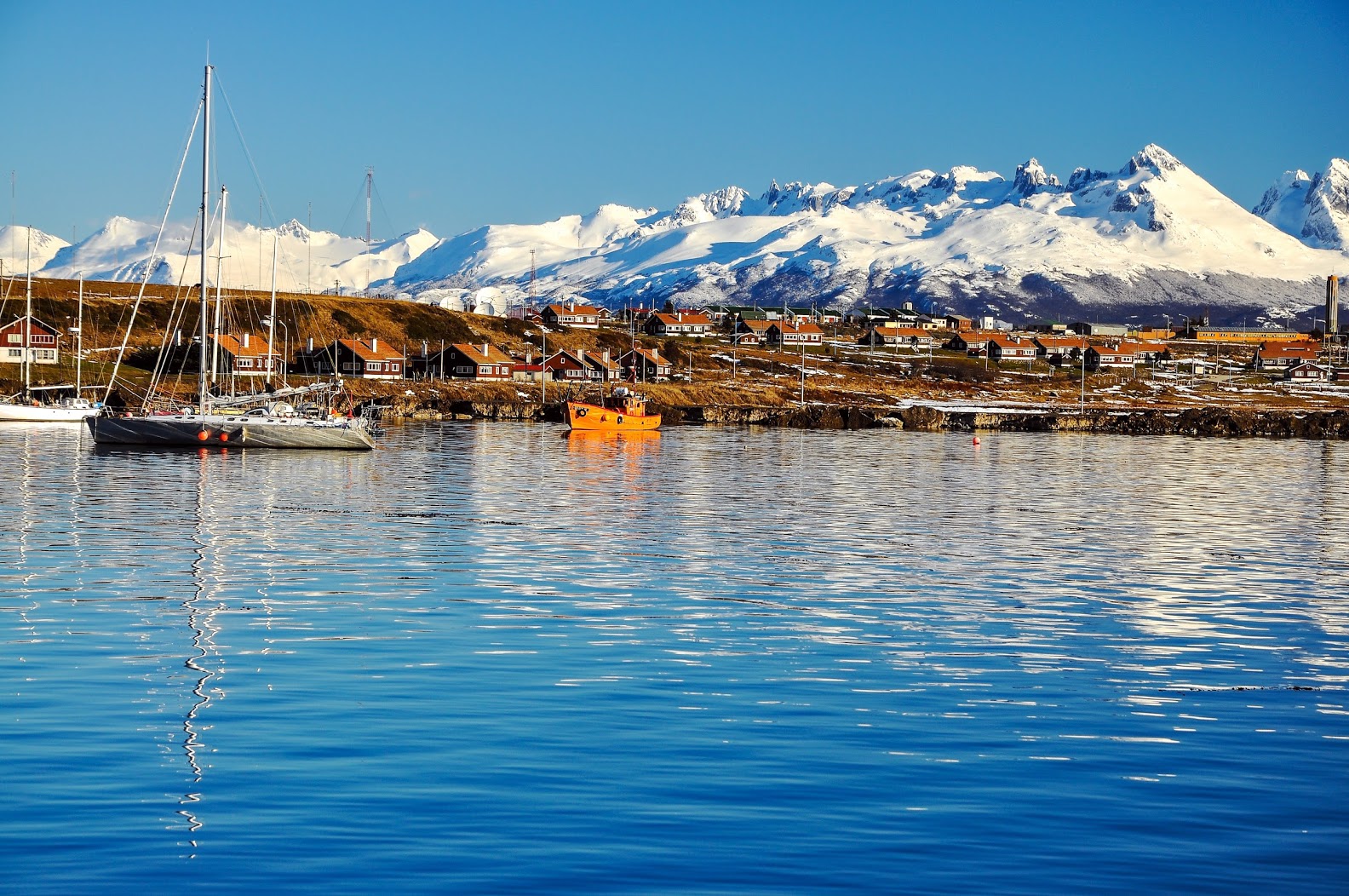
#5. Tierra del Fuego and Ushuaia
Ushuaia, the “End of the World,” gateway to Antarctica.
Patagonia is famous for the southernmost tip of the continent: Tierra del Fuego. Ushuaia, its main city, is known as the “End of the World” — beyond it there’s only Antarctica, and many Antarctic cruises set sail from its port. It’s a scenic harbor backed by wild, forested country full of rare flora and fauna. Don’t miss Tierra del Fuego National Park, a cruise along the Beagle Channel, the Les Éclaireurs Lighthouse, and the penguin colonies of Martillo Island.
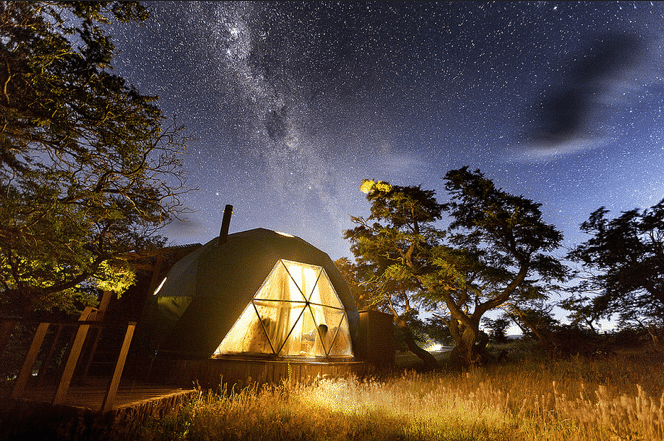
#6. EcoCamp Patagonia
The geodesic domes of EcoCamp in Torres del Paine.
The EcoCamp lodge in Torres del Paine National Park offers the best luxury camping in Patagonia. You can sleep under shimmering stars and amid the wilderness without ever pitching a tent or hunting for your dinner — choose between different dome styles, trip lengths, and meal-and-drink packages, and wake up inside one of the world’s most magnificent national parks. What a wonderful “glamping” experience!
But wait — here are a few more things Patagonia is famous for!
#7. Cueva de las Manos
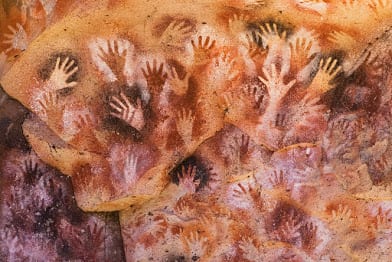
The stenciled hands of Cueva de las Manos, a UNESCO World Heritage Site.
The incredible rock art of Cueva de las Manos (“Cave of the Hands”) is a UNESCO World Heritage Site, inscribed in 1999, in Santa Cruz Province. The oldest paintings date back as far as around 9,000 years and are attributed to the ancestors of the Tehuelche people. They’re a riot of stenciled human hands, guanacos, and abstract designs, brightly worked in red, black, white, and yellow. If you love prehistoric art, this site is a must-visit.
#8. The Dinosaur Route
The Dinosaur Route across northwest Patagonia is one more reason the region is world-famous. In Chubut Province, paleontologists uncovered Patagotitan mayorum — among the largest land animals ever to walk the Earth, at roughly 37 m (122 ft) long and about 70 tons — buried in the red-rock badlands. Museums and dig sites along the route bring the giants of the Cretaceous back to life.
#9. Punta Tombo
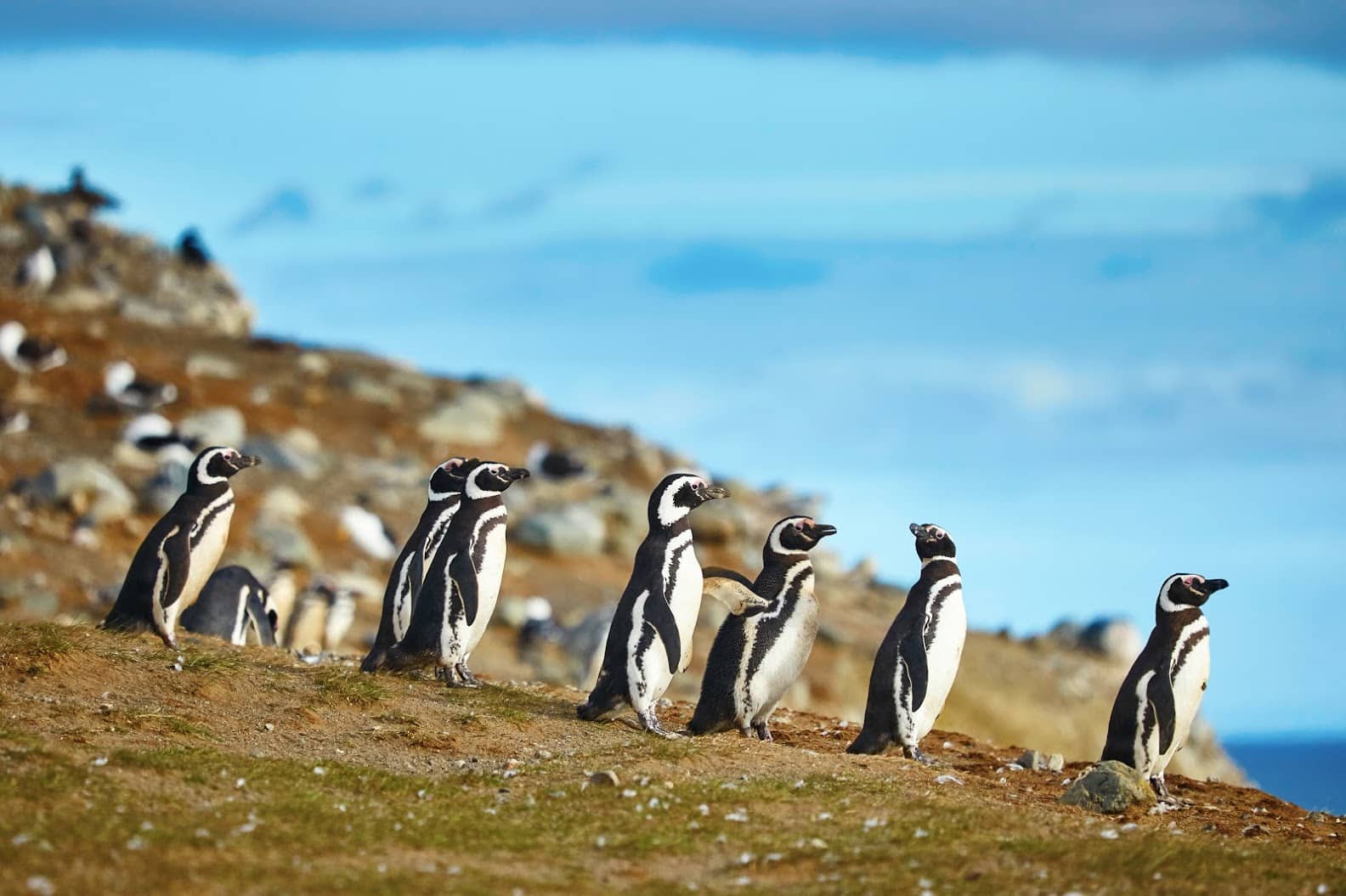
Magellanic penguins at Punta Tombo, the largest continental colony in the world.
At Punta Tombo you can watch the daily life of around half a million Magellanic penguins — the largest continental colony in the world — going about their business in their natural habitat. These charming birds arrive between September and April to incubate their eggs and raise their chicks: one parent guards the nest from predators while the other heads out to sea for food. Keep an eye out for seagulls and other seabirds in the area too. It pairs naturally with Puerto Madryn and El Calafate on a classic Argentine Patagonia tour.
#10. Ruta 40 and the Carretera Austral
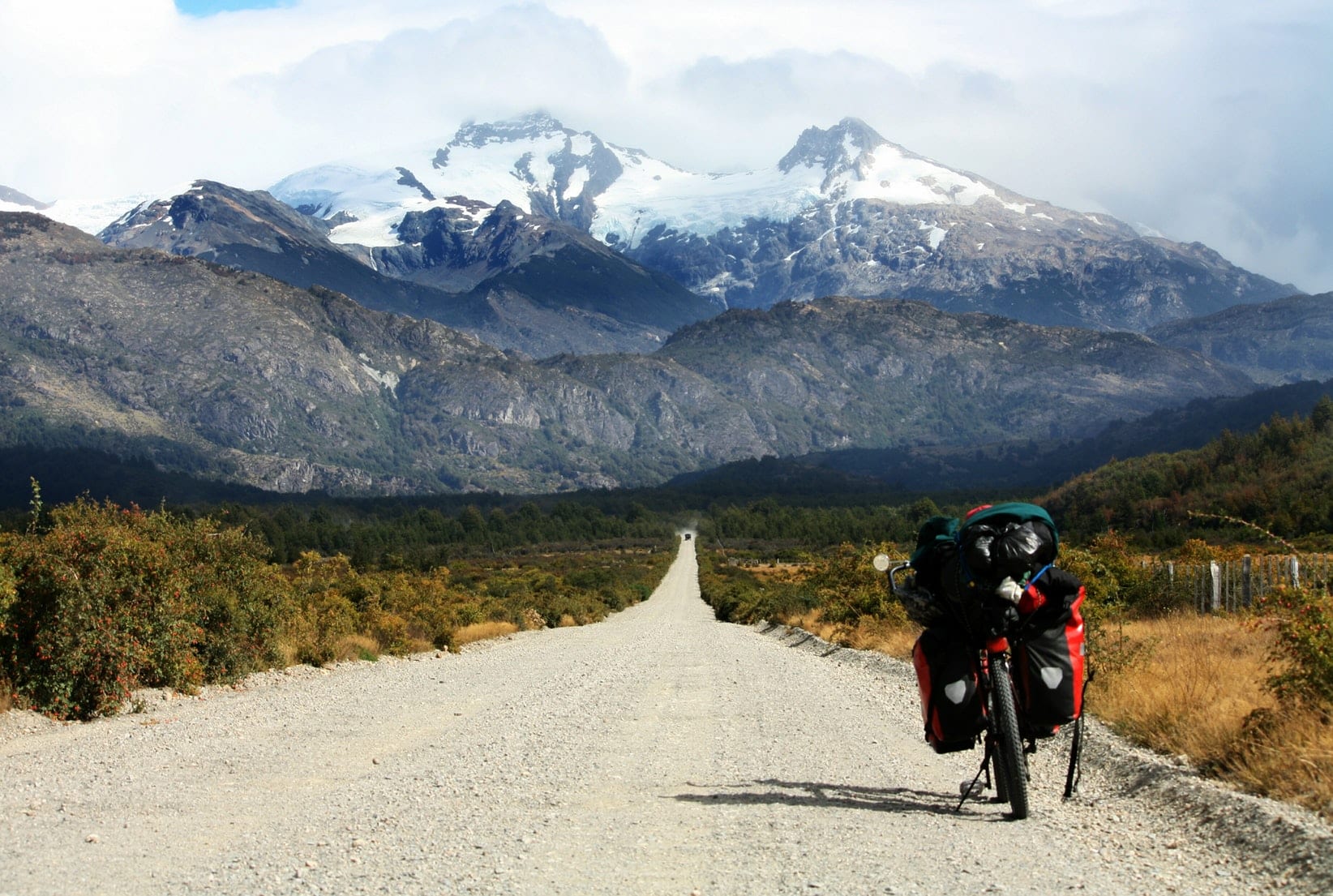
Patagonia’s legendary road trips: Ruta 40 in Argentina and the Carretera Austral in Chile.
Patagonia is famous for two of the world’s great road trips, one on each side of the Andes. On the Argentine side, Ruta 40 runs roughly 5,000 km (3,107 mi) parallel to the mountains, crossing 11 provinces — among them Santa Cruz, Chubut, Río Negro, and Neuquén — through the vast Patagonian steppe. On the Chilean side, the Carretera Austral threads more than 1,200 km from Puerto Montt to Villa O’Higgins, past fjords, rainforest, and remote villages. Either way, let’s go road tripping across some of the most extraordinary landscapes on the planet!
Jon Hillstead is a Senior Travel Consultant with a deep-rooted passion for South American culture and ecology. From living with the Kichwa people in the Ecuadorian Amazon to adopting the "Carioca" lifestyle in Rio de Janeiro, Jon uses his extensive firsthand experience across the continent to design adventurous, wildlife-focused journeys for fellow explorers.
Download our FREE Patagonia Travel Guide and get inspired to travel to Patagonia. Browse through 30 pages of travel planning tips and ideas – a great resource for planning your Patagonia dream vacation.