*Example by 4 travelers in 4★ accommodation, low season. Flights priced separately. Get a quote for 1 to 99+ below
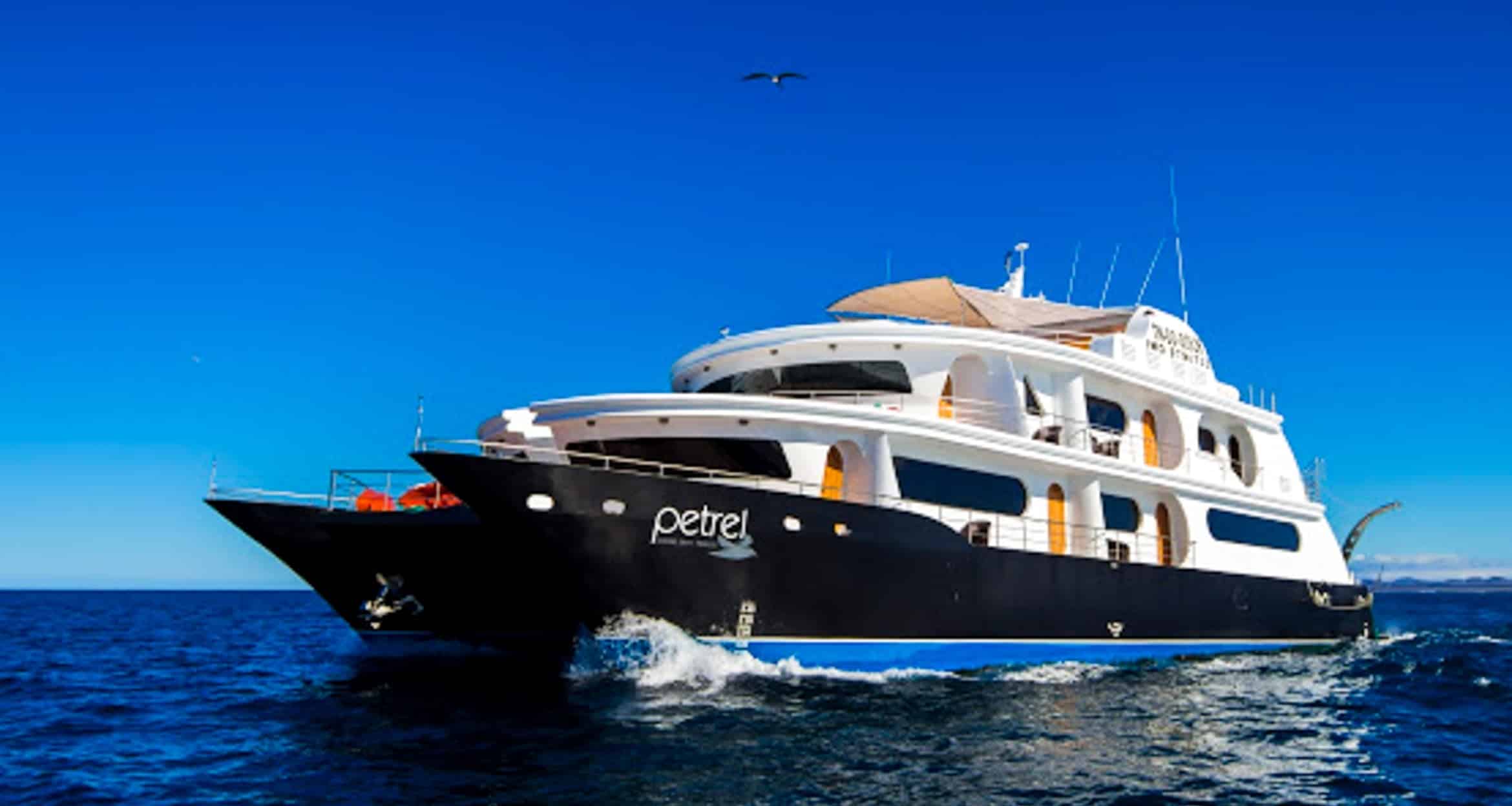
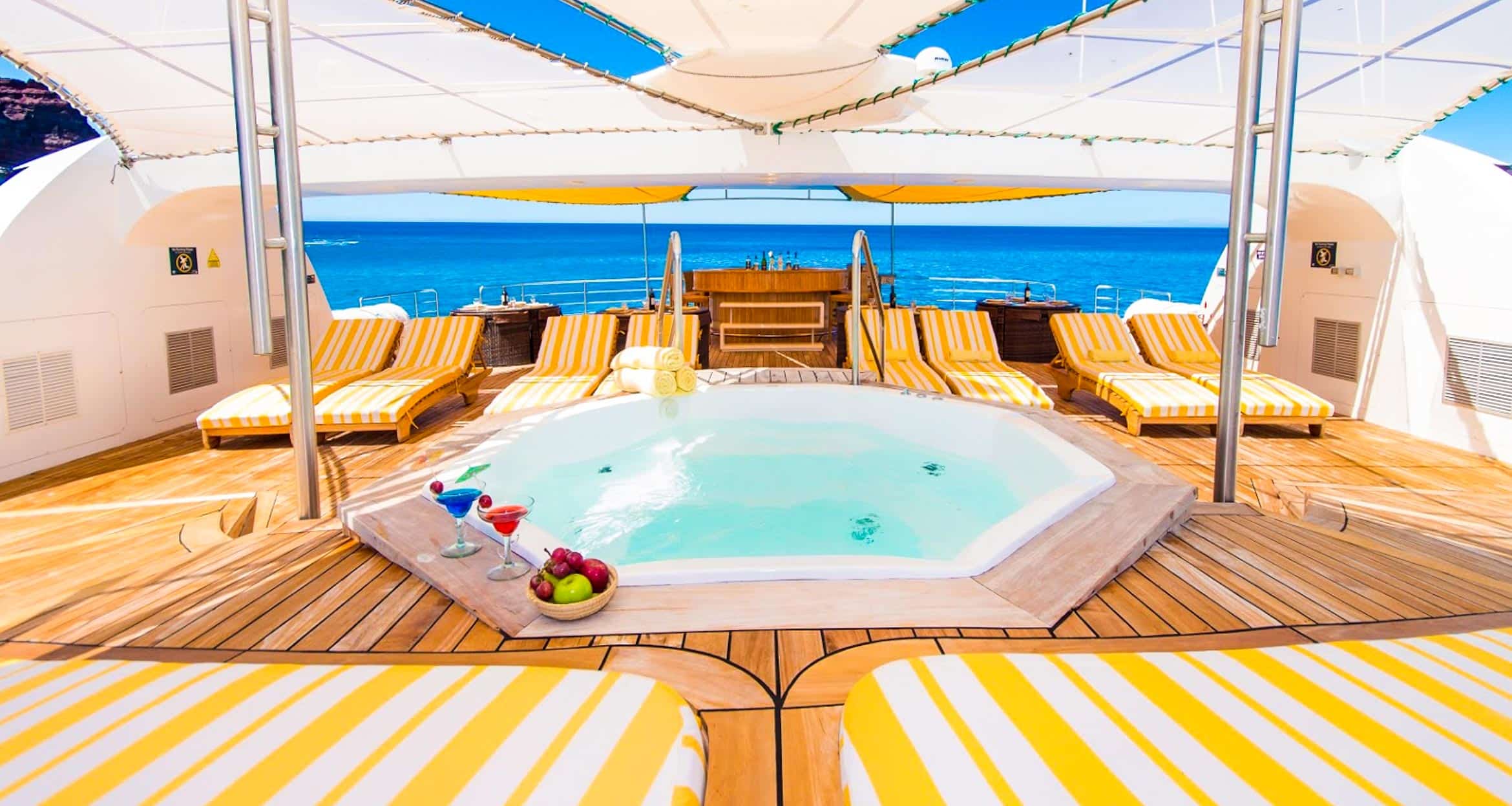
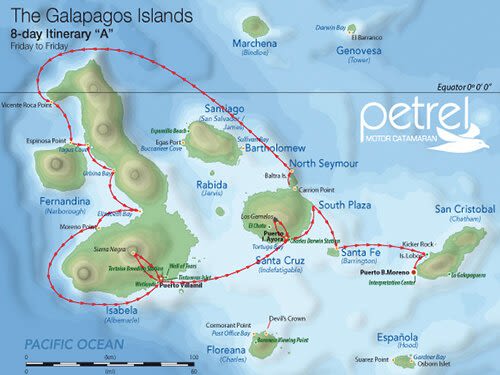
Spend 8-days exploring the turquoise waters and ancient volcanic rock formations of the Galapagos Islands aboard the newly built Petrel Catamaran. The Petrel is a new vessel in the Haugan fleet, designed to combine adventure and luxury. During the day, roam the islands alongside experienced local guides
Arrive in Baltra Airport and climb aboard the newly built Petrel Catamaran. Once on the vessel, head to your cabin and relax before the welcome briefing. The presentation is designed to help better acquaint you with your new surroundings.
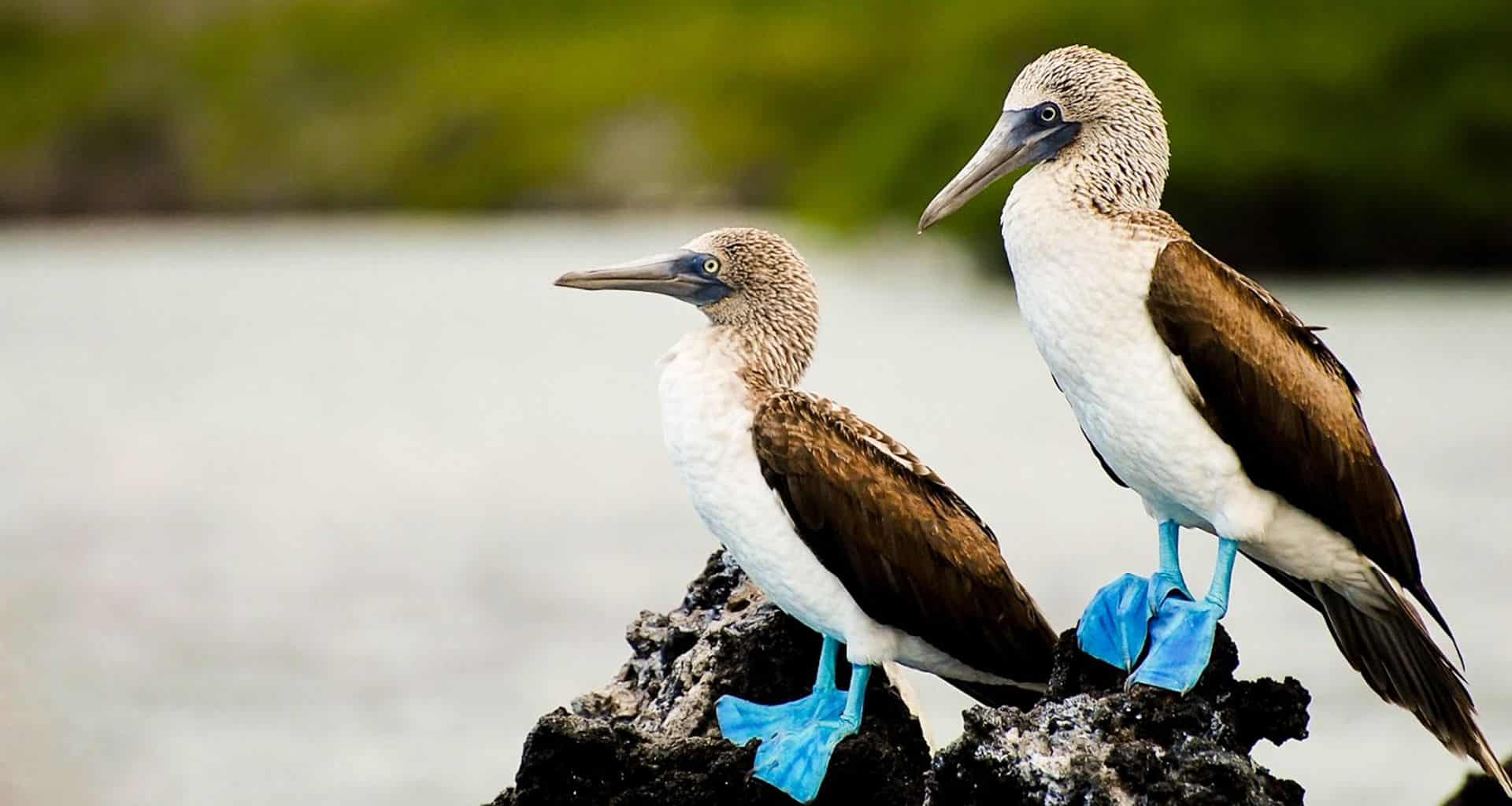
In the afternoon, begin your Galapagos adventure with a visit to North Seymour Island. This island is home to a massive colony of land iguanas, along with friendly sea lions, blue-footed boobies and frigatebirds. Choose between snorkeling, hiking or take a short dingy boat ride. At night, get settled in and relax.
In the morning, visit Isabela Island, the largest of the islands. Explore the sea-horse shaped territory. Isabela Island was formed by six different shield volcanoes that were continuously erupting until eventually joining. While there, check out Vicente Roca Point, admire the geological formations and look for some of the different bird species. You might even spot some sea lions and marine birds diving.
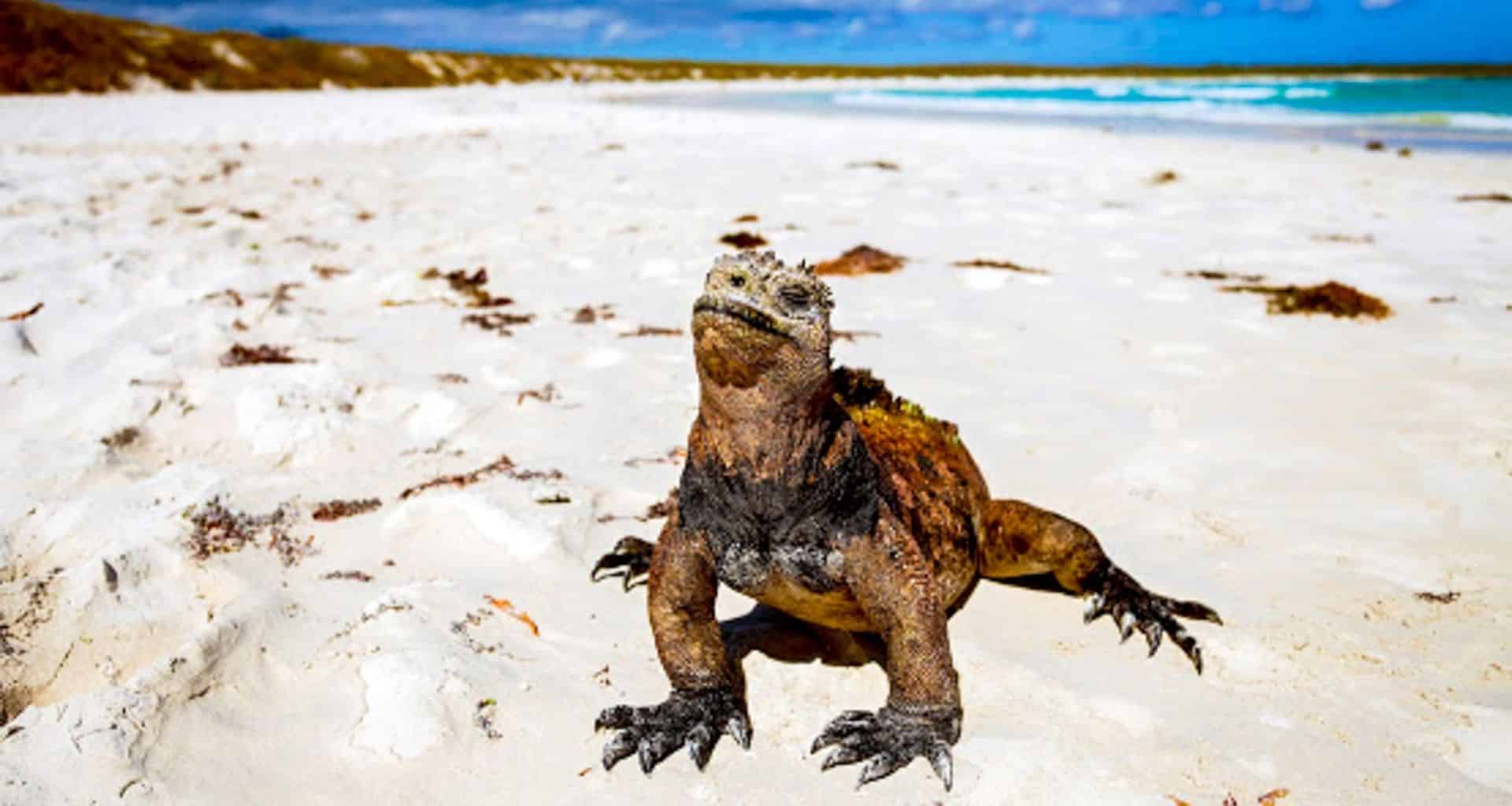
Later, visit Espinosa Point on Fernandina Island. Espinosa's narrow stretch of land is ideal for a scenic walk. Along the peninsula, it is common to see hundreds of marine iguanas gathered on the black lava rocks.
Get ready to explore Tagus Cove, a popular visitor site located on the upper west side of Isabela Island. Many pirates and sailors previously inscribed their names and their ship names on the island's volcanic rock. Hike along the volcanic rock and look for land iguanas, hawks or Galapagos penguins.
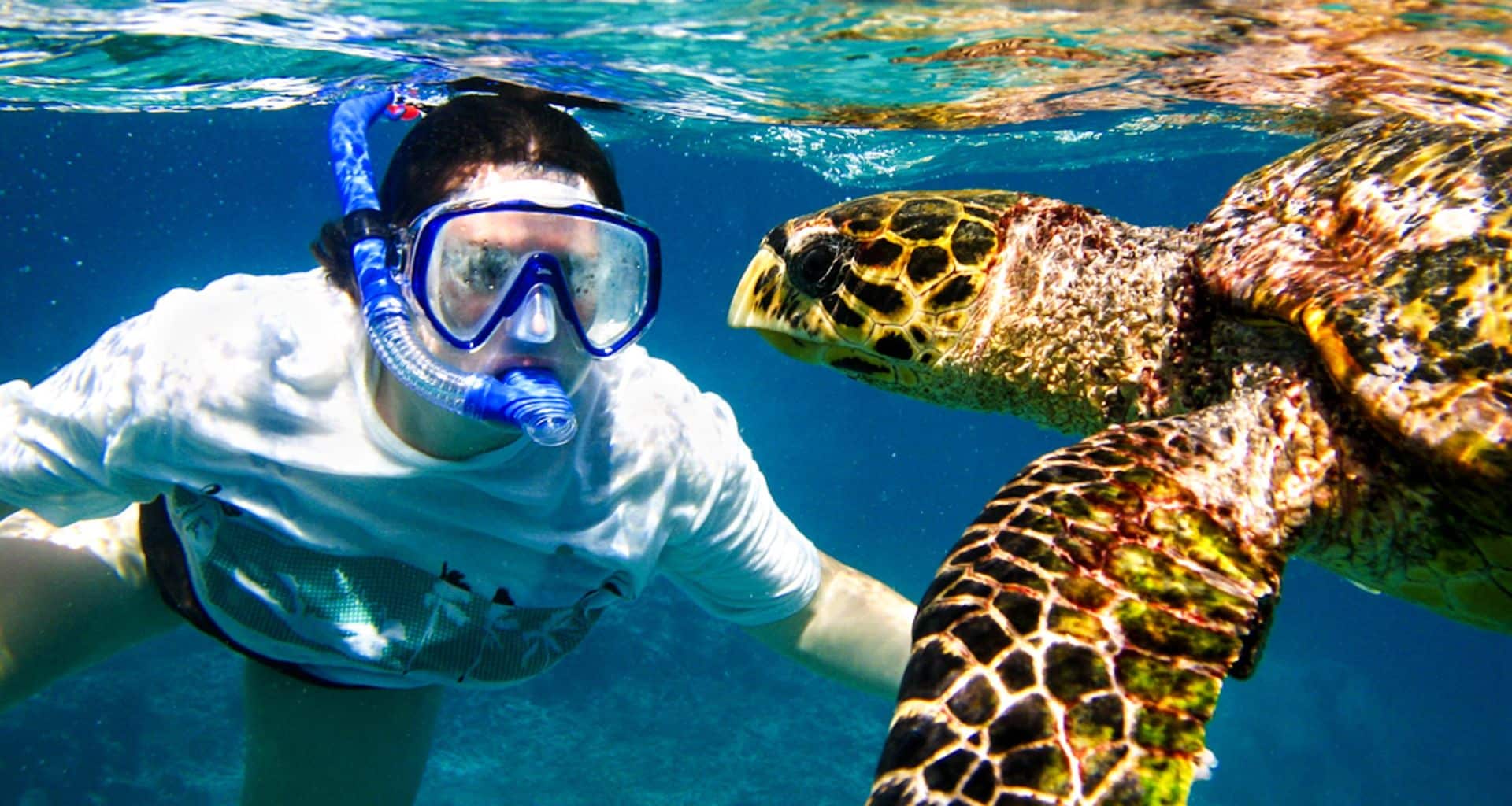
In the afternoon, head south to Urbina Bay. Marvel at the unique uplifting of the island due to volcanic and tectonic activity. Urbina Bay is an excellent area to spot Giant Tortoises, flightless cormorants and exposed coral reef. If you choose to snorkel, you can swim with green sea turtles, colorful fish and the Galapagos Penguin.
Today, you have the chance to explore Elizabeth Bay. Watch as hawks soar overhead and consider snorkeling as your morning activity. The water is quite clear, and an abundance of colorful fish can be seen swimming beneath the surface.
In the afternoon, walk along the rocky shores of Moreno Point. At first glance, Moreno Point appears to be a lifeless black surface. However, the terrain is full of lagoons and a wide variety of life. Spot penguins, shore birds, blue herons and other wildlife here.
In the morning, walk up the Sierra Negra, a massive shield volcano at the Southeastern end of Isabela Island. On the ascent, admire the lush vegetation, and at the summit take in the fantastic views of the lowlands.
In the afternoon, explore the island wetlands, lagoons, swamps, and mangroves. Also, keep your eyes out for a variety of unique bird species. Walk along the Wall of Tears, a historical site built between the years of 1945 and 1959 by prisoners of the island. Please be respectful while you visit this historical site.
Today, get a taste of history as you explore the Charles Darwin Station. Inside, there is a large variety of carefully preserved specimens, including the Giant Tortoise. This organization provides scientific assistance to ensure the proper preservation of the Galapagos Islands and plays a huge role in educating the community and public schools in Galapagos.
Later, head to Santa Cruz to explore Los Gemelos. These are two volcanic depressions on the highest part of Santa Cruz. Notice that the area of Los Gemelos has an entirely different climate from other regions of the island. While here, try and spot the famous vermillion flycatcher, Darwin finches and possibly the short-eared owls.
In the early morning visit South Plaza Island. While South Plaza Island is one of the smaller islands, it has an abundance of diverse flora and fauna. Walk around and admire the large population of Sesuvium plants, such as the prickly pear cactus tree. This friendly environment will put you face to face with the largest population of land iguanas (in the Galapagos Islands), Sea Lion pups, Sally Lightfoot Crabs and other sea birds.
Later, head to Santa Fe Island, the only place in the Galapagos where you can find Opuntia cactus. Santa Fe Island was once a popular site for the giant tortoises, but after years of pirates visiting the island and taking the tortoises for food, they have become extinct. As you walk around the island look for land iguanas, sea lions and the Galapagos hawk.
On your last day aboard the Petrel Catamaran, head to San Cristobal, the easternmost and oldest island in the Galapagos. Take some time to explore the small island named after the sea lions that rest and play on the shores.
In the afternoon, bid farewell the Galapagos and transport to the airport for your flight home or to your next destination.
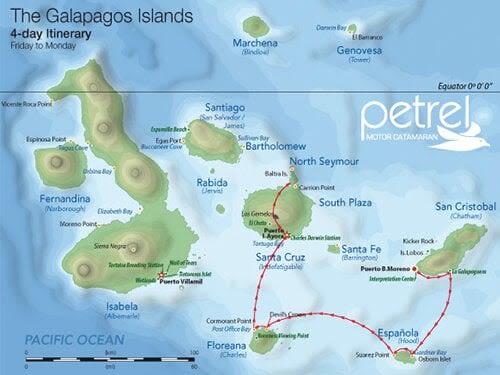
This 4-day luxury Petrel Catamaran cruise is the perfect way to explore the exotic terrain of the Galapagos Islands in a short amount of time. The Petrel is a new edition to the Haugan Cruise fleet, designed to combine exploration and luxurious amenities. Explore the Galapagos Islands alongside expert naturalist guides
Board the Petrel Catamaran to begin the Galapagos adventure. Start with a short briefing on the boat and learn about the islands you will explore on this itinerary.
In the afternoon, sail to the 5th largest island in the Galapagos archipelago, San Cristobal. This was where Darwin first landed back in 1835.
Visit the Interpretation Center and learn about the history, ecosystems, geology and the flora and fauna of the islands. Then, head to La Galapaguera to learn about the Giant Tortoise breeding program that was established by the National Park.
In the morning, head to Espanola Island, the oldest island in the Galapagos. It is estimated that it is nearly 4 million years old. Espanola is the southernmost island in the archipelago and has the most endemic species, ideal for birders. Continue to Gardner Bay. Travelers love spending time at Gardner Bay's beautiful white sandy beach with its turquoise waters. Keep your eyes open for a large colony of friendly sea lions. Also look for finches, the Espanola Mockingbird and green sea turtles. Later, visit the petite Osborn Islet. This small island is a marine-lovers dream, where you can enjoy fantastic snorkeling and swimming.
In the late afternoon, make a trip to Suárez Point. Suárez Point is one of the most outstanding wildlife areas of the archipelago. If you are lucky you might see a young albatross take off for its first flight. Other species found here are marine iguanas, Nazca boobies, blue-footed boobies, and more.
Venture to Floreana Island to explore Cormorant Point. Enjoy a beautiful hike overlooking a saltwater lagoon that often attracts flocks of flamingoes. Later, visit the Devil's Crown, arguably the best snorkeling site in the islands. Devil's Crown boasts an amazing variety of marine life that you can spot while swimming in the crystal clear water.
In the late afternoon, make one more stop, this time at Post Office Bay. Post Office Bay is a white-sand beach where in the past sailors used to leave and receive their letters in a barrel. This is a great place to learn about the history of the island and who visited the area, many years ago.
Today is your final day aboard the Petrel Catamaran. It only seems fitting to end a fantastic trip to the Galapagos at Charles Darwin Research Station on Santa Cruz Island. The station conducts research projects on the islands and plays an important role preserving and protecting the wildlife. Their most popular program is the Giant Tortoise restoration program.
After you've finished admiring the work of Darwin, transfer to the airport and board your flight home or to your next destination in Ecuador.
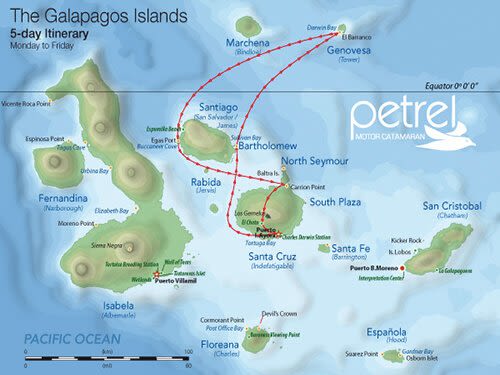
Explore the Galapagos Islands in 5 days aboard the Petrel Catamaran. This new vessel is a recent addition to the Haugan Cruise Ship fleet. It aims to combine adventure and luxury on board. Step foot on the islands during the day, and spot colonies of blue-footed boobies, giant tortoises, frigatebirds, marine iguanas and more.
Upon arrival, you will be greeted and taken across the Itabaca Channel to visit Santa Cruz Island before boarding the catamaran. This visit includes a short hike to the highlands, so make sure to pack sturdy shoes, long pants, and a long-sleeved shirt. The highlands are located in the northern part of the island and can reach drastically high elevations, offering spectacular views.
After you have explored Santa Cruz, board the catamaran and get ready for your Galapagos adventure.
This morning, visit Sullivan Bay, a satellite island of Santiago Island. Sullivan Bay was named after Bartholomew James Sullivan and features an eroded lava field detailed with a variety of patterns. Spend some time examining the shapes and textures of the trees that once existed there. This is also a fantastic spot to see the Galapagos fur seal. Possible activities here are hiking and snorkeling.
In the afternoon, head to Pinnacle Rock. Bartolomé Island's Pinnacle Rock is famous for its distinctive shape, making it the most famous view in the Galapagos Islands. The huge rock also has a beach where you can spot plenty of green sea turtles nesting. Possible activities here are hiking, snorkeling and the panga ride.
Today, discover Darwin Bay on Genovesa Island. Genovesa Island is known as "Bird Island" because of the abundance of diverse bird species. Guests can enjoy exploring the small sand and coral beach and spotting red-footed boobies. Follow the trail along a tidal lagoon and then up a rocky hill for a fantastic view overlooking the cliffs and Darwin Bay.
In the afternoon, visit Prince Phillip's Steps, a very steep, rocky path that takes guests up to a cliff with a beautiful view. On your way up, you might see some seabird colonies.
In the morning, head to Egas Port, also referred to as James Bay. Walk along the black sand beaches and spot Galapagos lava lizards, Galapagos fur seals, and more. This is a great area to hike and snorkel.
Later, visit Espumilla Beach, a popular place to spot marine iguanas and Sally Lightfoot crabs. If you snorkel here, you might come close to octopus, moray eel, shark, or other tropical fish species. After your visit at Espumilla Beach, visit Buccaneer Cove, this was once a refuge for British buccaneers and it is now a popular place to snorkel. The underwater formations and colorful fish here are a sight to see.
On this final day on the Petrel Catamaran, head to Santa Cruz. Visit Carrion Point; there are no landings here, so take a short panga ride to shore or snorkel near the vessel. Admire the beauty of the natural lagoons nearby, exuding turquoise water and a variety of colorful fish, rays and white-tip reef sharks.
After your visit to Santa Cruz, say goodbye to the Galapagos Islands and transfer back to the airport and board your flight home or to your next destination.
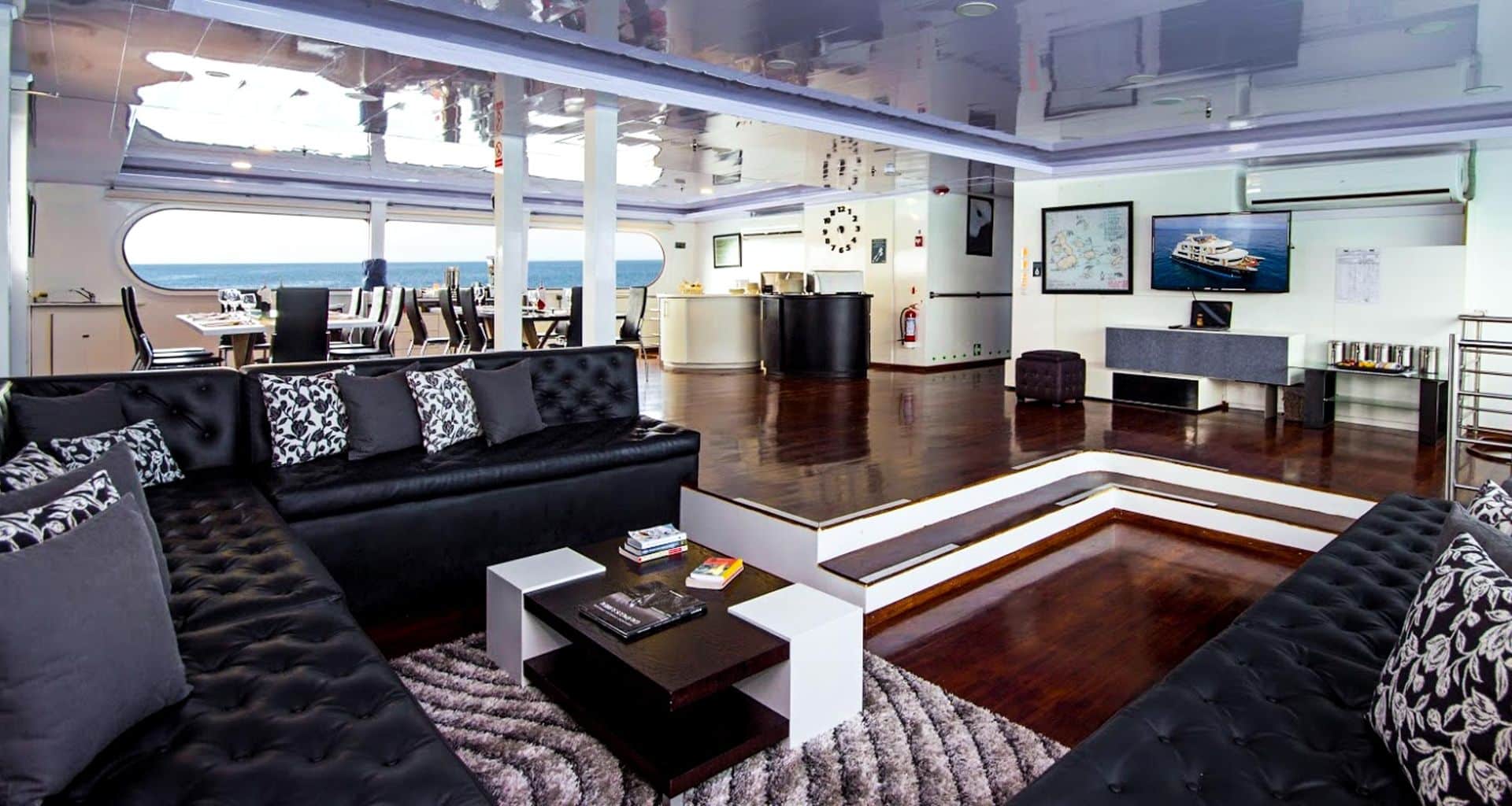
All standard staterooms include either a queen sized bed or two double beds, in-unit A/C, and a private bathroom.