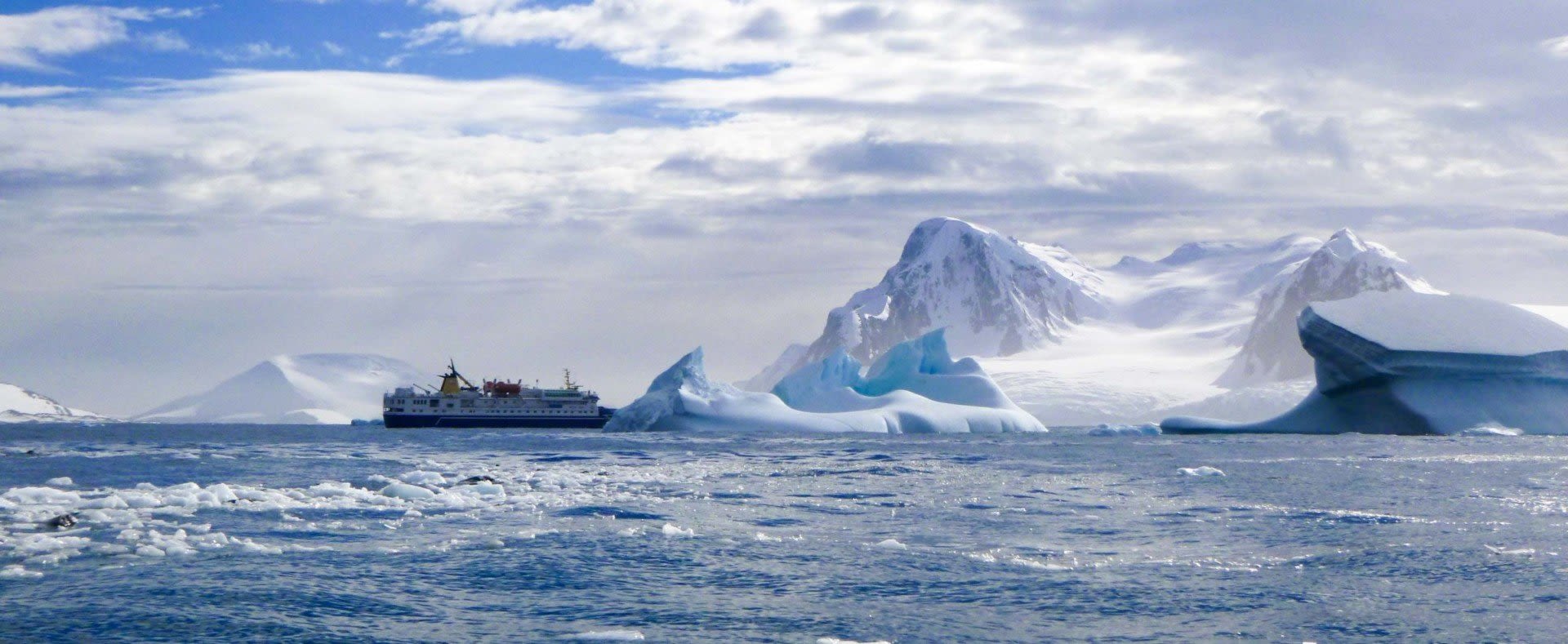
Antarctica is the only continent with no Indigenous people and no permanent residents — so, uniquely, it has no native language at all. Instead, the languages you’ll hear are those of the scientists, crew and travelers who visit, shaped by whichever nations run the research stations nearby.
The Languages of the White Continent
More than a dozen countries operate research stations in Antarctica, so on any given day the continent might be speaking English, Spanish, Russian, Chinese, French and more. For visitors, though, the practical answer is simple: nearly all expedition cruises operate in English, and many ships also carry multilingual guides and staff.
One thing worth knowing: almost every Antarctic voyage departs from a gateway town in South America — usually Ushuaia in Argentina or Punta Arenas in Chile — where the language is Spanish. A few words for your time on shore never hurt; see our Argentina and Chile language guides.
Do I Need to Learn Anything?
Happily, no. Aboard your expedition ship, English is spoken by the experienced exploration guides, crew and staff, with other languages available on request — so you can focus entirely on the penguins, icebergs and whales.
Ready for the adventure of a lifetime? Browse our Antarctica tours and let us handle the rest.