The lost city of the Incas is South America’s most iconic sight — and there’s far more to it than the classic postcard view. Perched on a ridge high above the Urubamba River, Machu Picchu rewards travelers who explore its temples, terraces, and surrounding peaks rather than just passing through. Below are the best things to do and see at Machu Picchu, drawn from 30+ years of planning Machu Picchu tours — from a sunrise over the citadel to the climb up Huayna Picchu.
A little planning goes a long way here: tickets, trains, and the famous Inca Trail all book up well ahead. Here’s how to make the most of the wonder — and how to reach it.
My favorite thing to do at Machu Picchu was to walk the pathway to the Sun Gate. With every step I took, I was able to see another beautiful vantage point of Machu Picchu and the surrounding mountains. Once you arrive to the Sun Gate, you're able to sit atop one of the large stones and enjoy the incredible views - it feels as if you're in another world when you're visiting Machu Picchu.
-Margo Lynott
Peru Travel Expert

Watching the sunrise over Machu Picchu is an incredible experience. There are a couple of different ways travelers can enjoy it. One option is to hike Huayna Picchu or Machu Picchu Mountain. These hikes start early—often before sunrise—and require advance tickets. For those who prefer not to hike, staying overnight at the Belmond Sanctuary Lodge, located just outside the site entrance, allows early access to the ruins. Wake up early, enter the site, find a comfortable spot, and enjoy the epic views—nearly anywhere within Machu Picchu offers a stunning sunrise.

The Sun Gate, known as Inti Punku, was the historic gateway to Machu Picchu for the Incas. Travelers can reach the Sun Gate either by hiking the Inca Trail or by booking the Inti Punku route ticket (sold in high season only) and following the wooden signs along a steady uphill path. Along the way, you’ll pass agricultural terraces, spot llamas, and eventually reach an incredible viewpoint overlooking Huayna Picchu. Those arriving via the Inca Trail experience Machu Picchu just as the Incas once did—entering the site for the first time through the Sun Gate.

What many people assume is Machu Picchu Mountain is actually Huayna Picchu. Machu Picchu Mountain is the peak you’re standing on when looking across at Huayna Picchu.
Climbing Huayna Picchu is challenging—the trail is short but very steep, and most hikers reach the summit in one to two hours. While demanding at times, the breathtaking views of the ancient citadel below make the effort well worth it.

Machu Picchu Mountain is a longer hike than Huayna Picchu and is generally considered slightly less challenging. It’s a good option for travelers concerned about steep climbs or exposure.
From the summit, hikers are rewarded with sweeping views of Huayna Picchu and the Machu Picchu ruins below.

The train journey to Machu Picchu Pueblo, also known as Aguas Calientes, is incredibly scenic. As the route winds from the Sacred Valley through the cloud forest, travelers enjoy views of towering mountains, waterfalls, lush vegetation, and the Urubamba River. Onboard, passengers can enjoy a Pisco Sour, wine, or beer along with light snacks. Whether traveling on the PeruRail line or aboard the Belmond Hiram Bingham, large windows ensure unobstructed views throughout the journey.
Within the citadel itself, these are the structures and details that reward a closer look — the masterworks of Inca engineering and astronomy.
There are plenty of spots in Machu Picchu where the Incas would give offerings and pay tribute to Mother Earth. The Temple of the Sun was a sacred place used and built by the Incas for ceremonies to pay tribute to the sun. The sun is considered to be responsible for the creation of life and all things, therefore the temple was incredibly important to the Incas.

The Inca Drawbridge is another example of the architecture that the Inca builders were able to accomplish. The bridge was created out of stones and was used as an access point to Machu Picchu – some believe it was even used as a secret entrance. Book the Inca Bridge route ticket (sold in high season only) and arrange for a local, professional guide to lead you to the bridge, located in the southeastern part of Machu Picchu. On the journey to the drawbridge, you can enjoy views of the Urubamba River and the surrounding nature and wildlife.

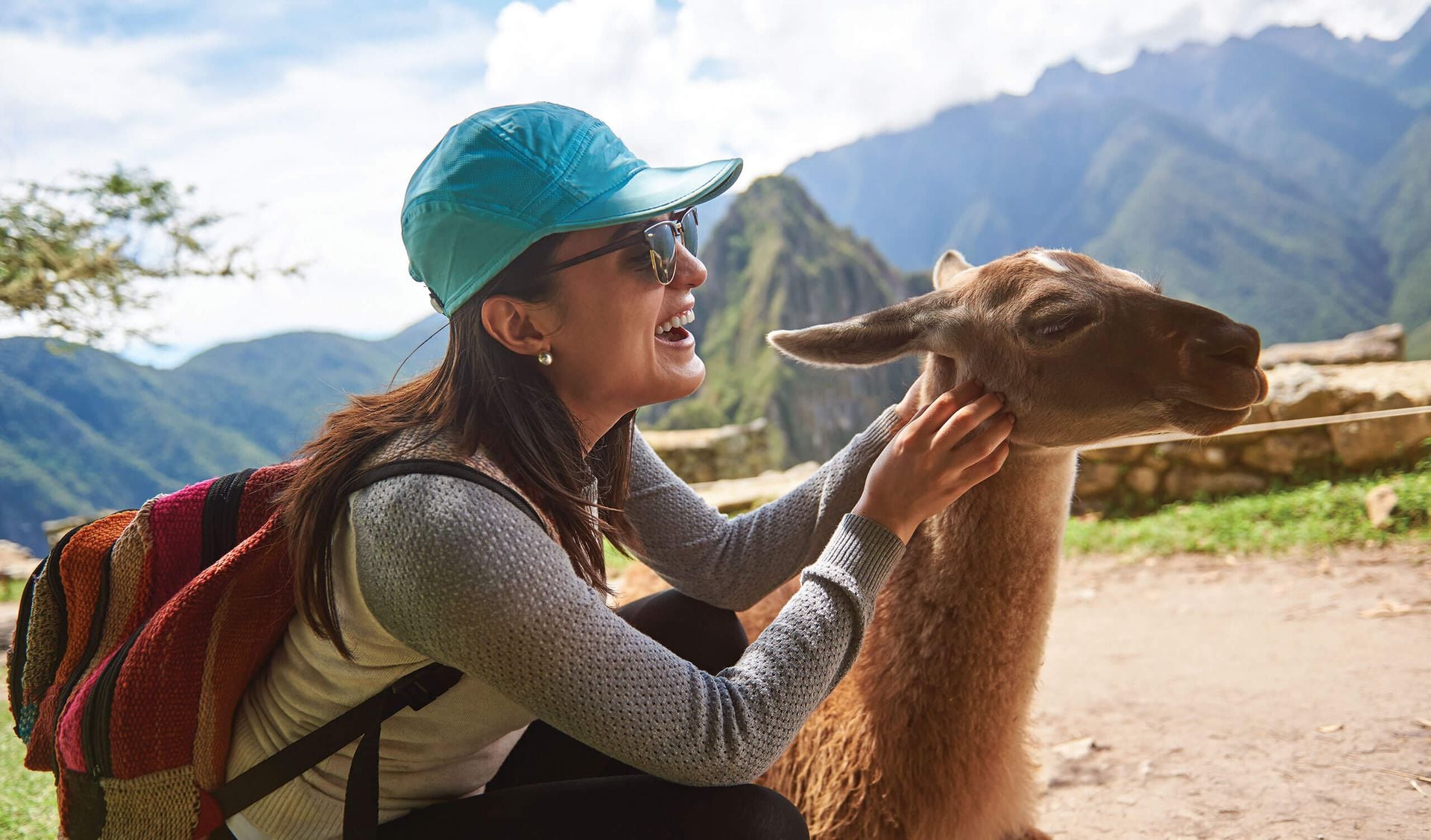
While walking around Machu Picchu you’ll notice plenty of Llamas roaming around the agricultural terraces. You may see single Llamas, or if you’re lucky, a family of llamas. These beautiful creatures are super friendly (even if they do sometimes spit!), and you’re welcome to take photos with them as long as you’re respectful of the guidelines in place.

There are two levels of agricultural terraces in Machu Picchu. The terraces were used by the Incas to produce food, such as quinoa, potatoes, and corn. However, the terraces had a second purpose – in addition to providing an area for food production, the lower terraces also acted as a way to avoid erosion of the mountain. While walking around Machu Picchu, there’s no way you can miss seeing these terraces!

The Watchman’s Hut rests at the top of multiple terraces, in the agricultural sector. The hut was used by the Incas as a guardhouse and ceremonial rock. Follow a guide to the Watchman’s Hut and learn the theories of why it was so important to the Incas, and enjoy the views of Machu Picchu while there!

The Intihuatana Stone, the Hitching Post of the Sun, was very special to the Incas. The beautifully carved rock was known as a ritual stone for the Incas and was used for astronomical purposes. Find the stone while walking around the lower part of the ruins. If the sun is shining you can stand close to the rock, and you’ll notice that your shadow is actually behind you – a fun trick due to the sun’s position!

Machu Picchu is reached from Cusco, usually via the Sacred Valley. The classic route is a spectacular train from Ollantaytambo or Cusco to the town of Aguas Calientes (Machu Picchu Pueblo), then a short bus up the switchbacks to the entrance. Alternatively, trekkers arrive on foot via the 4-day Inca Trail or the Salkantay route. Most travelers base a night in the Sacred Valley or Aguas Calientes to catch the site early. We arrange trains, tickets, buses, and guiding as one seamless package. See our Machu Picchu tours.
The best time to visit Machu Picchu is the dry season, roughly May to September, with the clearest skies and best trekking conditions — June to August is busiest. The shoulder months of April and October bring greener scenery and thinner crowds. The Inca Trail closes every February for maintenance, and the wet season (November–March) is quieter but cloudier.
Entry is by timed ticket on set circuits, and numbers are capped — high-season slots and the Huayna Picchu and Machu Picchu Mountain routes sell out weeks ahead, so book early. At 2,430m (7,970ft) the citadel is actually lower than Cusco, so it’s wise to acclimatize in Cusco or the Sacred Valley first. Bring layers, rain protection, and your passport (it’s stamped at the entrance). Our team handles all the permits and timing.
Machu Picchu is known as the best-preserved city of the Inca Empire — a 15th-century royal estate of extraordinary dry-stone architecture, astronomical alignments, and agricultural terraces, abandoned and hidden for centuries until 1911. A UNESCO World Heritage Site and one of the New Seven Wonders of the World, it is the crowning highlight of any trip to Peru.
From Cusco, usually via the Sacred Valley: a scenic train from Ollantaytambo or Cusco to Aguas Calientes, then a short bus up to the entrance. Trekkers can instead arrive on foot via the 4-day Inca Trail or the Salkantay route. There's no road directly to the citadel — it's always train-and-bus or a trek. We arrange all of it via our Machu Picchu tours.
Yes. Entry is by timed ticket on a chosen circuit, and daily numbers are capped — high-season dates and the Huayna Picchu / Machu Picchu Mountain climbs sell out weeks in advance. The classic Inca Trail additionally requires a strictly limited permit, typically booked four to six months ahead. Booking early is essential, and we secure it all for you.
You can see the citadel in a single well-planned day trip from the Sacred Valley, but two days — staying overnight in Aguas Calientes or the valley — lets you arrive early, beat the crowds, and add a mountain climb. Factor in a few days in Cusco and the Sacred Valley first to acclimatize and explore the wider Inca heartland.
Huayna Picchu is the iconic steep peak behind the classic photo — shorter but exposed and thrilling, with limited permits that sell out fast. Machu Picchu Mountain is higher, longer, and less vertiginous, with wider views and easier permits. Each is its own ticketed route, booked in advance; we'll help you choose and secure a slot.
Less than many expect — at 2,430m (7,970ft), Machu Picchu is actually about 1,000m lower than Cusco. The key is to acclimatize in Cusco or, better, the lower Sacred Valley for a day or two before visiting, take it easy, and stay hydrated. That way the citadel and its climbs feel comfortable.

Our favorite Peru tour ideas featuring the best destinations & activities designed to inspire…
Get your FREE Peru Guide Now!
"*" indicates required fields

