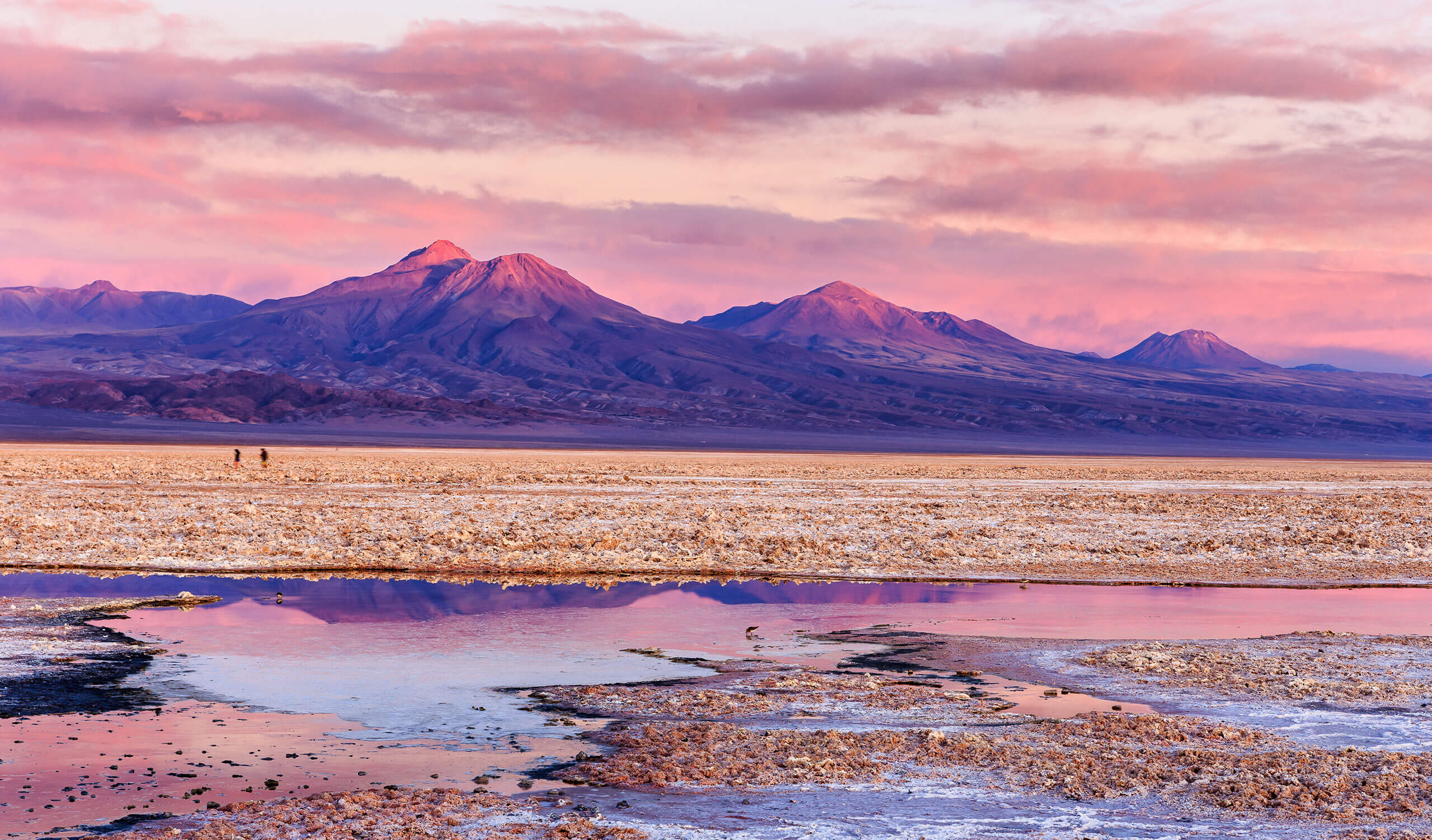
Few countries pack in as much variety as Chile. Stretching 4,300 km down the western edge of South America, it runs from the driest desert on Earth to the glaciers of Patagonia, by way of vineyards, volcanoes, and the moai of Easter Island. Below are the 9 experiences and 6 places our team rates highest after 30+ years of planning Chile tours — the Atacama, Torres del Paine, Valparaíso, and more.
Because Chile is so long and narrow, most trips fly between a few standout regions rather than trying to see it all. Here’s where to start — and how to string them together.
Updated for the 2026-2027 Chile travel season.
A trip to Chile is a never-ending surprise and I love going back every time I can! There are plenty of things to do in Chile, but some of my favorite activities include: visiting a local market; you’ll be surprised by the variety of fruits and vegetables in these vibrant markets. Taking a trip to Valparaiso and seeing the colorful walls of Cerro Alegre and Cerro Concepcion. Lastly, you must visit the charming town of San Pedro de Atacama. You can book an Astronomic tour which allows you a great view of the stars and night sky!
-Claudia Corona
Chile Travel Expert

The world's driest desert is Chile's otherworldly north: salt flats and flamingo lagoons, the steaming El Tatio geysers at dawn, the lunar dunes of the Valle de la Luna at sunset, and — thanks to some of the clearest skies on the planet — world-class stargazing. Based in San Pedro de Atacama, it's one of South America's most surprising landscapes. See our Atacama Desert tours.

Chile's Patagonian crown jewel: the granite towers, French Valley, and Grey Glacier that make Torres del Paine one of the world's great trekking parks. Tackle the multi-day "W" circuit or take catamaran-and-day-hike combos for the headline views without camping. Explore Torres del Paine tours.

Chile is one of the world's great wine countries, and the valleys around Santiago — Maipo, Casablanca, Colchagua — make it easy to spend a day among the vines. Tour the bodegas, taste standout Carmenère and cool-climate Sauvignon Blanc, and lunch with views of the Andes on our Chile food & wine tours.

Ringed by the snow-capped Andes, Chile's capital blends leafy plazas, buzzing food markets, hilltop views from Cerro San Cristóbal, and a serious cultural scene. Use it as the springboard to the wine valleys and the coast. Discover Santiago tours.
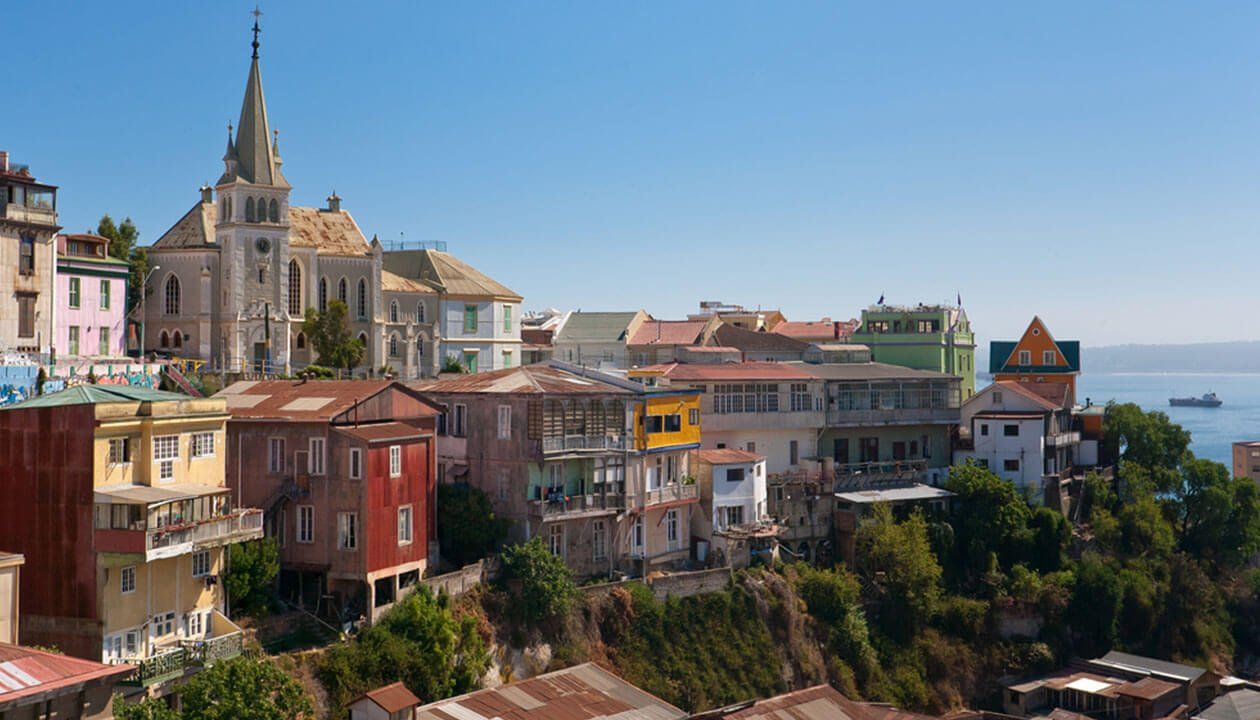
An hour and a half from Santiago, the UNESCO-listed port city of Valparaíso tumbles down steep hills in a riot of color — street murals, clanking Victorian funiculars, poets' houses, and hidden cafés. Pair it with the neighboring beach resort of Viña del Mar. See Valparaíso tours.

One of the most remote inhabited places on Earth, Rapa Nui (Easter Island) is a five-hour flight from Santiago and utterly unlike anywhere else in Chile — hundreds of enigmatic moai statues, volcanic craters, and Polynesian culture. A bucket-list add-on. Browse Easter Island tours.

Some of Chile's finest scenery is only reachable by water. Expedition cruises thread the southern fjords past hanging glaciers, sea-lion colonies, and remote channels — from short sailings near Torres del Paine to multi-day voyages through the far south. See Chile cruises.

Southern Chile's green heart: snow-capped volcanoes mirrored in deep blue lakes, hot springs, and adventure towns like Pucón. Just offshore, the misty island of Chiloé adds palafito stilt houses, UNESCO wooden churches, and its own folklore. Explore the Lake District and Chiloé.

For a deeper understanding of modern Chile, Santiago's Museum of Memory and Human Rights is a moving, world-class museum documenting the Pinochet era. Thoughtfully done and free to enter, it adds important context to any visit to the capital.
Chile’s highlights are spread across thousands of kilometers and wildly different climates — these are the regions and landmarks most trips are built around.
The adobe oasis town of San Pedro is the base for the Atacama: the Moon Valley's sculpted dunes, the Tatio geysers, altiplano lagoons dotted with flamingos, and star-filled desert nights.

Chile's historic core radiates from the Plaza de Armas, with the cathedral, colonial arcades, and grand government palace of La Moneda close by — the cultural and culinary heart of the country.

Valparaíso's hills are an open-air gallery of vivid street art, connected by historic funiculars — one of South America's most photogenic and creative cities, and a UNESCO World Heritage Site.

Nearly 900 monolithic moai stand guard over Rapa Nui, carved centuries ago by a Polynesian culture at the most isolated corner of the Chilean world — an archaeological wonder unlike any other.

On the glacial-blue waters of General Carrera Lake, wave-carved marble caverns glow turquoise — one of Chilean Patagonia's most spectacular and remote natural sights, reached along the Carretera Austral.

The island of Chiloé is famous for its palafito stilt houses and a series of UNESCO-listed wooden churches, built by Jesuit missionaries — the atmospheric, folklore-rich edge of southern Chile.

Chile is one of the world’s longest countries, so flying between regions is the norm — Santiago is the hub, with connections to Calama (for the Atacama), Punta Arenas (for Torres del Paine), Puerto Montt (for the Lake District), and Easter Island. Distances are deceptive: the Atacama and Patagonia are effectively at opposite ends of the country, so most itineraries pick two or three regions and connect them by air. Chile also pairs naturally with Argentina — the two share Patagonia and the Andes. We arrange the internal flights and cross-border legs. See our Argentina & Chile tours.
Chilean cuisine leans on its 4,000 km of coastline — superb seafood, from ceviche to congrio eel and machas a la parmesana — alongside hearty pastel de choclo and empanadas. And of course the wine: Chile is a world-class producer, with Carmenère as its signature grape. A pisco sour makes the classic aperitif.
Yes — Chile is one of the safest and most developed countries in South America, and its tourist regions are very well set up for visitors. Santiago and Valparaíso call for ordinary big-city sense with valuables, especially in crowds. On our trips you travel with local guides and pre-arranged transport. See our Chile safety guide.
The best time to visit Chile depends on the region. For Patagonia and the Lake District, come in the southern summer (November to March); the Atacama and the central wine country are rewarding year-round, though spring and autumn are especially pleasant. Because the country spans so many climates, a well-planned route can find good weather in most seasons.
Chile is known for the Atacama Desert, Patagonia and Torres del Paine, Easter Island’s moai, its world-class wine, the poetry of Neruda, and Valparaíso’s hills — a country of extremes squeezed into one long ribbon of land. For a closer look, see our guide to what Chile is famous for.
Plan 7–8 days to combine Santiago with one signature region — usually the Atacama or Patagonia — and 10–14 to link two or three, such as Atacama, Torres del Paine, and the wine country. Easter Island adds 3–4 days on its own. Because the country is so long, we plan around the internal flights. Our trip planners tailor it to your dates.
A popular route: Days 1–2 Santiago and the wine valleys; Days 3–5 fly north to the Atacama Desert; Days 6–9 fly south to Torres del Paine in Patagonia; Days 10+ add Valparaíso, the Lake District, or a flight to Easter Island. It captures Chile's astonishing range in one trip.
Chile is one of South America's more developed economies, so it sits mid-range — good value, but pricier than Bolivia or Peru. As a benchmark from our own 60+ Chile itineraries, trips start around $600 per person and most custom routes run roughly $200–300 per person per day depending on hotel tier, with Patagonia lodges and Easter Island at the higher end.
More than you'd expect from a desert: dawn at the El Tatio geysers, sunset over the Valle de la Luna, flamingo-filled altiplano lagoons and salt flats, hot springs, and some of the best stargazing on Earth. Based in San Pedro de Atacama, it's a highlight of many Chile trips. See our Atacama tours.
Easter Island (Rapa Nui) is reached by a roughly 5.5-hour flight from Santiago — the only regular air link. Because it's so remote, plan at least 3–4 days there to see the moai sites, volcanic craters, and beaches at a proper pace. It's a memorable add-on to a mainland Chile trip.
Yes — it's among the safest countries in South America, with excellent infrastructure and well-developed tourism. Take ordinary precautions with valuables in Santiago and Valparaíso, especially in crowds and markets. Traveling with local guides and arranged transport, as on our trips, keeps things smooth. See our Chile safety guide.

Our favorite Chile tour ideas featuring the best destinations & activities designed to inspire…
Get your FREE Chile Guide Now!
"*" indicates required fields

