

How to Plan an Argentina Trip: Routes, Insider Tips & Real Logistics
- Juergen Keller, Co-Founder & South America Specialist

- Published:
- Last Updated: July 28, 2026
- By Juergen Keller
Share This Post
Think International: The Argentina Route Secrets Most Visitors Miss
When people ask how to plan a trip to Argentina, they usually begin with Buenos Aires. Then they assume they must return there for the flight home. That works, of course—but it is not always the most efficient way to build the journey.
- Juergen Keller
Think international.
A good Argentina travel route can begin in Chile or Brazil and end somewhere else entirely. You do not need to fly into Buenos Aires, travel thousands of miles around the country, and then retrace your route simply because your return ticket also leaves from Buenos Aires.
Time permitting, look at the whole map before you book the flights. Argentina connects naturally with Chile across the Andes and with Brazil around Iguazú. Once you begin thinking this way, the route often becomes much easier.
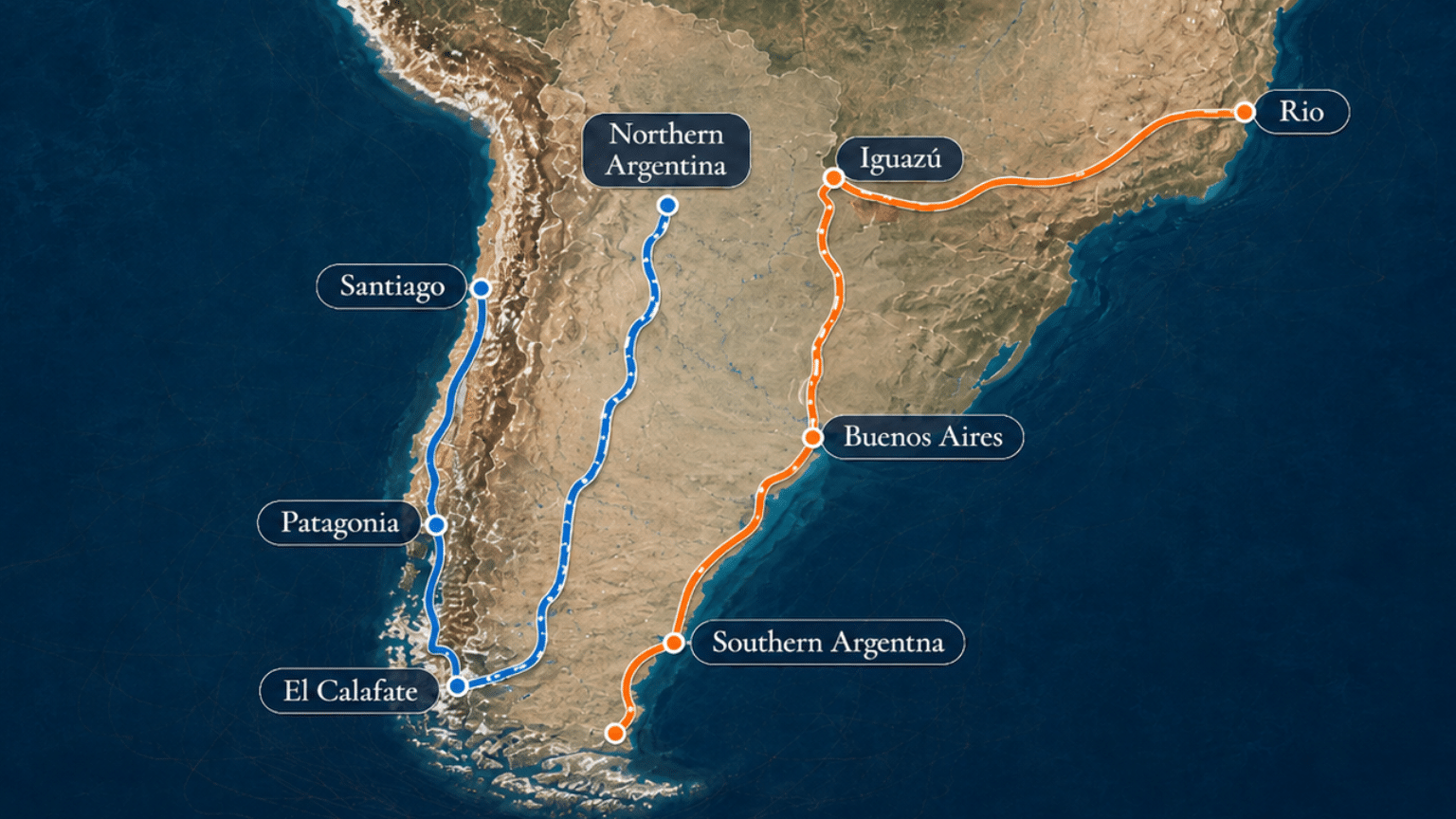
Route A: Santiago to Patagonia, Then North Through Argentina
- Santiago
- Chilean Patagonia
- El Calafate
- Northern Argentina
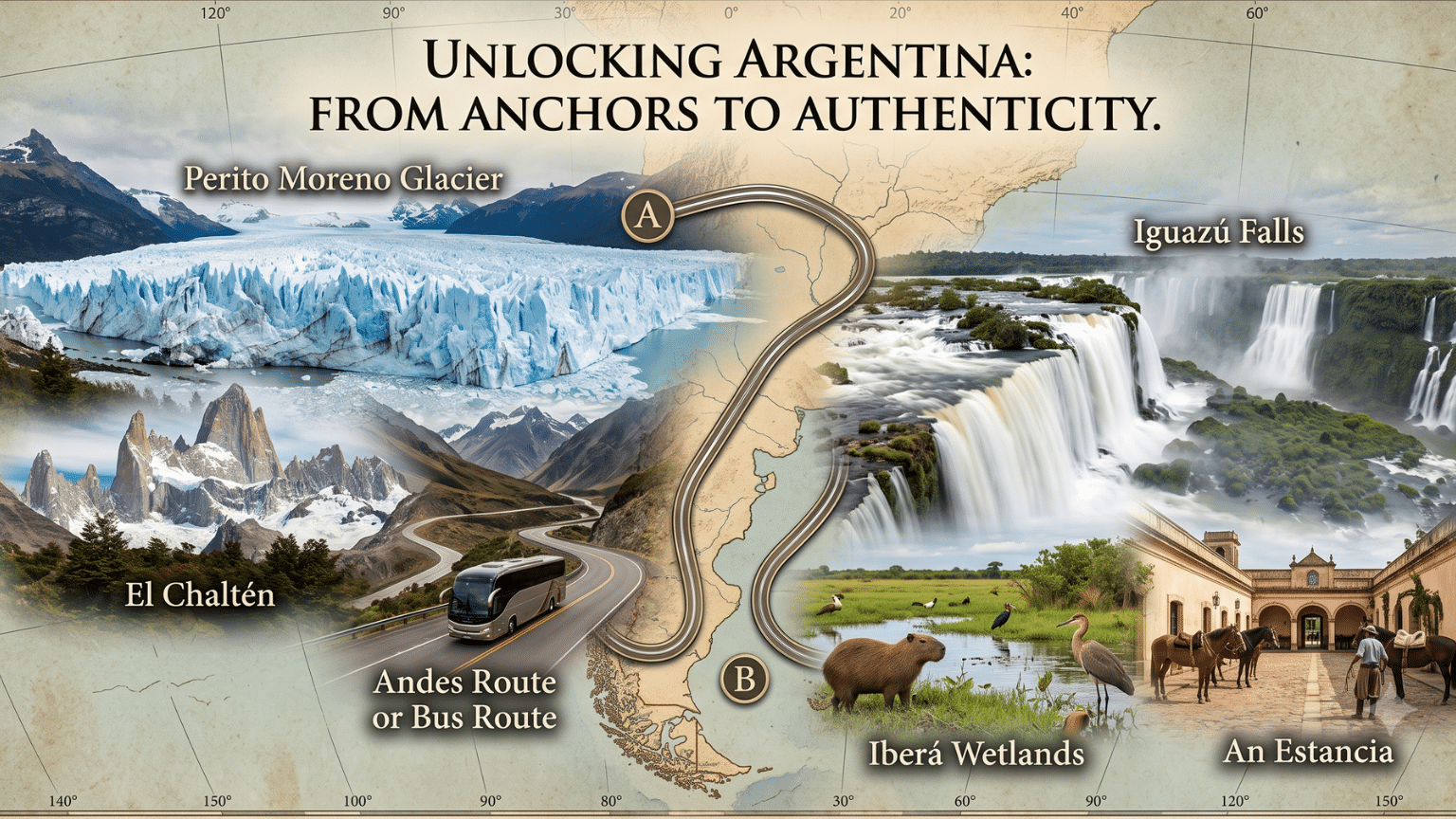
One excellent approach begins in Santiago de Chile. From there, travel south through Chilean Patagonia, cross into Argentina near El Calafate, visit the Perito Moreno Glacier, and then continue north through Argentina.
This route allows Patagonia to become part of the journey rather than a distant side trip from Buenos Aires. It also gives you the opportunity to see both sides of the region. Chilean Patagonia and Argentine Patagonia share the same great landscape, but the travel experience is not identical on each side of the border.
After crossing into Argentina, you can work your way north instead of flying back to where you started. The exact route depends on your time and interests, but the principle is simple: begin in Chile, cross the Andes once, and keep moving forward.
We run several Argentina and Chile tours built around this exact logic, crossing the Andes once and moving in one direction instead of doubling back
Route B: Rio to Iguazú, Then South Through Argentina
- Rio de Janeiro
- Iguazú Falls
- Buenos Aires
- Southern Argentina
The second route begins in Rio de Janeiro and enters Argentina through the subtropical north.
Travel from Brazil toward Iguazú Falls, cross into Argentina, and then continue south. This makes Iguazú a natural gateway rather than an isolated excursion that requires you to fly up from Buenos Aires and then fly back again.
From the Argentine side of the falls, the journey can continue toward Buenos Aires and farther south. Again, you are not following a rigid itinerary. You are using geography to make the trip more logical.
A good Argentina itinerary does not always need to begin and end in the same city. In many cases, the best route begins in one country and ends in another. By thinking internationally from the beginning, you can reduce unnecessary backtracking and create a journey that feels connected rather than assembled from separate flights.
There’s no single fixed version of this route but it’s one we usually build to order, shaping the Brazil-to-Argentina crossing around your dates and pace.
Pair the Icons with Places Still Waiting to Be Discovered

“Off the beaten path?” Ha!
Places worth visiting are attractive destinations, and attractive means attracting people. You will meet other travelers at Perito Moreno Glacier. You will meet them at Iguazú Falls. That is not a reason to skip these places. I would never stop someone from seeing either one just because its crowded on weekends.
But please do not just make the usual Instagram tour of Argentina. You have traveled too far to rush from one famous sight to the next, collecting checkmarks and airport transfers. See the highlights and best places in Argentina, certainly. Then stay longer, look around, and add the places nearby that many visitors overlook.
That is one of the best ways to plan an Argentina itinerary: pair each famous anchor with somewhere that gives you more time, more context, and often fewer people.
Glacier Country: Perito Moreno, El Chaltén and Chilean Patagonia
- Perito Moreno
- El Calafate
- El Chaltén
- Chilean Patagonia
Perito Moreno Glacier deserves its reputation. Go and see it.
Then resist the temptation to leave El Calafate immediately afterward. Stay an extra day. Forget about time for a while. Walk around, shop, sit somewhere, and watch people. The glacier may be the reason you came, but a journey should not become nothing more than transportation between attractions.
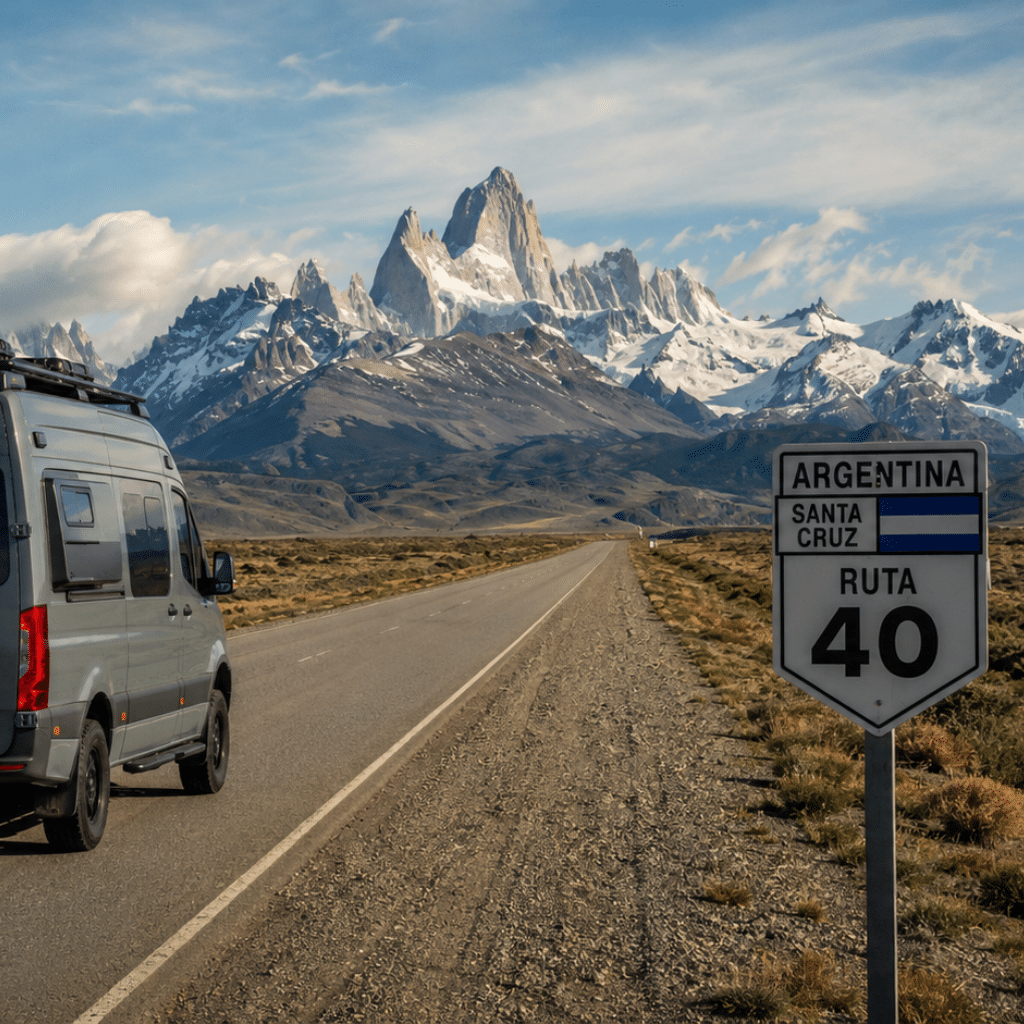
From El Calafate, add El Chaltén and spend more time in glacier country. If your route and schedule allow it, continue across the border into Chilean Patagonia. This is where thinking internationally becomes useful again: Patagonia is not divided neatly according to the way travelers usually book their flights.
The famous glacier becomes the anchor. El Chaltén and the Chilean side give the region depth.

Subtropical North: Iguazú Falls and the Iberá Marshes
“The logistics are a little complicated. But that is also the reason not too many tourists are coming there.”
- Juergen Keller
The same principle applies at Iguazú Falls. Of course you should visit the falls. But do not arrive, see them, and leave the subtropical north as quickly as possible.
Stay in the area around Puerto Iguazú. There is much more to see, and the atmosphere is completely different from Buenos Aires or Patagonia. Argentina is a very large country; slowing down here helps you understand just how varied it is.
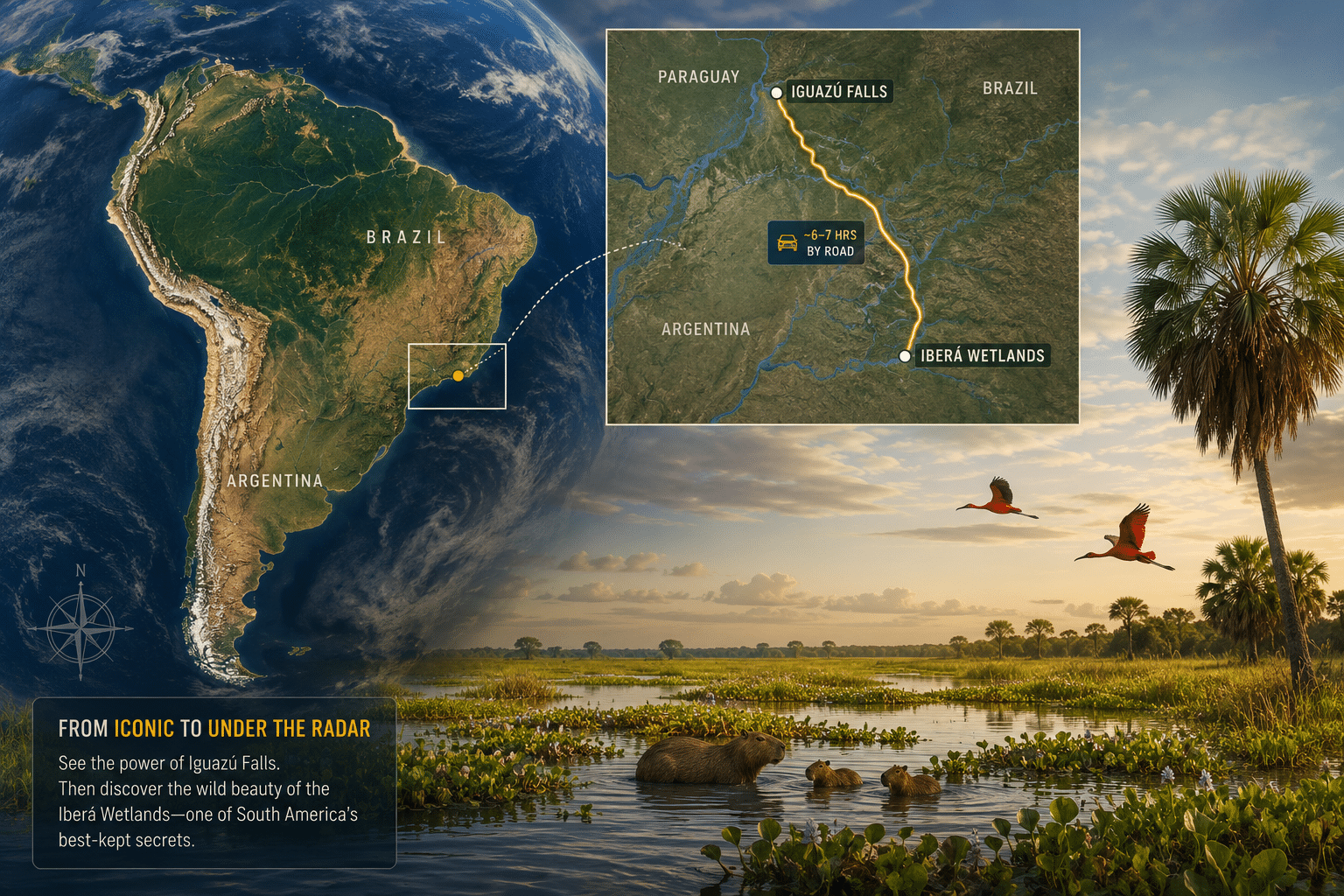
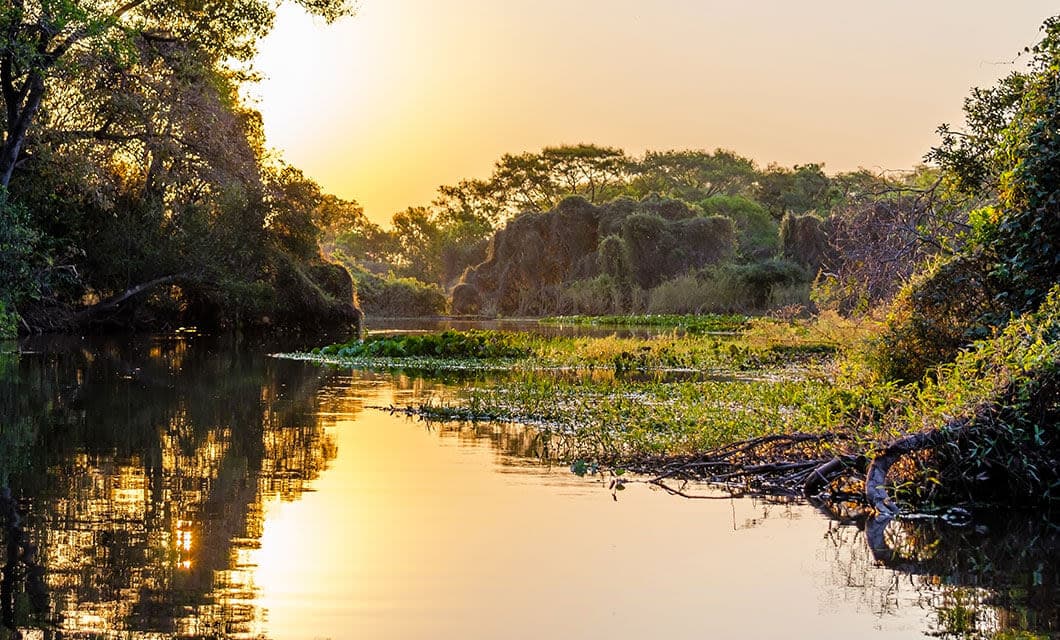
Then consider adding the Iberá Marshes. Iberá is teeming with wildlife and birds, and with a bit of luck, you may even see jaguars.
The logistics are a little complicated. But that is also the reason not too many tourists are coming there.
Sometimes difficult logistics are not merely an inconvenience. They are the filter that keeps a place from becoming another quick stop on the standard circuit. Iberá requires more thought, but for the right traveler, it can become one of the most memorable parts of the journey.
Buenos Aires and the Pampas: Add a Family-Run Estancia
Buenos Aires needs time. Do not treat it only as an airport and a few famous neighborhoods before the next flight.
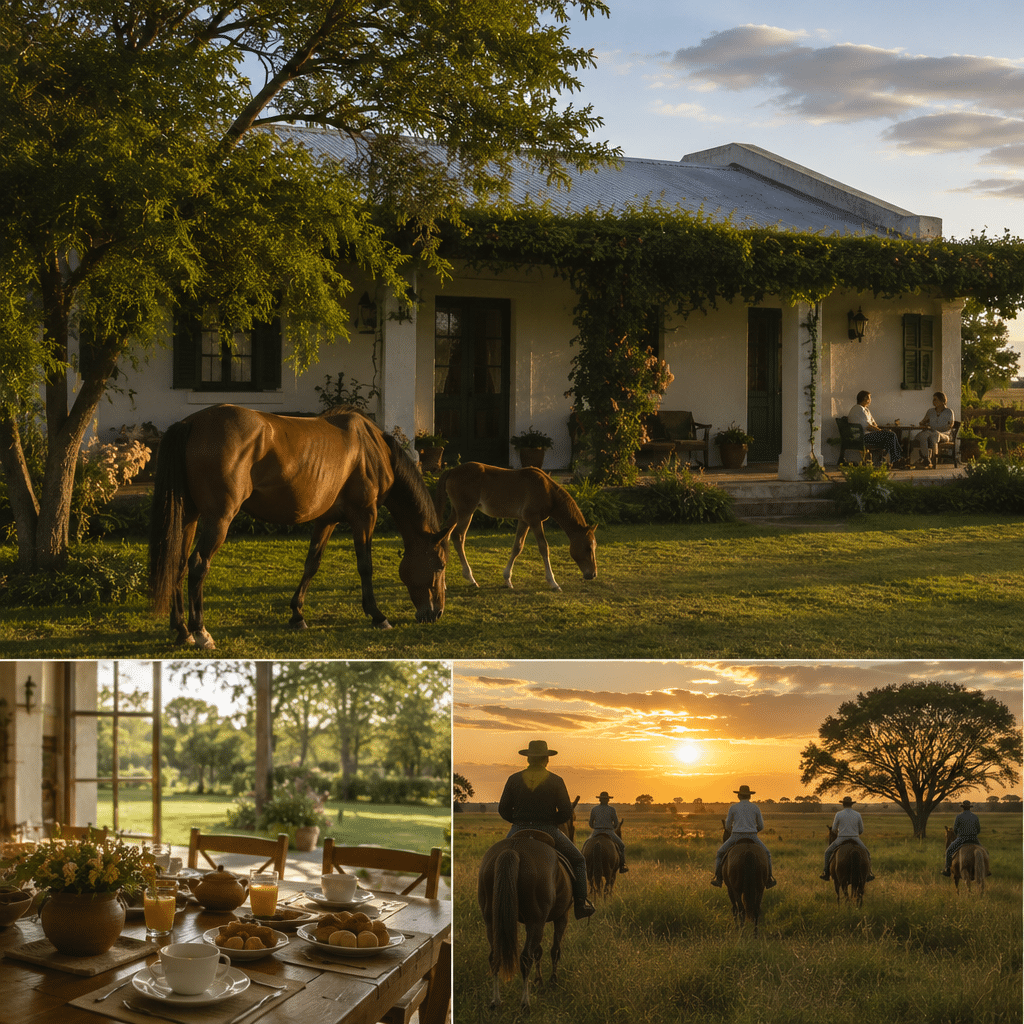
After the city, venture out to one of the many family-run ranches in the Pampas. These estancias are often luxurious, with a swimming pool and plenty of room for the entire family to take a real break. Horseback riding is usually part of the experience.
This is also where the gaucho heritage you hear about in Argentina becomes more tangible. You are no longer reading about it or watching a performance arranged around a short city visit. You are spending time in the landscape where that culture developed.
The estancia works well because it changes the pace. Buenos Aires gives you the energy of the city. The Pampas give you space, horses, long meals, and time together.
The Scenic Overland: Let the Route Become Part of the Trip
- Salta
- Atacama
- Mendoza
- Andes crossing
- Chile
Also, use your creativity with transportation.
Some of the most spectacular routes are traveled by bus, not by plane. The route from Salta across to the Atacama is the author’s favorite, with flamingos along the way and mountains surrounding the road.
Another excellent crossing comes after wine tasting in Mendoza. Instead of returning to Buenos Aires, continue west and take the bus over the Andes into Chile.
Buses in Argentina, and especially in Chile, are of a very high standard. They are certainly much more comfortable than Greyhound or similar services in the United States.
Flying may look faster when you compare departure and arrival times. But it can also remove the landscape that connects one destination to the next. On these routes, the journey is part of what you came to see.
Do not build an Argentina trip only by asking which flight is shortest. Sometimes the road over the Andes is the better answer.
Cultural and Culinary Realities: What the Guidebooks Get Wrong
Argentina is famous for steak and Malbec. True or false?
Yes, but!
The familiar descriptions are not exactly wrong. The meat is legendary, and rightly so. Argentina also produces excellent wines. But the most interesting part is often missing from the usual travel summary. The importance of an asado is not simply the quality of the steak, and many of the most interesting Argentine wines are bottles you may never encounter outside the country.

The Asado Ritual: A Social Affair, Not Only the Eating
Even if you are not too much into meat, it is worth experiencing a proper Argentine asado. It is one of the best ways to learn not only about the food, but also about Argentine culture and the country’s gaucho heritage.
The meat itself is only part of it. Today, much of it does not come from cattle roaming freely across the Pampas. Herds are often raised in ways that are not so different from livestock in the United States. What makes the asado distinctive is the preparation—and the patience.

The meat is grilled slowly for hours, away from the direct fire. This is not throwing a steak on the grill, cooking it quickly, and sitting down to eat. Nope.
While the meat cooks, starters are served. At a family gathering, people stand around the grill with a drink in hand. Conversations continue, more food appears, and nobody seems especially concerned about the clock. A typically late Argentine lunch can drift naturally into the evening without anyone noticing.
An asado is a social affair, not only the eating. That is what many visitors miss when they reduce it to “Argentina has good steak.” The meal is the reason everyone gathers, but the gathering is the real experience.
The Malbec Myth: Why Many Excellent Wines Never Leave Argentina
You have probably heard of Argentine Malbec. You may already buy it in the United States or Europe. But that does not mean the wines available abroad represent everything Argentina produces.
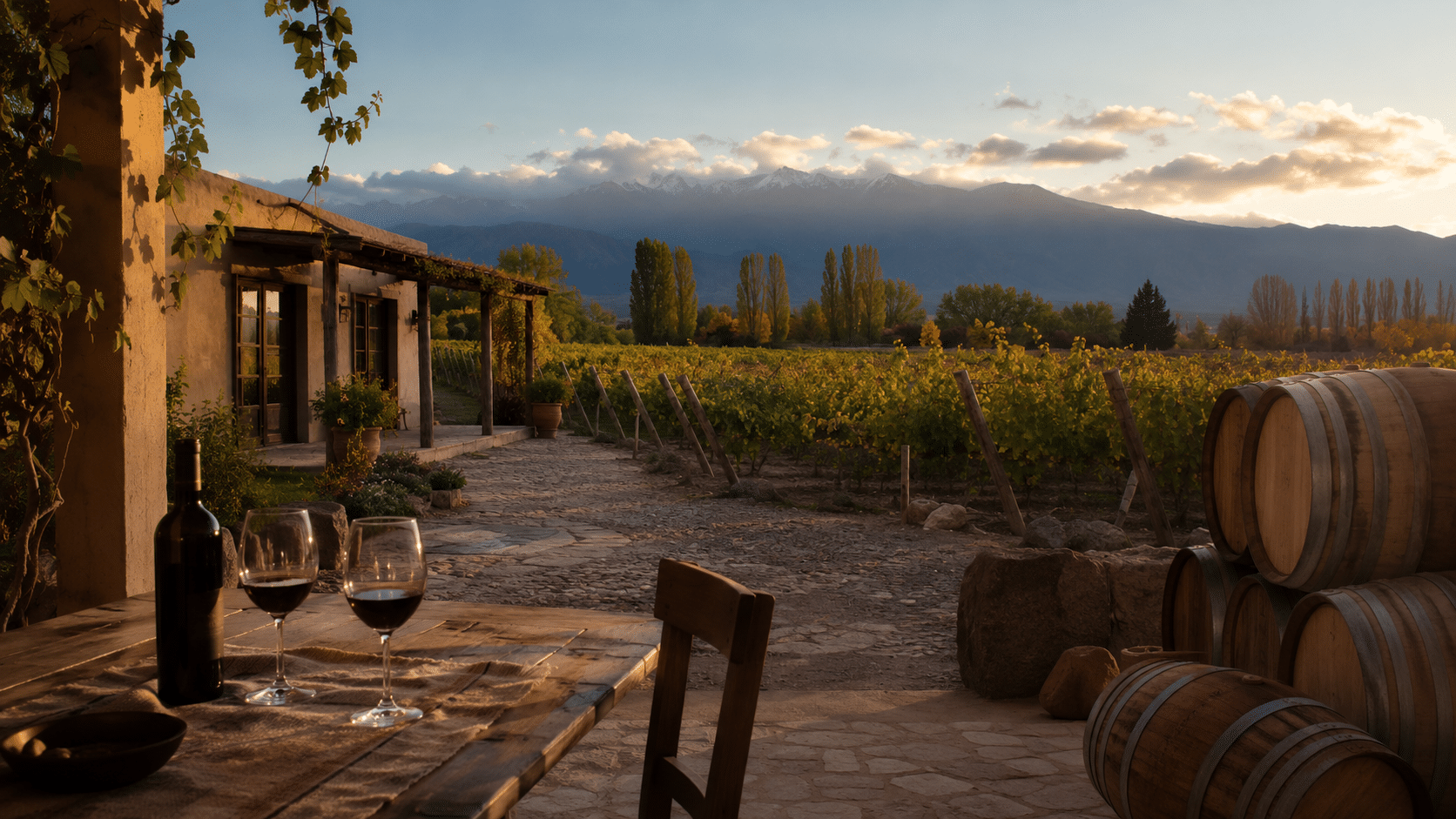
Many Argentine wineries are small. They make excellent wines, but they simply do not have the export logistics in place. For them, the Argentine market is already large enough. Their bottles are consumed within the country and may never cross the border.
The Argentine wines most commonly found abroad tend to come from the relatively small number of mass-producing wineries capable of exporting at scale, sometimes under foreign ownership. I am not saying those wines are bad. Many are very good.
But there is much more waiting inside Argentina.
Wine tasting in Mendoza is therefore not only about drinking Malbec near the place where it was produced. It is an opportunity to try wines you may never see again after returning home. That is part of the pleasure—and perhaps a good reason not to become too attached to one particular bottle.
The rest of Argentine food also deserves more attention than it usually receives. Italian and Arabic immigration have had an enormous influence, creating dinner options that extend far beyond steak. Let yourself be surprised. Argentina’s tables tell a much broader story than the clichés suggest.
Argentina Trip Planning Essentials: Pacing, Timing and Entry
- How Fast Should You Travel? Do not measure an Argentina itinerary only by how many destinations you can include. Every additional stop brings another transfer, another hotel check-in and often another flight. Leave enough time to stay an extra day occasionally, especially in places such as El Calafate or Puerto Iguazú, rather than turning the entire journey into a race between famous sights.
- When Is the Best Time to Visit Argentina? There is no single best month for the entire country. Patagonia, Buenos Aires, Iguazú and the northwest have different climates and seasonal considerations, so timing should be based on the route you actually want to travel. Our guide to the best time to visit Argentina explains how the seasons affect the country’s major regions.
- Entry Requirements and Visas Entry rules depend on your nationality and can change, so confirm the current requirements before making final travel arrangements. Review our guide to Argentina entry requirements for the practical details and links needed to prepare for arrival.
- Currency, Payments and Spending Money Argentina’s currency and payment situation requires a little more preparation than simply arriving with one credit card. Before traveling, read our guide to money in Argentina for current guidance on currency, cash and payment options.
Argentina Trip Planning FAQ
Is Argentine steak overrated?
Yes, but!
Argentine meat is legendary, and rightly so. But the important part of an asado is not simply whether the steak is better than every steak you have eaten elsewhere. It is the slow preparation, the starters, the drinks around the grill, and the late lunch that drifts into evening.
An asado is a social affair, not only the eating.
Can’t I just buy Argentine Malbec at home?
You can buy Argentine Malbec abroad, and many of those wines are very good. But they represent only part of what Argentina produces.
Many smaller wineries do not have the logistics to export internationally, and the Argentine market is already large enough for them. This means some excellent wines are consumed almost entirely within Argentina. Wine tasting there gives you the chance to try bottles you may never find again at home.
How should I plan my Argentina route?
Think international.
Do not automatically assume that you must fly into Buenos Aires, travel around Argentina, and then return to Buenos Aires for the flight home. A good route may begin in Santiago, continue through Chilean Patagonia, cross into Argentina near El Calafate, and then work north. Another may begin in Rio de Janeiro, cross through Iguazú, and continue south through Argentina.
When you look at Chile, Brazil and Argentina as one connected region, the route often becomes much easier.
Is Iberá worth the effort to reach?
For travelers interested in wildlife, birds and places outside the standard Argentina circuit, yes. The Iberá Marshes can be added to a journey through the subtropical north after Iguazú.
The logistics are a little complicated, but that is also the reason fewer tourists are coming there. Iberá requires more planning than the major highlights, yet that extra effort is part of what protects the experience.
How many days do I need for Argentina?
There is no honest single answer because Argentina is so large and the right amount of time depends on the route. Buenos Aires, Iguazú, Patagonia, Mendoza and the northwest cannot all be treated as nearby stops simply because they are in the same country.
Begin with the places that matter most to you, then account for flights, overland travel and border crossings. It is usually better to visit fewer regions well than to spend the entire trip moving between airports. Leave enough room to stay an extra day, slow down, and forget about the checkmarks on your Instagram list.
Designing Your Argentina Journey
Argentina will surprise you. But the best journeys here do not come from collecting the greatest number of famous places. They come from choosing the right route, allowing enough time, and understanding when crossing into Chile or Brazil makes more sense than returning to Buenos Aires.
Begin with the places you most want to experience. Then build the journey around geography rather than checkmarks. Pair the famous sights with places still waiting to be discovered, leave room for a long lunch or an unexpected bottle of Malbec, and do not be afraid to let the road itself become part of the trip.
SouthAmerica.travel can help you connect these regions into a route that works in the real world.
Explore our Argentina tours and begin designing a journey around your interests, timing, and preferred pace.
About the Author
