People search for the national dish of Antarctica. There isn’t one. Antarctica is one of the rare places on Earth with no Indigenous population, so no cuisine grew up there. Even in summer only a few thousand people live on the continent, and nearly everything they eat is brought in on the summer resupply.
So “Antarctica food” means three things: what the explorers survived on, what station crews eat now and, if you are going, what you will eat on an expedition ship.
The four foods most lists give you are real. They are also a century old. They were sledging rations, not a cuisine.
Pemmican is dried meat pounded fine and mixed with melted fat. The word is Cree and the food is Indigenous North American. Polar expeditions made it the core of the sledging ration: a dense, high-energy food that was easy to store and ship. On the march to the South Pole, each of Roald Amundsen’s men ate 350 grams (12.3 ounces) a day.
Hoosh is pemmican and sledging biscuit stewed in one pot with water or melted snow. On the boat journey from Elephant Island, Ernest Shackleton’s crew breakfasted on “hot hoosh made from Bovril sledging ration, two biscuits, and some lumps of sugar.” One expedition diarist rated his hoosh excellent “in spite of a decided tang of penguin guano.” That tells you most of what you need to know.
Bannock is not Antarctic at all. It made this list because Shackleton’s men baked it on the drifting sea ice after they abandoned the crushed Endurance, saving their remaining biscuits for the boat journey. Flour, fat, water, salt and a little baking powder, rolled flat and baked about ten minutes on a hot iron sheet. Each weighed one and a half to two ounces; each man got three or four a day. Easy to make, yes. A treat only by comparison.
Chocolate is the one item here you would still pack. Amundsen kept his sledging food to pemmican, biscuits, milk powder and chocolate, and wrote that “a rich and varied menu is for people who have no work to do.” His polar party got 40 grams (1.4 ounces) of chocolate per man per day. Calorie-rich, and rationed to the gram.
Food in Antarctica today is a logistics question. Australia’s stations receive all their food in the summer resupply, much of it frozen or tinned to last the year, and the “fresh” produce has already spent weeks at sea. A hydroponic hot house grows a few vegetables like lettuce and tomatoes, and a station chef cooks most meals.
McMurdo, the American base on Ross Island, can house more than 1,000 people; a chartered cargo ship has brought its food and supplies every year since 1955. Argentina’s icebreaker ARA Almirante Irízar spends about four months each summer delivering food, fuel and materials to its thirteen bases, Esperanza and Marambio among them. So the most popular food in Antarctica is whatever the last ship brought, and anything green is a luxury.
Early crews shoveled snow into tanks and melted it. Today two of Australia’s stations pump from a melt lake, a third runs a reverse-osmosis plant, and showers are limited to three minutes.
If Antarctica has a food tradition of its own, it is the Midwinter dinner around June 21. The crew of the Belgica, frozen into the ice, held the first in 1898. When The Antarctic Sun described it in 2004, winter crews dressed up for the feast, and at McMurdo the station managers acted as waiters, pouring the wine.
Commercial food from Antarctica comes out of the sea. CCAMLR, the international commission that manages Southern Ocean fishing, sets catch limits for Antarctic krill, mackerel icefish and two toothfish species. If you have eaten Chilean sea bass in the United States, you have eaten toothfish: NOAA notes both species are also referred to by that name. In Ushuaia the Patagonian toothfish is on menus as merluza negra.
What the explorers hunted is protected. Under the Madrid Protocol, killing or capturing native birds and mammals needs a permit, issued only for scientific study, for museums and other educational or cultural uses, or for the unavoidable effects of scientific work. No seal steak, no penguin.

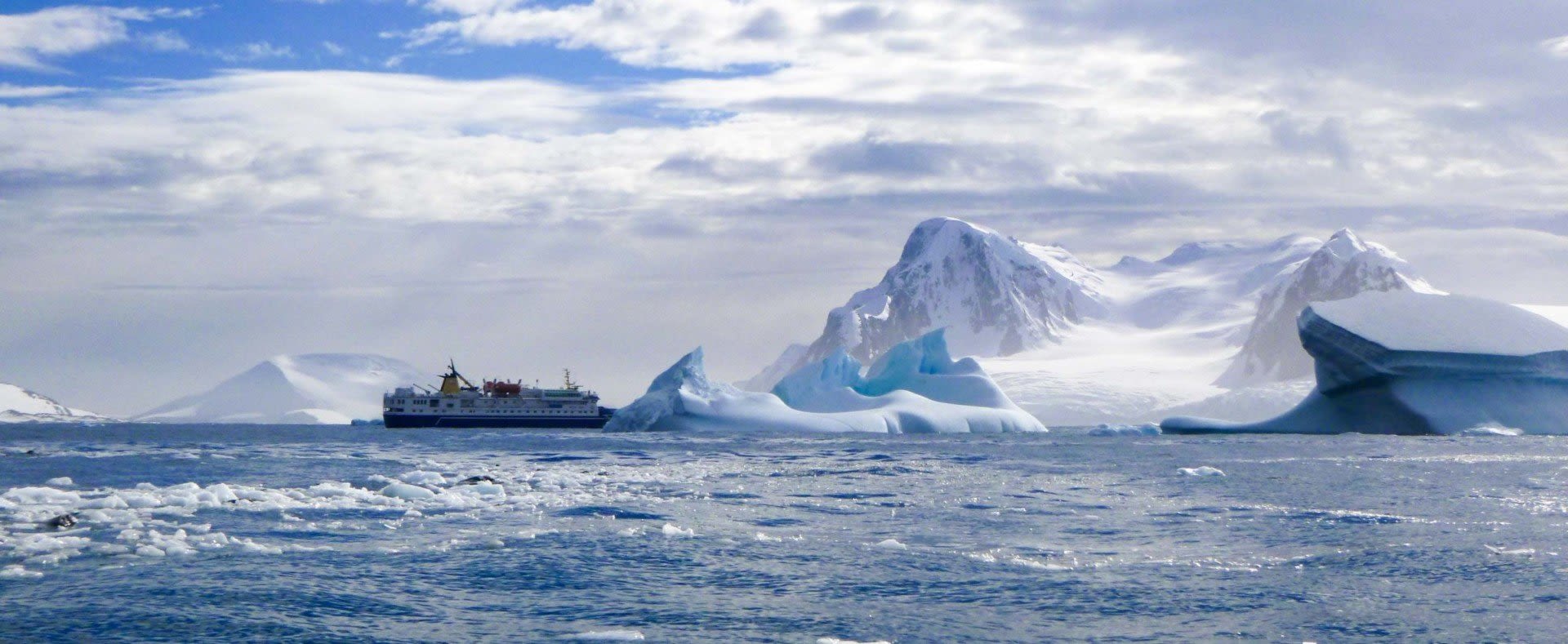
On an expedition cruise the ship is your kitchen and your bar, so read the inclusions line by line. One Ushuaia voyage on our site lists all meals plus snacks, coffee and tea; the fly-cruise from Punta Arenas lists full board with alcoholic and non-alcoholic drinks. Same continent, different fine print. Tell us about allergies or a special diet at booking, too. There is nowhere to shop at sea.
From Ushuaia the ship needs about two days each way to cross the Drake Passage, and that is where appetites go missing. The CDC’s motion-sickness advice: eat small amounts often, drink water, limit alcohol and caffeine, and lie down or watch the horizon. Ask a healthcare professional about medicines. Our Antarctica weather page explains the crossing; the fly-cruise swaps it for a two-hour flight to King George Island.
The CDC also notes that sharing close quarters with travelers from all over the world raises the risk of illness. Our staying healthy in Antarctica page covers the rest.
The Antarctic Treaty’s visitor guidelines, updated in 2025, are brief on food and firm: do not feed wildlife, do not leave food or scraps lying around, and leave no litter on land or in the sea. The bigger risk is invisible: seeds and soil ride in boot treads, pockets and Velcro, so boots and gear get cleaned before you arrive and between landings at the ship’s boot-washing station. IAATO, the tour operators’ association, discourages Velcro for that reason; our Antarctica packing list covers the rest of your gear.
The rules reach the galley too. The Madrid Protocol bans live poultry from the Treaty area, and any poultry not eaten must be removed or incinerated.
Most Antarctic voyages sail from Ushuaia, so your last meals ashore are Fuegian. The star is centolla, the southern king crab, a close look-alike of Alaska’s king crab, traditionally caught in the Beagle Channel and served in stews, soups, ravioli or gratinéed. Its fishing closure runs March 1 to June 30, when restaurants serve it frozen; Argentina’s tourism board names November to January as the best months for it fresh, the middle of the cruise season. Look too for cordero a la cruz, lamb roasted on a cross.
Our Patagonia food and drink guide goes deeper, and the Argentina food guide covers Malbec and mate. Then the ship takes over the cooking: compare voyages on our Antarctica cruises page, start with the classic voyage from Ushuaia, or ask us to fit Antarctica into a custom trip through Patagonia.