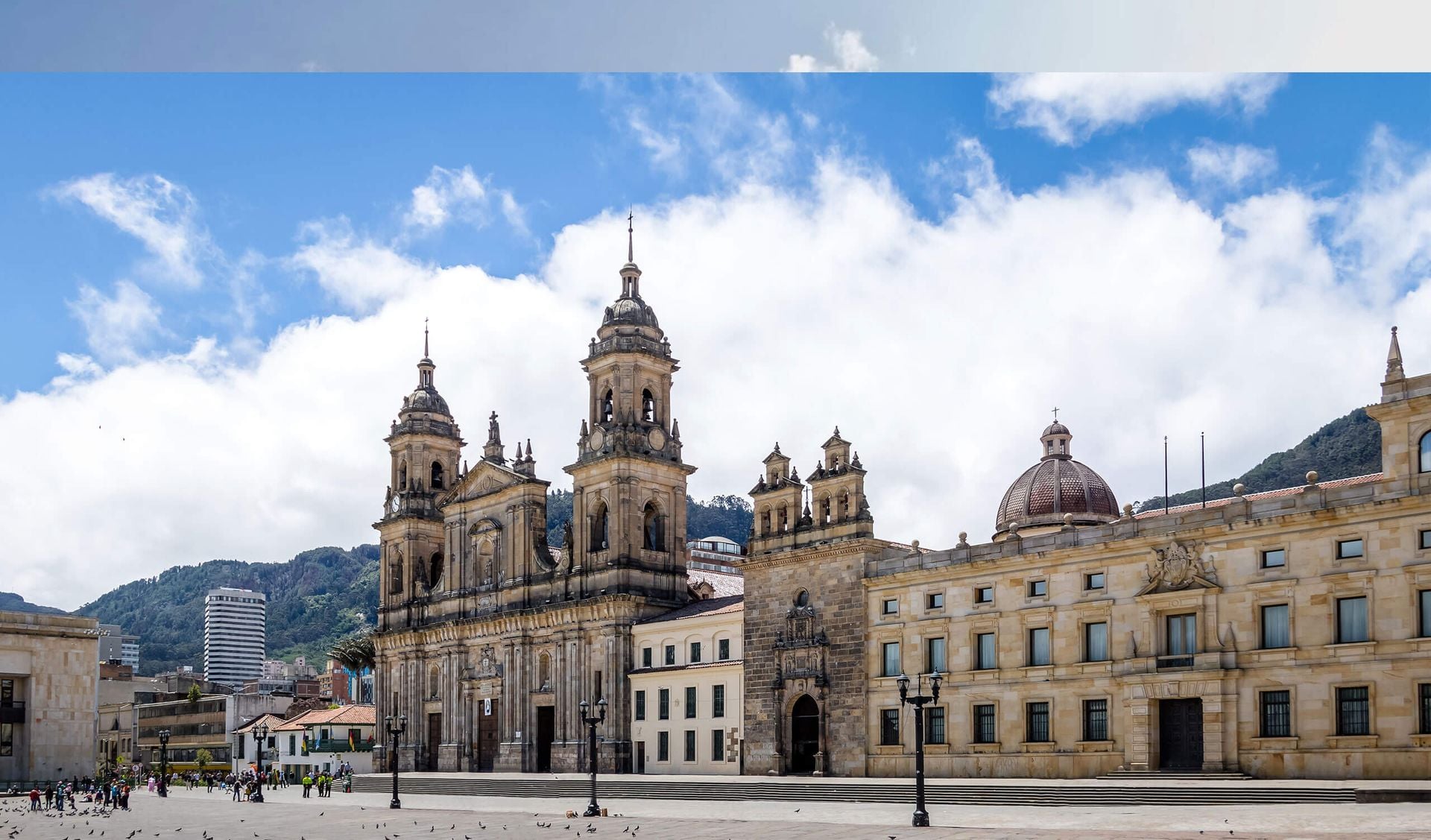
Colombia has become one of South America’s most exciting destinations — and for good reason. In one country you can wander walled colonial Cartagena, hike to a lost city in the jungle, sip coffee in emerald-green hills, and dance salsa till dawn in Cali. Below are the best things to do and see across Colombia, drawn from 30+ years of planning Colombia tours — from the Caribbean coast to the Coffee Triangle and the Amazon.
Warm, vibrant, and remarkably diverse, Colombia rewards travelers who venture beyond the obvious. Here’s where to start.
Updated for the 2026-2027 Colombia travel season.
I spent a memorable 5 years living in Colombia, one of the most exotic countries in South America. Two things that I will always remember doing in Colombia are participating in the coffee harvest in the Coffee Region, and snorkeling in the turquoise waters of La Piscinita Beach on the San Andres Island. Apart from those two things, I strongly recommend horseback riding in Cocora Valley, tasting the coffee in the colonial town of Salento.
-Izabela Zielinska
Colombia Travel Expert

The Spanish colonial city, Cartagena, was once one of the most prominent cities on the continent. With its essential location along the Caribbean Sea, boasting natural serene beauty, and an impenetrable fortress, the old city was a strategic center for the Empire. Today, the historic center clings to its roots, with quaint colonial homes and European-inspired cathedrals situated in the various neighborhoods. A stroll through Cartagena’s beautiful cobblestone streets is like journeying into the past.

The Rosario Islands are one of Colombia’s most famous attractions and it’s easy to understand why. Impressively preserved and protected, the park is popular for its thriving coral reefs and marine life. Here, nature is undisturbed, making for some of the world’s most impressive snorkeling opportunities. Also, the crystal-blue waters and palm-shaded beaches of the archipelago are easily accessible, located just an hour outside of Cartagena.

Besides its abundance of natural beauty and hiking opportunities, the Triángulo del Café (Coffee Triangle) is every coffee lover’s dream. Tucked away in the lush slopes of the Northern Andes rests Colombia’s largest coffee producing towns. The high altitude, volcanic soil, and sub-tropical climate of the region have positioned Colombia as one of the leading producers in the world for coffee. Visitors will sample these flavorful beans while learning about the traditional cultivation processes. The Coffee Triangle (Armenia, Pereira, Manizales) is a 30-minute flight or scenic drive from Medellín, and easy to fold into a wider route.

With access to both the Atlantic and Pacific Oceans, as well as the Caribbean Sea, one of Colombia’s top things to do involves enjoying the country’s magnificent coastline. What better way to enjoy the water views than to visit Tayrona National Park? Tayrona National Park is nestled in the foothills of the Sierra Nevada de Santa Marta and extends outward to the beautifully blue Caribbean sea. The area is famous for its palm-shaded coves and colorful lagoons. While here, stay in one of the park’s private bungalows and admire the region’s natural beauty.

Tucked away in the lush Sierra Nevada de Santa Marta mountains is one of Colombia’s most prominent sites, the Lost City. Created approximately 700 years ago by the ancient Tairona civilization, the Lost City features circular plazas, ancient homes, foundations, and roads that were once busy with the Tairona inhabitants. With no accessibility by vehicle or train, the wonder is truly an archaeological secret. Adventurers must make the two to three-day trek up to the ancient site, camping out in hammocks along the way. Nothing is more rewarding than enjoying the quiet city at your journey’s end, appreciating the scope of history all around as you walk the streets of the ancients. It's a strenuous 4–5 day guided jungle trek from near Santa Marta — no shortcuts, which is exactly why it stays uncrowded.

El Peñón de Guatapé is an impressively tall peak outside of Medellin. Standing at approximately 500 feet tall and weighing over 10 million tons, the peak towers over the surrounding landscape of Guatape. Today, El Peñón de Guatapé is a popular viewpoint. Climbing the hundreds of steps nestled against the rock, visitors at the top will enjoy uninterrupted views over the picturesque lakes and island neighborhoods of Guatapé. The scenery is out of this world, and a must on a trip to Colombia.

Colombia is considered the Salsa capital of the world, and there is no destination better to experience the alluring dance than in the city of Cali. As Colombia’s third-largest city, Cali has long been a hub for the world’s trendiest displays of art, with dancing, in particular, winning the hearts of locals. Inspired by the various dances of the world, Cali had its take on the traditional salsa creating the salsa caleño. Today, whether dancing or not, visitors and locals alike surround themselves with salsa music. Enjoy witnessing couples perform the fast-paced dance on street corners or in buzzing venues. Or learn the famed dance yourself among the world’s best salsa dancers.
Beyond the headline experiences, these are the landmarks and natural wonders that give a Colombia trip its color — from wax palms to gold-filled museums.
In the Valle de Cocora (Cocora Valley), near Salento, Colombia, stand the tallest palm trees in the world. A visit here can include horseback riding, sampling gorgeous coffee, and of course a walk amongst the towering palm trees. While the green valleys are absolutely breathtaking, your focus might be hard to waver when standing under the impressive height of the surrounding trees.

Every year, there is a huge flower festival in Medellin Colombia that takes place in August. This festival is a huge social event for the city and includes massive flower displays, a horse parade, live music, and of course, food. This is quite the spectacle to witness as the flower arrangements are large in size and extremely colorful.

Tequendama Falls is a remarkable waterfall located just 20 miles outside of Bogota. Centered in the Andean Cordillera mountain regions, the Magdalena River feeds into the Bogota River on a grand scale. Shrouded in mist and surrounded by lush, forested cliffs, the waterfall cascades over 500 feet into the canyon.

Castillo de San Felipe de Barajas is regarded as the Spanish Empire’s most impressive fortress built within the colonies. Construction began in the 16th century on the original fortress, located on San Lázaro Hill in Cartagena. Originally only encompassing the hill peak, over the centuries the mighty structure has been expanded to envelop the entirety of the hill. Take a step back in time to when European forces manned this impenetrable fortress from pirates with a tour of Castillo de San Felipe de Barajas.

Las Lajas Sanctuary is an impressive cathedral and popular pilgrimage site in Colombia. Built inside the canyon of the Guáitara River, the grand cathedral dips down the cliffs, with a bridge connecting the two sides. Just as impressive as the building’s exterior is its history. For centuries Las Lajas Sanctuary has been a pilgrimage site. Allegedly, a mother and her daughter were stranded in the canyon after a heavy storm. Fearing their death, they were saved by the image of the Virgin Mary, which appeared along the natural stone walls.

Museo Nacional de Colombia is the largest and most important museum in all of Colombia. Located in downtown Bogota, the museum dates back to the 19th century, where it has been educating visitors and locals alike on the history of Colombia and Latin America. Featuring beautiful artwork, archeological finds, historical artifacts, and interchanging exhibits, the museum is a must for learning the culture and complicated past of Colombia.

A true spectacle for the eyes is Colombia’s Gold Museum. Blending rich, expertly crafted artwork and fascinating history, this museum displays over 50,000 gold works from Colombia’s pre-Hispanic cultures. From sculptures, ceremonial devices and jewelry, the museum has an impressive array of artifacts that help paint a picture of the lives of these ancient indigenous groups.

Colombia is large and mountainous, so most itineraries fly between the main hubs — Bogotá, Medellín, Cartagena, and the Coffee Region are all connected by quick, inexpensive domestic flights. Bogotá is the main international gateway. A classic loop pairs the Caribbean coast (Cartagena and Tayrona) with the Andean interior (Medellín, the Coffee Triangle, Bogotá); the Amazon and the Pacific coast are add-ons for those with more time. We arrange the internal flights and transfers. See our Colombia adventure tours.
Colombian cuisine is regional and hearty — arepas and bandeja paisa in the interior, fresh ceviche and coconut rice on the coast, and exotic Amazonian fruits you’ll find nowhere else. And of course the coffee: a tasting on a working finca in the Coffee Triangle is one of the country’s great experiences.
Colombia has transformed over the past two decades, and its main tourist areas — Cartagena, Medellín, the Coffee Region, Bogotá’s historic core — are welcoming and well set up for visitors. As in any large country, use ordinary city sense, keep valuables discreet (“no dar papaya,” as Colombians say), and rely on registered transport. Some remote border and rural regions still carry official travel advisories, so it’s worth checking current guidance and traveling with a local operator who knows where to go. See our Colombia safety guide.
The best time to visit Colombia is during the drier months of December to March and July to August, ideal for the Caribbean coast and Andean hiking. That said, Colombia’s equatorial location means warm, spring-like weather year-round in much of the country, with conditions varying more by altitude than by season.
Colombia is known for its coffee, colonial Cartagena, salsa and cumbia, emeralds and gold, the biodiversity of the Amazon and the Andes, and its famously warm, joyful culture. For a closer look, see our guide to what Colombia is famous for.
Plan 8–10 days for the classic circuit — Cartagena, the Coffee Region, Medellín, and Bogotá — and two weeks to add Tayrona, the Lost City trek, or the Amazon. Because the regions are so different, most travelers pick two or three and connect them by short flights. Our planners shape it around your dates.
A popular route: Days 1–3 Cartagena and the Caribbean coast; Days 4–6 the Coffee Triangle; Days 7–8 Medellín and the paisa region; Days 9–10 Bogotá and the Gold Museum. Add the Lost City trek or the Amazon with more time.
Colombia is excellent value. As a benchmark from our own dozen-plus Colombia itineraries, trips start around $460 per person and most custom routes run roughly $150–250 per person per day depending on hotel tier, with boutique Cartagena hotels and private coffee-estate stays at the higher end.
The main tourist regions — Cartagena, Medellín, the Coffee Triangle, and central Bogotá — are welcoming and well set up for visitors, and Colombia has changed enormously in recent decades. Use normal city sense with valuables and stick to registered transport. Some remote areas still carry advisories, so traveling with a knowledgeable local operator matters here. See our Colombia safety guide.
Ciudad Perdida ("the Lost City") is an ancient terraced settlement hidden deep in the Sierra Nevada de Santa Marta, older than Machu Picchu. Reaching it means a demanding but rewarding 4–5 day guided jungle trek through rainforest and indigenous territory — one of South America's great adventure hikes, and utterly uncrowded.

Our favorite Colombia tour ideas featuring the best destinations & activities designed to inspire…
Get your FREE Colombia Guide Now!
"*" indicates required fields

