What’s the best island in the Galápagos? After 30+ years sending travelers here, our honest answer is: there isn’t one — and that’s the whole point. It was the variety between the islands that helped Charles Darwin understand evolution, and it’s the same variety that makes the archipelago unlike anywhere on Earth. Each island has its own landscapes and its own creatures, which is why we believe the best way to experience the Galápagos is a small-ship cruise that moves between them — not a single base. (More on that below, and in our guide to the best Galápagos islands to visit.)
Below are the best things to do and see across the islands, plus the practical guidance — how to get there, how long to go, and what to actually expect — that turns a Galápagos trip into the journey of a lifetime.
The Galapagos Islands are known for being some of the most pristine and singular islands in the world. The best things to do in the Galapagos Islands include snorkeling and diving. My favorite spots are Las Tintoreras for snorkeling (Isabela Island) and Kicker Rock for diving (Puerto Baquerizo Moreno, San Cristobal Island). I was blown away by the great variety and colors of the aquatic life I could spot while there last October!
-Claudia Corona
Galapagos Islands Travel Expert

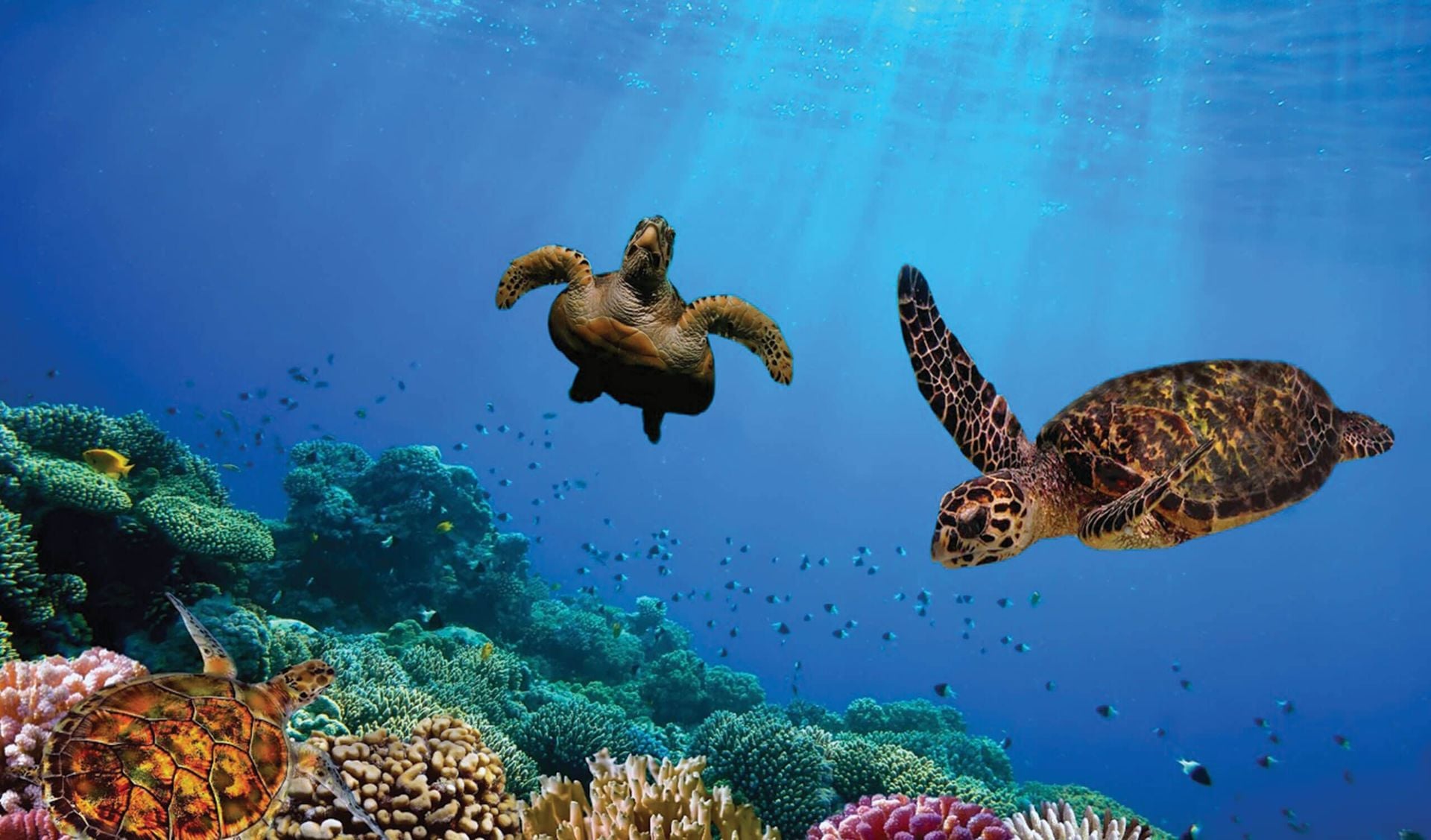
Nothing prepares you for it: young sea lions that treat you as a playmate, spiraling and darting inches away. Add sea turtles, rays, penguins, and shoals of tropical fish, and Galápagos snorkeling — at spots like Las Tintoreras off Isabela — becomes the highlight of the whole trip.

The Galápagos is a world-class dive destination. At Kicker Rock off San Cristóbal, and on liveaboards to remote Darwin and Wolf, divers encounter schooling hammerheads, whale sharks, and Galápagos sharks in some of the most electric water on the planet — best from June to November.

The archipelago's namesake giants — some over a century old — can be seen roaming the Santa Cruz highlands and at the Charles Darwin Research Station, where conservation programs have brought species back from the brink. A moving encounter with living history.

At Post Office Bay on Floreana, a weathered wooden barrel has served as an informal post office since the 1790s, when whalers left letters for homebound ships to carry. Drop a postcard, and hand-deliver one addressed near your home — a charming 200-year-old tradition still going strong.

In the lush Santa Cruz highlands, small farms grow cacao and craft bean-to-bar chocolate — a delicious, low-key counterpoint to the wildlife, and a window into the small community that calls the islands home.

The Galápagos are young, volcanic, and still growing. Hiking the rim of Isabela's Sierra Negra — one of the world's largest active calderas — you walk across raw lava fields and steaming fumaroles, a vivid lesson in how these islands were born.
Because no two Galápagos islands are alike, where a cruise takes you shapes what you’ll see. These are some of the standout islands and the creatures that make each one special.
The archipelago's most iconic view: the jagged spire of Pinnacle Rock rising over golden and turquoise bays. Climb the boardwalk to the summit viewpoint, then snorkel below with Galápagos penguins — the only penguins found north of the equator.

One of nature's great comedies: the male blue-footed booby's high-stepping courtship dance, showing off his bright turquoise feet. Islands like North Seymour and Española offer front-row seats, along with frigatebirds inflating scarlet throat pouches.

Remote, northern Genovesa — "Bird Island" — teems with red-footed and Nazca boobies, storm petrels, and short-eared owls. Reached only by certain cruise itineraries, it's a reminder of how a longer voyage unlocks the wilder corners of the archipelago.

Rábida's startling brick-red beach — colored by iron-rich volcanic rock — is home to sea lions and a saltwater lagoon that draws flamingos. A striking example of how dramatically the islands differ from one another.

Española's marine iguanas — the world's only sea-going lizards — turn red and green in breeding season, basking in heaps on the rocks. The island is also the sole nesting site of the waved albatross, present roughly April to December.

Isabela and Fernandina are the youngest, most volcanically active islands — and among the least visited. Here you'll find flightless cormorants, the largest marine iguanas, and pristine landscapes still being formed, reachable mainly on longer cruises.

Every trip begins with a flight from mainland Ecuador — Quito or Guayaquil — to Baltra or San Cristóbal, about 600 miles out in the Pacific. From Baltra, most travelers take a short ferry to Santa Cruz; but our strong recommendation is to head straight to your cruise ship waiting offshore. A national-park entry fee and transit card apply, and every visitor landing must be accompanied by a certified naturalist guide — one of the rules that keeps the wildlife so remarkably tame. We handle the flights, permits, and connections.
This is the single most important decision — and where our advice is unambiguous: choose a cruise. A small-ship cruise moves between islands overnight, so you wake up somewhere new each morning and reach the remote, wilder islands that day-trips never touch. The national park certifies and strictly limits the number of cruise vessels, so it’s the responsible, low-impact way to travel.
“Island-hopping” — basing in a hotel and taking day boats — sounds flexible, but it burdens you with hours of daily back-and-forth transfers and, more importantly, concentrates tourist pressure on Santa Cruz, the most populated island. The strain on its limited fresh water, sewage, and power is a genuine and growing problem. For those reasons we don’t recommend it. We explain the trade-offs in full in our guide to a Galápagos cruise vs. island-hopping.
The Galápagos are rewarding year-round, so the best time to visit comes down to your priorities. The warm season (roughly December–May) brings calmer, warmer seas, clearer water for snorkeling, and green landscapes. The cool, dry season (June–November), when the Humboldt Current is strongest, has choppier water but the most active marine life — the best diving, and peak season for whale sharks.
Set your expectations correctly and the Galápagos will exceed them. Despite sitting on the equator, this is not a palm-fringed tropical paradise: the cold Humboldt Current keeps the water surprisingly chilly, the seas are calm rather than surfy, and the landscapes are raw and volcanic. What you come for isn’t the beach — it’s wildlife that has evolved with no fear of humans, adapted to some of the harshest island conditions on Earth. That, not the scenery, is the magic.
The Galápagos are known as the living laboratory of evolution — the islands that inspired Darwin’s theory — and for wildlife found nowhere else: giant tortoises, marine iguanas, blue-footed boobies, flightless cormorants, and Galápagos penguins, all famously unafraid of people. It is one of the greatest wildlife destinations on the planet.
Honestly, there isn't one — and that's the point. The islands' variety is what makes the Galápagos extraordinary: each has different landscapes and different wildlife, from the marine iguanas of Española to the red-footed boobies of Genovesa. Rather than picking one, the ideal is a cruise that visits several. We break down the highlights of each in our guide to the best Galápagos islands to visit.
We strongly recommend a cruise. It reaches the remote islands, moves between them overnight so you lose no time to transfers, and is strictly limited by the national park — the low-impact, responsible choice. Island-hopping (hotel-based day trips) wastes hours on daily boat transfers and concentrates pressure on Santa Cruz, the most populated island, straining its scarce water and infrastructure. Full comparison in our cruise vs. island-hopping guide.
A 3- or 4-day cruise gives a genuinely good understanding of the wildlife and how the islands evolved — a great option if you're short on time. A 7- or 8-day cruise lets you see the full range of the archipelago, including the remote western and northern islands that shorter trips can't reach. Most travelers pair the islands with a few days on mainland Ecuador. Ask our planners to tailor it.
The Galápagos is a premium, once-in-a-lifetime destination, and cruises are the main cost — driven by the remote logistics, national-park fees, and strict vessel limits. Our Galápagos cruises generally start around $5,000 per person and rise well beyond for luxury vessels, though tourist-class "explorer" ships offer more affordable ways to sail. Ask us for options across the range.
No — and it's worth knowing before you go. Despite sitting on the equator, the Galápagos are cooled by the Humboldt Current, so the water is chillier than you'd expect, the seas are calm rather than surfy, and the islands are raw and volcanic rather than palm-fringed. The draw isn't beaches — it's wildlife that has no fear of humans, adapted to genuinely harsh conditions. That's exactly what makes it unforgettable.
Rigorously, which is why the animals stay so tame. The Ecuadorian national park requires that every visitor landing be led by a certified naturalist guide, keeps people at a respectful distance from the animals, and caps both the number of boats and the number of visitors. Traveling with an established, park-licensed operator, as we arrange, keeps you firmly on the responsible side of those rules.

Our favorite Ecuador tour ideas featuring the best destinations & activities designed to inspire…
Get your FREE Ecuador Guide Now!

