The Amazon is the largest remaining tropical rainforest in the world, shared by eight countries (Brazil, Bolivia, Peru, Ecuador, Colombia, Venezuela, Guyana and Suriname) and French Guiana, an overseas territory of France. It holds at least 40,000 plant species, 1,300 bird species, 427 mammals and around 3,000 freshwater fish. More than 500 Indigenous peoples depend on it, and their ingredients are still the base of Amazonian food.
Most travelers meet Amazon rainforest food at a jungle lodge or on a river cruise, and the ones we suggest are mainly in Brazil, Peru and Ecuador. The cooking changes at each border, so every dish below carries its country.
River fish, manioc and fruit. Fish is the everyday protein: in riverside floodplain communities, people eat more than 100 kilograms (220 pounds) of it a year each. Manioc (cassava, or yuca) and plantain are the starches, the forest adds palm fruits, nuts and juices you rarely see at home, and duck, pork and chicken fill out the menu.
| Dish | Country | What it is |
|---|---|---|
| Pirarucu (paiche) | Brazil, Peru | Giant river fish, grilled as steaks |
| Tambaqui | Brazil (Manaus) | Fruit-eating river fish, sold by the cut |
| Pato no tucupi | Brazil (Belém) | Roast duck finished in manioc-juice sauce |
| Tacacá | Brazil (the North) | Hot tucupi, manioc starch, dried shrimp and jambu |
| Juane | Peru | Rice, hen and egg cooked in a bijao leaf |
| Tacacho con cecina | Peru | Green-plantain balls with smoked pork |
| Maito | Ecuador | Fish steamed inside bijao leaves |
Two names, one fish. Brazilians say pirarucu, Peruvians say paiche, and both mean the arapaima, South America’s largest freshwater fish, up to 10 feet (3 meters) and 440 pounds (200 kilograms). It is cut into steaks and grilled, or in Peru marinated as jungle ceviche. Smaller river fish are fried, grilled or wrapped in leaves.
Overfishing cut wild numbers through the twentieth century. In Amazonas, the Brazilian state around Manaus, wild catches were banned in 1996, and pirarucu sold legally today comes from fish farms or from lakes under community plans approved by Ibama, the environmental agency. Where communities manage their lakes, the fish has come back strongly.
Manaus is the biggest market for tambaqui, a fish that feeds on fruits and seeds dropping into the flooded forest, from as many as 133 kinds of plants. It is sold by the cut, lombo (loin), banda (side) or costela (rib), and most now comes from fish farms in neighboring states. Piranha is on the table too: on our Juma Amazon Lodge itinerary, an evening of fishing ends with your catch at dinner, and the ride back to Manaus stops at a floating dock to see pirarucu up close.
Brazil’s Amazon cooks with bitter manioc, which is poisonous raw. The yellow roots are grated and pressed, and the juice carries cyanide compounds; left to ferment, then seasoned and boiled for about an hour, it loses its poison and becomes tucupi, an intense yellow sauce. The pressed roots become farinha, the manioc flour that is Pará’s main manioc product.
The famous dish is pato no tucupi, duck roasted and then cooked in the sauce, the lunch of Belém’s Círio de Nazaré on the second Sunday of October, a festival UNESCO inscribed as Intangible Cultural Heritage in 2013. Tacacá is hot tucupi over goma (manioc starch), dried shrimp and jambu leaves, in a cuia, a gourd bowl. Jambu is the surprise: its spilanthol makes your lips tingle and go slightly numb.
Açaí, from a palm native to the Amazon, is eaten differently here too: as part of the main meal, with fish or meat and farinha, while the sweet granola bowl is the export version. Taste it all in Belém, capital of Pará and a UNESCO Creative City of Gastronomy since 2015, where tucupi is sold by the bottle at the landmark Ver-o-Peso market, a stop on our Belém and Marajó Island itinerary.
Around Iquitos in Loreto and Puerto Maldonado in Madre de Dios, the dish to know is juane: rice, hen and boiled egg with spices, wrapped in the large leaf of the bijao plant and cooked in the bundle. It is the signature food of the Fiesta de San Juan, June 24, across Loreto, Madre de Dios, San Martín and Ucayali; the parcel is said to recall the head of Saint John the Baptist.
Tacacho con cecina is green plantain, cooked, mashed with pork lard into fist-size balls and served with cecina, dried smoked pork. Patarashca is river fish grilled in a bijao leaf, and inchicapi a soup of chicken, peanuts and corn flour named for inchik, Quechua for peanut. Peru’s signature dish, ceviche, has a jungle version too: cebiche amazónico marinates paiche or doncella in lime, camu camu and Amazonian chili sauces.
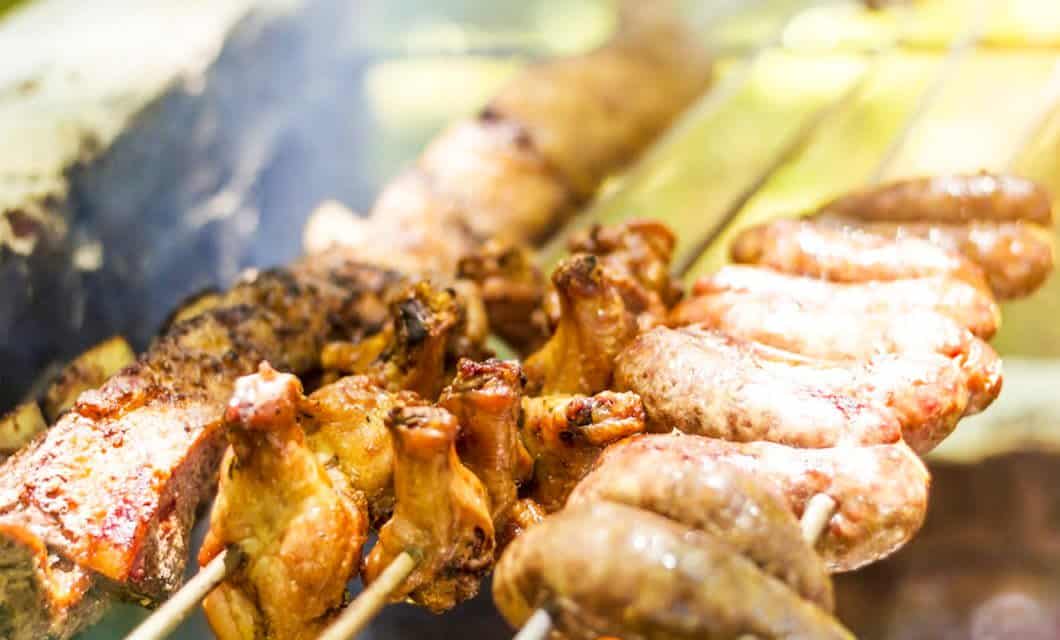
And yes, the grubs are real. Suri is the fat larva of a palm weevil that grows inside aguaje palm trunks. Indigenous communities eat it for its protein and fat. Some eat it raw or toasted, but the traditional way is grilled on skewers, a San Juan favorite.
Ecuador’s Amazon cooks in leaves. Maito is an ancestral technique: fish such as tilapia or catfish, wrapped in bijao leaves to cook in its own steam, served with yuca. Ayampaco, a Shuar recipe, wraps fish with local spices before grilling, and palm larvae called chontacuro are roasted on skewers. To drink, ask for guayusa, an energizing infusion of a traditional Amazon plant.

Guaraná is native to the Amazon, and in Brazil you will meet it first as guaraná soda. In Peru, ask for chapo (ripe plantain boiled and blended) and masato, made from fermented manioc. Aboard the Tucano river cruise in Brazil, one night is Caipirinha Night, with samba on the top deck.
On the Amazon lodge stays and river cruises we suggest, the wildlife sets meal times. At Posada Amazonas in Peru, all three meals are included each full day, an early breakfast comes before the lake and clay-lick outings, and depending on your flight, lunch may be boxed on the boat. On the Tucano, a dawn outing comes before a hearty Brazilian breakfast, and lunch and a siesta happen aboard. Ecuador’s Napo Wildlife Center serves one lunch at the Napo Cultural Center, shared with the Kichwa community. Tell your Destination Consultant early about allergies or a special diet.
The CDC’s advice for travelers holds here: don’t drink tap water where it might be contaminated, stick to factory-sealed bottles or cans or to boiled, filtered or treated water, skip ice where clean water is limited, and choose fruit you can peel. It also advises against raw fish “cooked” in citrus juice, so think twice about cebiche amazónico. A CDC journal report also traced an outbreak of acute Chagas disease in Pará to açaí juice and paste. For vaccinations and more, see staying healthy in the Amazon.
The CDC also advises against bushmeat, the meat of wild animals, which can pass diseases to people. In Brazil, buying products of a wild animal taken without a permit, river turtles included, is a crime under the Environmental Crimes Law of 1998. If turtle or wild game turns up on a menu, politely say no.
Certainly the wildlife is why you come; the meals are a fine reason to stay longer. Pair a lodge near Manaus with a few days in Belém, or follow a Peruvian lodge with Lima and our Peru food and wine tours. For each country’s wider table, see our guides to food in Brazil, Peru and Ecuador. Our Destination Consultants custom design Amazon trips around the lodge or river cruise that suits you; start with the Amazon Rainforest overview or plan a custom trip.