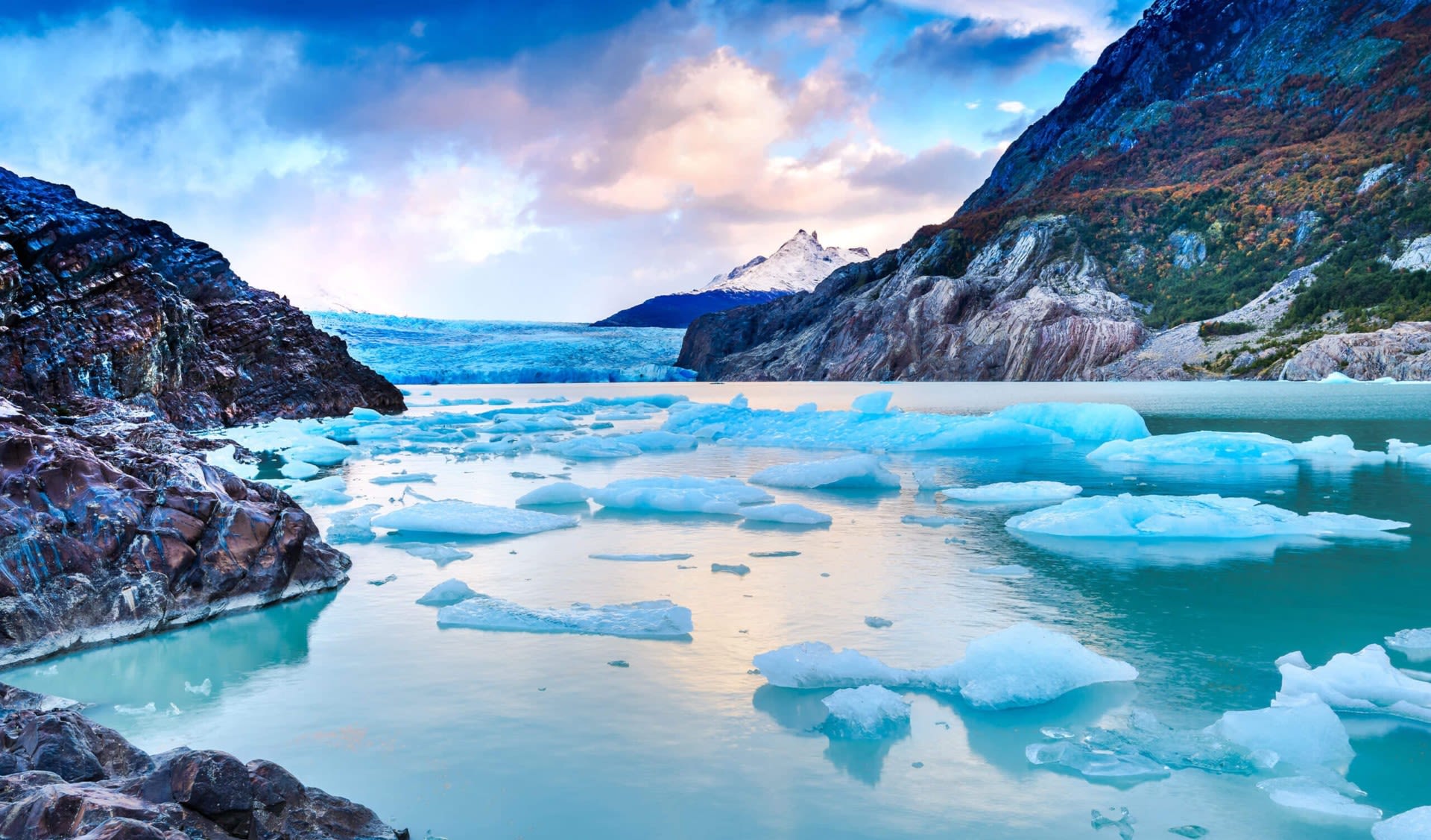
Spanning the southern tip of both Argentina and Chile, Patagonia is one of the great wilderness destinations on Earth — a land of granite spires, calving glaciers, turquoise lakes, and wide, humbling plains. Below are the 10 experiences and 7 places our team rates highest after 30+ years of planning Patagonia tours, from the trekking capitals of Torres del Paine and El Chaltén to whale coasts and the fjords at the end of the world.
One planning truth worth knowing up front: the best Patagonia trips cross the border. The icons sit on both sides — Perito Moreno and Fitz Roy in Argentina, Torres del Paine in Chile — and combining them is what turns a good trip into a great one.
Updated for the 2026-2027 Patagonia travel season.
Having resided in Argentina for 10-years now I have had the good fortune to visit Patagonia with its vast, humbling plains and awe-inspiring mountains. For first-time visitors, it is hard to look past hiking in Torres Del Paine National Park in Southern Chile as the top priority. The park is rightly considered to be South America’s most beautiful and boasts some of the finest scenery in the World with beautiful mountain peaks, glaciers, glacial lakes, and boreal forests. The scenery changes dramatically as you hike through the park and made such an impression on me that I have made a second pilgrimage to the park.
-Mike Bonnett
Patagonia Travel Expert

Chile's Torres del Paine is the crown jewel of Patagonia trekking. The multi-day "W" route links the three granite towers, French Valley, and Grey Glacier; the longer "O" circuit loops the whole massif. Not a multi-day hiker? Day walks and catamaran-plus-hike combos deliver the headline views without camping. See Torres del Paine tours. The park is a 5-hour drive from Punta Arenas or a short hop from Puerto Natales.

On the Argentine side, Perito Moreno is one of the only major glaciers you can watch calve from land — building-sized slabs crack and crash into Lago Argentino all day. Boardwalks bring you close; boat cruises and ice-trekking get you closer. Explore Los Glaciares National Park tours. El Calafate, the base town, has direct flights from Buenos Aires (about three hours).

Three hours north of El Calafate, El Chaltén is Argentina's self-styled trekking capital. Day hikes like Laguna de los Tres put you at the foot of Mount Fitz Roy's spires without technical climbing, and the town runs entirely on hikers, so logistics are easy. It pairs perfectly with the glaciers on our Patagonia adventure tours.

Patagonia is one of the few places outside the poles where you can strap on crampons and walk on a glacier. Guided "mini-trekking" on Perito Moreno and kayaking among icebergs on the glacial lakes turn the scenery into a hands-on day — no mountaineering experience required.

On General Carrera Lake, thousands of years of waves have carved swirling marble caverns that glow blue against the glacial water. Reached along Chile's remote Carretera Austral, it's one of Patagonia's most photogenic — and least crowded — highlights, best visited by small boat on a calm morning.

On Patagonia's Atlantic coast, southern right whales gather to breed from June through early December in the gulfs around UNESCO-listed Península Valdés — sometimes visible from the beach at Puerto Madryn. The peninsula also hosts elephant seals, sea lions, Magellanic penguins, and, in season, orcas hunting along the shore.

Some of Patagonia's finest scenery is only reachable by water. Expedition cruises thread the Chilean fjords past hanging glaciers, sea-lion colonies, and remote channels — from short sailings to Grey Glacier to multi-day voyages through the far south. Browse Patagonia cruises.

The classic way to rest between hikes: a working sheep ranch turned guest estancia, with horseback riding, open-fire lamb asado, and endless steppe under huge skies. Many of our favorite Patagonia lodges sit inside or beside the national parks, trading a night of camping for comfort without losing the wildness.

From Ushuaia — the southernmost city on Earth — boats sail the Beagle Channel past sea-lion islands and the Les Éclaireurs lighthouse, and in season land at penguin colonies. Hike Tierra del Fuego National Park by day; Ushuaia is also the departure port for Antarctica. See Ushuaia cruise tours.

Northern Patagonia's Lake District is greener and gentler: alpine lakes, forests, and the resort town of Bariloche. The signature journey is the Andean lakes crossing — three lakes by catamaran from Bariloche over the border to Puerto Varas, Chile — one of the most beautiful travel days in South America.
Patagonia is enormous, and its hubs are far apart — most trips pick two or three and connect them by short flights or scenic drives across the Argentina–Chile border. These are the places we route the most itineraries through; grab the free Patagonia travel guide for the full map.
Chilean Patagonia's showpiece: the granite towers, French Valley, Grey Glacier, and turquoise lakes that define the region's image. Base in Puerto Natales or stay in-park at a lodge or refugio. See Torres del Paine tours.

The Argentine gateway to Perito Moreno and the glacial lakes of the south. Beyond the boardwalks: iceberg boat safaris on Lago Argentino, glacier ice-treks, and historic Estancia Cristina, reachable only by boat.
A tiny village at the foot of Fitz Roy that exists for trekkers. Trail after trail leaves straight from town, from gentle walks to the demanding Laguna de los Tres — no guide needed, just an online park ticket and some of the best day hiking on the planet.

The friendly launch point for Torres del Paine and for fjord cruises toward the Serrano and Balmaceda glaciers. A relaxed harbor town worth a night at either end of a trek.
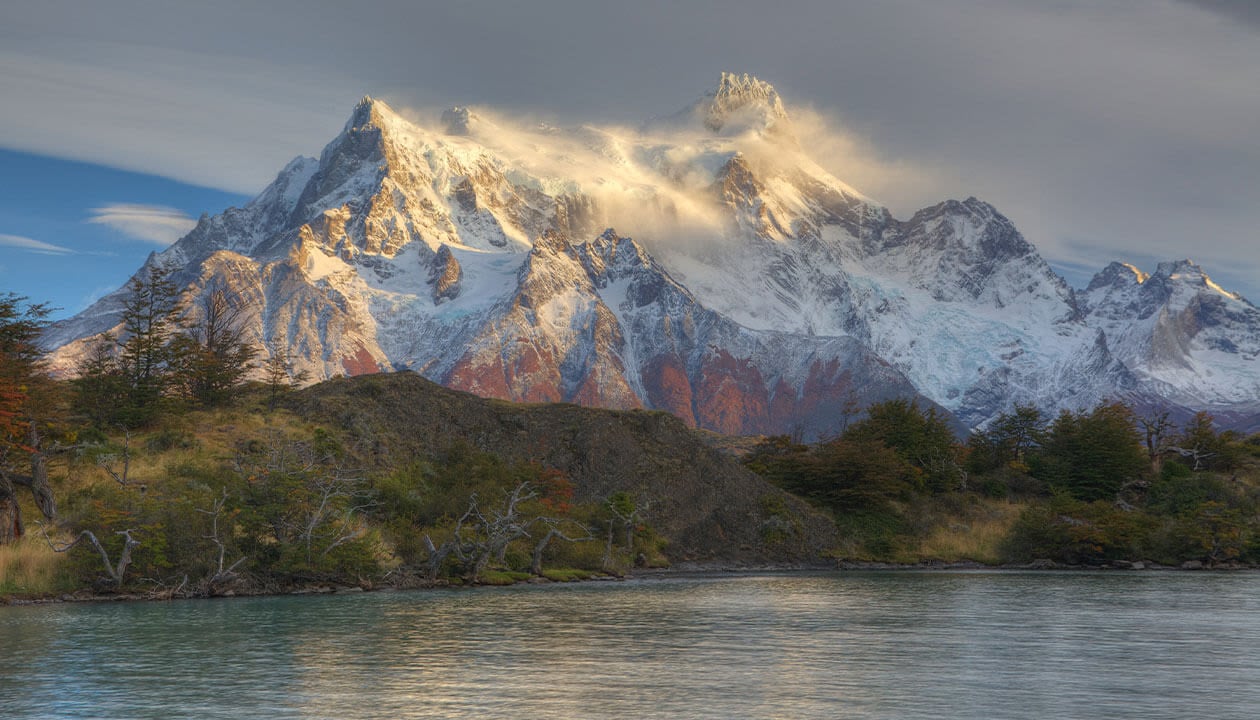
Northern Patagonia's alpine heart: forested peaks, chocolate shops, skiing at Cerro Catedral, and the catamaran crossing of the Andes to Chile. Greener and gentler than the far south. Explore Lake District lodges.
The southernmost city on Earth, ringed by mountains and sea. Sail the Beagle Channel, ride the End of the World train, hike Tierra del Fuego National Park — and, for many, board a ship to Antarctica.
Patagonia's Atlantic wildlife coast and a UNESCO World Heritage marine sanctuary: whales in season, elephant seals, sea lions, and vast Magellanic penguin colonies nearby — one of South America's great wildlife stops.
The best time to visit Patagonia is the southern summer, roughly November to March, when trails are open, days are long, and wildlife is active — December to February is peak. The shoulder months (November and March–April) bring fewer crowds, autumn color, and lower prices, at the cost of shorter days and more unpredictable weather. Most of Patagonia effectively closes down in the deep winter (June–August), apart from the ski season around Bariloche.
Yes. Both Argentine and Chilean Patagonia are among the safest places to travel in South America, with very low crime; the real hazards are environmental — sudden weather, strong sun, and remote trails. On our trips you travel with experienced local guides and pre-arranged logistics, which matters most when the weather turns.
Patagonia is known for raw, end-of-the-world wilderness: the granite towers of Torres del Paine and Mount Fitz Roy, the Perito Moreno Glacier, whale-rich coasts, glacial lakes, Magellanic penguins, and the trekking and estancia culture that grew up among them. It is the classic bucket-list finale to a South America trip. For a closer look, see our guide to what Patagonia is famous for.
Plan at least 7–8 days to do one side justice, and 10–14 to combine the Argentine glaciers with Chilean Torres del Paine — the trip most travelers come for. Add days for Ushuaia, the Lake District, or an Antarctica cruise. Because weather can shut down a hike, we always build in buffer time.
A route many of our travelers run: Days 1–3 El Calafate for Perito Moreno and Los Glaciares; Days 4–5 El Chaltén for the Fitz Roy trails; Days 6–9 cross into Chile for Torres del Paine, basing in Puerto Natales or in-park; Days 10+ add Ushuaia or fly out via Punta Arenas. Prefer the gentler north? Swap in Bariloche and the Lake District.
Patagonia is the priciest region in Argentina and Chile — it's remote, seasonal, and infrastructure is limited — but it's still strong value versus comparable wilderness travel elsewhere. As a benchmark from our own 60+ Patagonia itineraries, trips start around $650 per person and most custom routes run roughly $150–250 per person per day depending on hotel tier, with in-park lodges and cruises at the higher end. Booking early for the summer season is the biggest money-saver.
Ideally both — that's the honest answer. Argentina holds Perito Moreno, El Chaltén's Fitz Roy trails, and the whale coast; Chile holds Torres del Paine and the fjords. They're close together in the south and cross easily by land, so most of our itineraries combine them rather than choosing.
Torres del Paine (Chile) is the classic multi-day trek — the "W" and "O" circuits — with in-park lodges and a big-landscape payoff. El Chaltén (Argentina) is unbeatable for self-guided day hikes straight from town, with just a park ticket bought online. Many travelers do both: day-hike El Chaltén, then commit to the W in Paine.
Fly. From Buenos Aires there are direct flights to El Calafate, Bariloche, and Ushuaia; from Santiago you reach Punta Arenas, the gateway to Torres del Paine. Overland crossings between the Argentine and Chilean sides are straightforward and scenic, and we arrange the connections so you're not backtracking.
Its wilderness: Torres del Paine and Mount Fitz Roy, the Perito Moreno Glacier, glacial lakes and fjords, whales and penguins on the coast, and the trekking-and-estancia culture that makes it the bucket-list finale of a South America trip.

Our favorite Patagonia tour ideas featuring the best destinations & activities designed to inspire…
Get your FREE Patagonia Guide Now!
"*" indicates required fields

