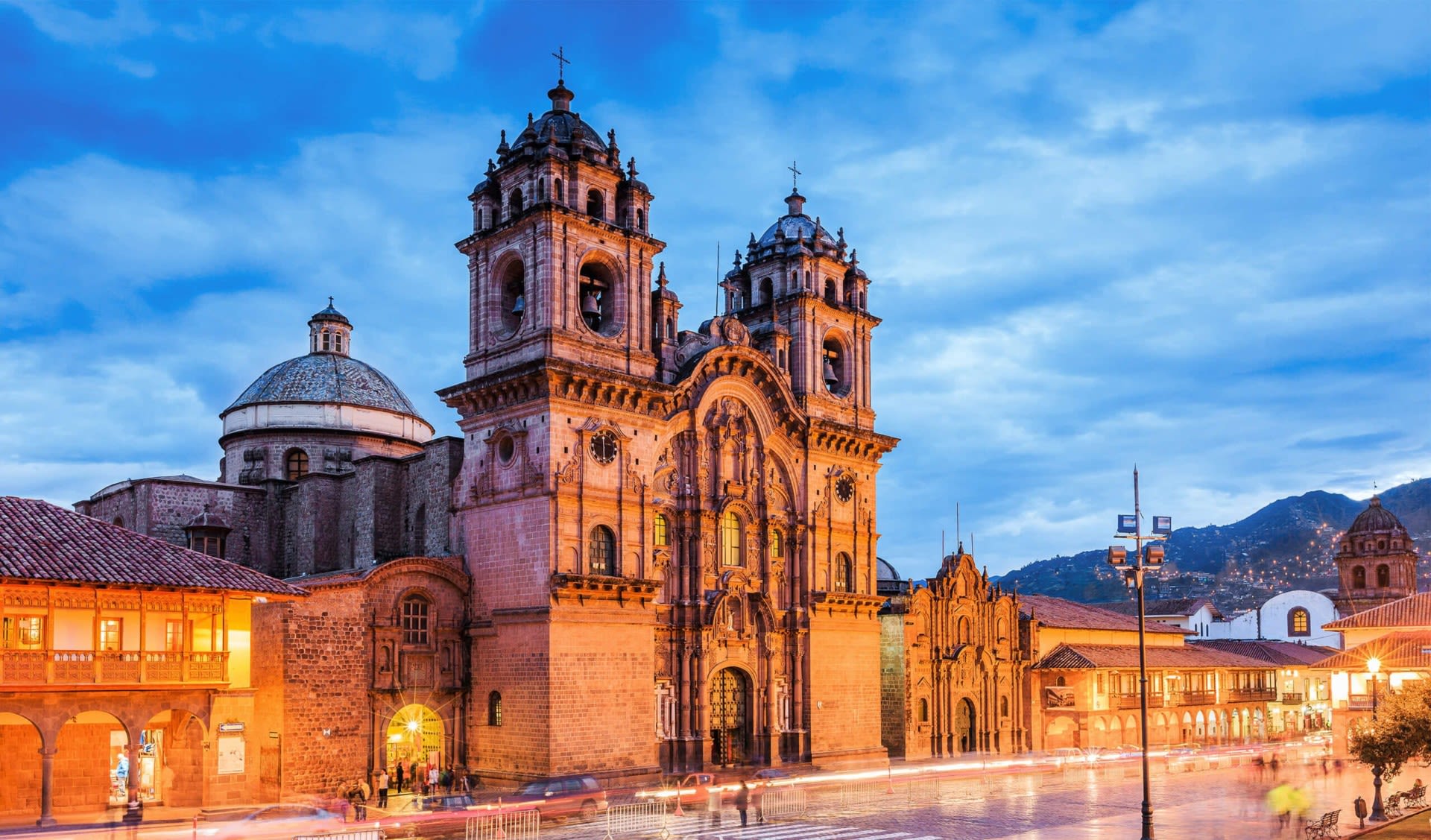
Peru is far more than Machu Picchu. It’s one of South America’s richest destinations — a country of Inca citadels, Amazon rainforest, Andean peaks, the world’s highest navigable lake, and a food scene routinely ranked among the planet’s best. Below are the 18 experiences and places our team rates highest after 30+ years of planning Peru tours, from the Inca Trail and the Sacred Valley to Lake Titicaca, Colca Canyon, and the Nazca Lines.
The classic circuit — Lima, Cusco, the Sacred Valley, and Machu Picchu — is the backbone of most first trips. But give Peru a few extra days and it opens into the Amazon, the southern deserts, and the high Andes. Here’s where to start.
Updated for the 2026-2027 Peru travel season.
I've traveled extensively throughout Peru, and one thing I've learned is that Peru is a country of contrasts! You can sandboard the deserts one day and the next day you can find yourself in the Amazon. This diversity makes Peru an all-year-round destination with plenty of things to do for every traveler!
-Sinan Baysan
Peru Travel Expert

First on our list of things to do in Peru is hiking the iconic Inca Trail to Machu Picchu. Peru is internationally known for its trekking opportunities, and few routes are as famous as this ancient path once used by the Inca civilization. As the pilgrimage route to one of the Seven Wonders of the World, Machu Picchu, the Inca Trail attracts nature lovers, hikers, and history enthusiasts alike. Beyond Machu Picchu, Peru also offers incredible treks such as Rainbow Mountain, Machu Picchu Mountain, the Cordillera Blanca, and the Lares Trek. Permits are strictly limited and typically sell out four to six months ahead — and the trail closes each February — so book early.

Huacachina is commonly referred to as the desert oasis of Peru. Centered around a lagoon believed to have natural healing properties, Huacachina’s shaded roads, and cozy establishments are perfect for relaxation. Additionally, located in the Ica Desert five hours outside of Lima, Huacachina is a popular destination for dune buggies and sandboarding. Surrounded by extraordinary mountains of sand, the landscape is perfect for riding adventures on the dunes and is impressive to behold.

With world-class restaurants such as Central and Mil, it’s easy to understand how Peru has earned its reputation as one of the world’s leading culinary destinations. Lima’s food scene showcases an exciting mix of traditional and modern cuisine, influenced by Japanese, Chinese, Spanish, West African, and Amazonian regional flavors.

Maras, Peru, situated between Cusco and the Sacred Valley, is an incredibly interesting place, both historically and visually. The Salt Mines of Maras are made up of thousands of individual salt ponds, which date back to Incan times. On a day tour of the Sacred Valley, observe the local families tending to the Salt Mines which are fueled by an ancient spring. Then taste test the delicious variations of salt produced by the local harvesters. Not far from Maras are the ruins of Moray. After sampling some salt, visit the beautiful circle-shaped ruins of Moray.

Lake Titicaca is the world’s highest navigable lake, located in the Andes Mountains at 3,800 meters above sea level. Regarded as the birthplace of the Inca Empire, the lake is home to important archaeological sites and remains culturally significant to local indigenous communities. Today, its deep-blue waters are popular for cruise exploration, offering travelers breathtaking mountain scenery and insight into traditional lakeside life. Reached from Puno, about a 6-hour scenic drive or short flight-plus-transfer from Cusco; the lake sits at 3,800m, so plan it after acclimatizing.

Located in the Sacred Valley near Cusco, Peru, the exclusive Skylodge Adventure Suites offer the opportunity to sleep in a completely transparent hanging bedroom. From this unique vantage point, guests can take in sweeping views of the dramatic and mystical Sacred Valley landscape.

Explore Peru by train on an award-winning route through the Peruvian Andes. Aboard the PeruRail Titicaca Train, travelers enjoy stunning landscapes as they journey from Cusco to Puno, with stops along the way for photo opportunities and glimpses into local towns. Upon arrival at the shores of Lake Titicaca, visitors can admire the deep-blue waters and learn about the floating islands of Uros.

Getting to Rainbow Mountain is an adventure in Peru. Begin your excursion driving to the trailhead of the hike, passing a few traditional villages and amazing views of the Andes on the way. Upon arrival at the trailhead, enjoy a lovely breakfast with fresh ingredients. After breakfast, the hike will begin from Chillca at 3700m/12139 ft elevation. From here it will be a 2-hour uphill hike to reach the famous Rainbow Mountains. While it is a difficult trail, at high elevation, the views are well worth the journey. At over 5,000m/16,400ft it's a high-altitude day trip, so it's best done later in your trip once you've acclimatized in Cusco and the Sacred Valley.

For travelers seeking adventure, biking to Maras and Moray is an unforgettable experience. Starting near the town of Chequereq, the route passes Andean lakes, snow-capped mountains, agricultural fields, and small villages. The journey continues to the Moray ruins and the impressive Maras salt flats, before finishing with sightseeing in Cusco and the Sacred Valley.
Beyond the marquee activities, these are the landscapes, wildlife, and cultural encounters that give a Peru trip its depth — from the Amazon’s clay licks to the condors of Colca Canyon and the enigmatic Nazca Lines.
Though the Peruvian Amazon Rainforest has similar wildlife to the Brazilian or Ecuadorian Amazon, Puerto Maldonado is home to the Tambopata National Park and Research Center, where extensive conservation and biodiversity research takes place. The region features numerous parrot clay licks and some of the highest concentrations of bird and butterfly species in the world. On river safaris, travelers may even spot pink river dolphins while exploring the Amazon Rainforest in Peru.

One of the best things to see in Peru is a local artisan weaving a colorful masterpiece. For an exceptional weaving experience, travel to the small town of Chinchero, resting at 12,000 feet, not far from Cusco. It is in this town where some of the best Alpaca blankets and clothing are produced. Watch as a local woman in traditional clothing explains and demonstrates how the natural dye is applied to the alpaca fur and then carefully woven into a fantastic garment or cozy blanket.

The Colca Canyon already boasts an impressive natural landscape. However, the soaring Andean condors make it even more unique. The Andean condor is a national symbol of Peru and plays an important role in the folklore and mythology of the Andean regions. Watch as they fly above you on the natural trekking trails of the Colca Canyon.

Peru’s landscapes are dotted with impressive ancient ruins. When in Peru, you really can’t miss these carefully created structures and the architectural influence of the Spanish conquerors. Make sure to visit the mysterious Machu Picchu, Kuelap, Chinchero, Ollantaytambo, Moray, and plenty of other fascinating ruins.

In Cusco and other cities of Peru, there’s no shortage of llamas and alpacas roaming. While they may spit, these animals are some of the most friendly creatures, just waiting to meet new people. Have fun feeding and petting them. If you’re lucky, you might even score a selfie!

Nestled between Cusco and Machu Picchu, the Sacred Valley is a beautiful area of small towns, Inca ruins and traditional communities. Famous sights include the salt pans at Maras, the Inca ruins at Maras and Ollantaytambo as well as the towns of Pisac and Chinchero. A stay of a few nights here is highly recommended – there are plenty of things to do in the Sacred Valley. Go hiking in the Sacred Valley, mountain bike or explore at a more leisurely pace. It is a good place to visit at the start of a tour of the Peruvian Andes to help adjust to the altitude as it is at a relatively modest altitude in comparison to Cusco.

One of the best parts of visiting a new place is learning how to make some of the local delicacies. In Peru, the traditional cocktail is the Pisco Sour. On a culinary tour, watch as an experienced bartender carefully mixes the ingredients (lemon juice, simple syrup, pisco, and egg white) into a refreshing drink. Then, of course, have fun sampling the excellent flavor!

Sacsayhuaman is an Incan citadel a short distance outside Cusco and overlooks the city below. Impressive walls can be seen, made out of massive stone blocks that fit together perfectly. Inti Raymi is celebrated here. Qorikancha – The Golden Temple is another important Inca ruin in Cusco. It was much damaged by the Spanish conquistadors and forms a large part of the foundations of the Santo Domingo convent. Both these sights can be easily visited on a half-day tour of Cusco.

Nazca Lines flights are the best way to see these mysterious etchings in the desert. The giant geoglyphs over 300 meters in length are thought to have been created as early as 500 BC. The Nazca Lines depict animals and geometric shapes. The meaning and purpose of the lines is not entirely clear with various theories existing. Visit the Nazca Lines and decide for yourself! A trip here can easily be combined with the Ballestas Islands or the sand dunes at Ica.

Lima is the international gateway, and from there most travelers fly to Cusco (about 1.5 hours) to begin the Inca circuit. Two things worth planning around: altitude — Cusco sits at 3,400m/11,150ft, so build in a day or two to acclimatize, and many itineraries start lower in the Sacred Valley for exactly that reason — and Machu Picchu logistics, reached by scenic train from Ollantaytambo or Cusco, with timed entry tickets that sell out in high season. If you plan to hike the classic Inca Trail, permits are strictly limited and typically book up four to six months ahead (and it closes each February). We handle all of it. See our Peru adventure tours.
Inti Raymi: Every June 24th, Cusco stages the Inca Festival of the Sun — a spectacular reenactment of the Inca winter-solstice ceremony at the Sacsayhuamán ruins, and the highlight of the Andean calendar. Semana Santa (Holy Week) in Ayacucho and Cusco, and the February Virgen de la Candelaria in Puno, are among South America’s great religious festivals.
Peruvian food is a destination in itself — Lima is one of the world’s top culinary cities. Beyond ceviche, look for lomo saltado, ají de gallina, causa, and the astonishing range of native potatoes and corn. Wash it down with a pisco sour, the national cocktail, or chicha morada. Amazon and Andean regions each bring their own distinct ingredients.
Yes — Peru welcomes millions of travelers a year. As anywhere, big cities like Lima call for ordinary sense with valuables and taxis, and the tourist regions of Cusco, the Sacred Valley, and the south are very well set up for visitors. On our trips you travel with local guides and pre-arranged transport. See our Peru safety guide for detail.
The best time to visit Peru is the dry season, roughly May to September, ideal for the Andes, the Inca Trail, and Machu Picchu — June to August is peak. The wet season (November to March) brings lush landscapes and fewer crowds, though the Inca Trail closes each February. The coast and Amazon follow their own patterns, so timing can be tuned to your route.
Peru is known above all for Machu Picchu and its Inca heritage, but also for its world-class cuisine, the Amazon rainforest, Lake Titicaca, the Nazca Lines, Andean textiles, llamas and alpacas, and pisco. For a closer look, see our guide to what Peru is famous for.
Plan 7–8 days for the classic circuit — Lima, Cusco, the Sacred Valley, and Machu Picchu — and 10–14 to add Lake Titicaca, Colca Canyon and Arequipa, the Amazon, or the Nazca Lines. Because Cusco is high, we build in acclimatization time rather than rushing straight to altitude. Our trip planners shape it around your dates.
A route many first-timers run: Days 1–2 Lima (food and history); Days 3–5 Cusco and the Sacred Valley to acclimatize; Day 6 Machu Picchu; Days 7–8 Lake Titicaca from Puno; Days 9–10 Colca Canyon and Arequipa, or fly into the Amazon. With two weeks, add the rainforest or the southern deserts.
Peru offers strong value. As a benchmark from our own 30+ Peru itineraries, short trips start around $400 per person and most custom multi-day routes run roughly $250–350 per person per day depending on hotel tier, with a typical 8–10 day trip landing around $2,500–4,000 per person. Luxury trains, high-end Sacred Valley lodges, and Amazon cruises sit at the upper end.
Yes. Entry to the classic 4-day Inca Trail is capped and sold only through licensed operators, and permits routinely sell out four to six months in advance — the trail also closes every February for maintenance. If permits are gone or the timing doesn't work, the Salkantay and Lares treks and the train to Machu Picchu are excellent alternatives. Book Inca Trail dates as early as possible via our Machu Picchu hiking tours.
Cusco sits at 3,400m (11,150ft), high enough to affect most visitors. The fix is planning: many of our itineraries head first to the lower Sacred Valley (around 2,800m) to acclimatize before Cusco and Machu Picchu, take the first day easy, and keep hydrated. Serious high-altitude spots like Rainbow Mountain (over 5,000m) come later in the trip, once you're adjusted.
Most travelers take the scenic train from Ollantaytambo (in the Sacred Valley) or Cusco to Aguas Calientes, then a short bus up to the site. Entry is by timed ticket with set circuits, and high-season slots sell out, so booking ahead matters. Hikers can instead arrive on foot via the Inca Trail or Salkantay trek. We arrange trains, tickets, and guiding as one package.
Yes — the main tourist regions of Cusco, the Sacred Valley, Lake Titicaca, and Arequipa are well set up for visitors and welcome millions each year. Lima and other big cities call for ordinary big-city sense with valuables and registered taxis. Traveling with local guides and pre-arranged transport, as on our trips, removes most of the friction. See our Peru safety guide.

Our favorite Peru tour ideas featuring the best destinations & activities designed to inspire…
Get your FREE Peru Guide Now!
"*" indicates required fields

