Bolivia is one of the most affordable countries in South America — but it’s also the one where how you handle money makes the biggest difference to your budget right now. The country is short of US dollars, and there’s a sizeable gap between the official and the street exchange rate, so a little planning pays off. Here’s what you need to know.
The currency is the boliviano (BOB). For years the official rate has been fixed, but an ongoing dollar shortage means a parallel (“blue”) rate has opened up on the street, where the boliviano is notably weaker — recently giving roughly a quarter to a third more bolivianos per dollar than the official rate. The practical takeaway: cash dollars are valuable in Bolivia, and how you change them really matters. Because the situation shifts, check a current rate before you travel and ask your guide for up-to-date local advice.
Bolivia is genuinely inexpensive — meals and drinks often cost a third to a half of North American prices, and a comfortable daily food budget is around US$25 per person. Prices include 13% VAT (IVA), so the listed price is what you pay; restaurants often add a 10% service charge, and where it isn’t included a 10% tip is appreciated.
Carry a copy of your passport (some merchants ask for ID when you pay) and leave the original in the hotel safe. Be alert for ATM fraud and card skimming — use machines inside banks where you can.
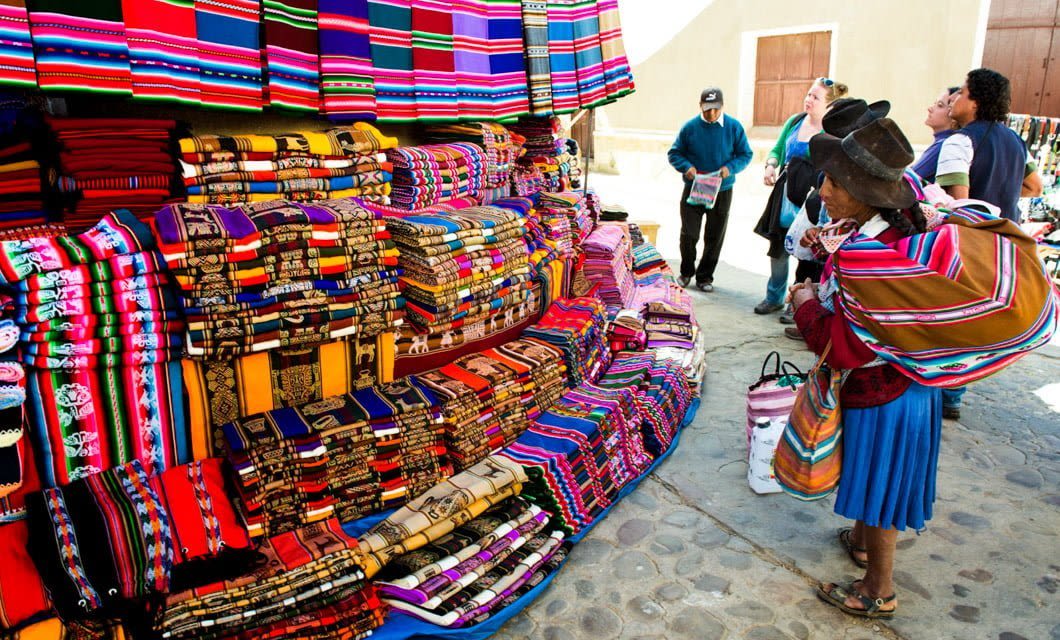
Bolivia’s markets are a highlight — look for handwoven textiles, alpaca knitwear, hats, and traditional crafts, often best bought with cash.
Ready to explore the salt flats and beyond? Browse our Bolivia tours — we handle the logistics so you can focus on the adventure.