Machu Picchu health planning comes down mostly to altitude, and most trips reach the ruins through Cusco, far higher than Machu Picchu itself. Our travel consultants are not medical professionals and cannot give medical advice, so the guidance below comes from the US Centers for Disease Control and Prevention (CDC). The CDC’s advice is to see your doctor or a travel clinic at least a month before your trip. If your Machu Picchu trip also takes in the Amazon, our Staying Healthy in Peru page covers the rest of the country.

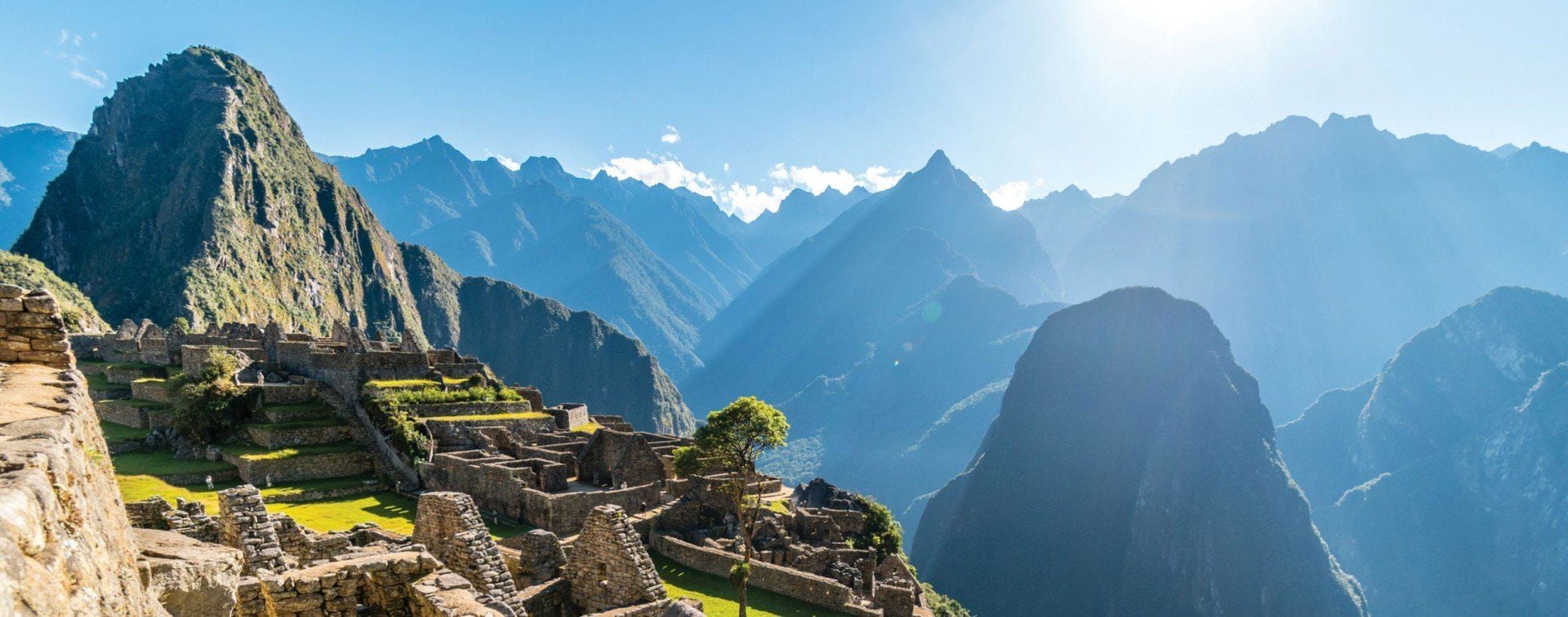
Cusco lies at about 11,150 ft (3,400 m). The Sacred Valley towns of Ollantaytambo and Urubamba are lower, at about 9,160 to 9,420 ft (2,790 to 2,870 m). Machu Picchu is lower again, at about 7,970 ft (2,430 m), and Aguas Calientes, the train town at the foot of the site, at about 6,690 ft (2,040 m).
The CDC’s Peru page counts Machu Picchu among Peru’s high-altitude destinations. For travel above 8,000 ft, the CDC’s advice is to avoid going from a low elevation to above 9,000 ft (2,750 m) in one day, to skip alcohol and heavy exercise for at least the first 48 hours, and to go lower if symptoms such as headache or nausea get worse while resting. The CDC Yellow Book adds that travelers arriving in Cusco can sleep lower than the airport for a night or two, and names acetazolamide as the medicine to ask your doctor about.
When a trip flies straight into Cusco, Juergen Keller, our co-founder, prefers to “take them from the airport … down to the Sacred Valley first, to stay there overnight.” As he puts it: “So you have Cusco with a very high altitude, then lower you have the Sacred Valley with the hotels, and then below the Sacred Valley is Machu Picchu.” On Machu Picchu & the Amazon Jungle, that means a night in Ollantaytambo, the train to Machu Picchu and a night in Aguas Calientes before Cusco.
Coca tea, mate de coca, is a highland custom. The CDC Yellow Book says there is no strong evidence that coca leaf works for altitude illness, and that using it may cause a positive drug test for cocaine metabolites.
Our four-day Inca Trail to Machu Picchu crosses its highest point, Dead Woman’s Pass, at about 13,830 ft (4,215 m) on the second day. The Salkantay trek crosses the Salkantay Pass at about 15,100 ft (4,600 m), then descends through cloud forest to Aguas Calientes. Above about 9,800 ft (3,000 m), the CDC Yellow Book’s guidance is to sleep no more than about 1,650 ft (500 m) higher each night, so take the itinerary to your doctor. Other routes are on our Machu Picchu hiking tours page.
At the site, the path up Huayna Picchu, the peak behind the ruins, is steep and in places exposed. It tops out at about 8,840 ft (2,690 m), some 850 ft (260 m) above Machu Picchu, so take care on the steep steps.
The CDC asks every traveler to Peru to be up to date on routine vaccines and recommends hepatitis A and, under age 60, hepatitis B for unvaccinated travelers.
Yellow fever. According to the CDC, Peru does not require a yellow fever certificate at the border. Separately, the CDC recommends the vaccine for travelers aged 9 months and older going to areas below 7,550 ft (2,300 m) in regions including Cusco, but not for travel limited to the city of Cusco, the Inca Trail and Machu Picchu. The Salkantay trek drops to about 7,380 ft (2,250 m) at La Playa on its third day, so show your clinic that route against the CDC’s yellow fever and malaria maps.
Malaria and dengue. The CDC lists no malaria transmission in the city of Cusco or at Machu Picchu, and the CDC Yellow Book reports no dengue risk at Cusco city, the Sacred Valley or Machu Picchu. For the Amazon, see our Peru health page.
The US CDC’s general advice for travelers is to choose factory-sealed drinks wherever tap water might be contaminated, and to skip ice where clean water is a concern. To order a drink without ice, ask for it “sin hielo.” The CDC Yellow Book rates Peru a moderate- to high-risk country for travelers’ diarrhea. More in our Machu Picchu food and drink guide.
The CDC Yellow Book warns that sun in Peru’s highlands is strong enough to burn after short exposures, and that health care outside Lima is not as good, so complex problems may need evacuation. Read our Machu Picchu travel insurance page before choosing a policy.
According to the CDC, Peru does not require one at the border, and the CDC does not recommend it for travel limited to the city of Cusco, the Inca Trail and Machu Picchu.
The CDC lists no malaria transmission in the city of Cusco or at Machu Picchu.
The US CDC’s general advice for travelers is to choose factory-sealed drinks wherever tap water might be contaminated, and to skip ice where clean water is a concern.
❗ A note from our team: we plan trips, we are not doctors. This page sums up what official health bodies such as the US CDC say about travel here. It is not medical advice, and official advice changes, so please check with your doctor or a travel clinic, ideally at least a month before you go.