20+ Years Designing Lake District & Patagonia Trips
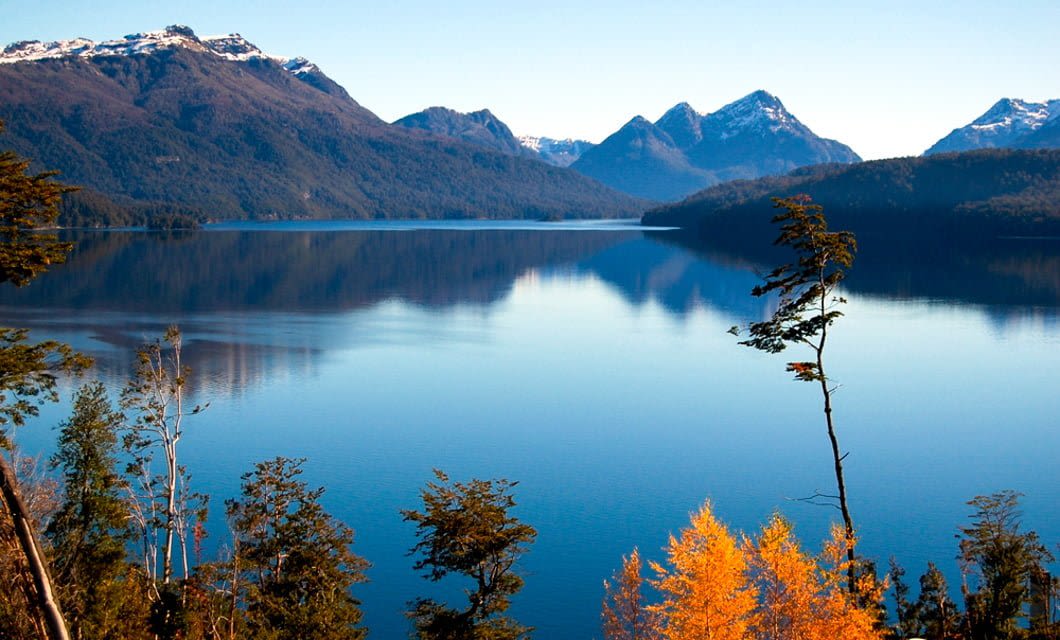
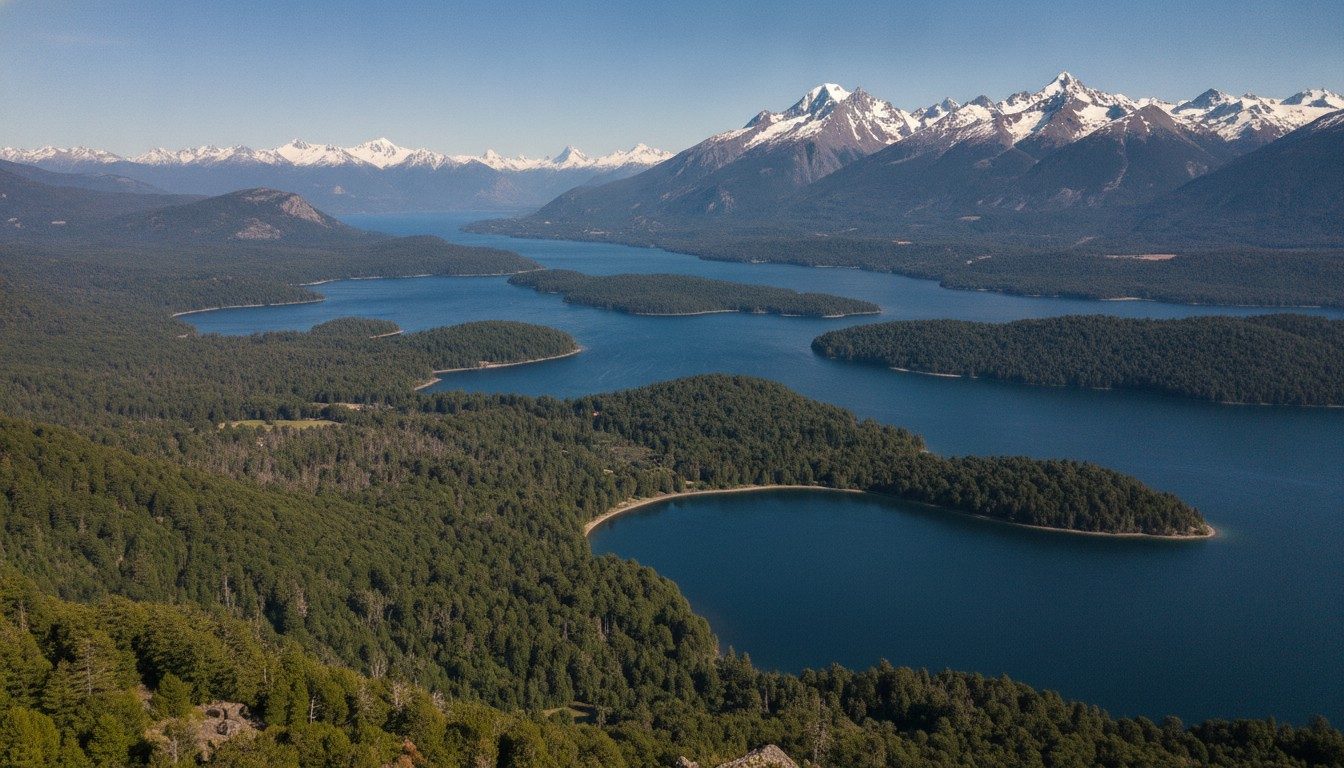
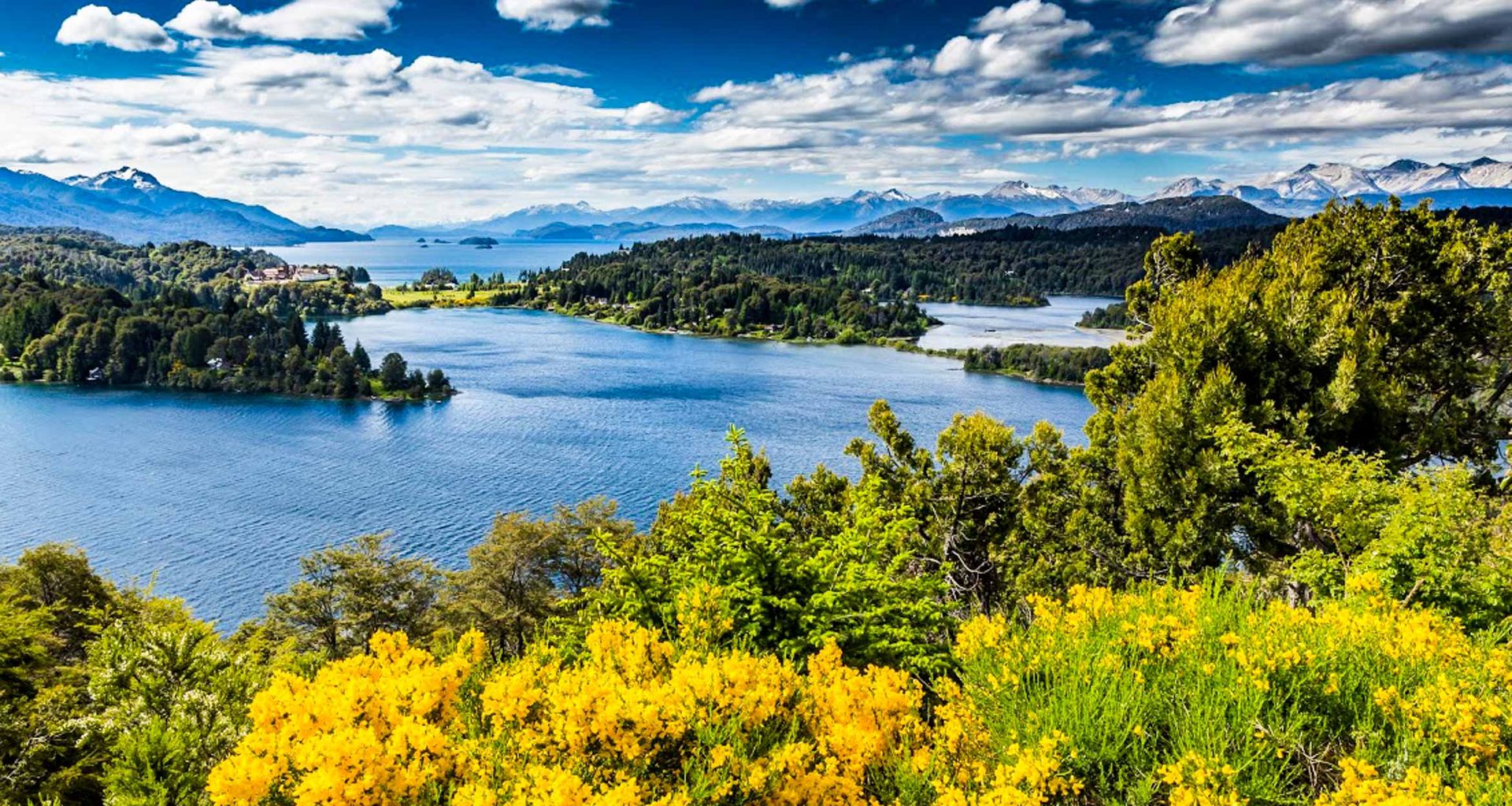
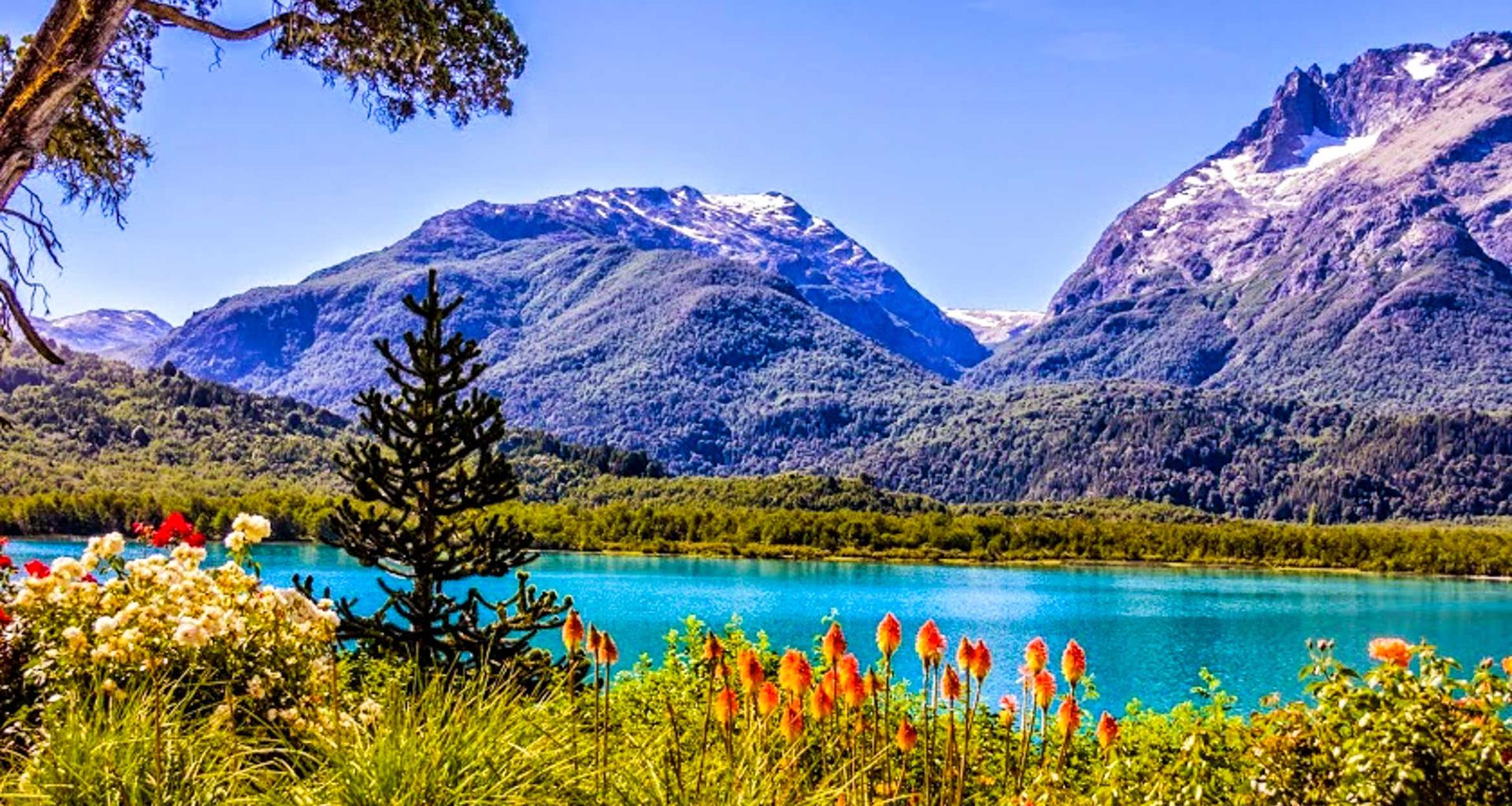
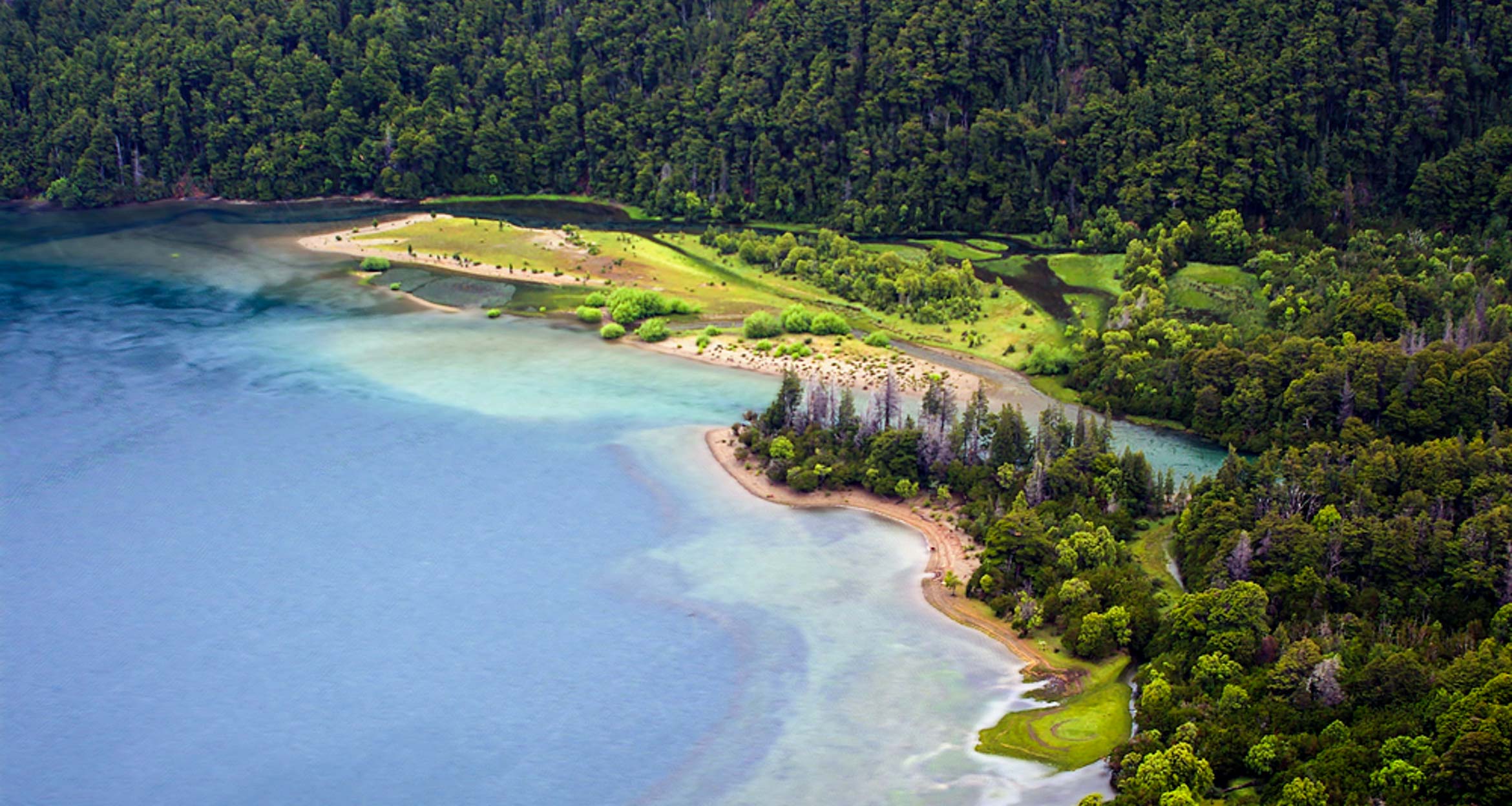
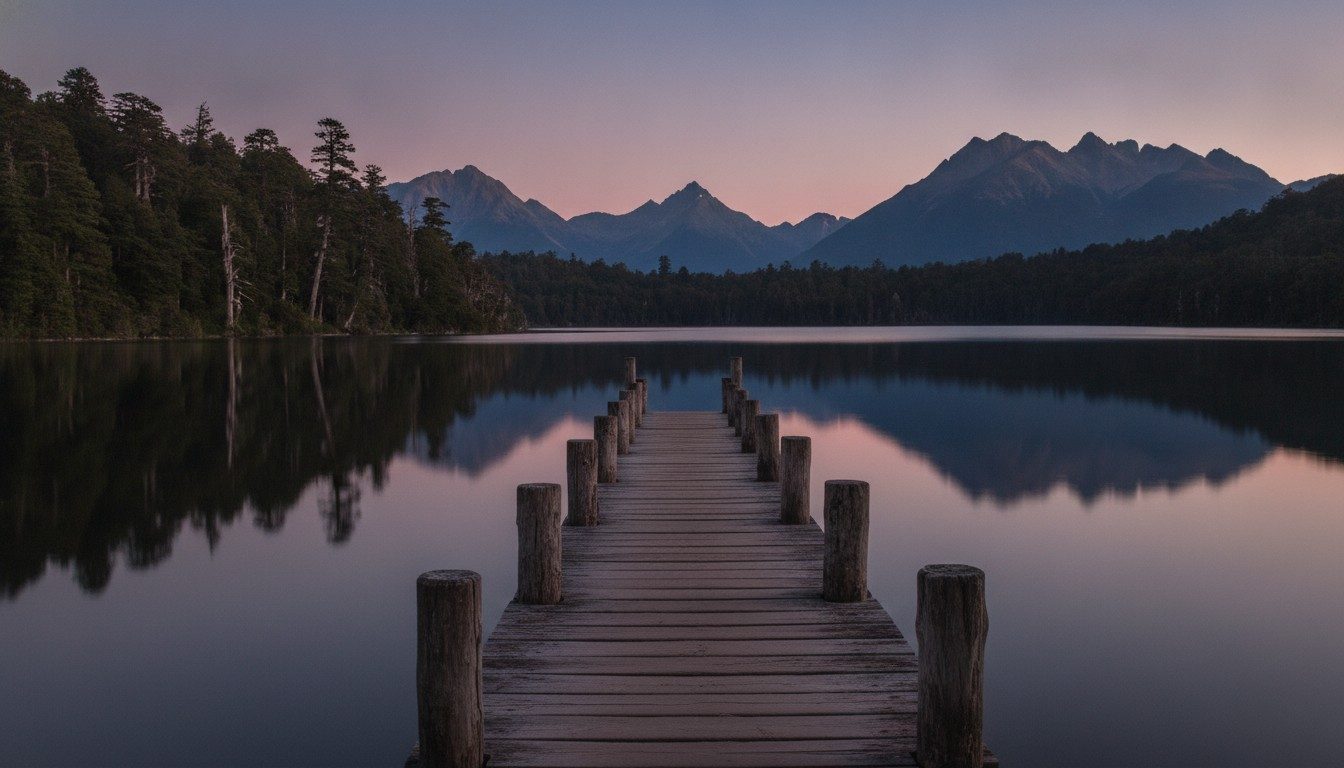
Bariloche calls itself the gateway to Patagonia, and fair enough. East of town the dry steppe runs all the way to the Atlantic; west of it are the lakes, the forest and the Andes. Lake Nahuel Huapi sits in the middle, carved from glacial basins and rimmed by mountains, inside the oldest national park in Argentina. River otters, foxes, pumas and a long list of birds live in the park. You can hike, ski, raft, ride, fish, or spend an afternoon in the chocolate shops on Mitre Street.
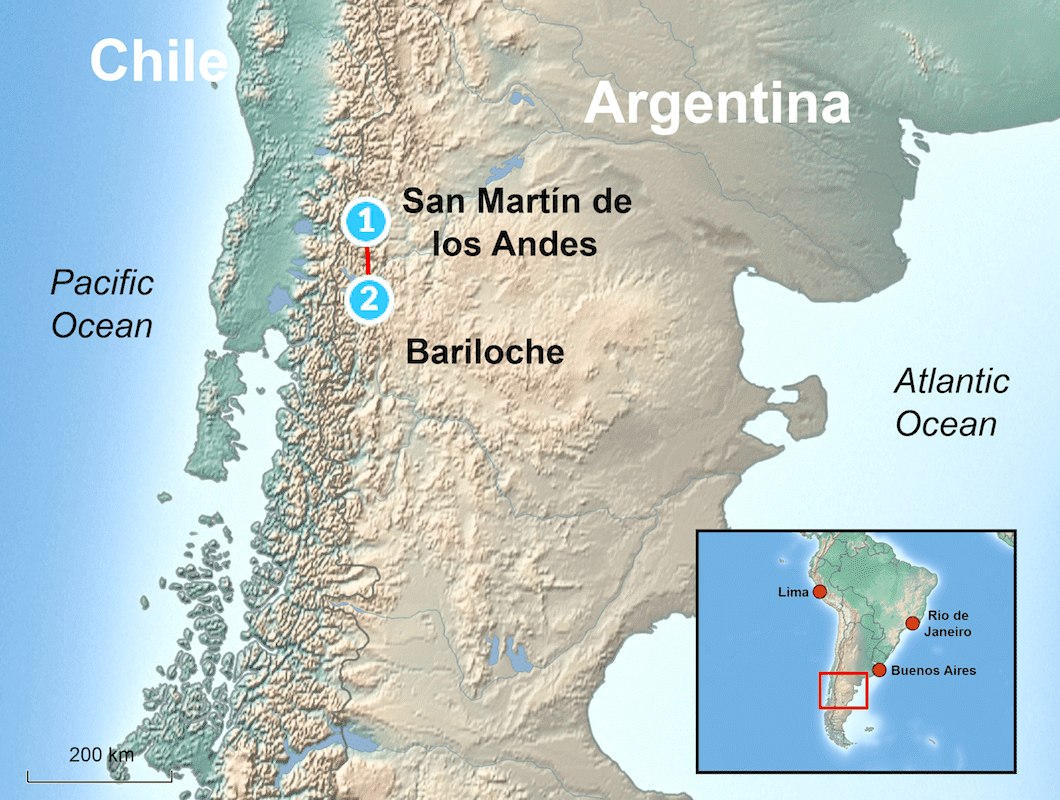
Bariloche is the base. The Lake District is the trip. The lakes carry on north to San Martín de los Andes and west across the Andes, and the best routes use both. Add the lake crossing into Chile and the visit becomes an Argentina and Chile tour, crossed by boat instead of by plane.
Lake District Itineraries
Itineraries built around Bariloche and the lakes: four- to six-day extensions that attach to a longer Argentina trip, and longer routes that continue into Chile or south through Patagonia. Every one can be changed to suit you, except the months an extension runs.
Click or Tap your preferences: Destinations & Activities. Be as specific or general as you like – or click Help Me Decide! We’ll spice it with hidden gems & personal tips to create your perfect trip. Need assistance? Contact an expert at +1 (888) 900-5060
Choosing a Lake District Route
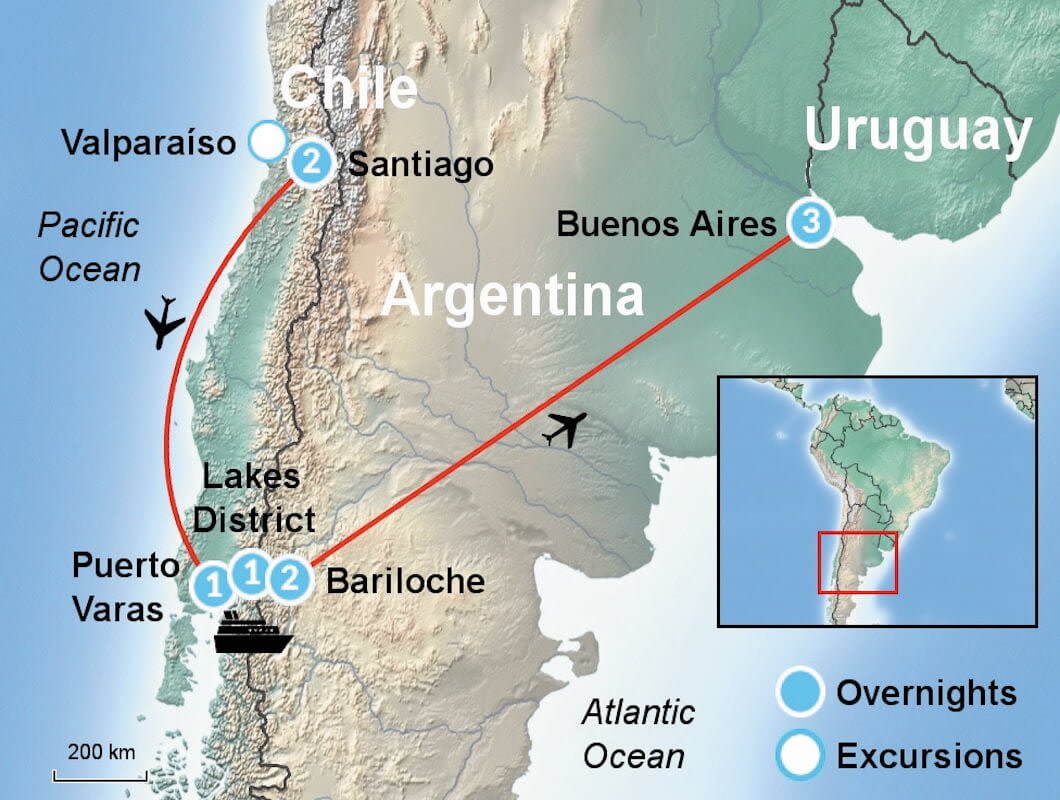
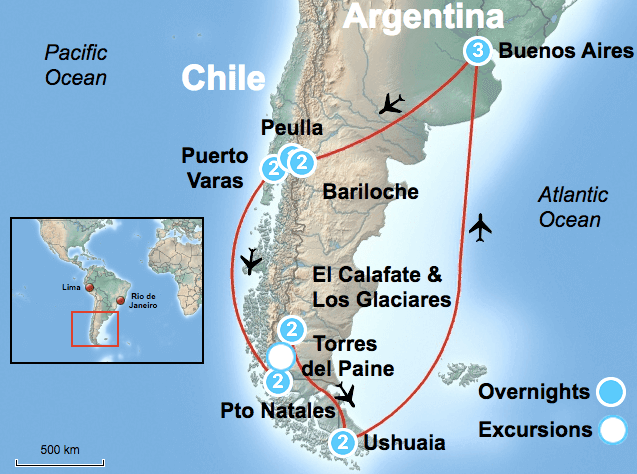
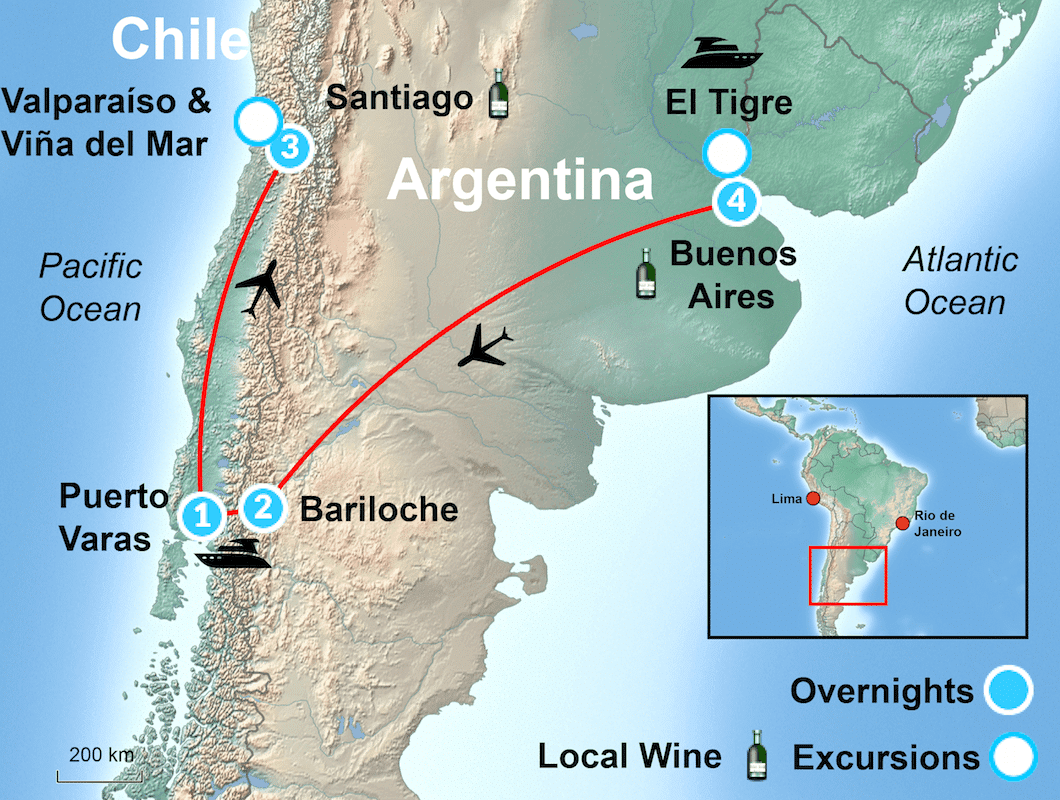
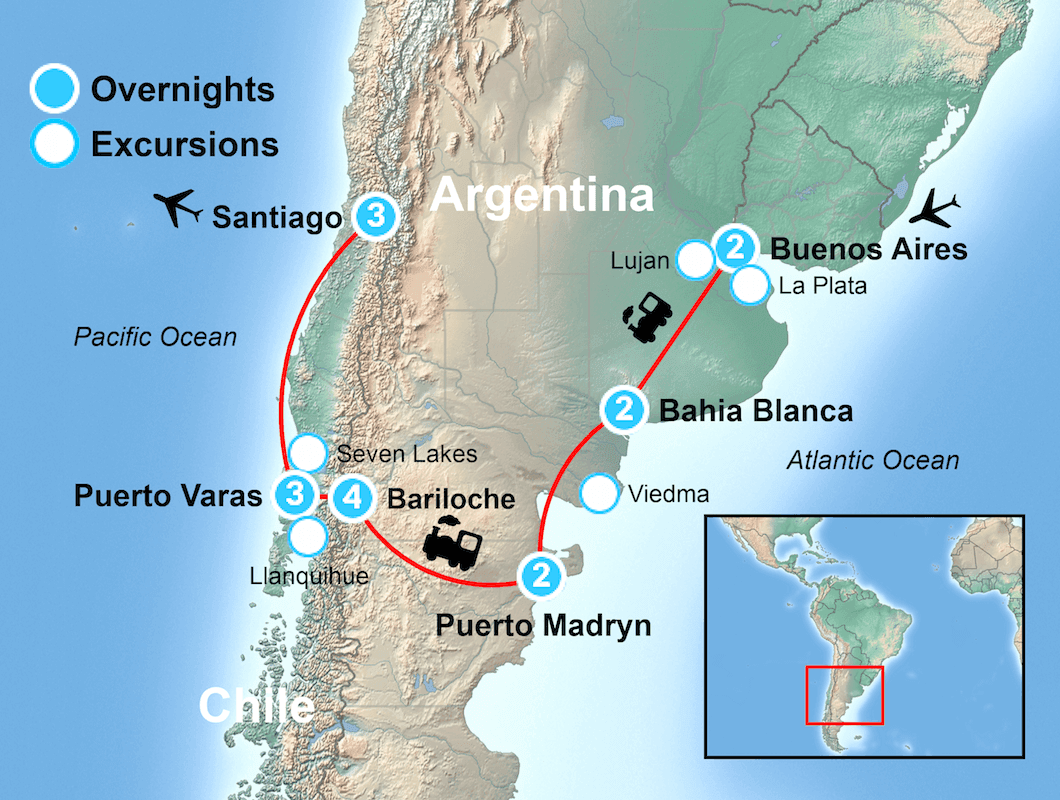
Buenos Aires to Santiago Wine Tour & Patagonia Lakes
The lake crossing and Chile's wine country in one trip. Tango lessons in Buenos Aires, a mountain resort in Bariloche, the crossing to Puerto Varas, then Santiago's wine region and a day at Valparaíso and Viña del Mar, with a last night of tango back in Buenos Aires.
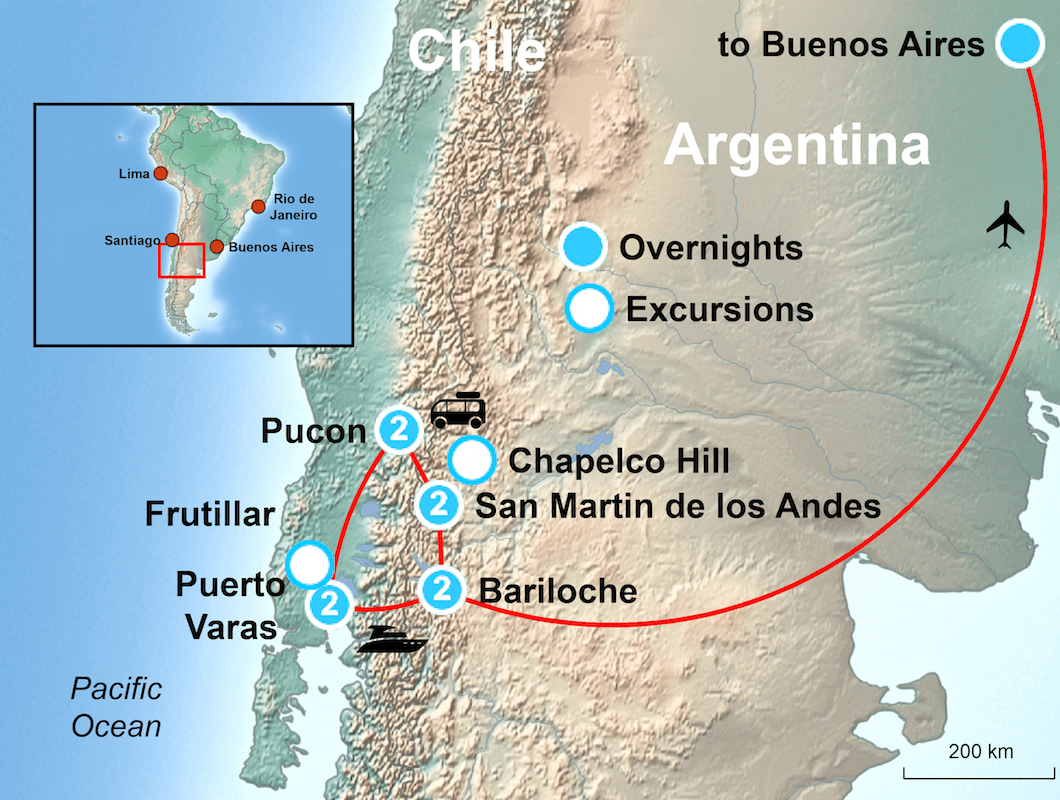
The loop, for travelers who want both sides of the lakes on a round-trip flight. San Martín de los Andes and the Seven Lakes Road, over the Andes to Pucón under Villarrica Volcano, then back across Todos los Santos Lake on the crossing.
What lies north of Bariloche: Campanario Hill first, then the Seven Lakes Road to Villa La Angostura and San Martín de los Andes. It runs September 1 to May 15 only.
For travelers who would rather ride and walk than look at the lakes through a window: horseback in Nahuel Huapi National Park, trekking near Cerro Tronador, home-cooked meals at an estancia. It runs November 8 to April 20 only, with the activities booked and paid on the spot.
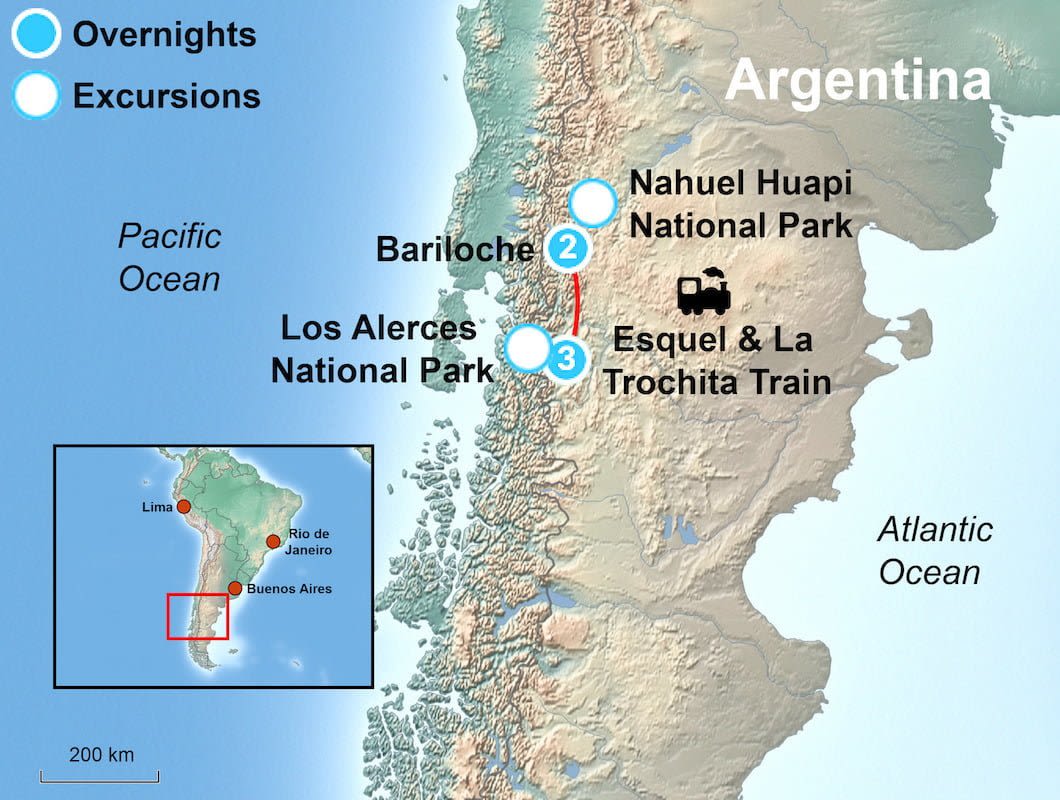
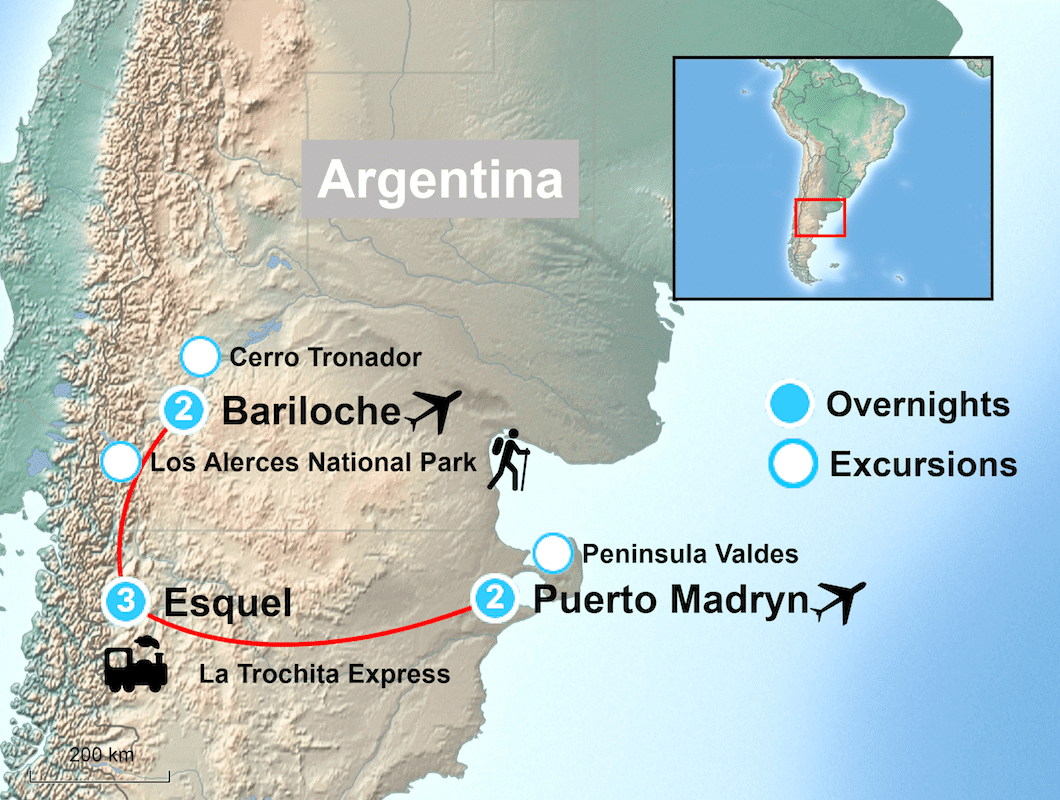
Bariloche and Peninsula Valdes Wildlife Watching Trip
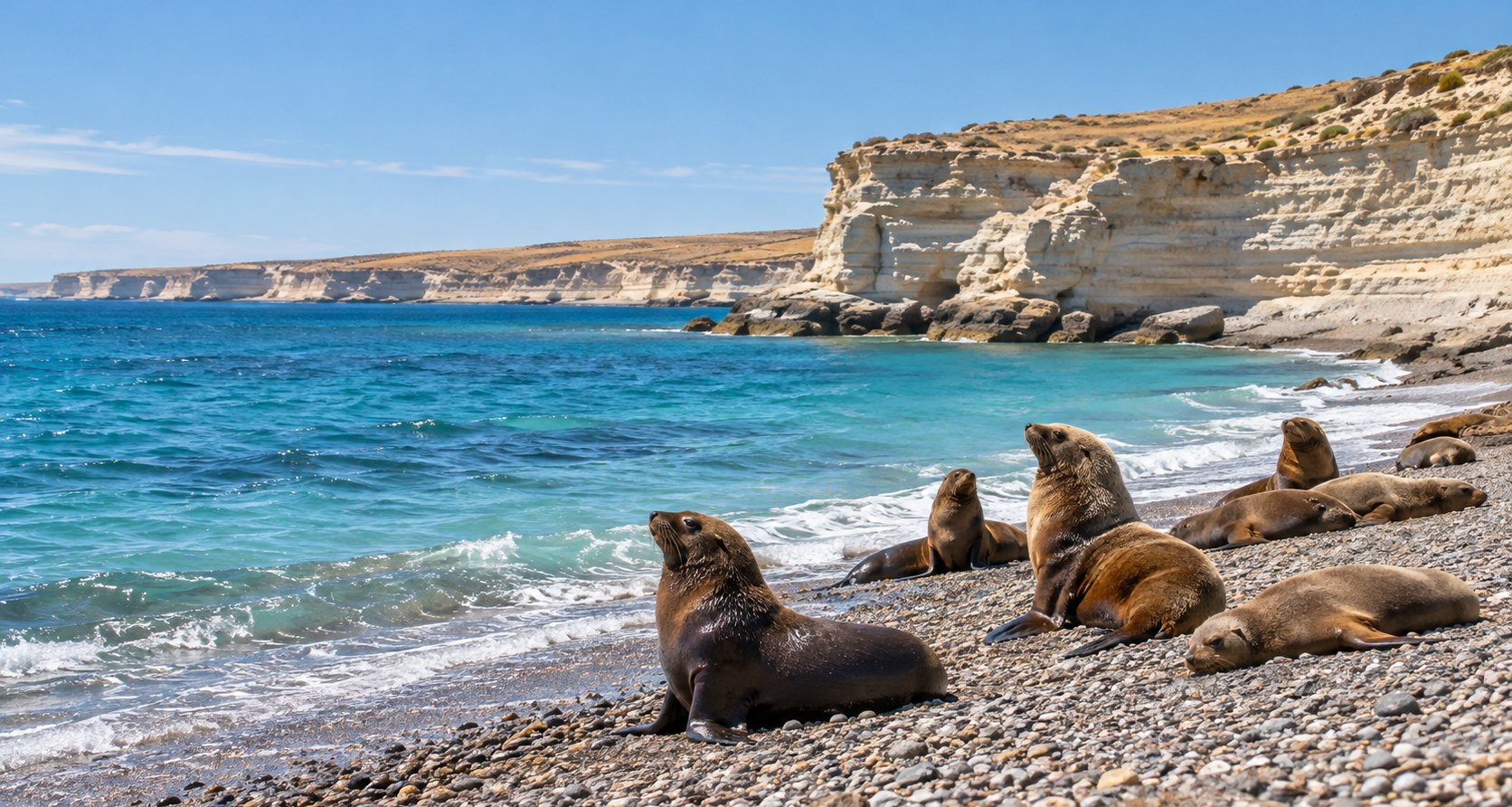
Mountains and ocean in one Patagonia trip. Penguins at Punta Tombo and the sea life of Península Valdés on the Atlantic, then Los Alerces National Park and the Bariloche lakes.
Most visitors do Bariloche the same way. The Circuito Chico out to the Llao Llao peninsula, the chairlift up Campanario Hill, an afternoon on the lake, chocolate. Three nights, then a flight south to the glaciers. It is a good three days. It is not the Lake District.
The region runs north and west of town. North, the Seven Lakes Road leaves Nahuel Huapi at Villa La Angostura and winds through forest, past one lake after another, to San Martín de los Andes on Lake Lácar. West, a gravel road follows Lake Mascardi toward Cerro Tronador, where glaciers hang off a peak that sits on the Chilean border. Neither works as a quick look from a van window.
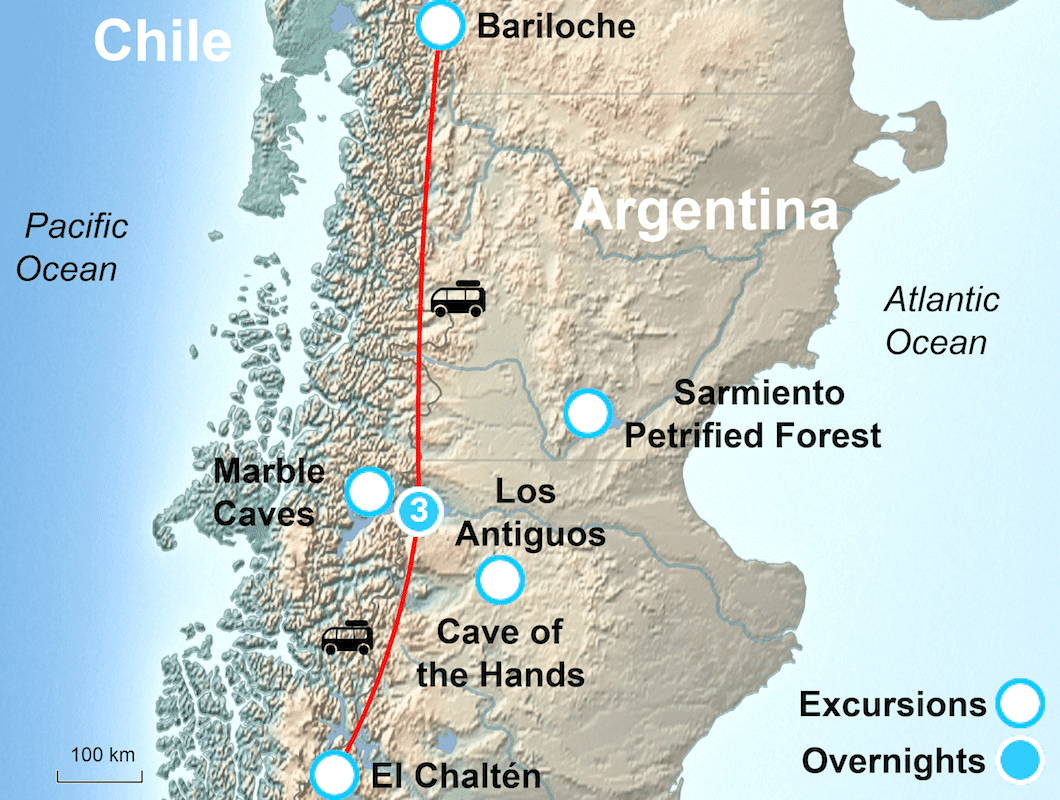
So plan in nights. Three for Bariloche. Two or three more for the road north, sleeping in Villa La Angostura or San Martín instead of doing it there and back in one go. With less time, the World Class Alpine Experience fits Campanario Hill and the Seven Lakes Road into four days. Any less and you are mostly driving.
Crossing into Chile over the Lakes
Juergen Keller, our co-founder, sums up Argentina route planning in two words: think international. A good route begins or ends in Chile or Brazil instead of flying in and out of Buenos Aires. Bariloche is where that is easiest.
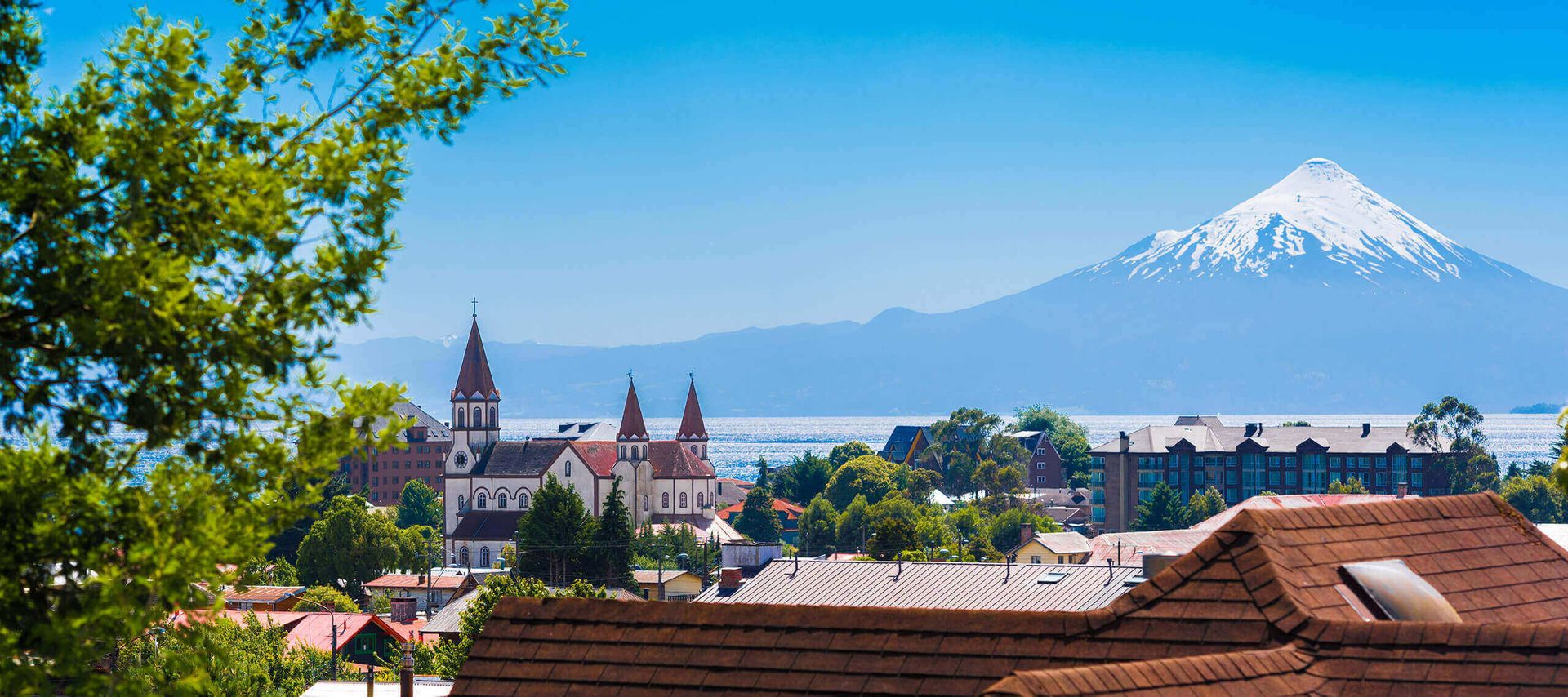
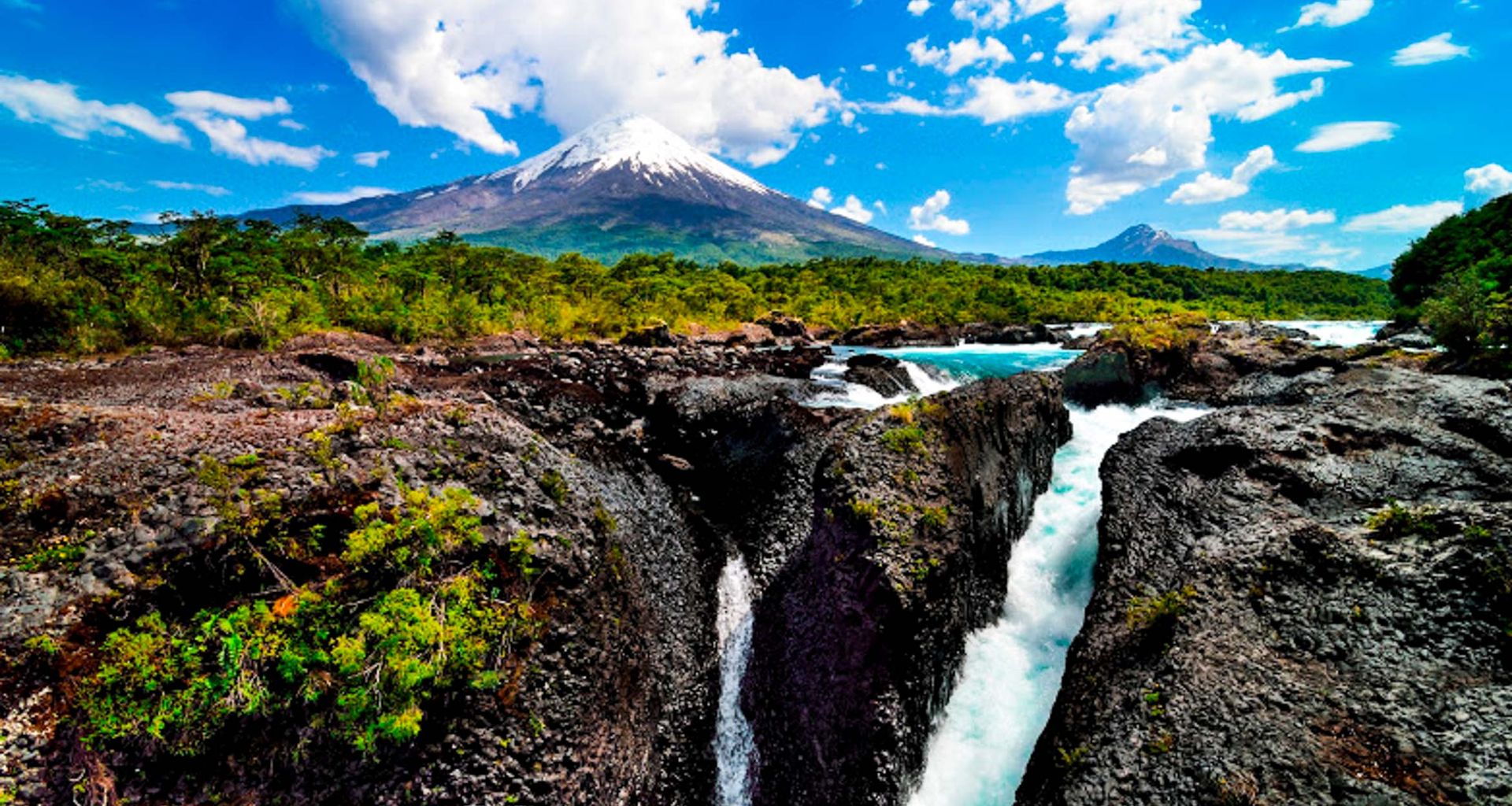
The Andean lake crossing, the Cruce Andino, takes you by boat over three lakes, Nahuel Huapi, Frías and Todos los Santos, joined by four overland stretches. It runs every day of the year and takes about 12 hours, or two days with a night at Puerto Blest or Peulla. You come out at Puerto Varas in Chile’s Lake District, across the water from Osorno Volcano. The road over the pass beyond Villa La Angostura is faster. Faster, yes. Less lake.
Either way, you skip the flight back to Buenos Aires, a day spent backtracking. Santiago is one domestic flight north of Puerto Montt, next door to Puerto Varas, and your flight home leaves from there. Buenos Aires to Santiago Wine Tour & Patagonia Lakes uses the crossing to reach Santiago’s wine country; drop its return to Buenos Aires and it ends there. More in our Argentina and Chile tours.
When to Go: Summer Lakes, Winter Snow
Two seasons matter here, and they want different trips.
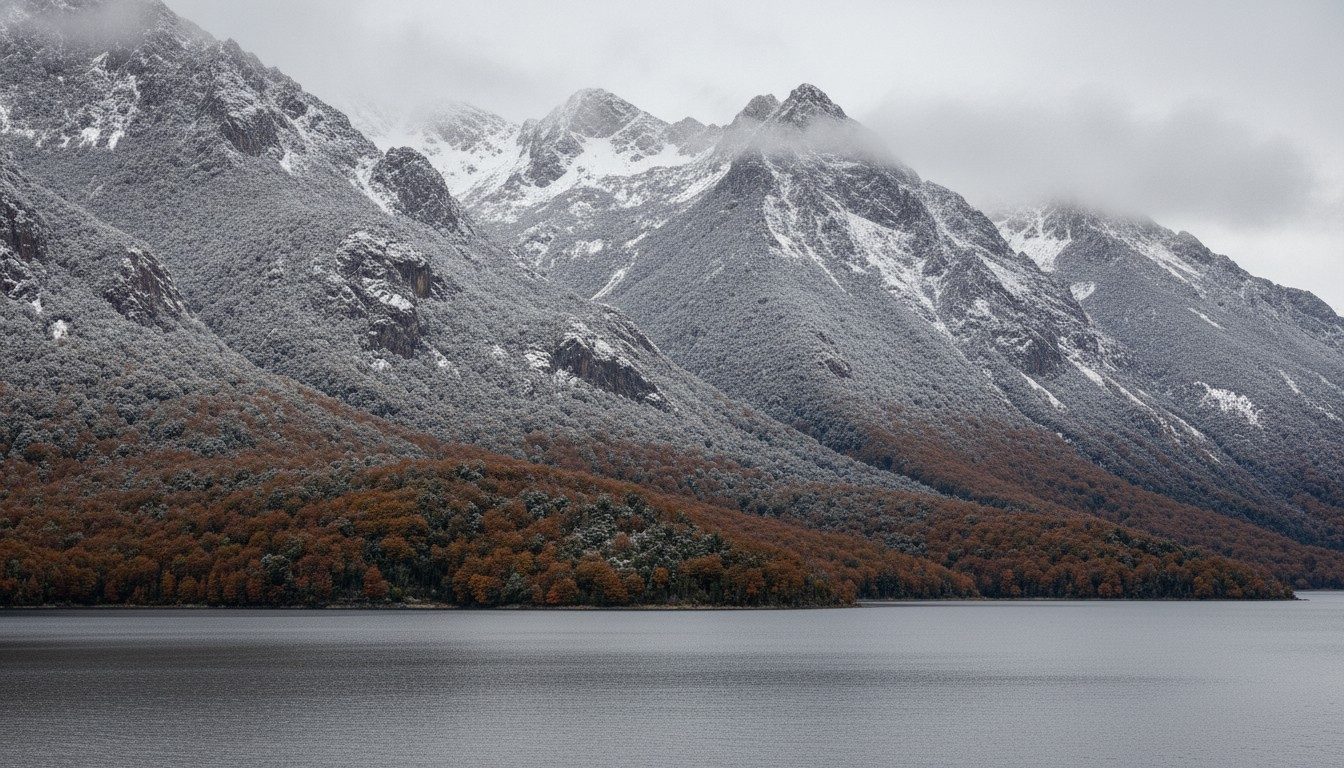
November to March is for the lakes. The forest is green, the high trails clear as the snow melts, and on a hot January afternoon the water is cold but swimmable. January is also when Argentines take their summer holidays, and July their winter ones, so book those months early. April and May bring autumn color, when the lenga forests turn red and the summer crowd has gone home. Late June to September is ski season, on Cerro Catedral above Bariloche and the resorts in our guide to Argentina’s ski resorts.
The calendar also decides what runs. The World Class Alpine Experience, our Seven Lakes extension, runs September 1 to May 15. The horseback and hiking extension runs November 8 to April 20, activities paid on the spot. The Route 40 journey south does not operate May to September. The lake crossing runs all year. Month by month for the whole country: the best time to visit Argentina.
Where to Go in the Lake District
Six places, and what you actually do in each. Bariloche is the first; the other five are the reason to stay longer.
1.
Bariloche & Nahuel Huapi
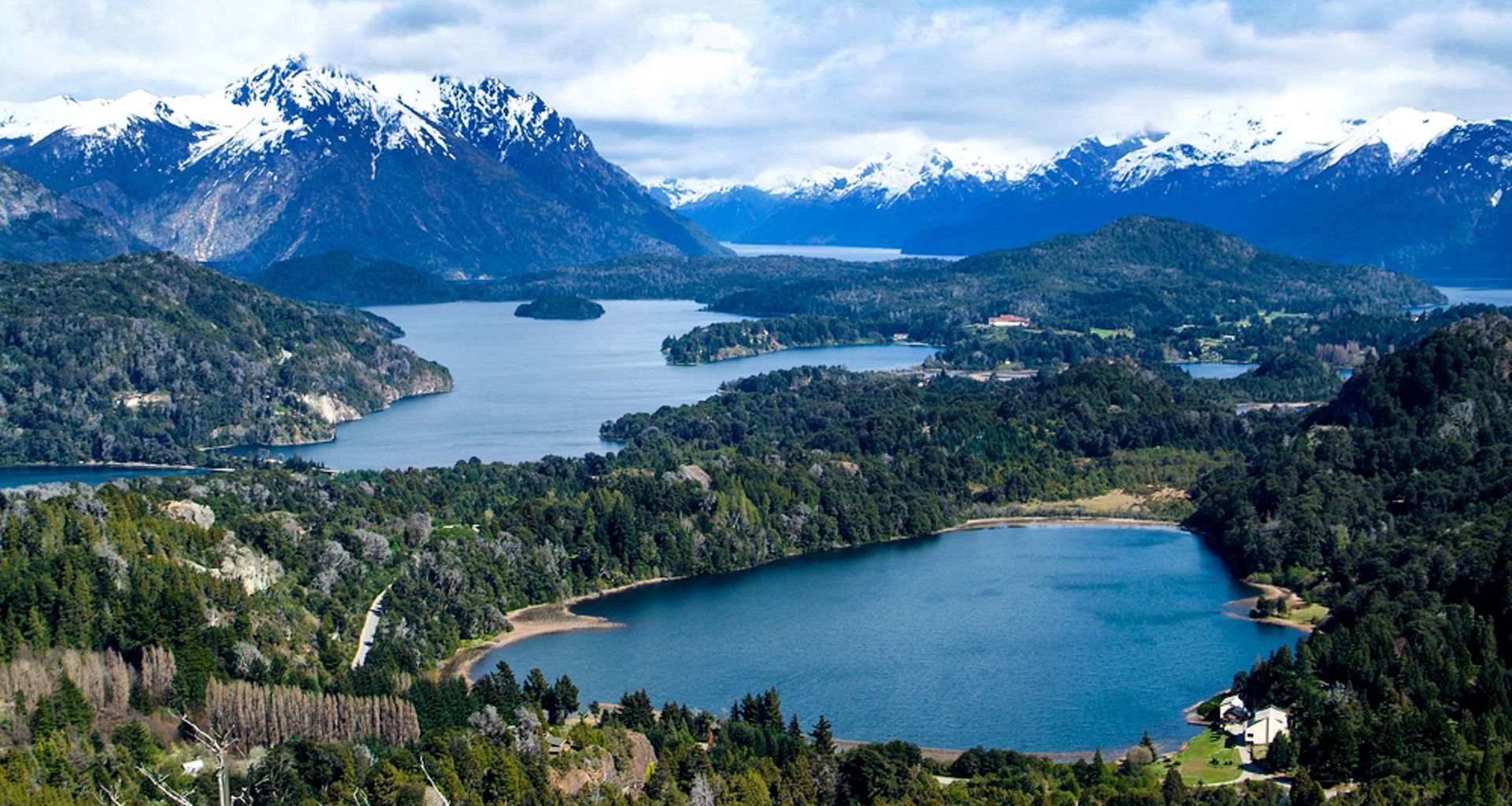
The town sits on the south shore of Nahuel Huapi. Drive the Circuito Chico along the lake to the Llao Llao peninsula and its grand hotel, then ride the chairlift up Campanario Hill for the view back over the water and the islands. Cerro Catedral is the ski mountain in winter and a trailhead in summer. Stay three nights, on the lake if you can.
The highest peak in Nahuel Huapi National Park, an extinct volcano on the Chilean border. Its name means Thunderer, for the sound of ice breaking off its glaciers. A gravel road runs past Lake Mascardi and Pampa Linda almost to its foot, where the Black Glacier lies dark with rock debris. A long day from Bariloche, and a good one. Go on a clear day if you can.
A smaller, quieter town on the north shore of Nahuel Huapi, and the southern end of the Seven Lakes Road. Walk, cycle or take the boat along the Quetrihué peninsula to the Arrayanes forest, myrtle trees with cinnamon-colored bark. Cerro Bayo is the local ski hill. The road to Chile over the pass starts here, which makes it a sensible last night in Argentina.
The northern end of the Seven Lakes Road: a low town of stone and wood buildings at the head of Lake Lácar, with Lanín Volcano standing to the northwest. In winter Chapelco is the ski mountain. Give it two nights. Drive the Seven Lakes Road up one day and spend the next on the lake, rather than turning straight round for Bariloche.
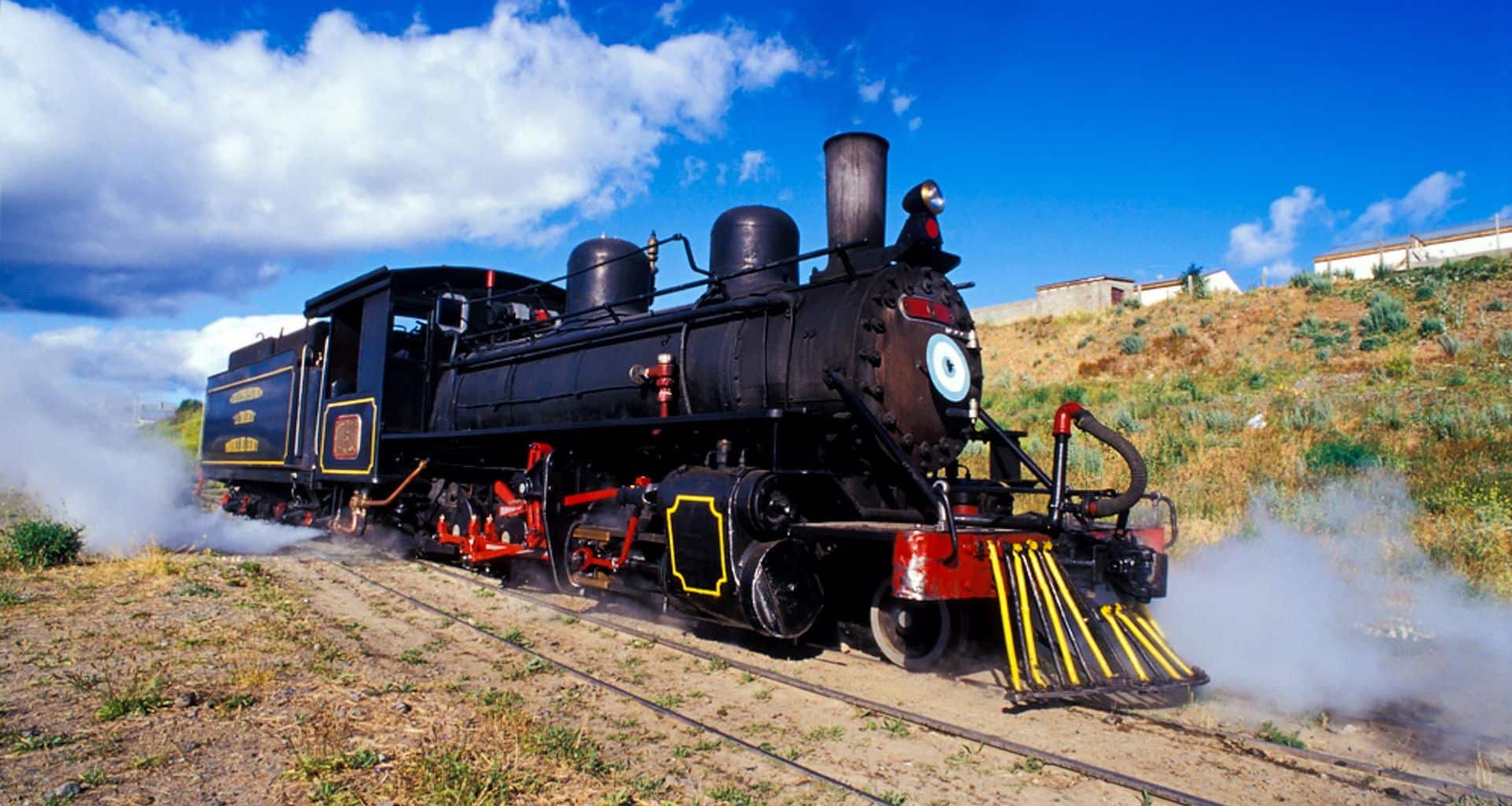
South of Bariloche, near Esquel, Los Alerces National Park protects alerce trees that are thousands of years old, among the oldest living things on the continent. Come for the forest, the lakes and the Cascada Los Alerces waterfall. Esquel is also the station for La Trochita, the Old Patagonian Express, a narrow-gauge steam train that still runs for visitors. Worth two nights on a longer route.
The Chilean side, and where the lake crossing ends. A town on Lake Llanquihue, with houses built by German settlers in the streets behind the shore. The Petrohué waterfalls and Frutillar are close, and Chiloé is within reach. It works as well as a start: fly into Santiago, down to Puerto Montt, and cross the lakes east into Bariloche. Give it two nights either way.
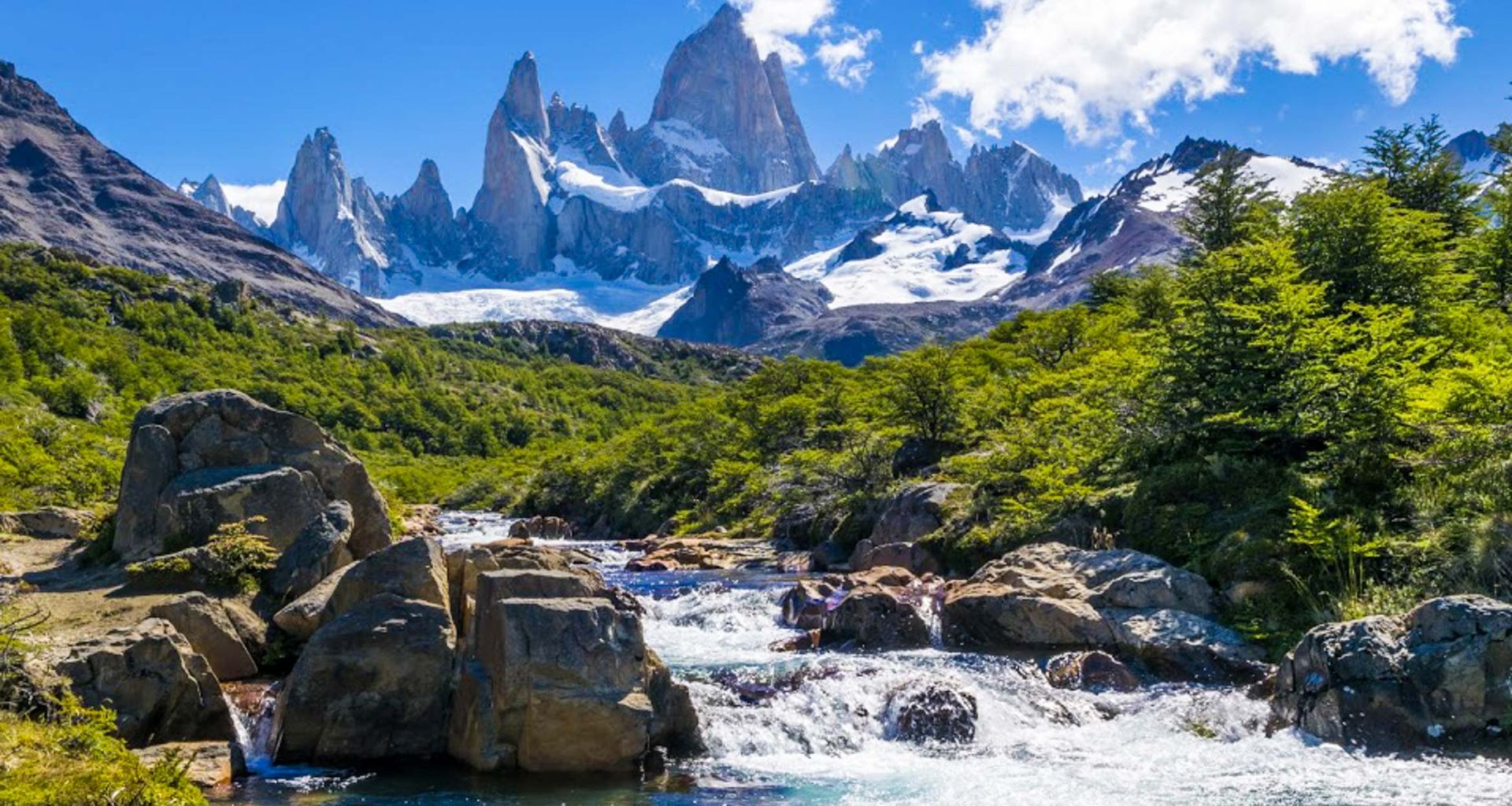
Most Lake District trips carry on somewhere. South toward the glaciers and Tierra del Fuego is Patagonia. La Trochita and the other rail journeys are on Argentina train tours. For riding, rafting and trekking elsewhere in the country, see Argentina adventure tours. Several Argentina honeymoon itineraries include Bariloche. The Chilean shore has its own page, Chile Lake District tours, and the rest of the country starts on our Argentina page.
Why Plan the Lake District with Us
Get to Know Us
Argentina travel content reviewed by Juergen Keller, Co-Founder & CEO
Because the Lake District is a routing question more than a sightseeing one. We book the lake crossing end to end: the boats, the bus stretches between them, and the night at Puerto Blest or Peulla if you split it. We know which extensions run in which months, so a horseback extension never lands in May, when it is not operating. And we route you one way through Chile, into Puerto Varas and home from Santiago, instead of doubling back to Buenos Aires. We have been designing trips like this for more than twenty years. Tell us the month and we will tell you what runs.
Download our FREE Argentina Travel Guide and get inspired to travel to Argentina. Browse through 30 pages of travel planning tips and ideas, pictures of Argentina, and adventurous tours. This e-book is a great resource for planning your Argentina dream vacation.
Planning a trip to South America? Explore essential travel info including via requirements, safety tips, weather, money, and more so you can focus on designing the perfect adventure!
Argentina Overview
Argentina Holidays
Argentina Recommended Hotels
Money in Argentina
Languages of Argentina
Safety in Argentina
Staying Healthy in Argentina
Argentina Travel Insurance
Internet & Calling in Argentina
Argentina Packing List
Argentina Visa Requirements
Argentina Flights
Argentina Food: Asado, Malbec and the Culture Behind the Table
Argentina Articles
Weather in Argentina
Bariloche & Lake District FAQs
How many days do you need in Bariloche?
Three nights for Bariloche itself, and five or six to take in the Lake District around it. The three cover the Circuito Chico and Campanario Hill, a long day out to Cerro Tronador, and a day on the lake or up Cerro Catedral. The extra nights go north on the Seven Lakes Road, to Villa La Angostura and San Martín de los Andes. Add a day for the crossing if you continue into Chile.
Is Bariloche, Argentina worth visiting?
Yes, but go for the lakes, not the town. The center is busy and built around visitors, with chocolate shops all along the main street. What earns the flight is around it: Nahuel Huapi and its national park, the peaks, the Seven Lakes Road going north and the boats across to Chile. Sleep out along the lake if you can, and give it at least three nights. One night is a waste of the airfare.
Why is Bariloche so German?
It is more Alpine than German, and much of it is deliberate. Swiss, German and other central European settlers were among the town's early families, and the town was later built to match: stone and timber buildings, the lakefront Civic Center among them, and chalet-style hotels. The chocolate shops lean into it. Lakes under snow peaks invite the comparison anyway, and San Martín de los Andes shares the look.
What is the best time to visit Bariloche?
November to March for the lakes, hiking and the Seven Lakes Road, and late June to September for skiing on Cerro Catedral. April and May are quieter, and the lenga forest turns red. Seasonal trips follow the same calendar: the Alpine extension runs September to mid-May, the horseback one November to April, while the crossing to Chile operates every day. Temperatures by month are on our Argentina weather page.
Is it better to go to Patagonia in Chile or Argentina?
Both, and in the Lake District you do not have to choose. It is one region split by the Andes. The Argentine side is drier, with long lakes, forest and steppe to the east; the Chilean side is wetter and greener, with volcano cones standing over the water. The lake crossing joins them in a day. Farther south the same applies to the glaciers and Torres del Paine, which our Patagonia page covers.
How do you get to Bariloche?
Fly from Buenos Aires, which takes about two hours. By road it is roughly 22 hours, and Argentine long-distance buses are comfortable, but that is a lot of pampa for a short trip. The other way in is from Chile, on the lake crossing from Puerto Varas or by road over the pass to Villa La Angostura. Good itineraries often arrive one way and leave the other. More on domestic flights is on our Argentina flights page.
Can you cross to Chile from Bariloche?
Yes, by boat or by road. The Cruce Andino strings together boats on Nahuel Huapi, Frías and Todos los Santos lakes with four land stretches, and ends at Puerto Varas; it operates all year, about 12 hours in one go or two days with a stop at Peulla or Puerto Blest. By road you go through Villa La Angostura and over the mountain pass, which is quicker. Bring your passport, and eat any fresh fruit before the Chilean border post.
Your Experts in Argentina!
Let’s Design Your Perfect Argentina Trip
Send us your month and the number of nights you have. We will tell you whether to cross into Chile, and where the trip should end.
We Love to Talk About South America Trip Ideas!
Thinking of traveling to South America? We take your South American travel dream and make it a reality. Every fully custom South America trip is planned by your own expert personal Travel Consultant.
"*" indicates required fields
Argentina Travel Guide
Our favorite Argentina tour ideas featuring the best destinations & activities designed to inspire…

 +1 (888) 900-5060